Glicociência
Subcategorias de "Glicociência"
- Amino açúcares(108 produtos)
- Anticorpos Glico-Relacionados(284 produtos)
- Glicolípidos(46 produtos)
- Glicosaminoglicanos (GAGs)(55 produtos)
- Glicosídeos(419 produtos)
- Monossacáridos(6.622 produtos)
- Oligossacarídeos(3.699 produtos)
- Polissacáridos(506 produtos)
Foram encontrados 11035 produtos de "Glicociência"
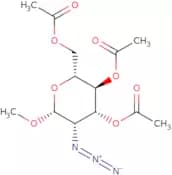
Methyl 2-azido-3,4,6-tri-O-acetyl-2-deoxy-b-D-mannopyranoside
CAS:Methyl 2-azido-3,4,6-tri-O-acetyl-2-deoxy-bD mannoside is a custom synthesis that can be modified to suit the needs of the customer. It is an oligosaccharide and polysaccharide that has been modified with methylation and glycosylation. This product has CAS No. 97604-59-6 and is available for purchase in high purity with a purity level of at least 95%. Methyl 2-azido-3,4,6-triO acetyl -2 deoxy b D mannoside has been fluorinated to create a synthetic sugar.
Fórmula:C13H19N3O8Pureza:Min. 95%Cor e Forma:White PowderPeso molecular:345.31 g/molForodesine
CAS:Forodesine is a purine nucleoside that inhibits the nucleoside phosphorylase enzyme and prevents the synthesis of purines. It has minimal toxicity and is effective against intracellular targets such as mitochondria, which are important for apoptosis induction. Forodesine also inhibits the mcl-1 protein, which is an inhibitor of t-cell lymphomas. This drug has been shown to be effective in animal models of human lymphoma and leukemia.
Fórmula:C11H14N4O4Pureza:Min. 95%Cor e Forma:PowderPeso molecular:266.25 g/molN-Trimethylchitosan
CAS:Quaternization of the primary amine in N-Trimethylchitosan increases the water solubility of chitosan and keeps chitosan soluble over a wide pH range. N-Trimethylchitosan is soluble in water and ethanol, making it ideal for use in biotechnology applications.The degree of quaternization is 30-70%Pureza:Min. 90%6-Monodeoxy-6-monoamino-gamma-cyclodextrin,
CAS:This gamma-cyclodextrin (γ-CD) derivative is a modified cyclic oligosaccharide composed of eight glucose units, featuring a larger cavity size than α- and β-cyclodextrins. This structural characteristic allows γ-CDs to form inclusion complexes with a wider range of guest molecules, making it particularly versatile in various industries. In the food sector, it is used as a carrier and stabilizer for flavors, fat-soluble vitamins, and polyunsaturated fatty acids, protecting volatile compounds from evaporation. In pharmaceuticals, it enhances the solubility and bioavailability of poorly water-soluble drugs and, thanks to its larger ring size, allows for the encapsulation of larger molecules or even entire drug molecules. γ-CDs and derivatives are also used for environmental remediation and, in analytical chemistry, for the extraction and concentration of target substances.Fórmula:C48H81NO39Pureza:Min. 95%Peso molecular:1,296.14 g/molTetragalacturonic acid
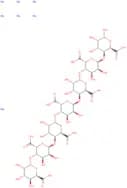
CAS:Tetragalacturonic acid (α-1,4 galacturonotetraose) is derived from pectin or pectic acid by enzymatic or partial acid hydrolysis (Combo, 2012). It is used inâ¯galacturonic acidâ¯metabolism research as a substrate to identify, differentiate, and characterize endo- and exopolygalacturonase(s), and gluconase(s) (Jayani, 2005). The addition of very short fragments of homogalacturonan, tri-galacturonate, and tetra-galacturonate oligosaccharides restores development in dark-grown, de-etiolated seedling mutants, suggesting that they are unable to generate de-methylesterified pectin fragments. A model of spatiotemporally separated photoreceptive and signal-responsive cell types has been proposed, that contains overlapping subsets of the regulatory network of light-dependent seedling development (Sinclair, 2017).Fórmula:C24H34O25Pureza:(%) Min. 95%Cor e Forma:White PowderPeso molecular:722.51 g/molN-Acetylneuraminic acid hexamer disodium salt
N-Acetylneuraminic acid hexamer disodium salt is a custom synthesis of a fluorinated, methylated and acetylated N-acetylneuraminic acid. This molecule is an oligosaccharide with three sugar rings. It has been modified by click chemistry and glycosylation to create a complex carbohydrate. The CAS number for this compound is 156587-48-2.Fórmula:C66H98N6O49Na6Pureza:Min. 95%Cor e Forma:White PowderPeso molecular:1,897.43 g/mol1,4:3,6-Dianhydro-L-iditol
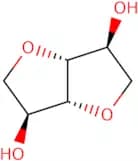
CAS:1,4:3,6-Dianhydro-L-iditol is a synthetic compound that is used in pharmaceutical preparations and tissue culture. It has been shown to inhibit the growth of bacteria such as Staphylococcus aureus and Mycobacterium tuberculosis in vitro assays. The synthesis of 1,4:3,6-dianhydro-L-iditol involves intramolecular hydrogenation of fatty acids with alkanoic acids and the use of solid catalysts.
Fórmula:C6H10O4Pureza:Min. 95%Peso molecular:146.14 g/mol6-Deoxy-6-iodo-D-glucose
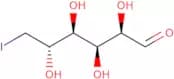
CAS:6-Deoxy-6-iodo-D-glucose is a glucose analog that can be used as a bypassed substrate for the study of d-glucose metabolism in diabetic patients. 6-Deoxy-6-iodo-D-glucose has been shown to be an acceptable substrate for animal cells and can be used for the study of glucose uptake in the pancreas. This analog does not require insulin for uptake, which may help to elucidate the role of insulin resistance in diabetes. The use of 6-deoxy-6-[18F]fluoroethyl D-[1,2]-glucose ([18F]FDG) as an optical imaging agent has also been studied.Fórmula:C6H11IO5Pureza:Min. 95 Area-%Cor e Forma:PowderPeso molecular:290.05 g/molPolysorbate 60
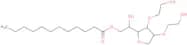
CAS:Polysorbate 60 is a polyoxyethylene-polyoxypropylene block copolymer that is composed of two different saturated fatty acid chains. It has been used as a surfactant and stabilizer in the manufacture of pharmaceuticals, foods, cosmetics, and other products. Polysorbate 60 has been shown to inhibit the growth of epidermal cells by binding to epidermal growth factor (EGF) receptors on the cell surface. The effects of polysorbate 60 are also mediated through hydrogen bonding with the EGF receptor. The pharmacokinetic properties of polysorbate 60 have been studied in vitro using human serum. This polymer is used as an excipient in solid dispersions for oral administration and can be administered intravenously or subcutaneously. Polysorbate 60 is chemically stable at acidic pH levels and hydrochloric acid does not affect its structure. Polysorbate 60 also has protease activity against trypsin at high temperatures,
Fórmula:C64H126O26Pureza:Min. 95%Cor e Forma:Light (Or Pale) Yellow To Yellow Solid Or Liquid (May Vary)Peso molecular:1,311.67 g/molMethyl cellulose - viscosity 40000 cP
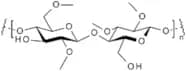
CAS:Cellulose derivative, food thickener and emulsifier, bulk forming laxative
Pureza:Min. 95%Cor e Forma:PowderL-Heptaguluronic acid heptasodium
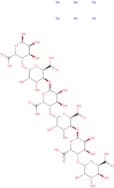
CAS:Please enquire for more information about L-Heptaguluronic acid heptasodium including the price, delivery time and more detailed product information at the technical inquiry form on this pageFórmula:C42H58O43•Na7Pureza:Min. 95%Peso molecular:1,411.81 g/mol2-Acetamido-2-deoxy-D-glucopyranosyl serine
CAS:2-Acetamido-2-deoxy-D-glucopyranosyl serine is a compound that belongs to the class of coumarins and monosaccharides. It contains a nitro group and a heterocycle, making it a unique and versatile molecule. This compound has been studied for its various properties, including its interaction with liver microsomes and its ability to undergo crystallization. Additionally, 2-Acetamido-2-deoxy-D-glucopyranosyl serine has shown promising effects on TGF-beta activation and has been found to inhibit aldehyde formation in trichloroacetic acid solutions. This compound also exhibits interactions with other molecules such as pyrazine, ofloxacin, and famotidine. Its diverse characteristics make it an intriguing compound for further research and potential applications in various fields.Fórmula:C11H20N2O8Pureza:Min. 95%Cor e Forma:White PowderPeso molecular:308.29 g/molL-Hexaguluronic acid hexasodium
CAS:Please enquire for more information about L-Hexaguluronic acid hexasodium including the price, delivery time and more detailed product information at the technical inquiry form on this pageFórmula:C36H50O37•Na6Pureza:Min. 95%Peso molecular:1,212.7 g/molGlobotriose-sp-biotin
Globotriose-sp-biotin is a custom synthesis that contains a fluorinated, methylated, and modified monosaccharide. It is a synthetic oligosaccharide with glycosylation at the reducing end. Globotriose-sp-biotin can be used in the modification of polysaccharides and complex carbohydrates to improve their bioactivity. This product has a CAS number of 127798-73-5 and is listed as an Oligosaccharide under Glycosylations in the Carbohydrate section.Pureza:Min. 95%Cor e Forma:PowderGlucose dehydrogenase
CAS:Glucose Dehydrogenase is an enzyme, which is typically derived from microbial sources such as bacteria and fungi. It functions by catalyzing the oxidation of glucose to gluconolactone, concurrently reducing a cofactor such as NAD⁺ or PQQ. This biochemical reaction is critical in various analytical applications due to its specificity and efficiency in glucose detection.Glucose Dehydrogenase is widely employed in the development of biosensors and diagnostic assays. Its primary application is in blood glucose monitoring devices, where its ability to accurately quantify glucose levels is crucial for managing diabetes. Additionally, it is utilized in research and development settings for biochemical assays that require precise glucose measurements. The enzyme's rapid and specific action on glucose molecules makes it an indispensable tool in both clinical and laboratory environments, contributing to advancements in biosensing technologies and metabolic studies.α-D-Mannopyranosyl amine
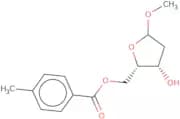
CAS:a-D-Mannopyranosyl amine is a synthetic product that is used as a sugar donor in glycosylation reactions. It can be custom synthesized to suit the needs of the customer. The chemical structure contains a methyl group and an oxygen atom, which are both in their highest oxidation state. This product is not intended for use as a food additive or dietary supplement.Fórmula:C6H13NO5Pureza:Min. 95%Peso molecular:179.17 g/molMethyl 2-deoxy-5-O-toluoyl-L-ribofuranoside
CAS:Methyl 2-deoxy-5-O-toluoyl-L-ribofuranoside is a high purity, custom synthesis, methylated, Glycosylation and Oligosaccharide. It has CAS No. 676598-19-9 and is Glycosylated and Methylated. This complex carbohydrate is a synthetic, monosaccharide or saccharide that can be modified with fluorination, Click modification or glycosylation.
Fórmula:C14H18O5Pureza:Min. 95%Cor e Forma:Brown oil.Peso molecular:266.3 g/molGlycosylceramide - from plant origin
CAS:Glucosylceramide (Glc-Cer) is the common precursor in the biosynthesis of most glycosphingolipids, with exception of some Gal-Cer derivatives, such as, GM4. Glucosylceramide consists of a glucosyl moiety which is β-O-glycosydically linked to ceramide, which itself, consists of the long-chain aminoalcohol sphingosine and a fatty acid. Glucosylceramide (also called glucocerebroside) is synthesised enzymatically, by the glucosylceramide synthase-catalysed with the addition of a glucose residue to ceramide. Glucosylceramide is involved in the regulation of various cellular events and also serves as a main constituent in liposome formulations.Fórmula:C40H75NO9Pureza:Min. 95%Peso molecular:714.02 g/molL-Lyxosamine HCl
L-Lyxosamine HCl is a synthetic monosaccharide that has been modified to contain a fluorine atom. L-Lyxosamine HCl is a methyl donor in the Methylation reaction and can be used as an intermediate for the synthesis of oligosaccharides and polysaccharides. This product is available in high purity, with an average yield of 97%. The CAS No. for this product is 590-81-6.Fórmula:C5H11NO4HClPureza:Min. 95%Peso molecular:185.61 g/molPachyman - from Poria cocos
CAS:Poria cocos is an edible medicinal fungus known as “Fuling” in Chinese that has been used as a Chinese traditional medicine for more than two thousand years. Polysaccharide material is the most abundant organic substance in the fungus, accounting for about 85% of the total and is a mixture of polysaccharides with the major component being Pachyman, a β-glucan with a 1,3 backbone and 1,6 side chains. It is reported that Pachyman has a wide range of biological activities including antitumour, immunomodulatory, anti-inflammatory and antioxidative properties. Pachyman is a beta-glucan with a 1,3 backbone and 1,6 side chains of fungal origin (Poria cocos). The image was kindly provided by Dr. Chris Lawson.Pureza:Min. 95%Cor e Forma:White Powder