Glicociência
Subcategorias de "Glicociência"
- Amino açúcares(108 produtos)
- Anticorpos Glico-Relacionados(283 produtos)
- Glicolípidos(46 produtos)
- Glicosaminoglicanos (GAGs)(55 produtos)
- Glicosídeos(419 produtos)
- Monossacáridos(6.617 produtos)
- Oligossacarídeos(3.718 produtos)
- Polissacáridos(505 produtos)
Foram encontrados 11021 produtos de "Glicociência"
2,3,5-Tri-O-benzyl-D-arabinofuranose
CAS:2,3,5-Tri-O-benzyl-D-arabinofuranose is a phosphorane that has been synthesised by the reaction of 2,3,5-trihydroxypentanoic acid and benzaldehyde. The synthesis of this compound involves the use of a stereoselective process to produce the desired product. This compound is able to inhibit both bacterial and fungal growth in vitro. Inhibition of bacterial growth is due to its ability to disrupt the synthesis of proteins and nucleic acids while the inhibition of fungal growth is due to its ability to interfere with chitin production.Fórmula:C26H28O5Pureza:Min. 95%Cor e Forma:White PowderPeso molecular:420.5 g/molb-D-Glucopyranosyl fluoride
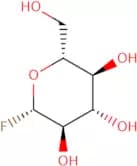
CAS:b-D-Glucopyranosyl fluoride is a kinetic inhibitor of the enzyme fatty acid synthase that is commonly found in human serum. It inhibits the activity of this enzyme by irreversible inhibition, which means that it binds to the active site of the enzyme and prevents it from functioning. The rate at which this inhibitor reacts with the enzyme depends on pH, as well as concentrations of other substances in solution, such as hydrogen fluoride and methyl glycosides. b-D-Glucopyranosyl fluoride has been shown to inhibit HIV infection by inhibiting viral maturation and protease activity. This drug also inhibits cell growth in culture by affecting cellular metabolism.Fórmula:C6H11FO5Pureza:Min. 95%Peso molecular:182.15 g/molL-Allose-6-phosphate disodium salt hydrate
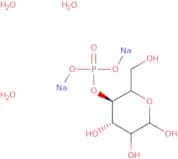
A sugar phosphateFórmula:C6H13O9P·Na2·3H2OPureza:Min. 95%Peso molecular:358.15 g/molNA3F N-Glycan
CAS:NA3F is a N-glycan that is found on various glycoproteins and glycolipids. It consists of sialic acid, galactose, and fucose sugars in the ratio 3:2:1. NA3F N-glycans are synthesized by the removal of the terminal sialic acid residue from an Asn-linked oligosaccharide precursor. These types of glycans are found on high mannose (HMan) and hybrid (HHyb) glycans. The synthesis of NA3F N-glycan requires the activity of two enzymes: peptidase and sialyltransferase. The enzyme peptidase cleaves an α(1,4)-linked oligosaccharide at the nonreducing end to form a free α(1,6) linked oligosaccharide with a terminal α(1,2) linked mannose residue. This process releases the terminal
Fórmula:C82H137N5O60Pureza:Min. 95%Peso molecular:2,152.96 g/mol2-Acetamido-6-azido-2,6-dideoxy-D-glucopyranose
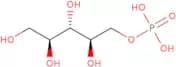
2-Acetamido-6-azido-2,6-dideoxy-D-glucopyranose is a synthetic compound with an azide functional handle, so set up for click chemistryFórmula:C8H14N4O5Pureza:Min. 95%Peso molecular:246.22 g/molD-Ribitol-5-phosphate
CAS:Ribitol is a sugar alcohol that is found in all living organisms. It is also used as a source of carbon and energy in the form of D-ribitol-5-phosphate, which can be synthesized from ribose 5-phosphate by means of an enzymatic reaction. Ribitol 5 phosphate is used for the synthesis of monoclonal antibodies, which are useful for studying enzyme activities, immunoassays, and cell surface receptors. This compound has been shown to have regulatory effects on the expression of genes encoding fatty acid biosynthesis enzymes. Ribitol 5 phosphate has been detected using magnetic resonance spectroscopy techniques in glycan structures and galacturonic acid residues.
Fórmula:C5H13O8PPureza:Min. 95%Peso molecular:232.13 g/mola-D-Glucopyranosyl azide
CAS:Please enquire for more information about a-D-Glucopyranosyl azide including the price, delivery time and more detailed product information at the technical inquiry form on this page
Fórmula:C6H11N3O5Peso molecular:205.17 g/molcis-Zeatin-o-glucoside
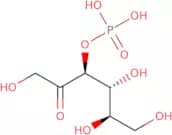
CAS:cis-Zeatin-o-glucoside is a naturally occurring cytokinin glycoside, which is a derivative of cis-zeatin conjugated with a glucose molecule. It is synthesized in various plant tissues and acts as an important signaling compound within the plant's hormonal network. The mode of action involves the regulation of cell division and differentiation, primarily through modulating the expression of specific genes and interacting with cytokinin receptors. This glycosylation potentially alters the transport, stability, and activity of the cytokinin, influencing its overall biological effect.Fórmula:C16H23N5O6Pureza:Min. 95%Cor e Forma:PowderPeso molecular:381.38 g/molFructose-3-phosphate sodium salt
CAS:Fructose-3-phosphate sodium salt is a reactive sugar molecule that belongs to the group of monosaccharides. It can be used as a cross-linking agent in polymerization reactions, such as those used in sample preparation for animal experiments or for magnetic resonance spectroscopy. Fructose-3-phosphate sodium salt is also used as a reactant in nephrology dialysis and has been shown to have beneficial effects on diabetic patients. This compound has the ability to increase the concentration of galactitol, a nonmetabolized form of glucose that can only be obtained from the diet. Galactitol is produced by the liver when blood glucose levels are high and helps to lower blood glucose levels through its action on insulin secretion and peripheral tissue sensitivity. Fructose-3-phosphate sodium salt may also act as an anti-inflammatory agent by inhibiting prostaglandin synthesis, which may be due to its inhibition of prostaglandin synthesis
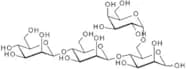
Pureza:Min. 95%a-D-Galactosyl-mannotriose
CAS:a-D-Galactosyl-mannotriose is a complex oligosaccharide, which is derived from plant materials such as leguminous seeds. Its mode of action involves selectively promoting the growth of beneficial gut bacteria, particularly bifidobacteria and lactobacilli, through its structural composition that resists hydrolysis by human digestive enzymes. This non-digestibility allows it to reach the colon intact, where it can exert its prebiotic effects.
Fórmula:C24H42O21Pureza:Min. 95 Area-%Cor e Forma:White PowderPeso molecular:666.58 g/molSalacinol
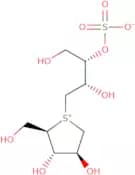
CAS:Salacinol is a naturally occurring sulfonium ion, which is a bioactive compound found primarily in the roots and stems of the plant Salacia reticulata. This plant is native to regions of South Asia, particularly India and Sri Lanka, and is traditionally used in Ayurvedic medicine. Salacinol's mode of action involves the inhibition of alpha-glucosidase, an enzyme responsible for breaking down carbohydrates into glucose. By inhibiting this enzyme, salacinol reduces the postprandial rise in blood glucose levels, thus demonstrating antidiabetic potential.
Fórmula:C9H18O9S2Pureza:Min. 95%Peso molecular:334.37 g/molAmmonium 8-azido-3,8-dideoxy-D-manno-octulosonate
Ammonium 8-azido-3,8-dideoxy-D-manno-octulosonate is an oligosaccharide that is a modification of the natural polysaccharide mannoheptulose. It has been shown to be highly soluble in water and can be easily synthesized. Ammonium 8-azido-3,8-dideoxy-D-manno-octulosonate has been shown to inhibit the activity of glycosyltransferases and methyltransferases. This compound also has a high degree of purity, with minimal impurities or degradation products.Pureza:Min. 95%Cellobiose-6'-phosphate
CAS:produced as the sodium saltFórmula:C13H25O14PPureza:Min. 95%Peso molecular:436.3 g/molGDP-6-deoxy-a-D-talose
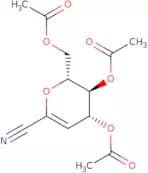
GDP-6-deoxy-a-D-talose is a synthetic oligosaccharide that can be modified to include fluorine, methylation, or other modifications. It has been synthesized for use in the modification of saccharides and complex carbohydrates. GDP-6-deoxy-a-D-talose is soluble in water and has a molecular weight of 519.Pureza:Min. 95%4,5,7-Tri-O-acetyl-2,6-anhydro-3-deoxy-D-lyxo-hept-2-enononitrile
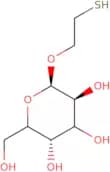
CAS:4,5,7-Tri-O-acetyl-2,6-anhydro-3-deoxy-D-lyxo-hept-2-enononitrile is a modified sugar molecule that has been synthesized and fluorinated. It has a high purity and can be custom synthesized to order. Click modification of this molecule is possible with the addition of a methyl group. This product is used in the synthesis of oligosaccharides and polysaccharides for glycosylation studies.Fórmula:C13H17NO7Pureza:Min. 95%Peso molecular:299.28 g/mol2-Thioethyl-β-D-glucopyranoside
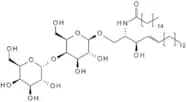
CAS:2-Thioethyl-b-D-glucopyranoside is a methylated saccharide with a molecular weight of 228.2 g/mol. It is soluble in water and aqueous solutions, and has an odorless taste. This compound is used as a synthetic intermediate for the preparation of other saccharides, such as starch, cellulose, and glycogen. 2-Thioethyl-b-D-glucopyranoside can be custom synthesized to meet your specifications.Fórmula:C8H16O6SPureza:Min. 95%Cor e Forma:White PowderPeso molecular:240.28 g/molDigalactosylceramide
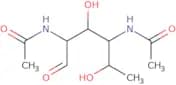
CAS:Digalactosylceramide is a bioactive glycosphingolipid, which is derived from the cellular membranes of certain bacteria and plants. This compound plays a significant role in modulating immune responses through its interaction with the immune system. Its mode of action involves binding to specific receptors on immune cells, influencing cell signaling pathways that are crucial for the regulation of the immune response, including the modulation of cytokine production and immune cell activation.Fórmula:C46H87NO13Pureza:Min. 95%Cor e Forma:PowderPeso molecular:862.18 g/mol2,4-Bis(acetylamino)-2,4,6-trideoxy-D-galactose
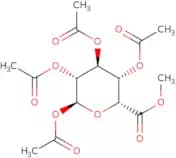
CAS:2,4-Bis(acetylamino)-2,4,6-trideoxy-D-galactose (BTDG) is a nitro derivative of L-threonine that has been derivatized with an acetyl group and a molecule of 2,4,6-trideoxygalactose. BTDG has been shown to be safe in clinical trials for vaccine development against life-threatening diseases. It is the first glycopolymer approved by the FDA for clinical use in humans. This drug has been shown to increase the antibody response and improve protection against influenza virus infection. BTDG also inhibits bacterial replication by blocking protein synthesis in some bacteria and inhibiting glycolysis in others.Fórmula:C10H18N2O5Pureza:Min. 95%Cor e Forma:PowderPeso molecular:246.26 g/molMethyl 1,2,3,4-tetra-O-acetyl-a-L-idopyranuronate
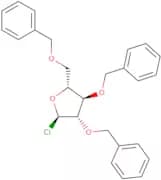
CAS:Methyl 1,2,3,4-tetra-O-acetyl-a-L-idopyranuronate is a carbohydrate standard that belongs to the group of L-iduronic acid derivatives. Methyl 1,2,3,4-tetra-O-acetyl-a-L-idopyranuronate is commonly used in the synthesis of glycosides and glycoconjugates. Its fluorescence properties make it useful for labeling and detection purposes in biochemical assays. This compound can also serve as a substrate for enzymes involved in carbohydrate metabolism. Overall, Methyl 1,2,3,4-tetra-O-acetyl-a-L-idopyranuronate is an essential tool for researchers in the field of glycobiology and biochemistry.Fórmula:C15H20O11Pureza:Min. 95%Peso molecular:376.31 g/mol2,3,5-Tri-O-benzyl-1-a-D-arabinofuranosyl chloride
CAS:2,3,5-Tri-O-benzyl-1-a-D-arabinofuranosyl chloride is a patent antibiotic produced by Streptomyces antibioticus. It has potent anticancer activity and is being developed as an antitumor agent. 2,3,5-Tri-O-benzyl-1-a-D-arabinofuranosyl chloride inhibits cell proliferation by inhibiting DNA synthesis and protein synthesis. This compound also induces programmed cell death (apoptosis) in tumor cells. Vidarabine is a nucleoside analog that can be used to treat herpes virus infections of the eye or genital tract. Vidarabine is chemically synthesized from 2,3,5 tri O benzyl d arabinofuranosyl chloride and has been shown to have potential antitumor activity.Fórmula:C26H27ClO4Pureza:Min. 95%Peso molecular:438.94 g/mol