Glicociência
A glicociência é o estudo dos carboidratos e seus derivados, bem como das interações e funções biológicas em que participam. Este campo de pesquisa é crucial para compreender uma ampla variedade de processos biológicos, incluindo o reconhecimento celular, a sinalização, a resposta imune e o desenvolvimento de doenças. A glicociência tem aplicações importantes na biotecnologia, na medicina e no desenvolvimento de novos medicamentos e terapias. Na CymitQuimica, oferecemos uma ampla seleção de produtos de alta qualidade e pureza para pesquisa em glicociência. Nosso catálogo inclui monossacarídeos, oligossacarídeos, polissacarídeos, glicoconjugados e reagentes específicos, projetados para apoiar os pesquisadores em seus estudos sobre a estrutura, função e aplicações dos carboidratos em sistemas biológicos. Esses recursos são destinados a facilitar descobertas científicas e aplicações práticas em diversas áreas das biociências e da medicina.
Subcategorias de "Glicociência"
- Amino açúcares(108 produtos)
- Anticorpos Glico-Relacionados(282 produtos)
- Glicolípidos(46 produtos)
- Glicosaminoglicanos (GAGs)(55 produtos)
- Glicosídeos(419 produtos)
- Monossacáridos(6.624 produtos)
- Oligossacarídeos(3.682 produtos)
- Polissacáridos(503 produtos)
Foram encontrados 11046 produtos de "Glicociência"
Ordenar por
Pureza (%)
0
100
|
0
|
50
|
90
|
95
|
100
1,2,4,6-Tetra-O-acetyl-3-O-(2,3,4,6-tetra-O-acetyl-a-D-galactopyranosyl)-D-galactopyranose
CAS:<p>1,2,4,6-Tetra-O-acetyl-3-O-(2,3,4,6-tetra-O-acetyl-aDgalactopyranosyl)-Dgalactopyranose is a modified sugar that can be synthesized by the Click chemistry reaction. It has been used in the modification of saccharides and polysaccharides. This product is CAS No. 123809-61-0 and is available for custom synthesis. 1,2,4,6 tetra O acetyl 3 O-(2 3 4 6 tetra O acetyl a D galactopyranosyl) D galactopyranose is a high purity carbohydrate with glycosylation and fluorination.<br>END> END></p>Fórmula:C28H38O19Pureza:Min. 95%Peso molecular:678.59 g/molα-D-Mannopyranosyl amine
CAS:a-D-Mannopyranosyl amine is a synthetic product that is used as a sugar donor in glycosylation reactions. It can be custom synthesized to suit the needs of the customer. The chemical structure contains a methyl group and an oxygen atom, which are both in their highest oxidation state. This product is not intended for use as a food additive or dietary supplement.Fórmula:C6H13NO5Pureza:Min. 95%Peso molecular:179.17 g/molIrbesartan N-b-D-glucuronide
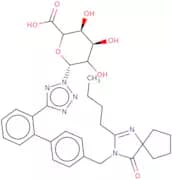
CAS:Irbesartan N-b-D-glucuronide is a complex carbohydrate that is a synthetic saccharide. It is an intermediate in the synthesis of irbesartan, which is an angiotensin II receptor antagonist. Irbesartan N-b-D-glucuronide has been shown to have antihypertensive properties, inhibiting the activity of the renin-angiotensin system and increasing blood flow to the kidneys. It also inhibits the growth of cancer cells. This compound can be custom synthesized for your specific needs and purities can be controlled to meet your specifications.Fórmula:C31H36N6O7Pureza:Min. 98 Area-%Cor e Forma:White PowderPeso molecular:604.65 g/molBenzyl 2-acetamido-2-deoxy-α-D-glucopyranoside
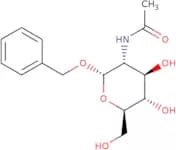
CAS:Benzyl 2-acetamido-2-deoxy-α-D-glucopyranoside is a synthetic compound with a molecular weight of 342.45 g/mol. It is a white to pale yellow crystalline solid that is soluble in water and methanol. The chemical formula for this compound is C12H14N2O6 and its structural formula is represented as CH2(COOCH3)COOC8H11O6. The CAS number for this compound is 13343-62-9, and the IUPAC name for it is benzyl 2-(2-acetamido)-2,3,4,5,6-pentaacetoxy αDglucopyranoside. This compound has been used in methylation reactions and click chemistry applications due to its ability to form stable carbonyl bonds with other molecules. Benzyl 2-(2-acetamido)-2,3,4,5,6Fórmula:C15H21NO6Pureza:Min. 98 Area-%Cor e Forma:White PowderPeso molecular:311.33 g/mol2,4-Dinitrophenyl 3,4,6-tri-O-acetyl-2-deoxy-2-fluoro-b-D-galactoside
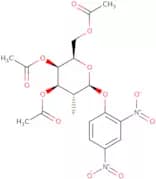
CAS:<p>2,4-Dinitrophenyl 3,4,6-tri-O-acetyl-2-deoxy-2-fluoro-b-D-galactoside is a glycosidase inhibitor that is used in the validation of β-glucosidases. It has been shown to inhibit the activity of a number of glycosidases, including α-, β-, and γ-. 2,4-Dinitrophenyl 3,4,6-tri-O-acetyl -2 -deoxy -2 -fluoro -b D galactoside inhibits the hydrolysis of oligosaccharides containing a terminal α-- or β--glucose moiety to produce smaller sugars. This compound can be used as an acceptor for spectrophotometric assays and as an analytical standard for measuring the degree of polymerization (DP) of oligosaccharides. The rate of its reaction with gly</p>Fórmula:C18H19FN2O12Pureza:Min. 95%Cor e Forma:PowderPeso molecular:474.35 g/molMan-3 Glycan, 2-AB labelled
2-AB labeled core pentasaccharide found in most N-linked oligosaccharides. Purified from the oligosaccharide pool released from bovine serum by hydrazinolysis using a combination of HPLC and glycosidase digestion.Pureza:Hplc.Cor e Forma:PowderD-Fructose-1,6-diphosphate trisodium
CAS:D-Fructose-1,6-diphosphate trisodium salt (D-FDP) is an ATP precursor that is used to study the effects of D-FDP on energy metabolism in rat cardiomyocytes. The results from this study showed that D-FDP increased ATP levels and inhibited the accumulation of intracellular lactate. This compound also inhibits ventricular myocardial hypertrophy induced by pressure overload in animal experiments. In addition, D-FDP has been shown to inhibit the polymerase chain reaction (PCR) process and to be active at a concentration of 25 mM.Fórmula:C6H14O12P2•Na3Pureza:Min. 99 Area-%Cor e Forma:PowderPeso molecular:409.09 g/mol1,2,3,4-Tetra-O-benzyl-6-O-trityl-a-D-mannopyranose
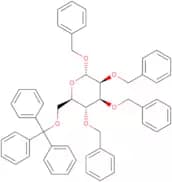
CAS:1,2,3,4-Tetra-O-benzyl-6-O-trityl-a-D-mannopyranose is a methylated form of mannopyranose. It can be custom synthesized and modified with various functional groups to produce a wide range of saccharide derivatives and oligosaccharides. The 1,2,3,4-tetra-O-benzyl group is commonly used for glycosylation reactions because it can be easily removed by acid hydrolysis. The methylation of the sugar molecule also increases its stability and prevents further reactions from occurring. This product is available in high purity and has been fluorinated on one or more hydroxyl groups to make it resistant to hydrolysis.Fórmula:C53H50O6Pureza:Min. 95%Cor e Forma:White PowderPeso molecular:782.96 g/molGlyco-diosgenin
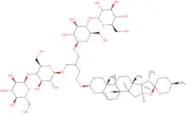
CAS:<p>Glyco-diosgenin is an amphipathic molecule that has been found to stabilize proteins. It has the potential to be developed as a drug target for stabilizing proteins in cells. Glyco-diosgenin was synthesized by chemical modification of diosgenin, which is a steroidal saponin found in plants. The chemical modification that occurred at the 3-hydroxyl position of glyco-diosgenin produced a more effective molecule due to increased solubility and decreased toxicity. The protein stabilization properties of glyco-diosgenin have been shown by cryo-electron microscopy on plant cells, titration calorimetry, and functional studies on various proteins.</p>Fórmula:C56H92O25Pureza:Min. 97 Area-%Cor e Forma:PowderPeso molecular:1,165.31 g/molLacto-N-neofucopentaose
<p>Neutral pentasasaccharide naturally present in human breast milk</p>Fórmula:C32H55NO25Pureza:Min. 90 Area-%Cor e Forma:PowderPeso molecular:853.77 g/molChondroitin disaccharide di-6S
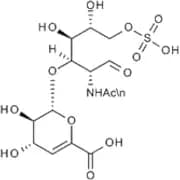
CAS:Chondroitin disaccharide di-6S (CDD6S) is a synthetic, fluorinated oligosaccharide that is used for glycosylation and modification of proteins, polysaccharides, and other biomolecules. It has been shown to be effective in inhibiting the growth of cancer cells by targeting the sugar moiety on cell surface receptors. CDD6S has been modified with methyl groups at various positions on the sugar chain to increase its activity against certain cancers.Fórmula:C14H21NO15SPureza:Min. 95%Peso molecular:475.38 g/molN-5-Carboxypentyl-1-deoxygalactonojirimycin
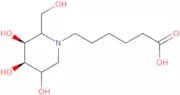
CAS:N-5-Carboxypentyl-1-deoxygalactonojirimycin is an inhibitor of glycolipid hydrolase and a potential drug for the treatment of lysosomal storage disorders. N-5-Carboxypentyl-1-deoxygalactonojirimycin is derived from the natural product galactonojirimycin, which has been shown to inhibit glycolipid hydrolase in vitro. The compound was developed by modifying the peptide sequence to increase its affinity for the enzyme. N-5-Carboxypentyl-1-deoxygalactonojirimycin displays a higher affinity for glycolipid hydrolase than galactonojirimycin, and it also has a greater inhibitory effect on this enzyme. N-5-Carboxypentyl-1-deoxygalactonojirimycin isFórmula:C12H23NO6Pureza:Min. 95%Cor e Forma:White PowderPeso molecular:277.31 g/mol1,3,4,6-Tetra-O-acetyl-2-azido-2-deoxy-D-galactopyranose
CAS:1,3,4,6-Tetra-O-acetyl-2-azido-2-deoxy-D-galactopyranose is a carbohydrate that has been shown to bind to the lectin domain of the human insulin receptor. This binding is thought to modulate the activity of this protein. The carbohydrate has also been shown to inhibit the uptake of galactose by pancreatic beta cells in vitro. 1,3,4,6-Tetra-O-acetyl-2-azido-2-deoxy-D-galactopyranose is postulated to have anti cancer properties and may be used as a blocker for tumor growth.Fórmula:C14H19N3O9Pureza:Min. 95%Cor e Forma:White PowderPeso molecular:373.32 g/mol6-Phosphogluconic acid trisodium
CAS:<p>6-Phosphogluconic acid trisodium is a synthetic, non-natural glycosylation product that is used as a building block in the synthesis of complex carbohydrates. It can be fluorinated or methylated, and modified with a click reaction to produce various derivatives. The compound has been shown to have high purity and is readily available from commercial suppliers.</p>Fórmula:C6H13O10P•Na3Pureza:Min. 95%Peso molecular:345.1 g/molMethyl 1-C-[4-chloro-3-[[4-[[(3S)-tetrahydro-3-furanyl]oxy]phenyl]methyl]phenyl]-a-D-glucopyranoside
CAS:Intermediate in the synthesis of empagliflozinFórmula:C24H29ClO8Pureza:Min. 95%Peso molecular:480.94 g/mol2,3,4,6-Tetra-O-benzyl-D-galactono-1,5-lactone
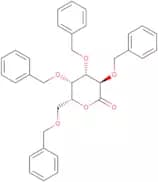
CAS:2,3,4,6-Tetra-O-benzyl-D-galactono-1,5-lactone is an aldehyde that has been synthesized from tert-butyl bromoacetate and ethynyl acetate in the presence of cesium carbonate. It is an exocyclic aldehyde that forms a cyclic ester with glycine. The synthetic pathway was stereoselective because the exocyclic double bond was only formed on one face of the molecule. This product can be used as an intermediate for the synthesis of glycine analogues and glycines.Fórmula:C34H34O6Pureza:Min. 95%Peso molecular:538.63 g/molNystatin A3
CAS:<p>8,9-Dideoxy-28,29-dihydro-7,10-dihydroxy-35-O-(2,6-dideoxy-L-ribo-hexopyranosyl)amphotericin B is an antifungal drug that belongs to the class of polyene macrolides. It is a potent inhibitor of Candida albicans and Candida glabrata. This compound has been shown to have synergistic effects when used in combination with nystatin against C. albicans. 8,9-Dideoxy-28,29-dihydro-7,10-dihydroxy-35O-(2,6 - dideoxy - L - ribo - hexopyranosyl)amphotericin B also inhibits toll like receptor 4 (TLR4), which is responsible for the induction of inflammatory cytokines such as IL1B and IL8</p>Fórmula:C53H85NO20Pureza:Min. 95%Peso molecular:1,056.24 g/molPseudaminic acid
Pseudaminic acid is a sugar molecule that is found in the cell walls of bacteria, where it provides structural support. It is synthesized enzymatically by transferring the terminal hydroxyl group from glucose-1-phosphate to glycerol-3-phosphate. Pseudaminic acid can be chemoenzymatically synthesized in a scalable manner and has been shown to inhibit the growth of infectious bacteria in biological studies. Structural studies have revealed that pseudaminic acid contains an hydroxyl group and two glycosidic bonds, which are formed between the carbon atom at position C2 and C6 of glucose. This molecule also has an ester linkage between C1 and C2 of mannose. Pseudaminic acid is biosynthesized through a series of reactions that involve phosphorylation, dephosphorylation, and oxidation. This molecule also participates in protein glycosylation as well as water molecules that hydrogen bondFórmula:C13H22N2O8Pureza:Min. 95%Cor e Forma:PowderPeso molecular:334.32 g/molOctanoyl b-D-glucosylamine
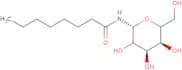
CAS:<p>Octanoyl b-D-glucosylamine is a synthetic compound that has been designed for use in the synthesis of complex carbohydrates. It is an octanoyl derivative of D-glucosamine, which is a sugar. This compound can be used for the modification of saccharides and polysaccharides, as well as sugars. It has been shown to be resistant to glycosylation and fluorination reactions.</p>Fórmula:C14H27NO6Pureza:Min. 95%Peso molecular:305.37 g/molLacto-N-neodifucohexaose
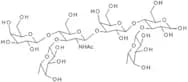
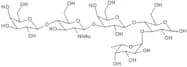
Neutral difucosylated hexasasaccharide naturally present in human breast milkFórmula:C38H65NO29Pureza:Min. 75%Cor e Forma:PowderPeso molecular:999.93 g/mol





![Methyl 1-C-[4-chloro-3-[[4-[[(3S)-tetrahydro-3-furanyl]oxy]phenyl]methyl]phenyl]-a-D-glucopyranosi…](/_next/image/?url=https%3A%2Fstatic.cymitquimica.com%2Fproducts%2F3D%2Fthumb-webp%2FMM137435.webp&w=3840&q=75)