Glicociência
A glicociência é o estudo dos carboidratos e seus derivados, bem como das interações e funções biológicas em que participam. Este campo de pesquisa é crucial para compreender uma ampla variedade de processos biológicos, incluindo o reconhecimento celular, a sinalização, a resposta imune e o desenvolvimento de doenças. A glicociência tem aplicações importantes na biotecnologia, na medicina e no desenvolvimento de novos medicamentos e terapias. Na CymitQuimica, oferecemos uma ampla seleção de produtos de alta qualidade e pureza para pesquisa em glicociência. Nosso catálogo inclui monossacarídeos, oligossacarídeos, polissacarídeos, glicoconjugados e reagentes específicos, projetados para apoiar os pesquisadores em seus estudos sobre a estrutura, função e aplicações dos carboidratos em sistemas biológicos. Esses recursos são destinados a facilitar descobertas científicas e aplicações práticas em diversas áreas das biociências e da medicina.
Subcategorias de "Glicociência"
- Amino açúcares(108 produtos)
- Anticorpos Glico-Relacionados(282 produtos)
- Glicolípidos(46 produtos)
- Glicosaminoglicanos (GAGs)(55 produtos)
- Glicosídeos(419 produtos)
- Monossacáridos(6.624 produtos)
- Oligossacarídeos(3.682 produtos)
- Polissacáridos(503 produtos)
Foram encontrados 11046 produtos de "Glicociência"
Ordenar por
Pureza (%)
0
100
|
0
|
50
|
90
|
95
|
100
Forodesine
CAS:<p>Forodesine is a purine nucleoside that inhibits the nucleoside phosphorylase enzyme and prevents the synthesis of purines. It has minimal toxicity and is effective against intracellular targets such as mitochondria, which are important for apoptosis induction. Forodesine also inhibits the mcl-1 protein, which is an inhibitor of t-cell lymphomas. This drug has been shown to be effective in animal models of human lymphoma and leukemia.</p>Fórmula:C11H14N4O4Pureza:Min. 95%Cor e Forma:PowderPeso molecular:266.25 g/molMethyl 2-azido-3,4,6-tri-O-acetyl-2-deoxy-b-D-mannopyranoside
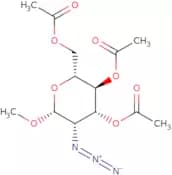
CAS:<p>Methyl 2-azido-3,4,6-tri-O-acetyl-2-deoxy-bD mannoside is a custom synthesis that can be modified to suit the needs of the customer. It is an oligosaccharide and polysaccharide that has been modified with methylation and glycosylation. This product has CAS No. 97604-59-6 and is available for purchase in high purity with a purity level of at least 95%. Methyl 2-azido-3,4,6-triO acetyl -2 deoxy b D mannoside has been fluorinated to create a synthetic sugar.</p>Fórmula:C13H19N3O8Pureza:Min. 95%Cor e Forma:White PowderPeso molecular:345.31 g/molN-Acetylmuramic acid 6-phosphate
CAS:N-Acetylmuramic acid 6-phosphate is a molecule that belongs to the class of compounds known as nucleotide phosphates. It is an intermediate in the biosynthesis of peptidoglycan, which is a major component of bacterial cell walls. N-Acetylmuramic acid 6-phosphate is synthesized from ATP and N-acetylmuramic acid by hydrolysis. The reaction mechanism for this transformation involves an imine intermediate, which can be formed through the action of two molecules of ATP and one molecule of N-acetylmuramic acid. This reaction is catalyzed by an enzyme called heterocyst. The enzyme kinetics for this transformation are influenced by many factors, including temperature, pH, and substrate concentration.Fórmula:C11H20NO11PPureza:Min. 95%Peso molecular:373.25 g/mol2-N-Chloroacetyl-2-deoxy-D-glucosamine
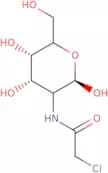
CAS:<p>2-N-Chloroacetyl-2-deoxy-D-glucosamine is a high purity synthetic molecule that is custom synthesized to meet your needs. This product is a sugar with the following Click modification, fluorination, glycosylation, and methylation. 2-N-Chloroacetyl-2-deoxy-D-glucosamine has CAS No. 1334320-67-0. The molecular weight of this compound is 514.25 g/mol. This product can be used in the synthesis of oligosaccharides and monosaccharides as well as saccharides, which are complex carbohydrates.</p>Fórmula:C8H14ClNO6Pureza:Min. 95%Cor e Forma:PowderPeso molecular:255.65 g/mol3-Azido-3-deoxy-1,2-O-isopropylidene-a-D-ribofuranose
CAS:<p>3-Azido-3-deoxy-1,2-O-isopropylidene-a-D-ribofuranose is a synthetic carbohydrate that contains fluorine and is used as a glycosylation and methylation reagent. It has been shown to react with various saccharides, including glucose, maltose, lactose, sucrose, and cellobiose. In addition to its use in glycosylation reactions, 3-azido-3-deoxy-1,2-O-isopropylidene -a D ribofuranose can be used for click chemistry. This reagent is available in high purity and is synthesized from the natural sugar ribofuranose.</p>Pureza:Min. 95%D-Fructose-1,6-diphosphate dibarium
CAS:D-Fructose-1,6-diphosphate dibarium salt is a synthetic sugar that is used in the synthesis of oligosaccharides and polysaccharides. This compound can be custom synthesized to meet your specifications. D-Fructose-1,6-diphosphate dibarium salt has been shown to be soluble in water, ethanol, acetone, and chloroform. D-Fructose-1,6-diphosphate dibarium salt is a fluorinated carbohydrate with a purity of 99%. It can be modified with methylation or click modification for further applications.Fórmula:C6H14O12P2•(Ba)2Pureza:Min. 95%Cor e Forma:PowderPeso molecular:614.75 g/molN-Acetylneuraminic acid hexamer disodium salt
N-Acetylneuraminic acid hexamer disodium salt is a custom synthesis of a fluorinated, methylated and acetylated N-acetylneuraminic acid. This molecule is an oligosaccharide with three sugar rings. It has been modified by click chemistry and glycosylation to create a complex carbohydrate. The CAS number for this compound is 156587-48-2.Fórmula:C66H98N6O49Na6Pureza:Min. 95%Cor e Forma:White PowderPeso molecular:1,897.43 g/molMethyl b-D-fructofuranoside
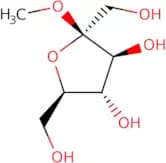
CAS:<p>Methyl b-D-fructofuranoside is a chemical compound that is used in the production of esters and fatty acids. Methyl b-D-fructofuranoside is produced by a dehydration reaction between two molecules of acetone. The product of this reaction, methyl b-D-fructopyranoside, can be broken down into two molecules of acetone and one molecule each of methyl alcohol and carbon dioxide. This process is called alkylation. Furanocoumarin derivatives are often found in plants such as asperulosidic acid and quinquefasciatus. These compounds are found in many species of plant, but they are most concentrated in the roots of these plants because they are more metabolically active there than other parts of the plant. Environmental pollution can lead to high concentrations of furanocoumarins in plants, which can have toxic effects on organisms that come into contact with them.</p>Fórmula:C7H14O6Pureza:Min. 98 Area-%Cor e Forma:Clear LiquidPeso molecular:194.18 g/molN-Propionyl-D-glucosamine
CAS:N-Propionyl-D-glucosamine is a sugar used in the synthesis of peptidoglycan, a structural component of bacterial cell walls. N-Propionyl-D-glucosamine is synthesized from formaldehyde and propionic acid. It is used as an antibiotic to treat bacterial infections caused by Gram-positive bacteria such as streptococci and staphylococci. N-Propionyl-D-glucosamine has also been shown to have anti-fungal properties against Candida albicans and Saccharomyces cerevisiae. The biosynthesis of this compound takes place through phosphorylation of the amide group on the sugar residue, which is catalyzed by a number of enzymes including phosphotransacetylase, acetate kinase, and phosphoenolpyruvate synthase. This process requires ATP, phosphate ions, ammonium ion, and water molecules.Fórmula:C9H17NO6Pureza:Min. 95%Cor e Forma:White PowderPeso molecular:235.23 g/molα-D-Mannopyranosyl amine
CAS:<p>a-D-Mannopyranosyl amine is a synthetic product that is used as a sugar donor in glycosylation reactions. It can be custom synthesized to suit the needs of the customer. The chemical structure contains a methyl group and an oxygen atom, which are both in their highest oxidation state. This product is not intended for use as a food additive or dietary supplement.</p>Fórmula:C6H13NO5Pureza:Min. 95%Peso molecular:179.17 g/mol1,4:3,6-Dianhydro-L-iditol
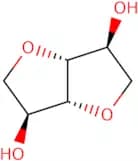
CAS:<p>1,4:3,6-Dianhydro-L-iditol is a synthetic compound that is used in pharmaceutical preparations and tissue culture. It has been shown to inhibit the growth of bacteria such as Staphylococcus aureus and Mycobacterium tuberculosis in vitro assays. The synthesis of 1,4:3,6-dianhydro-L-iditol involves intramolecular hydrogenation of fatty acids with alkanoic acids and the use of solid catalysts.</p>Fórmula:C6H10O4Pureza:Min. 95%Peso molecular:146.14 g/molOctyl D-glucopyranoside
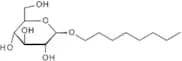
CAS:<p>Octyl D-glucopyranoside is a glucoside that is used as an analytical reagent. It has been shown to have detergent properties and can be used for the extraction of proteins. Octyl D-glucopyranoside also has a high binding affinity for guanine nucleotides, protein, and glycol ethers. The rate constant for the reaction between octyl D-glucopyranoside with the guanine nucleotide was found to be 0.25 x 10^(-5) s^(-1). This product can be used in biochemical research and chromatographic analysis.</p>Fórmula:C14H28O6Pureza:Min. 98 Area-%Cor e Forma:White PowderPeso molecular:292.37 g/molD-Glucoheptono-1,4-lactone
CAS:Please enquire for more information about D-Glucoheptono-1,4-lactone including the price, delivery time and more detailed product information at the technical inquiry form on this pageFórmula:C7H12O7Pureza:Min. 95%Peso molecular:208.17 g/mol1,3,4,6-Tetra-O-acetyl-2-O-benzyl-a-D-mannopyranose
CAS:1,3,4,6-Tetra-O-acetyl-2-O-benzyl-a-D-mannopyranose (1) is a high purity monosaccharide that can be custom synthesized to meet the needs of your research. 1 is a synthetic compound that is fluorinated and glycosylated. It has been shown to be an efficient methylation and modification agent for saccharide synthesis. It also acts as a building block for oligosaccharides and complex carbohydrates.Fórmula:C21H26O10Pureza:Min. 95%Peso molecular:438.43 g/molMethyl 2-hydroxyethyl cellulose
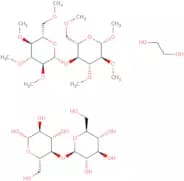
CAS:Produto ControladoMethyl 2-hydroxyethyl cellulose (MEC) is a synthetic substance that is used as a thickening and emulsifying agent in many products, including foods, pharmaceuticals, and cosmetics. MEC has been shown to inhibit the activity of certain enzymes, such as amylase, lipase, and protease. In addition to these properties, MEC is also known for its high degree of thermal stability and light resistance. This product can be used in a wide range of applications due to its versatility and low cost.Fórmula:C34H66O24Pureza:Min. 95%Cor e Forma:White/Off-White SolidPeso molecular:858.87 g/molGlyco-diosgenin
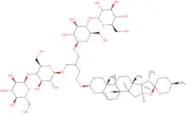
CAS:<p>Glyco-diosgenin is an amphipathic molecule that has been found to stabilize proteins. It has the potential to be developed as a drug target for stabilizing proteins in cells. Glyco-diosgenin was synthesized by chemical modification of diosgenin, which is a steroidal saponin found in plants. The chemical modification that occurred at the 3-hydroxyl position of glyco-diosgenin produced a more effective molecule due to increased solubility and decreased toxicity. The protein stabilization properties of glyco-diosgenin have been shown by cryo-electron microscopy on plant cells, titration calorimetry, and functional studies on various proteins.</p>Fórmula:C56H92O25Pureza:Min. 97 Area-%Cor e Forma:PowderPeso molecular:1,165.31 g/mol3,6’-Disinapoyl sucrose
CAS:3,6’-Disinapoyl sucrose is a saponin that has been shown to be neuroprotective and antidepressant. It is also able to increase the absorption of drugs in the gastrointestinal tract. 3,6’-Disinapoyl sucrose was found to have neurotrophic effects on neurons and inhibit glutamate-induced excitotoxicity. 3,6’-Disinapoyl sucrose has been shown to inhibit the mineralocorticoid receptor in vitro and may be useful as an antihypertensive agent. 3,6’-Disinapoyl sucrose can be used for clinical use in the treatment of depression and other neurological disorders such as Alzheimer's disease.Fórmula:C34H42O19Pureza:Min. 95%Cor e Forma:PowderPeso molecular:754.69 g/molγ-Cyclodextrin hydrate
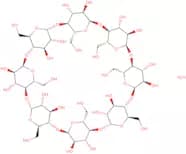
CAS:Gamma-cyclodextrin (γ-CD) is a cyclic oligosaccharide composed of eight glucose units, featuring a larger cavity size than α- and β-cyclodextrins. This structural characteristic allows γ-CDs to form inclusion complexes with a wider range of guest molecules, making it particularly versatile in various industries. In the food sector, it is used as a carrier and stabilizer for flavors, fat-soluble vitamins, and polyunsaturated fatty acids, protecting volatile compounds from evaporation. In pharmaceuticals, it enhances the solubility and bioavailability of poorly water-soluble drugs and, thanks to its larger ring size, allows for the encapsulation of larger molecules or even entire drug molecules. γ-CDs and derivatives are also used for environmental remediation and, in analytical chemistry, for the extraction and concentration of target substances.Fórmula:C48H80O40•(H2O)xPureza:Min. 95%Cor e Forma:PowderPeso molecular:1,297.12 g/molGlobotriaosylsphingosine
CAS:<p>Globotriaosylsphingosine is dramatically increased in plasma of classically affected male Fabry patients and plasma and tissues of Fabry mice. Globotriaosylsphingosine was shown to be an inhibitor of α-galactosidase A activity. Furthermore, exposure of smooth muscle cells, but not fibroblasts, to globotriaosylsphingosine at concentrations observed in plasma of patients promotes proliferation. It was suggested that measurement of circulating globotriaosylsphingosine would be useful to monitor Fabry disease and may contribute to a better understanding of the disorder.</p>Fórmula:C36H67NO17Pureza:Min. 95%Cor e Forma:PowderPeso molecular:785.91 g/molDifucosyl-para-lacto-N-hexaose II
CAS:Difucosyl-para-lacto-N-hexaose II is a blood group oligosaccharideFórmula:C52H88N2O39Pureza:Min. 95%Cor e Forma:White Off-White PowderPeso molecular:1,365.25 g/mol