Glicociência
Subcategorias de "Glicociência"
- Amino açúcares(108 produtos)
- Anticorpos Glico-Relacionados(284 produtos)
- Glicolípidos(46 produtos)
- Glicosaminoglicanos (GAGs)(55 produtos)
- Glicosídeos(419 produtos)
- Monossacáridos(6.622 produtos)
- Oligossacarídeos(3.691 produtos)
- Polissacáridos(506 produtos)
Foram encontrados 11036 produtos de "Glicociência"
(2R,3R,4S,5R,6S)-3,4,5-Trihydroxy-2-hydroxymethyl-7,9-diaza-1-oxa-spiro[4,5]decane-10-one-8-thione
CAS:(2R,3R,4S,5R,6S)-3,4,5-Trihydroxy-2-hydroxymethyl-7,9-diaza-1-oxa-spiro[4,5]decane-10-one-8-thione is a custom synthesis of a polysaccharide. It has been modified to include fluorination and methylation. The monosaccharides present are glucose and galactose. This polysaccharide also has a saccharide linkage to an oligosaccharide that contains glycosylation sites for sugar groups.
Fórmula:C8H12N2O6SPureza:Min. 95%Peso molecular:264.26 g/mol2-Bromoethyl a-L-fucopyranoside
This compound is a modification of the 2-bromoethyl a-L-fucopyranoside. It is an oligosaccharide that is a carbohydrate. It is made up of many monosaccharides, which are sugar molecules linked together. This modified carbohydrate has been synthesized from other carbohydrates and then fluorinated to make it more stable.
Pureza:Min. 95%Sodium carboxymethyl cellulose, viscosity 50-200 cps
CAS:Please enquire for more information about Sodium carboxymethyl cellulose, viscosity 50-200 cps including the price, delivery time and more detailed product information at the technical inquiry form on this page
Ref: 3D-YS184483
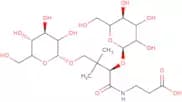
Produto descontinuadoPantothenic acid 2,4-di-O-b-D-galactopyranoside
Pantothenic acid 2,4-di-O-b-D-galactopyranoside is a custom synthesis of Methylated Pantothenic Acid 2,4-Di-O-b-D-Galactopyranoside. The compound is an oligosaccharide composed of two glucose molecules and one galactose molecule. It contains a fluorine atom at the 4th position of the sugar chain. This modification was made to increase the solubility in water. Pantothenic acid 2,4-di-O-b-D-galactopyranoside can be used in industry as a food additive or pharmaceutical intermediate.
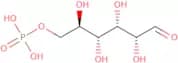
Fórmula:C21H37NO15Pureza:Min. 95%Peso molecular:543.52 g/molD-Glucose 6-phosphate - Powder
CAS:D-glucose 6-phosphate is an intermediate in the hexose monophosphate shunt pathway. It is formed by the enzyme phosphoglucomutase from D-glucose 1-phosphate and UTP. D-glucose 6-phosphate is also an important intermediate in glycolysis. The conversion of D-glucose 6-phosphate to glucose 1,6-bisphosphate occurs through a series of reactions catalyzed by enzymes that are sensitive to inhibition by magnesium ions. These reactions include the phosphofructokinase, hexokinase, and pyruvate kinase reactions. The accumulation of glucose 6-phosphate leads to increased levels of lactate production and decreased levels of ATP production. This may be due to its ability to inhibit monoamine reuptake, which would lead to decreased synthesis of dopamine and serotonin.
Fórmula:C6H13O9PPureza:Min. 95%Cor e Forma:PowderPeso molecular:260.14 g/molRef: 3D-FD158897
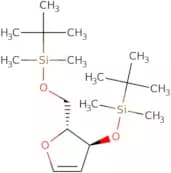
Produto descontinuado1,4-Anhydro-2-deoxy-3,5-bis-O-(t-butyldimethylsilyl)-D-erythro-pent-1-enitol
CAS:1,4-Anhydro-2-deoxy-3,5-bis-O-(t-butyldimethylsilyl)-D-erythro-pent-1-enitol is a custom synthesis that has been fluorinated. It is a high purity oligosaccharide with a complex carbohydrate structure. This product was synthesized by click modification and methylation of the saccharide. It is a monosaccharide and sugar with a molecular formula C8H14FNO6S.Fórmula:C17H36O3Si2Pureza:Min. 95%Cor e Forma:Clear LiquidPeso molecular:344.64 g/molRef: 3D-MA06401
Produto descontinuadoHydroxyethyl Starch (HES) 450/0.7
CAS:Please enquire for more information about Hydroxyethyl Starch (HES) 450/0.7 including the price, delivery time and more detailed product information at the technical inquiry form on this page
Fórmula:(C6H10O5)m•(C2H5O)nRhamnolipids C8-C8
CAS:Rhamnolipids C8-C8 are a group of lipids that are produced by the bacterium Burkholderia cepacia. They have been shown to have a strong ability to bind to and remove substances from water, such as heavy metals, lignin, and polychlorinated biphenyls. Rhamnolipids C8-C8 can be used in industrial settings for wastewater treatment or in the environment for bioremediation of pollutants. The physicochemical properties of rhamnolipids C8-C8 are determined by their composition of fatty acids and their degree of unsaturation. These properties can vary depending on the origin of the bacteria producing them.
Fórmula:C22H40O9Pureza:Min. 95%Peso molecular:448.55 g/molGM2-Oligosaccharide-spacer-NH2 ammonium
GM2-Oligosaccharide-spacer-NH2 ammonium is a complex carbohydrate with an oligosaccharide spacer and a hydrophobic NH2 group. The product is custom synthesized to your specifications and is available in high purity. It can be modified with fluorination or click chemistry. GM2-Oligosaccharide-spacer-NH2 ammonium is used in the synthesis of polysaccharides, saccharides, and carbohydrates. Some of its applications include modifying proteins, monosaccharides, and sugars.
Fórmula:C44H75N7O27·NH3Pureza:Min. 95%Peso molecular:1,151.13 g/molAzo-Xyloglucan
Dyed and soluble azo-xyloglucan (tamarind) is used for the measurement of enzyme activity, research, biochemical enzyme assays and in vitro diagnostic analysis. It is a soluble chromogenic substrate for the assaying of endo-cellulase.
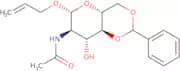
Pureza:Min. 95%Allyl 2-acetamido-4,6-O-benzylidene-2-deoxy-b-D-glucopyranoside
CAS:Allyl 2-acetamido-4,6-O-benzylidene-2-deoxy-b-D-glucopyranoside is a synthetic compound that belongs to the class of carbohydrates. It is used as a reagent in sugar chemistry and glycosylation reactions. Allyl 2-acetamido-4,6-O-benzylidene-2-deoxy-b-D-glucopyranoside is also used for the modification of polysaccharides and fluorination reactions. This product has been shown to be effective as a substrate for site specific methylation reactions. Allyl 2 acetamido 4,6 O benzylidene 2 deoxy b D glucopyranoside has been tested in vitro against methicillin resistant Staphylococcus aureus (MRSA) with promising results.
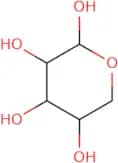
Fórmula:C18H23NO6Pureza:Min. 95%Peso molecular:349.39 g/molD-Ribose-2,3,4,5-13C4
CAS:D-Ribose-2,3,4,5-13C4 is a complex carbohydrate with saccharide units. It is synthesized by the chemical modification of D-ribose. This product can be used to modify or methylate glucose and other carbohydrates. It has been shown to inhibit the formation of amyloid plaques in Alzheimer's disease, which may be due to its ability to reduce nitric oxide and reactive oxygen species levels. The purity of this product is at least 98%.
Fórmula:C5H10O5Pureza:Min. 95%Peso molecular:154.1 g/molRef: 3D-DUA50623
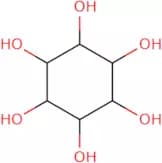
Produto descontinuadoMyo-inositol-d6
CAS:Myo-inositol-d6 is a stable isotope of myo-inositol. It is used to monitor the biosynthesis of myo-inositol in yeast cells. Myo-inositol is a carbohydrate that has regulatory functions in yeast cells. Myo-inositol-d6 can be used as an extracellular bioassay for determining the uptake and intracellular distribution of myo-inositol in mammalian cells.
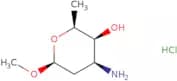
Fórmula:C6H12O6Pureza:Min. 95%Cor e Forma:PowderPeso molecular:186.19 g/molMethyl b-L-daunosaminide HCl
CAS:Methyl b-L-daunosaminide HCl is a glycoconjugate that has been custom synthesized by our team. It is a complex carbohydrate that has been modified with glycosylation and methylation groups. Methyl b-L-daunosaminide HCl is an oligosaccharide that contains multiple saccharides linked together in a specific order. It is also fluorinated at the C4 position, which makes it more stable in water. Methyl b-L-daunosaminide HCl has high purity, making it suitable for use in the modification of other compounds or as a research tool for studying glycosylations.
Fórmula:C7H15NO3·HClPureza:Min. 95%Peso molecular:197.66 g/molRef: 3D-MM04967
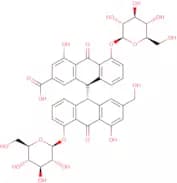
Produto descontinuadoSennoside D
CAS:Sennoside D is a fatty acid that can be isolated from the sennosides found in the leaves of the plant Senna alata. It has been shown to have anti-tumor properties and may play a role in treating colon cancer, breast cancer, and skin cancer. Sennoside D has also been shown to be effective against autoimmune diseases such as arthritis, ulcerative colitis, and Crohn's disease. The low energy of this compound may be due to its formation rate. The hydroxide solution (NaOH) is used in the synthesis of this molecule because it binds with carbon dioxide molecules to form sodium bicarbonate and carbon dioxide gas which can then be captured by water. This process produces a high yield of sennoside D. In addition, the bound form of this molecule is soluble in organic solvents and insoluble in water, which makes it suitable for skin conditions as well as colon cancer treatments.
Pureza:Min. 95%Cor e Forma:SolidRef: 3D-MS74108
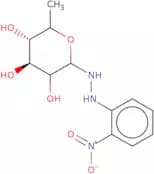
Produto descontinuadoFucose 2-nitrophenylhydrazone
Fucose 2-nitrophenylhydrazone is a custom synthesis that is a modification of fucose. It has been used in methylation, click modification, and fluorination. This compound has been shown to be effective in the synthesis of oligosaccharides and polysaccharides. Fucose 2-nitrophenylhydrazone has also been used as an intermediate for the synthesis of saccharides such as monosaccharide and sugar.
Fórmula:C12H17N3O6Pureza:Min. 95%Peso molecular:299.11174UDP-2-ketopropyl-a-D-galactose
UDP-2-ketopropyl-a-D-galactose is a synthetic compound that belongs to the group of oligosaccharides. It is an excellent candidate for glycosylation, methylation, and click modification. The product has a CAS number, which provides high purity and custom synthesis. The product is also a complex carbohydrate with a variety of modifications.
Pureza:Min. 95%2-epi-(-)-emtricitabine
CAS:2-epi-(-)-emtricitabine is an analog of the nucleoside cytidine, which inhibits the phosphorylation and subsequent degradation of deoxycytidine kinase, thereby blocking the production of the viral DNA polymerase. The compound also inhibits tyrosine kinases, which are enzymes that play a vital role in cell signaling. This inhibition may contribute to its antiviral activity. 2-epi-(-)-emtricitabine has been shown to inhibit human immunodeficiency virus (HIV) replication in vitro and in vivo. It is a prodrug that is converted to emtricitabine, its active form, by deoxycytidine kinase and then hydrolyzed by esterases. 2-epi-(-)-emtricitabine has been shown to be effective against hepatitis B virus and cancer cells.
Fórmula:C8H10FN3O3SPureza:Min. 95%Peso molecular:247.25 g/molRef: 3D-ME16711
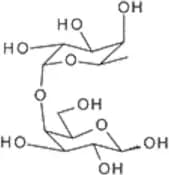
Produto descontinuado4-O-(α-L-Fucopyranosyl)-D-galactopyranose
CAS:4-O-(a-L-Fucopyranosyl)-D-galactopyranose is a glycosidic sugar that has an alpha-1,3 linkage and a galactose residue. The sequence of this sugar is the same as that of D-galactose. 4-O-(a-L-Fucopyranosyl)-D-galactopyranose belongs to the group of carbohydrates. It is found in plants, animals, or fungi and can be used as a precursor for the synthesis of many other compounds.
Fórmula:C12H22O10Pureza:Min. 95%Cor e Forma:PowderPeso molecular:326.3 g/mol2,3,5-Tri-O-p-chlorobenzyl-L-fucopyranoside
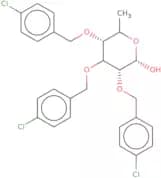
CAS:2,3,5-Tri-O-p-chlorobenzyl-L-fucopyranoside is a modified sugar and an effective inhibitor of the glycosidase enzymes. It has been shown to inhibit the synthesis of glycogen in vitro. 2,3,5-Tri-O-p-chlorobenzyl-L-fucopyranoside is a major component of commercially available agarose gel electrophoresis buffers and is also used for modification of proteins by click chemistry. The compound can be custom synthesised with a high degree of purity and can be fluorinated for use in mass spectrometry.
Fórmula:C27H27Cl3O5Pureza:Min. 95%Peso molecular:537.86 g/mol
![(2R,3R,4S,5R,6S)-3,4,5-Trihydroxy-2-hydroxymethyl-7,9-diaza-1-oxa-spiro[4,5]decane-10-one-8-thione](/_next/image/?url=https%3A%2Fstatic.cymitquimica.com%2Fproducts%2F3D%2Fthumb-webp%2FMT01909.webp&w=3840&q=75)