Glicociência
Subcategorias de "Glicociência"
- Amino açúcares(108 produtos)
- Anticorpos Glico-Relacionados(284 produtos)
- Glicolípidos(46 produtos)
- Glicosaminoglicanos (GAGs)(55 produtos)
- Glicosídeos(419 produtos)
- Monossacáridos(6.622 produtos)
- Oligossacarídeos(3.701 produtos)
- Polissacáridos(505 produtos)
Foram encontrados 11034 produtos de "Glicociência"
Methyl 2-deoxy-2-fluoro-β-D-glucopyranoside
CAS:Methyl 2-deoxy-2-fluoro-b-D-glucopyranoside is a synthetic glycosylation product that is prepared by monosaccharide and polysaccharide modification. This fluorinated sugar has high purity and is easy to handle. It can be used in the synthesis of oligosaccharides, sugar chains, and other complex carbohydrate molecules. The CAS number for Methyl 2-deoxy-2-fluoro-b-D-glucopyranoside is 39110–58–2.Fórmula:C7H13FO5Pureza:Min. 95%Peso molecular:196.17 g/mol4-O-{[(6-Azidoethoxy)ethoxy]ethyl}-β-D-galactopyranosyl-2-deoxy-α-D-glucopyranose-2,1-oxazoline
CAS:Please enquire for more information about 4-O-{[(6-Azidoethoxy)ethoxy]ethyl}-β-D-galactopyranosyl-2-deoxy-α-D-glucopyranose-2,1-oxazoline including the price, delivery time and more detailed product information at the technical inquiry form on this page
Fórmula:C20H34N4O12Pureza:Min. 95%Peso molecular:522.5 g/molRef: 3D-OA183929
Produto descontinuadoD-glucosyl--1,1' N-oleoyl-D-erythro-sphingosine
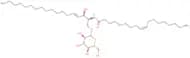
CAS:D-glucosyl--1,1' N-oleoyl-D-erythro-sphingosine is a synthetic oligosaccharide with a fluorinated alpha-hydroxy group and a methylated nitrogen atom. It is also a complex carbohydrate that has been modified by glycosylation and polysaccharide modification. D-glucosyl--1,1' N-oleoyl-D-erythro-sphingosine can be used in custom synthesis, click modification, methylation, and sugar modification. This product has high purity and can be used in the synthesis of drugs or other chemical compounds.Fórmula:C42H79NO8Pureza:Min. 95%Peso molecular:726.08 g/mol2,4-O-Benzylidene-L-xylose
CAS:2,4-O-Benzylidene-L-xylose is a white crystalline powder with a melting point of about 125°C. It is an acetate salt that can be used in the synthesis of many natural products. It has been shown to inhibit HMG-CoA reductase and is used in the treatment of hypercholesterolemia. The reaction mechanism for this compound is not well understood, but it is believed to involve an acid catalyst and an organic solvent. The yield for this compound is low and it requires a long reaction time due to its high reactivity.
Fórmula:C12H14O5Pureza:Min. 95%Peso molecular:238.24 g/molRef: 3D-MB06850
Produto descontinuado(-)-2,3-O-Isopropylidene-D-threitol
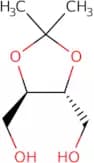
CAS:(-)-2,3-O-Isopropylidene-D-threitol is a chiral compound with two stereoisomers. It is a crystalline solid that melts at 71°C and has a population of 50%. (-)-2,3-O-Isopropylidene-D-threitol is an important intermediate for the synthesis of polyethers with chiral centers. The catalytic asymmetric synthesis of (-)-2,3-O-isopropylidene-D-threitol is achieved by alkylation of (+)-2,3-(dimethoxyphosphinyl)propane with isopropanol. This reaction can be used to produce polyethers with chiral centers in high yields and enantioselectivity.
Fórmula:C7H14O4Pureza:Min. 95%Peso molecular:162.18 g/molRef: 3D-MI05357
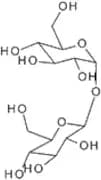
Produto descontinuadoα,β-Trehalose
CAS:α,β-Trehalose is a carbohydrate that is found in many organisms and has been shown to have biochemical properties such as energy metabolism, enzyme activities, and x-ray diffraction data. Trehalose has a phase transition temperature of around 98°C, which makes it an ideal sugar for food preservation. Trehalose can also be used as a sugar substitute with the same sweetness level as sucrose. The chemical stability of trehalose allows it to be used as a preservative in food and beverages. Trehalose has been shown to be nontoxic in animal studies with doses up to 2000 mg/kg body weight. It also has an optimum pH of 7 and is stable at high temperatures.
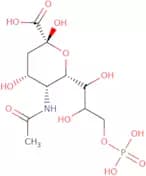
Fórmula:C12H22O11Pureza:Min. 95 Area-%Cor e Forma:White PowderPeso molecular:342.3 g/molN-Acetylneuraminic acid 9-phosphate
CAS:N-Acetylneuraminic acid 9-phosphate is a sugar phosphate
Fórmula:C11H20NO12PPureza:Min. 95%Peso molecular:389.25 g/molDebranched arabinan, from sugar beet
CAS:Please enquire for more information about Debranched arabinan, from sugar beet including the price, delivery time and more detailed product information at the technical inquiry form on this page
Ref: 3D-YD184506
Produto descontinuadoD-[UL-¹³C6]Galacturonic acid potassium
D-[6-13C]Galacturonic acid potassium salt is a synthetic, water-soluble complex carbohydrate with a molecular weight of 744.2. It is used as a fluorescence probe in magnetic resonance imaging (MRI) and also has applications in the synthesis of oligosaccharides and polysaccharides. D-[6-13C]Galacturonic acid potassium salt is soluble in water and has an average pH of 5.0. This compound is available for custom synthesis with high purity and can be found under CAS number 144561-27-4.
Pureza:Min. 95%Disialyllacto-N-hexaose I
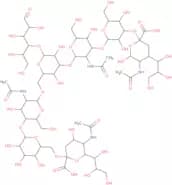
CAS:Disialyllacto-N-hexaose I is a complex carbohydrate that belongs to a class of saccharides called polysaccharides. Disialyllacto-N-hexaose I is synthesized through the methylation and glycosylation of sucrose. It has been modified by Click chemistry with a maleimide group to create an amide bond between the terminal alpha position on the glucose residue and the terminal alpha position on the N-acetylglucosamine residue. This modification can be used for Polysaccharide analysis, such as MALDI TOF MS. Disialyllacto-N-hexaose I has a CAS number of 137636-98-7 and has been shown to have high purity without any impurities or contaminants.
Fórmula:C62H102N4O47Pureza:Min. 95%Peso molecular:1,655.47 g/molRef: 3D-OD64737
Produto descontinuado5-Thio-N-acetylglucosamine
5-Thio-N-acetylglucosamine is a microtubule inhibitor that binds to o-glcnac, a posttranslational modification of proteins that regulates the morphology and cycling of stem cells. 5-Thio-N-acetylglucosamine has been shown to inhibit the transcriptional activity of o-glcnacase, an enzyme that catalyzes the conversion of o-glcnac to glucosamine. This drug also inhibits the metabolic activity of neural progenitor cells, which may be due to its ability to regulate subpopulations with concomitant expression of markers such as Oct4 and Sox2.
Pureza:Min. 95%Daunorubicin-d3
Daunorubicin-d3 is a fluorinated, monosaccharide, synthetic, oligosaccharide and complex carbohydrate. Custom synthesis of Daunorubicin-d3 is available with glycosylation, methylation and other modifications. Daunorubicin-d3 has CAS No. 1614-68-8 and purity >99%.
Fórmula:C27H26D3NO10Pureza:Min. 95%Peso molecular:530.54 g/molIsosaccharinic acid
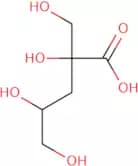
CAS:Isosaccharinic acid is a bacterial strain that produces isosaccharinic acid as its main fatty acid. The thermodynamic data for the reaction mechanism of the conversion of glucose to isosaccharinic acid has been determined. Isosaccharinic acid formation is catalyzed by an enzyme called glycosyl-glycerate dehydrogenase, which converts glycerate to 3-hydroxypropanoic acid and then to 3-oxopropanoate before it undergoes decarboxylation and reduction to form isosaccharinic acid. Radionuclides such as TcO4 are used in chemical ionization mass spectrometry for the detection of this compound in samples. Neutral pH, high activation energies, and low binding constants are all factors that affect the stability of this molecule.
Fórmula:C6H12O6Pureza:Min. 95%Peso molecular:180.16 g/molRef: 3D-MI08218
Produto descontinuadoADP-L-glycero-b-D-manno-heptose
ADP-L-glycero-b-D-manno-heptose is a synthetic, fluorinated oligosaccharide that is custom synthesized and modified. It has a high purity level and CAS No., as well as being a complex carbohydrate that can be modified with methylation or click modification to generate desired properties. ADP-L-glycero-b-D-manno-heptose is an Oligosaccharide with a glycosylation and methylation. This compound can be used in the synthesis of saccharides, polysaccharides, or other complex carbohydrates.
Pureza:Min. 95%

![4-O-{[(6-Azidoethoxy)ethoxy]ethyl}-β-D-galactopyranosyl-2-deoxy-α-D-glucopyranose-2,1-oxazoline](/_next/image/?url=https%3A%2Fstatic.cymitquimica.com%2Fproducts%2F3D%2Fthumb-webp%2FOA183929.webp&w=3840&q=75)

![D-[UL-¹³C6]Galacturonic acid potassium](/_next/image/?url=https%3A%2Fstatic.cymitquimica.com%2Fproducts%2F3D%2Fthumb-webp%2FMG170938.webp&w=3840&q=75)