


Glicociência
A glicociência é o estudo dos carboidratos e seus derivados, bem como das interações e funções biológicas em que participam. Este campo de pesquisa é crucial para compreender uma ampla variedade de processos biológicos, incluindo o reconhecimento celular, a sinalização, a resposta imune e o desenvolvimento de doenças. A glicociência tem aplicações importantes na biotecnologia, na medicina e no desenvolvimento de novos medicamentos e terapias. Na CymitQuimica, oferecemos uma ampla seleção de produtos de alta qualidade e pureza para pesquisa em glicociência. Nosso catálogo inclui monossacarídeos, oligossacarídeos, polissacarídeos, glicoconjugados e reagentes específicos, projetados para apoiar os pesquisadores em seus estudos sobre a estrutura, função e aplicações dos carboidratos em sistemas biológicos. Esses recursos são destinados a facilitar descobertas científicas e aplicações práticas em diversas áreas das biociências e da medicina.
Subcategorias de "Glicociência"
- Amino açúcares(108 produtos)
- Anticorpos Glico-Relacionados(282 produtos)
- Glicolípidos(46 produtos)
- Glicosaminoglicanos (GAGs)(55 produtos)
- Glicosídeos(419 produtos)
- Monossacáridos(6.624 produtos)
- Oligossacarídeos(3.682 produtos)
- Polissacáridos(503 produtos)
Foram encontrados 11046 produtos de "Glicociência"
Ordenar por
Pureza (%)
0
100
|
0
|
50
|
90
|
95
|
100
Esculin sesquihydrate
CAS:<p>Sugars formed by photosynthesis are essential for plants nutrition and they can be carried by a sophisticated system called phloem from the leaves to the root tips. Since the phloem is a delicate tissue composed of various specialized cell types, the study of its structure and functions remains a challenging task. Recently, fluorescent coumarin glucoside derivatives, including esculin (Plant Physiology 2015, 1211-1220) have been used as phloem probes. Among the probes tested, only esculin and fraxin are transported, while skimmin is not, suggesting a certain specifity of natural coumarin glucosides for the transporter AtSUC2.</p>Fórmula:C30H38O21Pureza:Min. 98.0 Area-%Peso molecular:734.62 g/mol5-Azido- 5- deoxy- 1, 2- O-isopropylidene -β- D- talofuranose,
<p>5-Azido- 5-deoxy- 1,2-O-isopropylidene -beta- D-talofuranose is a methylated sugar that can be synthesized by the click modification of an azido sugar. This compound has been shown to be an excellent substrate for Oligosaccharide synthesis and Polysaccharide synthesis. The compound is soluble in water and ethanol, but not in ether. It is a white powder that is insoluble in chloroform, acetone, and benzene. This compound has a CAS no., which is 115541-53-1. It has been used as a reagent for Fluorination and complex carbohydrate modification.</p>Pureza:Min. 95%3-O-(b-D-Galactopyranosyl)-D-mannopyranose
<p>3-O-(b-D-Galactopyranosyl)-D-mannopyranose is a synthetic sugar that is modified with fluorine at the C-3 position. It is a member of the carbohydrate family and has been shown to be useful for glycosylation or click chemistry. 3-O-(b-D-Galactopyranosyl)-D-mannopyranose can be custom synthesized to meet your needs. This product also features high purity and methylation, which makes it an excellent candidate for synthesis projects. This product can be used in research applications, such as complex carbohydrate modification, glycosylation, or click chemistry.</p>Fórmula:C12H22O11Pureza:Min. 95%Peso molecular:342.3 g/mol2-O-Benzyl-2,4-di-C-methyl-3,4-O-isopropylidene-L-arabinonic acid γ-lactone
2-O-Benzyl-2,4-di-C-methyl-3,4-O-isopropylidene-L-arabinonic acid gamma-lactone is a custom synthesis of a complex carbohydrate. It has CAS No. and can be modified by methylation and glycosylation. This product is high purity, fluorinated, and synthetic.Pureza:Min. 95%L-Gulono-γ-lactone
CAS:<p>L-Gulono-gamma-lactone is a natural vitamin C metabolite that is synthesized from L-ascorbic acid in the liver. It has been shown to inhibit the oxidase and other enzymes involved in ascorbic acid metabolism, which may be due to its ability to bind to iron. L-Gulono-gamma-lactone also inhibits polymerase chain reactions in rat liver microsomes and inhibits the activities of ascorbic acid and glutathione reductase in rat hepatic tissues. This compound is not active against humans, but it has been shown to have antioxidation properties.</p>Fórmula:C6H10O6Peso molecular:178.14 g/molRef: 3D-G-8500
1kgA consultar100gA consultar250gA consultar500gA consultar2500gA consultar-Unit-kgkgA consultar(2S, 3S, 4R, 5R) - 3, 4-Dihydroxy- 2- methyl-1- oxa- 6, 9- diazaspiro[4.5] decane- 7, 10- dione
CAS:<p>(2S, 3S, 4R, 5R) - 3, 4-Dihydroxy-2-methyl-1-oxa-6,9-diazaspiro[4.5] decane-7,10-dione is a synthetic sugar that can be used in the synthesis of oligosaccharides and monosaccharides. This sugar has been fluorinated and glycosylated with saccharide moieties to produce a high purity product. The chemical name for this sugar is (2S,3S,4R,5R)-3-(3',4'-dihydroxyphenyl)-2-[(1E)-1-(hydroxymethyl)ethoxy]propanoate. CAS No. 915275-45-5.</p>Pureza:Min. 95%2-C-Methyl- 2, 3- O- benzylidene- D- ribonic acid g- lactone
<p>2-C-Methyl- 2, 3- O- benzylidene- D- ribonic acid g- lactone is a synthetic carbohydrate that is used in the synthesis of oligosaccharides. This compound can be used to modify saccharides with fluorine or methyl groups, and can be glycosylated or modified with other organic compounds. 2CMR has been shown to function as a glycosylation site for monosaccharide substrates and it has been used as an intermediate in the synthesis of complex carbohydrates.</p>Pureza:Min. 95%D-Cellobiose
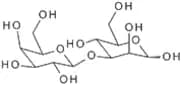
CAS:<p>Cellobiose is a reducing disaccharide consisting of two β(1-4)-linked glucopyranose units. It is produced by the hydrolysis of cellulose, a homopolysaccharide of glucose with β(1-4)-linkages. Cellobiose constitutes the polar part of cellobiose lipids (CLs) that are secreted by yeasts and mycelia fungi. Their various biological activities have led to a range of applications in the food industry, pharmaceutical industry and in medicine. Cellobiose itself has been used as an indicator carbohydrate for Crohns disease and malabsorption syndrome. In biotechnology, cellobiose is one of the sugars explored for the synthesis of biotensides.</p>Fórmula:C12H22O11Pureza:Min. 98.0 Area-%Peso molecular:342.30 g/mol2,3-O-Carbonyl-a-D-mannopyranose
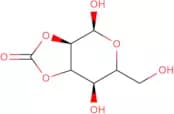
CAS:<p>2,3-O-Carbonyl-a-D-mannopyranose is a modified sugar that can be synthesized from D-mannose. It is used to produce oligosaccharides and polysaccharides. This compound has been shown to be useful for the fluorination of proteins and for click modification reactions. 2,3-O-Carbonyl-a-D-mannopyranose has high purity and can be custom synthesized for quality assurance purposes.</p>Fórmula:C7H10O7Pureza:Min. 95%Cor e Forma:PowderPeso molecular:206.15 g/molGlobo H pentenyl glycoside
CAS:<p>GloboH-pentanyl backbone for incorporation onto peptide or conjugated to protein</p>Pureza:Min. 95%2-Acetamido-2-deoxy-a-D-galactopyranosyl serine
CAS:2-Acetamido-2-deoxy-a-D-galactopyranosyl serine (2AGPS) is a naturally occurring glycosaminoglycan. It has been shown to inhibit the growth of cancer cells and to reduce the size of mouse tumors in vivo. This compound also inhibits viral replication in vitro, and its antiviral properties have been shown to work on several different types of viruses, including herpes simplex virus type 1, human cytomegalovirus, and influenza A virus. 2AGPS is also a potent inducer of toll-like receptor 4 signaling pathways in macrophages and dendritic cells. 2AGPS can be synthesized by using a polymerase chain reaction (PCR) technique with synthetic oligosaccharides as a template.Fórmula:C11H20N2O8Pureza:Min. 90 Area-%Cor e Forma:Off-White Yellow PowderPeso molecular:308.29 g/mol(2S,3R,4R,5S)-3-O-Benzyl-3,4,5-trihydroxy-2-hydroxymethylpiperidine
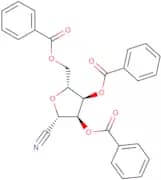
<p>(2S,3R,4R,5S)-3-O-Benzyl-3,4,5-trihydroxy-2-hydroxymethylpiperidine is a custom synthesis that is used as a building block for the preparation of sugar oligosaccharides and polysaccharides. It is also used in glycosylation reactions to form complex carbohydrates. This compound has been a valuable reagent for the introduction of fluorine atoms into carbohydrate molecules. The structure contains an oxygen atom at C1 and two hydroxyl groups at C2 and C5. The molecule has CAS number .</p>Pureza:Min. 95%2,3,5-Tri-O-benzoyl-β-D-ribofuranosyl cyanide
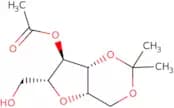
CAS:Building block for C-nucleoside synthesisFórmula:C27H21NO7Pureza:Min. 98 Area-%Cor e Forma:White PowderPeso molecular:471.46 g/mol4-O-Acetyl-2,5-anhydro-1,3-isopropylidene-D-glucitol
CAS:4-O-Acetyl-2,5-anhydro-1,3-isopropylidene-D-glucitol (4AIG) is a modification of glucose. 4AIG is a white to light yellow crystalline solid that melts with decomposition at 150°C. It is soluble in water and acetone but insoluble in ether. 4AIG can be used as a raw material for the synthesis of oligosaccharides and polysaccharides.Fórmula:C11H18O6Pureza:Min. 95%Peso molecular:246.26 g/molEthyl 4,6-O-benzylidene-β-D-thioglucopyranoside
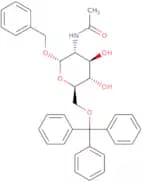
CAS:<p>A protected thioglucose sugar</p>Fórmula:C15H20O5SPureza:Min. 95%Cor e Forma:PowderPeso molecular:312.38 g/molBenzyl 2-acetamido-2-deoxy-6-O-trityl-a-D-glucopyranoside
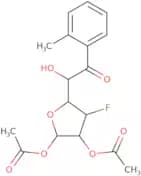
CAS:<p>Benzyl 2-acetamido-2-deoxy-6-O-trityl-a-D-glucopyranoside is a glycosylation of benzyl 2,3,4,6-tetraacetamido-2,3,4,6-tetra deoxyglucopyranoside. It is a complex carbohydrate that can be modified with methyl groups or fluorine atoms. This product is often used in Click chemistry and as a building block for oligosaccharides and polysaccharides. Benzyl 2-acetamido-2-deoxy 6O trityl a D glucopyranoside has CAS number 33493 71 9 and can be custom synthesized to meet individual requirements.</p>Fórmula:C34H35NO6Pureza:Min. 95%Cor e Forma:White PowderPeso molecular:553.64 g/mol1,2-Di-O-acetyl-3-deoxy-3-fluoro-5-O-toluoyl-a-D-ribofuranose
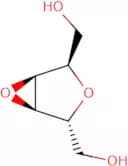
CAS:1,2-Di-O-acetyl-3-deoxy-3-fluoro-5-O-toluoyl-a-D-ribofuranose is a fluorinated sugar molecule. It is a methylated saccharide that has been modified with click chemistry and glycosylation. The modified sugar can be used to synthesize a variety of complex carbohydrates including oligosaccharides and polysaccharides. This product is available in high purity with CAS No. 1884324-99-5.Pureza:Min. 95%2,5:3,4-Dianhydro-D-altritol
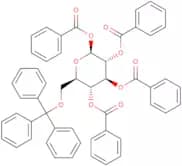
CAS:2,5:3,4-Dianhydro-D-altritol is a hydrogenated form of the sugar D-altritol. It can be prepared by hydrogenolysis of D-mannitol or D-sorbitol with palladium on charcoal at 200°C. The 2,5:3,4-dianhydro form can be converted to the 3,4-dianhydro form by hydrolysis with sodium hydroxide. Hydrogenation of the 3,4 form produces 2,5:3,4-dianhydro-D-altritol. This compound has been used in high energy density fuels and as a trackable marker for hydrogenolysis experiments. 2,5:3,4-Dianhydro-D-altritol is soluble in alcohols and extracted with ether in organic solvents such as acetone or chloroform. It oxidizes readily to the corresponding dPureza:Min. 95%1,2,3,4-Tetra-O-benzoyl-6-O-trityl-b-D-glucopyranose
CAS:1,2,3,4-Tetra-O-benzoyl-6-O-trityl-b-D-glucopyranose is a custom synthesis that can be used for methylation and Click modification. This compound is an oligosaccharide consisting of sugar molecules linked by glycosidic bonds. It is a polysaccharide with a saccharide repeating unit composed of monosaccharides. The carbohydrate chain contains 1,2,3,4 tetra O benzoyl groups and 6 O trityl groups. This product has a high purity and can be used in the synthesis of other compounds. 1,2,3,4 Tetra O benzoyl 6 O trityl b D glucopyranose (1) was synthesized from 4-(2'-hydroxyethyl)benzaldehyde (2), 4-(2'-hydroxyethyl)benzoic acid (3),Fórmula:C53H42O10Pureza:Min. 95%Peso molecular:838.89 g/molMan-8D1D3 N-Glycan
CAS:<p>Man-8D1D3 N-Glycan is a custom synthesis carbohydrate that is used as a structural component in polysaccharides and glycoproteins. This compound is used for the modification of saccharides, methylation, glycosylation, and click chemistry. The purity of this substance is high and it has been fluorinated for synthetic purposes.</p>Fórmula:C64H108N2O51Pureza:Min. 90%Cor e Forma:PowderPeso molecular:1,721.53 g/molMethyl 2,3-di-O-acetyl-4,6-O-(4-methoxybenzylidene)-a-D-mannopyranoside
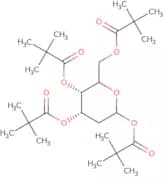
<p>Methyl 2,3-di-O-acetyl-4,6-O-(4-methoxybenzylidene)-a-D-mannopyranoside is a custom synthesis that contains a fluorinated sugar with a methyl group attached to the 4 position. The oligosaccharide is synthesized through click chemistry and has been modified with an acetate at the 6 position. The CAS number is 108739-53-0. The carbohydrate is a complex carbohydrate that can be found in nature or synthesized in the laboratory.</p>Fórmula:C19H24O9Pureza:Min. 95%Peso molecular:396.4 g/mol2-Deoxy-1,3,4,6-tetra-O-pivaloyl-D-glucopyranose
<p>2-Deoxy-1,3,4,6-tetra-O-pivaloyl-D-glucopyranose is a glycosylation sugar that belongs to the category of complex carbohydrates. It is a methylated sugar that can be fluorinated or modified with other saccharides. This product can be custom synthesized and has high purity.</p>Fórmula:C26H44O9Pureza:Min. 95%Peso molecular:500.64 g/mol2,4-Di- C- methyl- 3, 4- O- isopropylidene-L- arabinonic acid γ-lactone
<p>2,4-Di-C-methyl-3,4-O-isopropylidene-L-arabinonic acid gamma-lactone is a high purity synthetic chemical that has been custom synthesized for research purposes. It has a molecular weight of 556.0 and its CAS number is 133552-02-2. This chemical is used in the synthesis of saccharides and carbohydrates, including oligosaccharides and monosaccharides. 2,4 Di C methyl 3,4 O isopropylidene L arabinonic acid gamma lactone can be fluorinated or glycosylated to create new compounds with different properties. It can also be methylated to create a variety of derivatives. This chemical reacts with sugars in order to produce glycosylations that are useful in drug development. Click modification refers to the addition of a sugar molecule to an amino acid side chain followed by a rearrangement of the sugar ring</p>Pureza:Min. 95%Sucrose-6-acetic ester
CAS:<p>Sucrose-6-acetic ester is a product of the reaction between sucrose and acetic anhydride. It is a white crystalline compound that reacts with chlorinating agents to form sulfoxide compounds. Sucrose-6-acetic ester can be converted to acetylsalicylic acid, which is used to synthesize aspirin. The reaction selectivity of this process relies on the enzyme catalysis of acetylation and triphosgene as well as an acidic or basic catalyst. Acetylation is carried out in organic solvents and requires a crystallization process for purification. This product also has fatty acid properties, which are insoluble in water and other polar solvents.</p>Fórmula:C14H24O12Pureza:Min. 95%Cor e Forma:White PowderPeso molecular:384.33 g/molGlucostrophanthidin
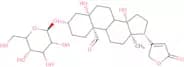
CAS:<p>Glucostrophanthidin is a cardiac glycoside, which is derived from natural plant sources, specifically from species in the Apocynaceae family. This compound exerts its effects primarily through inhibition of the sodium-potassium ATPase enzyme, leading to an increase in intracellular sodium concentration. The downstream effect of this process involves an increase in intracellular calcium via the sodium-calcium exchange mechanism, ultimately enhancing the contractility of cardiac muscle fibers.</p>Fórmula:C29H42O11Pureza:Min. 95%Peso molecular:566.64 g/molL-[UL-13C6]Rhamnose monohydrate
CAS:L-[UL-13C6]Rhamnose monohydrate is a high purity, custom synthesis sugar. It has been modified with fluorination, glycosylation and methylation to synthesize a complex carbohydrate. This compound has been shown to be useful in the synthesis of oligosaccharides and monosaccharides. L-[UL-13C6]Rhamnose monohydrate is also used in click chemistry, which is a new method that uses the copper-catalyzed azide-alkyne cycloaddition reaction to form stable covalent bonds between molecules. The CAS number for this compound is 10030-85-0 (unlabelled).Fórmula:C6H12O5·H2OPureza:Min. 95%N-Acetyl-2,3-dehydro-2-deoxyneuraminic acid
CAS:Inhibitor of viral, bacterial and animal sialidaseFórmula:C11H17NO8Pureza:Min. 94 Area-%Cor e Forma:White PowderPeso molecular:291.25 g/mol2-O-Acetyl-3,4,6-tri-O-benzyl-a-D-glucopyranosyl trichloroacetimidate
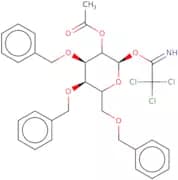
CAS:<p>2-O-Acetyl-3,4,6-tri-O-benzyl-a-D-glucopyranosyl trichloroacetimidate is a custom synthesis. It is a modified oligosaccharide with a fluorinated carbon atom in the 2 position of the acetyl group. This chemical has been shown to be effective for click modification and glycosylation reactions. The CAS number for this chemical is 108869-64-3.</p>Pureza:Min. 95%5-S-Methyl-5-thio-D-xylose
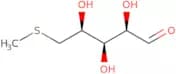
CAS:5-S-Methyl-5-thio-D-xylose is a carbohydrate that can be synthesized from 5,5’ -dithiobis(2-nitrobenzoic acid) and D-xylose. It is a high purity, custom synthesis product. This carbohydrate has been modified with fluorination at the 5 position of the sugar ring and methylation of the alpha carbon to form a methylated xylose. The molecular weight is 488.1 g/mol and it has a CAS number of 53458-58-5. This product can be used to modify saccharides and oligosaccharides with fluorination and methylation reactions.Fórmula:C6H12O4SPureza:Min. 95%Peso molecular:180.22 g/molD-Galacturonic acid benzyl ester
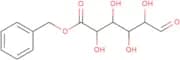
CAS:<p>D-Galacturonic acid benzyl ester is a donor of d-galacturonic acid that is used to regulate the growth of bacterial cells. It has been shown to be an acceptor for oligosaccharides, which are substrates for glycosidases. D-Galacturonic acid benzyl ester has been shown to have anti-inflammatory effects in animal models and may be useful in the treatment of heart diseases, such as cardiac hypertrophy.</p>Fórmula:C13H16O7Pureza:Min. 95%Cor e Forma:White PowderPeso molecular:284.26 g/molβ-D-Galactose pentaacetate plant origin (ex peach gum)
CAS:1,2,3,4,6-Penta-O-acetyl-b-D-galactopyranose, also known as beta-D-galactose pentaacetate, has high chemical stability and long shelf life. This protected form of galactose is a key building block of any chemical synthesis of galactose-containing oligosaccharides or glycoconjugates. In the presence of Lewis acids it can be used as a glycosyl donor to make simple glycosides. In order to perform more complex galactosylations it can be converted into more reactive donors, such as glycosyl halides or thioglycosides.Fórmula:C16H22O11Peso molecular:390.35 g/molRef: 3D-G-1782
1kgA consultar5kgA consultar10kgA consultar500gA consultar2500gA consultar-Unit-kgkgA consultar2-Amino-2,4-dideoxy-4-C-methyl- D-arabinaric acid 1-methyl ester
<p>2-Amino-2,4-dideoxy-4-C-methyl-D-arabinaric acid 1-methyl ester is a fluorinated carbohydrate that belongs to the group of modified saccharides. It is a synthetic compound that is custom synthesized and can be used as a chemical intermediate. 2-Amino-2,4-dideoxy-4-C-methyl--D--arabinaric acid 1 methyl ester has been shown to have high purity and can be used in glycosylation reactions. This product also has strong methylation properties and can be used for click chemistry modifications.</p>Pureza:Min. 95%3-o-Benzyl-diacetonide-d-glucose
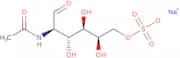
<p>3-O-benzyl-diacetonide-d-glucose is a synthetic monosaccharide that can be used as a building block for oligosaccharides and polysaccharides. It is custom synthesized to meet your specific needs and can be modified with fluorination, methylation, or glycosylation. 3-O-benzyl-diacetonide-d-glucose has been shown to have high purity and is available in small quantities for custom synthesis.</p>Pureza:Min. 95%N-Acetyl-D-galactosamine-6-O-sulphate sodium salt - 95%
CAS:<p>N-Acetyl-D-galactosamine-6-O-sulphate sodium salt is a glycosylation product that can be used in the synthesis of oligosaccharides and saccharides. It is also used for the modification of proteins, polysaccharides, fluorination reactions, and click reactions. This compound has been synthesized from D-galactose and acetylated with sulfuric acid to form an ester. N-Acetyl-D-galactosamine-6-O-sulphate sodium salt has a molecular weight of 584.12 g/mol and a melting point of 236°C.</p>Fórmula:C8H14NO9SNaPureza:Min. 95 Area-%Cor e Forma:PowderPeso molecular:323.25 g/molD-Fructose 1,6-diphosphate, dicalcium salt
CAS:D-Fructose 1,6-diphosphate is an ion-exchange resin that has been used for the isolation of calcium. It is also a calcium salt that is soluble in ethanol and water. This compound can be isolated from seaweed and it has been used as a filler in food. D-Fructose 1,6-diphosphate is often used to precipitate calcium ions from solutions with high pH values and it has been shown to be a potent inhibitor of DNA synthesis.Fórmula:C6H10Ca2O12P2Peso molecular:416.25 g/molRef: 3D-F-7370
1kgA consultar5kgA consultar250gA consultar500gA consultar2500gA consultar-Unit-ggA consultarD-Glucuronic acid, sodium salt monohydrate
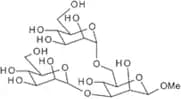
CAS:D-Glucuronic acid, sodium salt monohydrate is a chromatographic standard. It is used to measure the hydrophilicity of a sample and its interaction with proteins. In addition, it can be used as an immunomodulator. D-Glucuronic acid, sodium salt monohydrate has been shown to have anti-inflammatory effects by inhibiting the production of prostaglandins and leukotrienes. The acidic nature of this compound may play a role in its membrane system interactions with lysine residues on protein surfaces.Fórmula:C6H11NaO8Peso molecular:234.14 g/molMethyl 3,6-di-O-(a-D-mannopyranosyl)-b-D-mannopyranoside
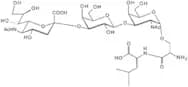
Methyl 3,6-di-O-(a-D-mannopyranosyl)-b-D-mannopyranoside is a glycosylation product of the sugar, mannose. It can be used in the synthesis of oligosaccharides and polysaccharides with modifications such as fluorination and methylation. Methyl 3,6-di-O-(a-D-mannopyranosyl)-b-D-mannopyranoside is also known by its CAS number, which is 57424-92-5.Fórmula:C19H34O16Pureza:Min. 95%Peso molecular:518.46 g/mol(Neu5Ac a(2-3)-Gal-b(1-3)-GalNAc)SL-OH
<p>Neu5Ac a(2-3)-Gal-b(1-3)-GalNAc)SL-OH is an Oligosaccharide that is a complex carbohydrate with a Methylation modification. It is the product of Click chemistry and has been Fluorinated and saccharide, Modification, sugar, Oligosaccharide, Synthetic, CAS No., Monosaccharide, Custom synthesis, High purity.</p>Pureza:Min. 95%1,2,3,4-Tetra-O-benzoyl-6-O-tert-butyldimethylsilyl-a-D-mannopyranose
CAS:1,2,3,4-Tetra-O-benzoyl-6-O-tert-butyldimethylsilyl-a-D-mannopyranose is a custom synthesis of a complex carbohydrate. It is an Oligosaccharide that is Polysaccharide in nature. The saccharide has been modified with Methylation and Glycosylation. Carbohydrate modifications include Click modification and Fluorination. CAS No. 1222709-51-4. 1,2,3,4 Tetra O benzoyl 6 O tert butyldimethylsilyl a D mannopyranose has high purity with a purity greater than 99%.Fórmula:C40H42O10SiPureza:Min. 95%Peso molecular:710.86 g/mol3,5-Di-C-methyl-L-mannose
<p>3,5-Di-C-methyl-L-mannose is a custom synthesis that is an Oligosaccharide with a CAS number of <br>83683-03-1. It is a polysaccharide that is modified by methylation and glycosylation. 3,5-Di-C-methyl-L-mannose has been shown to be effective in inhibiting the growth of cancer cells through modification of glycosylations on proteins and other molecules. 3,5-Di-C-methyl-L-mannose also has high purity and can be synthesized using fluorination reactions.</p>Pureza:Min. 95%Di-guluronic acid sodium
CAS:<p>Di-guluronic acid sodium (DGA) is a custom synthesis of an oligosaccharide that has been modified with methylation and glycosylation. It can be used in the production of Oligosaccharides, which are complex carbohydrates. DGA is synthesized by a process called Click chemistry, which includes a modification called fluorination. DGA is also a polysaccharide and a sugar, as well as being high purity and having high molecular weight.</p>Fórmula:C12H16O13Na2Pureza:Min. 95%Cor e Forma:PowderPeso molecular:414.23 g/molThymidine-5'-diphosphate-D-glucose disodium salt
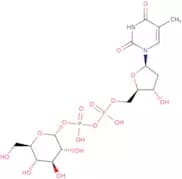
CAS:Starting point for the biosynthesis of more rare sugars such as deoxysugarsFórmula:C16H24N2O16P2Na2Pureza:Min. 95%Cor e Forma:White Off-White PowderPeso molecular:608.29 g/molDextran sulfate sodium salt - MW 9,000-16,000
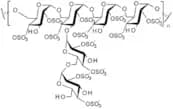
CAS:<p>Dextran sulphate is a dextran derivative whose ulcer (colitis) -causing properties were first reported in hamsters and extrapolated a few years later to mice and rats. The exact mechanisms through which dextran sulphate induces intestinal inflammation are unclear but may be the result of direct damage of the monolayer of epithelial cells in the colon, leading to the crossing of intestinal contents (for e.g. commensal bacteria and their products) into underlying tissue and therefore induction of inflammation. The dextran sulphate sodium induced ulceration model in laboratory animals has some advantages, when compared to other animal models of colitis, due to its simplicity and similarities to human inflammatory bowel disease.</p>Cor e Forma:PowderMetrizamide
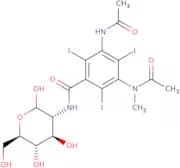
CAS:<p>Radiopaque contrast agent; diagnostic aid for myelography</p>Fórmula:C18H22I3N3O8Pureza:(%) Min. 95%Cor e Forma:White PowderPeso molecular:789.1 g/mol6-O-Methyl-D-glucose
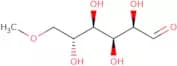
CAS:<p>6-O-Methyl-D-glucose is a non-carbohydrate that can be found in Mycobacterium tuberculosis. It is an electron microscopic study of proton and fatty acid molecules, which has shown that the cell membrane of mycobacterial cells are susceptible to inhibition by fatty acids. 6-O-Methyl-D-glucose is a nucleophilic attack on cellular fatty acids, which may inhibit their synthesis and lead to cell death. 6-O-Methyl-D-glucose has been shown to be synthesized from glucose and glycosylated with hydroxyl groups during biosynthesis. This chemical is also used in the synthesis of oligosaccharides because it has a molecular weight of 180, making it more easily scalable than other carbohydrates.</p>Fórmula:C7H14O6Pureza:Min. 95%Cor e Forma:White Off-White PowderPeso molecular:194.18 g/molDi-Lex-APE-BSA
<p>Di-Lex-APE-BSA is a synthetic oligosaccharide with a high purity. It is synthesized from glycosylation and has been modified by fluorination, methylation, and click chemistry. This product has CAS No. 56837-19-4 and can be custom synthesized to order.</p>Pureza:Min. 95%Methyl a-L-idopyranosiduronic acid 2-sulfate sodium salt
<p>Methyl a-L-idopyranosiduronic acid 2-sulfate sodium salt is a custom synthesis that is an oligosaccharide. It is a complex carbohydrate with Oligosaccharide CAS No. and it has been modified by saccharide, Methylation, and Glycosylation. This product has high purity and is fluorinated. This product is synthetic and can be used for click modification.</p>Fórmula:C7H10O10Na2SPureza:Min. 95%Peso molecular:332.19 g/mol2,2',2''-Triaminotriethylamine-bis(thiogalactopyranosyl acetamide)
2,2',2''-Triaminotriethylamine-bis(thiogalactopyranosyl acetamide) is a fluorinated sugar that can be used as a building block in glycosylation and oligosaccharide synthesis. It has been shown to be useful for the preparation of complex carbohydrates with desired properties such as high purity.Fórmula:C22H42N4O12S2Pureza:Min. 95%Peso molecular:618.72 g/molD-Gluconic acid manganese salt
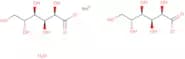
CAS:<p>D-Gluconic acid manganese salt (DGM) is a glycol ether that is used as an antimicrobial agent in the treatment of infectious diseases. It binds to the metal ions in bacterial cell walls and disrupts their function. DGM has been shown to inhibit enzymes such as phosphoglucoisomerase, glucose-6-phosphate dehydrogenase, and pyruvate kinase. DGM also has covalent linkages that may be involved in its antimicrobial activity. The structure of DGM has been determined by X-ray diffraction data and electrochemical impedance spectroscopy, which show that it belongs to group p2.</p>Fórmula:C6H11O7·MnPureza:Min. 98%Cor e Forma:PowderPeso molecular:445.24 g/molN-[2-(4'-Methoxyphenylacetonitrile)]-2,3,4,6-tetra-O-pivaloyl-D-glucopyranoside
<p>N-[2-(4'-Methoxyphenylacetonitrile)]-2,3,4,6-tetra-O-pivaloyl-D-glucopyranoside is a custom synthesis of a carbohydrate. It is a synthetic saccharide that is modified by fluorination and methylation. This compound has high purity and can be custom synthesized to order.</p>Fórmula:C35H52N2O10Pureza:Min. 95%Peso molecular:660.79 g/mol



![(2S, 3S, 4R, 5R) - 3, 4-Dihydroxy- 2- methyl-1- oxa- 6, 9- diazaspiro[4.5] decane- 7, 10- dione](/_next/image/?url=https%3A%2Fstatic.cymitquimica.com%2Fproducts%2F3D%2Fthumb-webp%2FMD163949.webp&w=3840&q=75)








![L-[UL-13C6]Rhamnose monohydrate](/_next/image/?url=https%3A%2Fstatic.cymitquimica.com%2Fproducts%2F3D%2Fthumb-webp%2FMR182508.webp&w=3840&q=75)









![N-[2-(4'-Methoxyphenylacetonitrile)]-2,3,4,6-tetra-O-pivaloyl-D-glucopyranoside](/_next/image/?url=https%3A%2Fstatic.cymitquimica.com%2Fproducts%2F3D%2Fthumb-webp%2FMM08496.webp&w=3840&q=75)