Glicociência
A glicociência é o estudo dos carboidratos e seus derivados, bem como das interações e funções biológicas em que participam. Este campo de pesquisa é crucial para compreender uma ampla variedade de processos biológicos, incluindo o reconhecimento celular, a sinalização, a resposta imune e o desenvolvimento de doenças. A glicociência tem aplicações importantes na biotecnologia, na medicina e no desenvolvimento de novos medicamentos e terapias. Na CymitQuimica, oferecemos uma ampla seleção de produtos de alta qualidade e pureza para pesquisa em glicociência. Nosso catálogo inclui monossacarídeos, oligossacarídeos, polissacarídeos, glicoconjugados e reagentes específicos, projetados para apoiar os pesquisadores em seus estudos sobre a estrutura, função e aplicações dos carboidratos em sistemas biológicos. Esses recursos são destinados a facilitar descobertas científicas e aplicações práticas em diversas áreas das biociências e da medicina.
Subcategorias de "Glicociência"
- Amino açúcares(108 produtos)
- Anticorpos Glico-Relacionados(282 produtos)
- Glicolípidos(46 produtos)
- Glicosaminoglicanos (GAGs)(55 produtos)
- Glicosídeos(419 produtos)
- Monossacáridos(6.624 produtos)
- Oligossacarídeos(3.682 produtos)
- Polissacáridos(503 produtos)
Foram encontrados 11046 produtos de "Glicociência"
Ordenar por
Pureza (%)
0
100
|
0
|
50
|
90
|
95
|
100
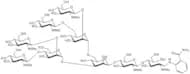
NGA4 Glycan, 2-AB labelled
NGA4 Glycan, 2-AB labelled is a synthetic oligosaccharide that has been modified with Click chemistry. This modification has been shown to be useful for the detection of methylation. The NGA4 Glycan, 2-AB labelled has a purity of >99% and is available in quantities of 1 mg or more.Pureza:Min. 95%1,2-O-Isopropylidene-5-O-tert-butyldiphenylsilyl-b-D-arabinofuranose
CAS:<p>1,2-O-Isopropylidene-5-O-tert.butyldiphenylsilyl-b-D-arabinofuranose is a modified sugar that can be used in the synthesis of complex carbohydrates. It has been custom synthesized and is available in high purity with a CAS number. It is an oligosaccharide that can be methylated or glycosylated. The chemical name for 1,2-O-Isopropylidene-5-O-tert.butyldiphenylsilyl-b-D-arabinofuranose is 5-(1,1'-Biphenylethyl)-3'-hydroxybenzaldehyde O-(4,4'-dimethoxytrityl)ester. This product also has fluorination and saccharide properties.</p>Fórmula:C24H32O5SiPureza:Min. 95%Peso molecular:428.59 g/molMethyl 2,3,4-tri-O-acetyl-6-O-tert-butyldimethylsilyl-a-D-glucopyranoside
CAS:<p>Methyl 2,3,4-tri-O-acetyl-6-O-tert-butyldimethylsilyl-a-D-glucopyranoside is a glycosylation reagent and a synthetic monosaccharide that is custom synthesized and available in high purity. It is a saccharide with a molecular weight of 244.24 g/mol and chemical formula C12H21NO8Si. This product is often used as an intermediate for modified oligosaccharides and polysaccharides.<br>Methyl 2,3,4-tri-O-acetyl-6-O-tert-butyldimethylsilyl -a D glucopyranoside can be used for the synthesis of complex carbohydrate, methylation, click modification, fluorination saccharide, modification or other reactions.<br>This product has CAS No. 637341162 and can be found in</p>Fórmula:C19H34O9SiPureza:Min. 95%Peso molecular:434.56 g/mol2,3:5,6-Di-O-isopropylidene-2-C-(tert.butyldimethylsilyloxy)methyl-D-allono-1,4-lactone
2,3:5,6-Di-O-isopropylidene-2-C-(tert.butyldimethylsilyloxy)methyl-D-allono-1,4-lactone is a sugar molecule. It is composed of two monosaccharides, D and L allose. The D allose is an alpha(1→2)-linked glucose with the terminal hydroxyl group on C2 and the L allose is a beta(1→4)-linked galactose with the terminal hydroxyl group on C4. The chemical formula for 2,3:5,6-Di-O-isopropylidene-2-C-(tert.butyldimethylsilyloxy)methyl-D-allono-1,4-lactone is C12H22O11.Pureza:Min. 95%Carboxymethyl-dextran sodium salt - Average MW 20,000
CAS:<p>Sodium carboxymethyl dextran is a white, odourless and tasteless powder, which is freely soluble in water or electrolyte solutions. Applications that have been described for carboxymethyl dextran include carriers of paramagnetic contrast agents, preparation of conjugates of pharmacologically active compounds and carboxymethyl dextrans in biosensors. A number of other uses in cosmetics, agriculture, foods, paints and textiles have been the subject of patent applications.</p>Cor e Forma:PowderL-Arabinose - Syrup
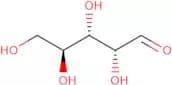
CAS:L-arabinose is a monosaccharide that is found in many plants, but not in humans. It is metabolized by the liver to produce L-arabinose-1-phosphate and L-ribulose-1,5-bisphosphate. L-Arabinose syrup is used for the treatment of bacterial infections such as escherichia coli or listeria monocytogenes.Fórmula:C5H10O5Pureza:Min. 95%Peso molecular:150.13 g/molD-glycero-D-galacto-Heptose
CAS:D-Glycero-D-galacto-heptose is a sugar that has been shown to have antimicrobial properties and inhibit the growth of oral pathogens. It inhibits the enzyme glycosyltransferase, which is responsible for synthesizing D-galactosyl sugars. This inhibition prevents the formation of a substrate for the enzyme β-1,4-N acetylglucosaminyltransferase, which is necessary for bacterial cell wall synthesis. This leads to cell death as a result of impaired membrane integrity. D-Glycero-D-galacto-heptose has been shown to have inhibitory properties against both Gram negative and Gram positive bacteria in vitro assays. The mechanism of action is through target enzymes such as glycosyltransferases, which are necessary for bacterial cell wall synthesis. Inhibition of these enzymes leads to cell death by impairing membrane integrity.Fórmula:C7H14O7Pureza:Min. 98 Area-%Cor e Forma:PowderPeso molecular:210.18 g/mol1,2,3,6-Tetra-O-acetyl-α-D-glucopyranose
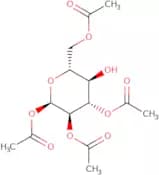
CAS:<p>1,2,3,6-Tetra-O-acetyl-a-D-glucopyranose is a high purity chemical that can be custom synthesized. It is a sugar that has been fluorinated and glycosylated with a Click modification. It is a synthetic compound that contains methylation and modification. It has CAS No. 55286-97-0, which indicates its oligosaccharide and monosaccharide saccharide composition. This product can be used for complex carbohydrate synthesis in the laboratory or for research purposes.</p>Fórmula:C14H20O10Pureza:Min. 98 Area-%Cor e Forma:PowderPeso molecular:348.3 g/mol1,4-Dideoxy-1,4-imino-D-ribitol
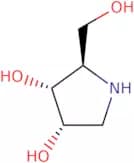
CAS:<p>1,4-Dideoxy-1,4-imino-D-ribitol is a polyhydroxylated pyrrolidine alkaloid isolated from the roots of mulberry trees (Morus alba) and from the bark of leguminous plants (Angylocalyx pynaertii). Due to its structure it has been looked at as enzyme inhibitors that mimic glycoside and nucleoside substrates. It was found to be a potent inhibitor of lysosomal β-mannosidase and eukaryotic DNA polymerases.</p>Fórmula:C5H11NO3Pureza:Min. 95%Peso molecular:133.15 g/mol3,6-Di-O-methyl-D-glucose
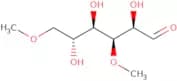
CAS:3,6-Di-O-methyl-D-glucose is a glycopeptide sugar that is used as a terminal sugar in the cell wall of many gram-positive bacteria. It is found on the surface of most strains of Streptococcus pneumoniae and Staphylococcus aureus. 3,6-Di-O-methyl-D-glucose is an antigen for monoclonal antibodies against the streptococcal M protein and has been used to identify the carbohydrate chemistry of Streptococcus pneumoniae. 3,6-Di-O-methyl glucose may also be useful in the detection of cellulose derivatives by magnetic resonance spectroscopy or nitrocellulose membranes. The terminal sugars found on these membranes are hydrolyzed by acid and dry weight methods before being analyzed by gas chromatography or high performance liquid chromatography.Fórmula:C8H16O6Pureza:Min. 95%Peso molecular:208.21 g/molMethyl 4-C-Hydroxymethyl-2,3-O-isopropylidene-b-D-ribofuranoside
CAS:Methyl 4-C-Hydroxymethyl-2,3-O-isopropylidene-b-D-ribofuranoside is a modification of the monosaccharide, D-ribose. It is synthesized by the selective methylation of the hydroxymethyl group at position C4. The synthesis of this compound starts with the oxidation of D-ribose to form 2,3'-diisopropylidene boronate ester (1). This compound is then reacted with methyl iodide in the presence of an acid to form 4-(methyloxy)benzaldehyde (2). The final step involves conversion of 2 to 4-(methyloxy)benzylidene boronate ester (3), which is then hydrolyzed to yield methyl 4-C-hydroxymethyl-2,3-O-isopropylidene ribofuranoside.Pureza:Min. 95%6-a-D-Maltotriosyl-maltotriose
CAS:<p>Derived from pullulan using pullulanase</p>Fórmula:C36H62O31Pureza:Min. 95%Cor e Forma:PowderPeso molecular:990.86 g/molKonjac glucomannan
CAS:<p>Konjac glucomannan is an acetylated (1,4)-β-D-glucomannan obtained from the tubers of Amorphophallus konjac or Konnyaku root. It is widely used in foods, pharmaceuticals paints and explosives. It has been shown that ternary mixtures of konjac glucomannan, xanthan gum and sodium alginate can form a non-covalently linked complex which exhibits enhanced rheological properties of value in, for example, functional foods.</p>Pureza:Min. 75%Cor e Forma:White Powder2-O-Benzhydryloxybis(trimethylsilyloxy)silyl-3, 4- O- isopropylidene - L- arabinonic acid γ-lactone
<p>2-O-Benzhydryloxybis(trimethylsilyloxy)silyl-3,4-O-isopropylidene -L-arabinonic acid gamma-lactone (2BHOS) is an oligosaccharide that is synthesized from arabinose. It is a product of the Click modification and is used to synthesize a glycosylation with a monosaccharide or saccharide donor molecule. 2BHOS can be modified by fluorination, glycosylation, methylation, or other chemical modifications. 2BHOS has CAS number 47311-27-8.</p>Pureza:Min. 95%(1R) -1- [(2S, 3R,4S) -4-Hydroxymethyl-3- hydroxy- 1- azetidinyl] -1, 2- ethanediol hydrochloride
(1R) -1- [(2S, 3R,4S) -4-Hydroxymethyl-3- hydroxy- 1- azetidinyl] -1, 2- ethanediol hydrochloride is a synthetic modification of oligosaccharides and polysaccharides. It is an oligosaccharide with a high degree of polymerization (DP) and a high purity. The fluorination of saccharides can be used for the synthesis of this product.Pureza:Min. 95%Methyl 2,3,4-tri-O-benzyl-6-O-tert-butyldimethylsilyl-a-D-galactopyranoside
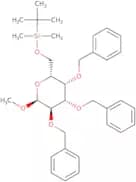
CAS:<p>Methyl 2,3,4-tri-O-benzyl-6-O-tert-butyldimethylsilyl-a-D-galactopyranoside is a fluorinated monosaccharide that is used as a building block for the synthesis of oligosaccharides and polysaccharides. This chemical has been modified with methylation and click chemistry to give it an interesting utility in glycosylation reactions. Methyl 2,3,4-tri-O-benzyl-6-O-tert butyldimethylsilyl -a D galactopyranoside has a CAS number of 862730 60 7. It is soluble in methanol and ethanol and can be purified by recrystallization or chromatography. It has been shown to be nonmutagenic and nontoxic.</p>Fórmula:C34H46O6SiPureza:Min. 95%Peso molecular:578.83 g/molMethyl 3-O-(a-D-mannopyranosyl)-b-D-mannopyranoside
Methyl 3-O-(a-D-mannopyranosyl)-b-D-mannopyranoside is a custom synthesized compound that belongs to the group of complex carbohydrates. It is used in the synthesis of oligosaccharides and polysaccharides. Methyl 3-O-(a-D-mannopyranosyl)-b-D-mannopyranoside can be modified through fluorination, which enhances its properties. This product is available in high purity and with a monosaccharide content of 99%. The CAS number for this compound is 4127757-76-4.Fórmula:C13H24O11Pureza:Min. 95%Peso molecular:356.32 g/mol(3R, 4S, 5R, 6R, 7S) -1- Azabicyclo[4.2.0] octane- 3, 4, 5, 7- tetrol
CAS:Fluorination, Monosaccharide, Synthetic, Oligosaccharide, complex carbohydrate, Custom synthesis, Glycosylation, Polysaccharide, Click modification, Methylation Fluorination is a chemical reaction that introduces fluorine into organic compounds. The reactant is typically an alcohol or phenol and the product is a fluoroalcohol or fluoroether. Monosaccharides are simple sugars that cannot be hydrolyzed to smaller carbohydrates. Oligosaccharides are saccharides composed of two to ten monosaccharides. Complex carbohydrates are polymers of saccharides. Click chemistry is a type of chemical reaction used in organic chemistry to create new molecules and modify existing ones with high selectivity and efficiency. Methylation is the process by which methyl groups are introduced into organic compounds such as fats and oils. It can also refer to the addition of a methyl group at one specificPureza:Min. 95%Hyaluronic acid sodium, average MW 2.0 - 2.5 million Da
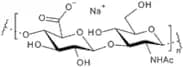
CAS:<p>Gycosaminoglycan in many organs; joint lubricant and shock absorber</p>Fórmula:(C14H20NO11Na)nPureza:Min. 95%Cor e Forma:Powder2-Acetamido-1,3,4-tri-O-butanoyl-2-deoxy-D-mannopyranose
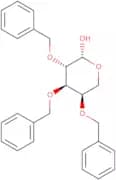
CAS:<p>2-Acetamido-1,3,4-tri-O-butanoyl-2-deoxy-D-mannopyranose is a protected mannosamine carbohydrate.</p>Fórmula:C23H39NO9Pureza:Min. 95%Peso molecular:473.56 g/mol2,3,4-Tri-O-benzyl-b-D-arabinopyranose
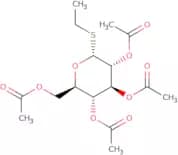
CAS:2,3,4-Tri-O-benzyl-b-D-arabinopyranose (TBA) is a sugar that is found in the skin of primates. It has been shown to promote epidermal growth factor (EGF) production and maturation of the epidermis. TBA has also been shown to have a gestational age effect on epidermal growth. This compound has been used as a synchronizing agent for animal studies in vitro and has been investigated as a treatment for cesarean sections, which may help to reduce the risk of infection and postoperative complications. TBA has also been used to treat skin diseases such as psoriasis and ichthyosis by stimulating keratinocyte proliferation and differentiation.Fórmula:C26H28O5Pureza:Min. 95%Cor e Forma:PowderPeso molecular:420.5 g/molEthyl 2,3,4,6-tetra-O-acetyl-a-D-thioglucopyranoside
CAS:Ethyl 2,3,4,6-tetra-O-acetyl-a-D-thioglucopyranoside is an orthorhombic sugar that is composed of a mannopyranoside and a thioglucopyranoside. The crystal structure has been determined to be space group P2(1)/c.Fórmula:C16H24O9SPureza:Min. 98 Area-%Cor e Forma:White PowderPeso molecular:392.42 g/molN-(Phenyl-2-methyl-1-propenyl)imino-2,3,4,6-tetra-O-pivaloyl-D-glucopyranoside
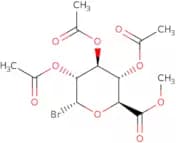
N-(Phenyl-2-methyl-1-propenyl)imino-2,3,4,6-tetra-O-pivaloyl-D-glucopyranoside is an Oligosaccharide that contains a sugar. It has been custom synthesized for the purpose of fluorination and methylation reactions. The purity of this product is high and it has been assigned the CAS number: 3642.Fórmula:C36H53NO9Pureza:Min. 95%Peso molecular:643.81 g/mol1-Bromo-2,3,4-tri-O-acetyl-a-D-glucuronide methyl ester
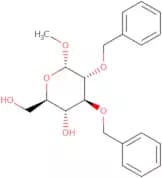
CAS:<p>1-Bromo-2,3,4-tri-O-acetyl-a-D-glucuronide methyl ester is a protected D-glucoronic acid with an alpha bromide at the anomeric position ready to undergo glycosylation reactions with suitable glycoside acceptors. Pharmaceutically active compounds have been used as acceptors to form β-linked D-glucuronide prodrugs which can be used to modify pharmacokinetics, improve solubility and lower the toxicity of the drug.</p>Fórmula:C13H17BrO9Pureza:Min. 80%Peso molecular:397.17 g/molMethyl 2,3-di-O-benzyl-α-D-glucopyranoside
CAS:Methyl 2,3-di-O-benzyl-a-D-glucopyranoside is a chiral sugar that can be synthesized by sulfidation of methyl 1,2,3,4-tetra-O-benzyloxycarbonyl-a-D-glucopyranoside. This sugar was used in the synthesis of oxathianes and sulfones as well as other synthetic methodology.Fórmula:C21H26O6Pureza:Min. 95%Cor e Forma:PowderPeso molecular:374.43 g/mol1,2:5,6-Di-O-isopropylidene-3-O-methanesulfonyl-α-D-glucofuranose
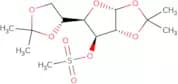
CAS:<p>A protected glucofuranose.</p>Fórmula:C13H22O8SPureza:Min. 95%Cor e Forma:White To Off-White SolidPeso molecular:338.37 g/mol5-Azepan-1-yl-5-deoxy-1,2-isopropylidene-a-D-xylofuranose
CAS:<p>5-Azepan-1-yl-5-deoxy-1,2-isopropylidene-a-(D)-xylofuranose (ADXF) is a synthetic glycoside that was synthesized in order to explore the potential of ADXF as a drug candidate. ADXF has shown promising antiinflammatory and anticancer activities. The synthesis of ADXF starts with the protection of the hydroxyl group at the anomeric center with acetate and then the glycosylation with azepane and 5-deoxy-1,2 isopropylidene erythronolide B. This synthesis also includes fluorination and methylation steps, which are necessary for modifying the sugar structure.</p>Fórmula:C14H25NO4Pureza:Min. 95%Cor e Forma:Brown solid.Peso molecular:271.35 g/mol2-Methylphenyl 2-acetamido-2-deoxy-β-D-glucopyranoside
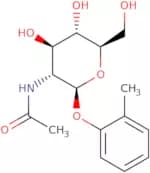
CAS:2-Methylphenyl 2-acetamido-2-deoxy-b-D-glucopyranoside is a fluorinated glycosylation product that is synthesized by custom synthesis. It is a complex carbohydrate with high purity and modification.Fórmula:C15H21NO6Pureza:Min. 95%Cor e Forma:PowderPeso molecular:311.33 g/mol4,6-O-Ethylidene-D-glucopyranose
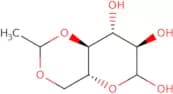
CAS:4, 6-O-Ethylidene-D-glucopyranose is a glucose analogue that inhibits sugar transport. It has been shown to inhibit glucose transport by binding to the hydroxyl group on the red cell membrane. This binding prevents the sugar from entering the cell and as a result, glucose accumulates in the blood. 4, 6-O-Ethylidene-D-glucopyranose also binds to tryptophan fluorescence and inhibits cytochalasin B binding to tryptophans that are located on the plasma membrane of eukaryotic cells.Fórmula:C8H14O6Pureza:Min. 90 Area-%Cor e Forma:PowderPeso molecular:206.19 g/mol2-Acetamido-2-deoxy-b-D-glucopyranosyl azide
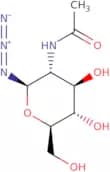
CAS:<p>2-Acetamido-2-deoxy-b-D-glucopyranosyl azide is a biodegradable, environmentally oriented compound that has been shown to be compatible with polylactic acid. This compound has shown unevenness in the hydroxy group and a functional group sensitive to hydrolysis. The molecular weight of 2-acetamido-2-deoxy-b-D-glucopyranosyl azide is 154.14 g/mol. It is soluble in water and has a natural environment frequency of 0.0005%.</p>Fórmula:C8H14N4O5Pureza:Min. 95 Area-%Cor e Forma:White PowderPeso molecular:246.22 g/mol2-Azido- 2- deoxy- 2, 4- di- C- methyl- 3, 4- O- isopropylidene - L- ribonic acid d- lactone
2-Azido-2-deoxy-2,4-di-C-methyl-3,4-O-isopropylidene -L-ribonic acid d -lactone is a synthetic carbohydrate. It is a monosaccharide that has been modified by the addition of fluorine atoms to the 2 and 4 positions of the ribose ring. The chemical name for this compound is 2-[(4S)-2,2'-azido]-2,4-[1S,3R,4R]dimethyl - 3,4-[1S,3R]oxirane - O-[(1Z)-1-(ethoxycarbonyl)propylidene]- L -ribonic acid d -lactone. This compound can be used in glycosylation reactions with saccharides and other carbohydrates that are not more than two carbons long. It can also be methylated at the 2 position on the ribPureza:Min. 95%2-Fluoro-4-nitrophenyl 2-azido-2-deoxy-b-D-galactopyranoside
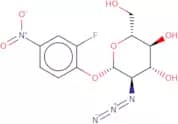
CAS:2-Fluoro-4-nitrophenyl 2-azido-2-deoxy-b-D-galactopyranoside is a synthetic glycosylation agent that has been used in the synthesis of oligosaccharides and polysaccharides. This reagent is also used for click modification, which is a chemical reaction that produces an azide group on the saccharide. Click modification can be used to modify complex carbohydrates with fluorine or methyl groups. 2-Fluoro-4-nitrophenyl 2-azido-2-deoxy-b-D galactopyranoside has a CAS number of 2088233–73–0.Fórmula:C12H13FN4O7Pureza:Min. 95%Cor e Forma:Off-White To Yellow SolidPeso molecular:344.25 g/mol2,3-Anhydro-3,4-O-ispropylidene-7-O-triphenylmethyl-D-glycero-D-altro-heptonic acid diethylamide
2,3-Anhydro-3,4-O-ispropylidene-7-O-triphenylmethyl-D-glycero-D-altroheptonic acid diethylamide is a custom synthesis that has been modified by fluorination and methylation. The compound is a monosaccharide with an Oligosaccharide chain. It is a synthetic molecule that can be found in the CAS No. 899072. This compound is a saccharide and a carbohydrate. It is complex carbohydrate that consists of glucose and galactose units.Pureza:Min. 95%GD1a-Ganglioside
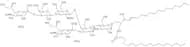
CAS:GD1a ganglioside is one of the major gangliosides in neuronal and glial membranes. It has a core tetrasaccharide structure (Galβ1,3GalNAcβ1,4Galβ1,4Glc) with sialic acids linked α2,3/α2,8 to the inner galactose residue, α2,3 to the outer galactose residue, and ceramide linked β to position 1 on the reducing terminal glucose residue (Ledeen, 2009). GD1a ganglioside interacts with myelin-associated glycoprotein (MAG) and is essential for long-term axon-myelin stability. GD1a ganglioside plays a role in viral infection as it is a receptor for viral glycoproteins in rotavirus and paramyxovirus 1. The hexasaccharide GD1a moiety was also found on a glycoprotein that acts as a receptor for adenovirus type 37. GD1a ganglioside also interacts with botulinum neurotoxin (BoNT) and is crucial for its entry into cells (Kolter, 2012). The functional significance of ammonia in the brain is not fully understood see: (Modi, 1994).Fórmula:C84H148N4O39Pureza:Min. 95%Cor e Forma:PowderPeso molecular:1,838.08 g/molIsomaltopentaose
CAS:<p>Produced from high maltose syrup by treatment with transglucosidase</p>Fórmula:C30H52O26Pureza:Min. 95%Cor e Forma:White PowderPeso molecular:828.7 g/mol2-C-Hydroxymethyl-2,3:5,6-di-O-isopropylidene-L-gulono-1.4-lactone
<p>2-C-Hydroxymethyl-2,3:5,6-di-O-isopropylidene-L-gulono-1.4-lactone is a Custom synthesis that is used in the production of polysaccharides and other carbohydrates. It is a polysaccharide that contains many glycosylated sugars; it can be modified with methyl groups or fluorine atoms. Carbohydrates are polymers of monosaccharides linked together by glycosidic bonds. The basic structure of a carbohydrate consists of a central carbon atom to which two hydroxyl (OH) groups are attached, and three on each side. This molecule also has an oxo group, which reduces the glycosidic bond to an ether linkage. 2CGHGL is used as an additive for food products and pharmaceuticals due to its high purity and low cost.</p>Pureza:Min. 95%1,2,3,4-Tetra-O-benzyl-6-O-tert-butyldiphenylsilyl-b-D-galactopyranose
1,2,3,4-Tetra-O-benzyl-6-O-tert-butyldiphenylsilyl-b-D-galactopyranose is a custom synthesis of an oligosaccharide. It is a complex carbohydrate that is composed of a glycosylated polysaccharide with a molecular weight of 676. It has been modified by methylation and fluorination (a click modification). The carbohydrate has been synthesized using high purity, fluoroquinolone resistant reagents.Fórmula:C50H54O6SiPureza:Min. 95%Peso molecular:779.07 g/molDextrorphan O-β-D-glucuronide
CAS:Produto ControladoDextrorphan O-b-D-glucuronide is a glycosylated form of dextrorphan, an opioid analgesic. The synthesis of this compound is accomplished by the attachment of a glucose to dextrorphan via an ether bond. Dextrorphan O-b-D-glucuronide has been shown to be more potent than the parent drug. This product is available in custom synthesis and click modification. It can be used for a variety of purposes, including as a building block for other molecules, such as oligosaccharides, sugar, or synthetic compounds. It also may be used for fluorination or methylation reactions.Fórmula:C23H31NO7Pureza:Min. 95%Cor e Forma:PowderPeso molecular:433.51 g/molDisialyllactose sodium
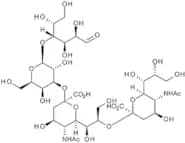
CAS:Disialylated tetrasaccharide naturally present in human breast milk that has been identified as one of the binding sites of the C fragment of the clostridial tetanus toxin.Fórmula:C34H54N2O27Na2Pureza:Min. 90 Area-%Cor e Forma:White PowderPeso molecular:968.77 g/mol2-Acetamido-1,2-dideoxy-galactonojirimycin
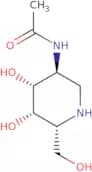
CAS:2-Acetamido-1,2-dideoxy-galactonojirimycin is a microbial infection drug that belongs to the class of chemical species. It has been shown to be a potent inhibitor of sodium carbonate (NaCO) and can be used as a control in analytical studies. This drug also inhibits vasoactive intestinal peptide, which may lead to the development of cancer. 2-Acetamido-1,2-dideoxy-galactonojirimycin is an acyl chain with galacturonic acid and can be used as diagnostic agents for human serum and hepatic steatosis. It has been shown to have anti-inflammatory properties that are useful for the treatment of autoimmune diseases.Fórmula:C8H16N2O4Pureza:Min. 95%Cor e Forma:PowderPeso molecular:204.22 g/mol5-Deoxy-L-ribose
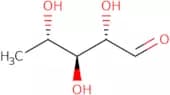
CAS:5-Deoxy-L-ribose is found in a variety of organisms, including humans. It is stereoselective, with the (-) form being more common than the (+) form. 5-Deoxy-L-ribose is synthesized by the glycosidic bond between l-arabinose and D-ribose. This compound is an inexpensive way to produce 5-deoxy analogs of other sugars, such as glucose, fructose, and mannose. The biosynthesis of 5-deoxy-L-ribose relies on a molybdenum cofactor and involves oxidation of L-arabinonate by aldehyde oxidase to give L-xylulose. Lactate dehydrogenase converts this into D-xylulose. Dihydroorotate reductase then reduces this to give D-(+)-5--deoxy--D--erythro--pentitol phosphate, which cyclFórmula:C5H10O4Pureza:Min. 95%Cor e Forma:Slightly Yellow Clear LiquidPeso molecular:134.13 g/mol2, 4- Anhydro-5-O-benzyl- 6- deoxy- L- mannonic acid methyl ester
<p>2, 4-Anhydro-5-O-benzyl-6-deoxy-L-mannonic acid methyl ester is a synthetic oligosaccharide that can be used as a fluorinated carbohydrate. It is modified by the addition of methyl groups to the hydroxyl group of an anhydro sugar moiety. It can be used in various applications such as glycosylation and click chemistry. 2, 4-Anhydro-5-O-benzyl-6-deoxy--L--mannonic acid methyl ester has CAS number 167801–91–9 and molecular weight of 538.4 g/mol. It is soluble in water and ethanol.</p>Pureza:Min. 95%N- [(Phenylmethoxy) carbonyl] glycylglycyl- 2- amino- 2- deoxy-a- D- manno- 2- heptulofuranosonic acid methyl ester
CAS:N- [(Phenylmethoxy) carbonyl] glycylglycyl- 2- amino- 2- deoxy-a- D- manno- 2- heptulofuranosonic acid methyl ester is a custom synthesis of an oligosaccharide, polysaccharide, and a complex carbohydrate. It is modified with methylation, glycosylation, and click modification. The CAS number for this compound is 161086-37-9. This product is highly pure, fluorinated, and synthetic.Pureza:Min. 95%Methyl 2,3,4-tri-O-pivaloyl-6-O-triisopropylsilyl-a-D-mannopyranoside
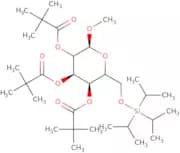
Methyl 2,3,4-tri-O-pivaloyl-6-O-triisopropylsilyl-a-D-mannopyranoside is a custom synthesis of an oligosaccharide with high purity. It is a complex carbohydrate that has been modified to have fluorination. The modification of the saccharide was done by Click chemistry, which is a type of radical reaction. Methyl 2,3,4-tri-O-pivaloyl-6-O-triisopropylsilyl-a-D-mannopyranoside is a monosaccharides and sugar that has been synthesized.Fórmula:C31H58O9SiPureza:Min. 95%Peso molecular:602.89 g/mol1,2-O-Cyclohexylidene-a-D-glucofuranose
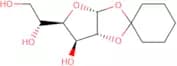
CAS:1,2-O-Cyclohexylidene-a-D-glucofuranose is a fluorinated cyclic monosaccharide. It is a synthetic oligosaccharide that belongs to the class of complex carbohydrates. This product has been modified by glycosylation, methylation, and click chemistry. The chemical name for this compound is 1,2:6,7-di-O-isopropylidene-α-D-glucofuranose. This product has not been evaluated by the U.S. Food and Drug Administration (FDA) so it should be used in laboratory research only.Fórmula:C12H20O6Pureza:Min. 95%Cor e Forma:PowderPeso molecular:260.28 g/moln-Octyl β-D-maltoside
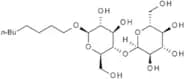
CAS:n-Octyl β-D-maltoside (OBM) is a fatty acid that is used as a sample preparation agent. OBM is chemically stable and has been shown to be non-carcinogenic in mammalian tissue. The structural analysis of OBM revealed that the molecule contains two nitrogen atoms, one on each end. In addition, OBM binds to antimicrobial peptides and inhibits their activity by preventing them from binding to their target site on the bacterial membrane. OBM also has anti-cancer properties due to its ability to prevent the proliferation of cervical cancer cells.Fórmula:C20H38O11Pureza:Min. 98 Area-%Cor e Forma:White PowderPeso molecular:454.51 g/molD-Tagatose
CAS:<p>D-Tagatose is a sugar that is found naturally in some dairy products such as yogurt. It is a complex carbohydrate that can be modified by methylation, fluorination, and click chemistry. D-Tagatose has been shown to have anti-inflammatory properties in animal studies and can inhibit the growth of bacteria such as Escherichia coli and Helicobacter pylori.<br>D-tagatose is water soluble, stable at high temperatures, and does not react with other compounds; it also has a CAS number of 87-81-0. D-tagatose can be custom synthesized to meet your needs.</p>Fórmula:C6H12O6Pureza:Min. 98.5 Area-%Peso molecular:180.16 g/mol1,2,3,4-Tetra-O-acetyl-6-deoxy-6,6,6-trifluoro-L-galactose
CAS:<p>fucosylation inhibitor</p>Fórmula:C14H17F3O9Peso molecular:386.28 g/mol1,2-O-Di-O-acetyl-5-O-benzoyl-3-deoxy-3C-methyl-D-ribofuranose
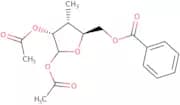
CAS:1,2-O-Di-O-acetyl-5-O-benzoyl-3-deoxy-3C-methyl-D-ribofuranose is a fluorinated monosaccharide that can be used as a building block for the synthesis of complex carbohydrates. It is a custom synthesis and is available in high purity.Fórmula:C17H20O7Pureza:Min. 95%Peso molecular:336.34 g/mol6-a-D-Glucopyranosyl maltotriose
CAS:<p>Substrate for glucoamylases; derived from pullulan using pullulanase</p>Fórmula:C24H42O21Pureza:Min. 97 Area-%Cor e Forma:PowderPeso molecular:666.58 g/mol






![(1R) -1- [(2S, 3R,4S) -4-Hydroxymethyl-3- hydroxy- 1- azetidinyl] -1, 2- ethanediol hydrochloride](/_next/image/?url=https%3A%2Fstatic.cymitquimica.com%2Fproducts%2F3D%2Fthumb-webp%2FMH163402.webp&w=3840&q=75)

![(3R, 4S, 5R, 6R, 7S) -1- Azabicyclo[4.2.0] octane- 3, 4, 5, 7- tetrol](/_next/image/?url=https%3A%2Fstatic.cymitquimica.com%2Fproducts%2F3D%2Fthumb-webp%2FMA163391.webp&w=3840&q=75)






![N- [(Phenylmethoxy) carbonyl] glycylglycyl- 2- amino- 2- deoxy-a- D- manno- 2- heptulofuranosonic …](/_next/image/?url=https%3A%2Fstatic.cymitquimica.com%2Fproducts%2F3D%2Fthumb-webp%2FMP163942.webp&w=3840&q=75)