Glicociência
Subcategorias de "Glicociência"
- Amino açúcares(108 produtos)
- Anticorpos Glico-Relacionados(282 produtos)
- Glicolípidos(46 produtos)
- Glicosaminoglicanos (GAGs)(55 produtos)
- Glicosídeos(419 produtos)
- Monossacáridos(6.616 produtos)
- Oligossacarídeos(3.718 produtos)
- Polissacáridos(502 produtos)
Foram encontrados 11011 produtos de "Glicociência"
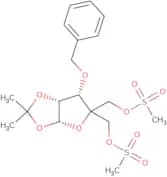
3-O-Benzyl 4-C-(methanesulfonyloxymethyl)-5-O-methanesulfonyl-1,2-O-isopropylidene-a-D-ribofuranose
CAS:3-O-Benzyl 4-C-(methanesulfonyloxymethyl)-5-O-methanesulfonyl-1,2-O-isopropylidene-a-D-ribofuranose is an Oligosaccharide with a CAS number of 293751-01-6. It has been synthesized by Click modification and has a purity of greater than 98%. The glycosylation is custom synthesis. Glycosylations are modifications to saccharides that are added to the sugar chain in order to increase the biological activity or improve the pharmacokinetics of the drug.Fórmula:C18H26O10S2Pureza:Min. 98 Area-%Cor e Forma:White PowderPeso molecular:466.53 g/mol5-Azido- 5, 6- dideoxy- 2, 3- O-isopropylidene- D- gulonic acid-1,4-lactone
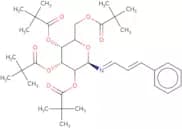
CAS:5-Azido-5,6-dideoxy-2,3-O-isopropylidene-D-gulonic acid-1,4-lactone is a carbohydrate that belongs to the group of saccharides. It is a synthetic sugar that has been modified with fluorine atoms on the 2 and 3 position of the sugar. 5-Azido-5,6-dideoxygulonic acid 1,4lactone has been shown to be resistant to enzymatic degradation by α amylase and β amylase. The compound also has a high level of purity (>98%) and custom synthesis capabilities.Pureza:Min. 95%N-(Phenyl-1-propenyl)imino-2,3,4,6-tetra-O-pivaloyl-D-glucopyranoside
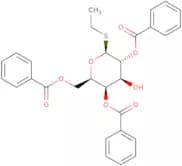
N-(Phenyl-1-propenyl)imino-2,3,4,6-tetra-O-pivaloyl-D-glucopyranoside (NPG) is a synthetic oligosaccharide. It is an Methylation and Click modification of the natural glycosylation product of glucose with pivalic acid. NPG has been shown to inhibit the Glycosylation enzyme by methylating it and preventing it to be able to catalyze the attachment of a sugar molecule to an amino acid residue. This inhibition prevents the production of complex carbohydrates in bacteria. NPG is also fluorinated at the 2,3,4,6 positions on the glucose ring which allows for better binding to bacterial cells. NPG has been shown to bind specifically to mycobacterial cell wall glycolipids and inhibit their synthesis as well as other bacterial cells such as staphylococcus aureus.Fórmula:C35H51NO9Pureza:Min. 95%Peso molecular:629.78 g/molEthyl 2,4,6-tri-O-benzoyl-b-D-thiogalactopyranoside
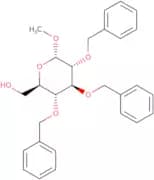
CAS:Ethyl 2,4,6-tri-O-benzoyl-b-D-thiogalactopyranoside is a custom synthesis that is a modification of an oligosaccharide. It is a glycosylation and carbonylation product of an ethyl 2,4,6-tri-O-(benzoyl)-b-D-thioglucopyranoside. This product has been fluorinated and methylated. Ethyl 2,4,6-tri-O-(benzoyl)-b-D-thiogalactopyranoside is a polysaccharide with a complex carbohydrate structure. It has been modified by glycosylation and carbonylation.Fórmula:C29H28O8SPureza:Min. 95%Cor e Forma:White Off-White PowderPeso molecular:536.59 g/molMethyl 2,3,4-tri-O-benzyl-α-D-glucopyranoside
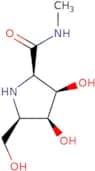
CAS:Resource for the 6-O-modification of Glc e.g. in glucuronic acid synthesisFórmula:C28H32O6Pureza:Min. 95%Cor e Forma:White PowderPeso molecular:464.55 g/mol(2R, 3R, 4S, 5R) -3, 4- Dihydroxy- 5- (hydroxymethyl) - N- methyl-2- pyrrolidinecarboxami de
CAS:(2R, 3R, 4S, 5R) -3, 4- Dihydroxy- 5- (hydroxymethyl) - N- methyl-2- pyrrolidinecarboxami de is an Methylation product of 2-pyrrolidinone. It is a white to off-white solid. This product has been modified with Click chemistry to create a glycosylation site at the C6 position. It is soluble in water and alcohols. The CAS number for this product is 1591783-03-7.Pureza:Min. 95%Methyl 5-Acetamido-N-benzyl-5,6-dideoxy-2,6-imino-3-O-benzyl-L-galactofuranoside
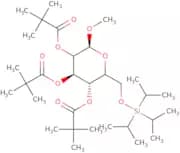
Methyl 5-Acetamido-N-benzyl-5,6-dideoxy-2,6-imino-3-O-benzyl-L-galactofuranoside is a modified carbohydrate with a methyl group at the C5 position. It is synthesized by modification of the saccharide and has a CAS number. This compound is used as a custom synthesis for synthesis of complex carbohydrates.Pureza:Min. 95%Methyl 2,3,4-tri-O-pivaloyl-6-O-triisopropylsilyl-a-D-galactopyranoside
Methyl 2,3,4-tri-O-pivaloyl-6-O-triisopropylsilyl-a-D-galactopyranoside is a glycosylated sugar that can be custom synthesized or purchased. This product is a fluorinated oligosaccharide with a methyl group at C2. The chemical name for this modified sugar is O-(3,4,5,6-tetra-O-(1,1,1,3,3,3,-hexafluoroethoxy)propyl)-a-D-galactopyranose. It can be used in glycosylation reactions to modify the saccharides and it has an average purity of 99%. Methyl 2,3,4-tri-O-pivaloyl-6-O--triisopropylsilyl--a--D--galactopyranoside has a CASFórmula:C31H58O9SiPureza:Min. 95%Peso molecular:602.87 g/mol2,5-Anhydro-4-azido-4-deoxy-L-xylonic acid methyl ester
CAS:2,5-Anhydro-4-azido-4-deoxy-L-xylonic acid methyl ester is a custom synthesized carbohydrate that has been modified with glycosylation and methylation. This product can be used as a sugar or polysaccharide in the synthesis of complex carbohydrates. 2,5-Anhydro-4-azido-4-deoxy-L-xylonic acid methyl ester is an intermediate in the production of high purity monosaccharides for use in the manufacture of fluorinated saccharides. 2,5-Anhydro-4-azido-4-deoxy--L--xylonic acid methyl ester is also available from other suppliers.Pureza:Min. 95%2- Azido- 2- deoxy- 2- C- methyl-D- ribonic acid g- lactone
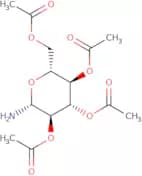
2-Azido-2-deoxy-2-C-methyl-D-ribonic acid g-lactone is a glycoside that can be used as a monosaccharide or an oligosaccharide. It's custom synthesis allows for the modification of saccharides, such as fluorination and methylation, to create complex carbohydrates. This product has been shown to have high purity with a CAS number in the range of 108411-41-8.Pureza:Min. 95%2,3,4,6-Tetra-O-acetyl-b-D-glucopyranosyl amine
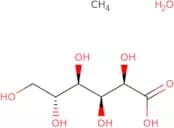
CAS:2,3,4,6-Tetra-O-acetyl-b-D-glucopyranosyl amine is an artificial carbohydrate with a fluorinated sugar. It is synthesized by reacting 2,3,4,6-tetra-O-acetyl-b-D-glucopyranosyl chloride with ammonia and methyl iodide. The compound can be used to modify the sugar residues of glycosides or polysaccharides. It has been shown to have high purity and can be used in the synthesis of complex carbohydrates.Fórmula:C14H21NO9Pureza:Min. 98 Area-%Cor e Forma:White PowderPeso molecular:347.32 g/molD-Gluconic acid magnesium (II) hydrate
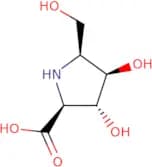
CAS:D-Gluconic acid magnesium (II) hydrate is a proton that is used as an enzyme inhibitor. It has been shown to inhibit glutamate pyruvate transaminase, which is involved in the production of inflammatory cytokines such as TNF-α and IL-1β. D-Gluconic acid magnesium (II) hydrate also inhibits creatine kinase, which plays an important role in the production of inflammatory cytokines. This compound has been shown to be effective at inhibiting bowel disease and inflammatory diseases.Fórmula:C6H11O7Mg·xH2OPureza:Min. 95%Cor e Forma:PowderPeso molecular:207.3 g/mol(3R, 4R, 5S) -3, 4- Dihydroxy- 5- (hydroxymethyl) - L- proline
CAS:(3R, 4R, 5S) -3, 4- Dihydroxy- 5- (hydroxymethyl) - L- proline is a fluorinated monosaccharide that is synthesized from D-glucose and D-alanine. It can be modified to form oligosaccharides or polysaccharides with various glycosylations, methylations, and click modifications. This compound has shown promising results in cancer research studies and is available at high purity.Pureza:Min. 95%1,3,4,6-Tetra-O-acetyl-2-[[2-(acetylthio)acetyl]amino]-2-deoxy-D-galactopyranose
CAS:1,3,4,6-Tetra-O-acetyl-2-[[2-(acetylthio)acetyl]amino]-2-deoxy-D-galactopyranose is a modified GalNAc analogueFórmula:C18H25NO11SPureza:Min. 95%Cor e Forma:PowderPeso molecular:463.46 g/mol3-Azidopropyl 2-acetamido-2-deoxy-3,4,6-tri-O-acetyl-b-D-glucopyranoside
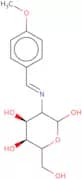
3-Azidopropyl 2-acetamido-2-deoxy-3,4,6-tri-O-acetyl-b-D-glucopyranoside is a synthetic carbohydrate. It is a modification of the natural saccharide 3,4,6 tri O acetyl b D glucopyranoside. The modification in this case is the addition of an azide group to one of the hydroxyl groups on the sugar. This product has a CAS number and can be custom synthesized to meet your specific needs. It is available in high purity and can be modified by methylation or glycosylation.Pureza:Min. 95%2-Deoxy-2-(4-methoxybenzyliden)imino-D-glucose
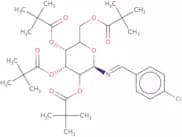
CAS:2-Deoxy-2-(4-methoxybenzyliden)imino-D-glucose is a modified carbohydrate that is used for the synthesis of oligosaccharides, polysaccharides, and glycosaminoglycans. This compound is also used as a substrate for methylation reactions. It can be synthesized from D-glucose by the addition of a 2-(4-methoxybenzylidene) group to the 2′ position of the carbon atom on the anomeric carbon. The structure of this compound has been determined by X-ray crystallography.Fórmula:C14H19NO6Pureza:Min. 95%Cor e Forma:White to off-white solid.Peso molecular:297.3 g/molN-(4-Chlorobenzyliden)imino-2,3,4,6-tetra-O-pivaloyl-D-glucopyranoside
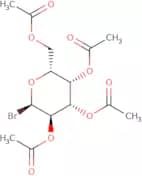
This product is a complex carbohydrate that is custom synthesized by our experts. It is made of Oligosaccharide, Carbohydrate, Custom synthesis, Synthetic, High purity, CAS No., Monosaccharide, Methylation, Glycosylation and Polysaccharide. This product has the following properties: Fluorination, saccharide.Fórmula:C33H48ClNO9Pureza:Min. 95%Peso molecular:638.19 g/mol1-Bromo-2,3,4,6-tetra-O-acetyl-α-D-galactopyranoside
CAS:Donor for Koenigs-Knorr type galactosylation and other anomeric substitutionsFórmula:C14H19BrO9Peso molecular:411.21 g/molRef: 3D-B-8975
1kgA consultar100gA consultar250gA consultar500gA consultar2500gA consultar-Unit-ggA consultarTri-b-GalNAcAc3-amine TFA
CAS:Tri-b-GalNAc-amine formate salt is an ASGPR-targeted ligand for therapeutics and diagnostics. With three terminal beta-GalNAc (N-acetylgalactosamine) sugars in a trivalent configuration, its high-affinity permits binding to the asialoglycoprotein receptor (ASGPR) on hepatocytes. Notably, the presence of a protonated primary amine group allows for chemoselective bioconjugation with various functional moieties via established amide bond formation techniques. Its salt form (TFA salt) enhances the water solubility of the molecule, facilitating its use in aqueous reaction buffers commonly employed in bioconjugation protocols. This combination of specific ASGPR targeting and a readily available conjugation site makes tri-b-GalNAc-amine TFA a valuable tool for developing customized and targeted drug-GalNAc conjugates, siRNA delivery vehicles, or ASGPR-specific probes. The use of TFA as a counterion ensures efficient deprotonation of the amine during conjugation, potentially improving reaction efficiency.
Fórmula:C79H128N10O36C2HF3O2Pureza:Min. 95 Area-%Peso molecular:1,907.93 g/molTri-b-GalNAcAc3-NHCbz
CAS:This peracetylated tri-b-GalNAcAc3-NHCbz, a triantennary N-acetylgalactosamine (GalNAc) ligand with protected functionalities, serves as a valuable building block for ASGPR-targeted therapies. Its three branches or arms, each ending in a GalNAc sugar, ensure strong binding to hepatocyte ASGPR. However, the key feature lies in its protective groups: acetylated sugars allow for controlled removal to expose reactive sites for conjugation, while the Cbz-protected amine provides stability and can be selectively cleaved to introduce a reactive amine group for further biomolecule attachment, ultimately enabling researchers to tailor Tri-b-GalNAcAc3-NHCbz into customized conjugates for specific therapeutic applications.Fórmula:C87H134N10O38Pureza:Min. 97 Area-%Peso molecular:1,928.04 g/molNonyl β-D-thiomaltopyranoside
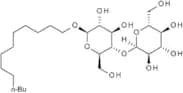
CAS:Nonyl b-D-thiomaltopyranoside is a custom synthesis of an oligosaccharide and polysaccharide. It is prepared by the modification of saccharides with methylation, glycosylation and carbamylation. The compound has CAS No. 148565-55-3 and can be used as a fluorescent probe for carbohydrate binding proteins. Nonyl b-D-thiomaltopyranoside is a high purity synthetic sugar that has been fluorinated. Click modification has been performed on this sugar to create a fluorescent probe for carbohydrate binding proteins. This sugar has also been synthesized using the technique of glycosylation, which involves the addition of monosaccharides to form disaccharides or polysaccharides.Fórmula:C21H40O10SPureza:Min. 95%Cor e Forma:White PowderPeso molecular:484.6 g/molN-Acetyl-D-glucosamine - plant source
CAS:Please enquire for more information about N-Acetyl-D-glucosamine - plant source including the price, delivery time and more detailed product information at the technical inquiry form on this page
Fórmula:C8H15NO6Pureza:Min. 98 Area-%Peso molecular:221.21 g/molMonosialyl, monofucosyllacto-N-neohexaose
Please enquire for more information about Monosialyl, monofucosyllacto-N-neohexaose including the price, delivery time and more detailed product information at the technical inquiry form on this pageFórmula:C57H95N3O43Pureza:Min. 95%Peso molecular:1,510.36 g/molEsculin - Anhydrous
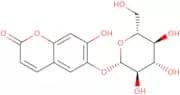
CAS:Esculin is a natural product obtained from the plant Aesculus hippocastanum. Esculin has been shown to have anti-inflammatory properties in experimental models. It also has been shown to inhibit the activity of both human and animal renin, suppressing kidney fibrosis. Esculin was found to be more effective than indomethacin in preventing the progression of renal disease induced by the model system of chronic kidney disease. Esculin also has antioxidant properties and can reduce oxidative stress caused by free radicals, which may contribute to its anti-inflammatory effects. Esculin is a coumarin derivative that can be used as a chromatographic stationary phase for separation and identification of various chemical compounds.Fórmula:C15H16O9Pureza:Min. 98 Area-%Cor e Forma:PowderPeso molecular:340.28 g/molN,N-Bis[3-D-gluconamidopropyl]cholamide
CAS:N,N-Bis[3-D-gluconamidopropyl]cholamide is a potent inhibitor of the cytochrome P450 enzyme. It has been shown to bind to peptides and monoclonal antibodies. This drug also inhibits the acyl chain elongation in the chemical process that produces prostaglandins, leading to their depletion. N,N-Bis[3-D-gluconamidopropyl]cholamide is also an inhibitor of plant α subunit, which is involved in the synthesis of fatty acids and phytohormones. This agent has a high affinity for solanum tuberosum (potato) and can be used as a marker for this species. The kinetic energy of particles enhanced by N,N-bis[3-D-gluconamidopropyl]cholamide was found to be dependent on the fatty acid content of the molecule. The optimumFórmula:C42H75N3O16Pureza:Min. 95.0 Area-%Cor e Forma:PowderPeso molecular:878.06 g/molN-(3,4,6-Triacetyl-N-azidoacetylmannosamine)-cis-2-ethyl-3-formylacrylamideglycoside
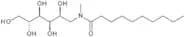
CAS:Please enquire for more information about N-(3,4,6-Triacetyl-N-azidoacetylmannosamine)-cis-2-ethyl-3-formylacrylamideglycoside including the price, delivery time and more detailed product information at the technical inquiry form on this pageFórmula:C20H27N5O10Pureza:Min. 95%Peso molecular:497.45 g/molN-Decanoyl-N-methylglucamine
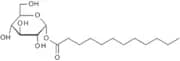
CAS:N-Decanoyl-N-methylglucamine is a fatty acid that is used as a cationic surfactant in detergents and cleaning products. It has been shown to have conformational properties that can be influenced by the acyl chain length. N-Decanoyl-N-methylglucamine has also been shown to bind to antibodies and other proteins, which may lead to antibody response or changes in their conformation. N-Decanoyl-N-methylglucamine binds to receptors on cells, triggering cell lysis and monoclonal antibody production. The optimum pH for this chemical is between 5 and 6, and it has been shown to undergo titration calorimetry at temperatures greater than 100°C.Fórmula:C17H35NO6Pureza:Min. 95%Cor e Forma:White PowderPeso molecular:349.47 g/mol1-Oxododecyl a-D-glucopyranoside
CAS:1-Oxododecyl a-D-glucopyranoside is a synthetic, high purity, and complex carbohydrate that has been synthesized with methylation, saccharide, polysaccharide, click modification and modification. This product is custom synthesized to order for the synthesis of oligosaccharides. 1-Oxododecyl a-D-glucopyranoside is available in CAS No. 64395-91-1 and has been fluorinated for stability and modification.Fórmula:C18H34O7Pureza:Min. 95%Cor e Forma:White To Off-White SolidPeso molecular:362.46 g/molHexyl β-D-glucopyranoside
CAS:Hexyl β-D-glucopyranoside is a 5-HT agonist that has been shown to activate the hydrolysis of phospholipids in the cell membrane. Hexyl β-D-glucopyranoside also increases the activity of ATPase, which is an enzyme that transports adenosine triphosphate (ATP) across membranes. This compound has been shown to inhibit the growth of lymphocytes and stimulate the growth of epidermal cells. It also inhibits prostaglandin synthesis and has been shown to reduce inflammation in animal studies. Hexyl β-D-glucopyranoside has been shown to have transport properties and can be found in fatty acids and cholesterol esters. It is used as a reagent for acid analysis, cell signaling pathways, and human liver function tests. This chemical can also be used as a growth factor for cells, especially for monoclonal antibody production when combined with an immunogen orFórmula:C12H24O6Pureza:Min. 98.0 Area-%Cor e Forma:PowderPeso molecular:264.32 g/molUndecyl a-D-maltopyranoside
CAS:Undecyl a-D-maltopyranoside is a fluorescent dye that is used in immunohistochemical and immunocytochemical techniques. It has been shown to have excellent photostability, and is also useful for the detection of sulfides. This dye emits light at 520 nm when excited with laser light. The emission spectrum can be changed by adding other dyes, such as fluorescein or rhodamine, to the molecule. The addition of these dyes can also increase its photostability, which makes it an excellent candidate for use in confocal microscopy techniques. Undecyl a-D-maltopyranoside has been shown to react with proteins through an immunoreaction technique.Fórmula:C23H44O11Pureza:Min. 95%Cor e Forma:PowderPeso molecular:496.59 g/mol2-((4,4,5,5,5-Pentafluoropentyl)oxy)octyl b-D-maltopyranoside
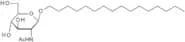
2-((4,4,5,5,5-Pentafluoropentyl)oxy)octyl ?-D-maltopyranoside is a fluorinated surfactant that can be used as a substitute for traditional detergents in holding membranes proteins in the soluble fraction and improve their stability.Fórmula:C25H43F5O12Pureza:Min. 95%Cor e Forma:SolidPeso molecular:630.59 g/molHexadecyl 2-acetamido-2-deoxy-b-D-glucopyranoside
CAS:Hexadecyl 2-acetamido-2-deoxy-b-D-glucopyranoside is a monosaccharide that is mediated by the enzyme 2,3-bisphosphoglycerate (2,3BPG) synthase. It is a key intermediate in the synthesis of glycerol 3 phosphate, which is a precursor for glycerol and phosphoglycerides in plants. Hexadecyl 2-acetamido-2-deoxy-b-D-glucopyranoside can be found in chloroplasts and leaves. This compound is also used as a spacer in liposomes, as well as to clone DNA sequences.Fórmula:C24H47NO6Pureza:Min. 95%Peso molecular:445.63 g/molDodecyl α-D-maltopyranoside
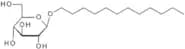
CAS:Dodecyl a-D-maltopyranoside is a solubilized fat that has an optimum pH of 11. It is soluble in chloroform, ethanol, and water. The molecular weight of dodecyl a-D-maltopyranoside is 587.87 g/mol. Dodecyl a-D-maltopyranoside can be used as an absorption marker for lipids in the human liver, wheat germ, and chloroplasts. Dodecyl a-D-maltopyranoside contains two monomers and four subunits. Dodecyl a-D-maltopyranoside can be used to measure the density of lipids in the cell membrane by nmr spectra.Fórmula:C24H46O11Pureza:Min. 95%Cor e Forma:PowderPeso molecular:510.62 g/moln-Dodecyl-beta-D-glucopyranoside
CAS:Non-ionic detergent; solubilises membrane-bound proteins
Fórmula:C18H36O6Cor e Forma:White PowderPeso molecular:348.47 g/molTridecyl β-D-maltopyranoside
CAS:Tridecyl b-D-maltopyranoside is a high purity, custom synthesis sugar that can be fluorinated, glycosylated, methylated, and modified. It has CAS No. 93911-12-7 and can be used as an oligosaccharide or monosaccharide in the synthesis of complex carbohydrates. Tridecyl b-D-maltopyranoside is also used in click modifications.
Fórmula:C25H48O11Pureza:Min. 95%Cor e Forma:PowderPeso molecular:524.64 g/mol6-O-Desmethyl donepezil glucuronide sodium (Mixture of Diastereomers)
CAS:Please enquire for more information about 6-O-Desmethyl donepezil glucuronide sodium (Mixture of Diastereomers) including the price, delivery time and more detailed product information at the technical inquiry form on this pageFórmula:C29H35NO9•NaPureza:Min. 95%Peso molecular:540.59 g/molHexadecyl b-D-maltopyranoside
CAS:Hexadecyl b-D-maltopyranoside is a lamellar liquid crystal composed of octadecanol and hexadecyl b-D-maltopyranoside. It is an inorganic, crystalline polymorph that forms monomers and micelles with surfactant properties. Hexadecyl b-D-maltopyranoside has been shown to transduce x-ray data, which can be used in techniques such as microscopy. The lamellar phase of this compound may be metastable and depend on additives.Fórmula:C28H54O11Pureza:Min. 95%Cor e Forma:PowderPeso molecular:566.72 g/mol3-O-Benzyl-2-deoxy-1,6-di-O-methoxyphenyl-2-phthalimido-β-D-glucopyranoside
3-O-Benzyl-2-deoxy-1,6-di-O-methoxyphenyl-2-phthalimido-b-D-glucopyranoside is a synthetic glycosylation agent. It is a sugar with an Oligosaccharide structure. 3-O-Benzyl--2'-deoxy--1,6'-di--O--methoxyphenyl--2'-phthalimido--b--D--glucopyranoside has been synthesized by fluorination of the sugar and methylation of the benzyl group. Click modification can be used to modify the carbohydrate to create complex carbohydrates. This compound is made from natural ingredients and has a high purity level. Molecular weight: 592.24 g/mol CAS Number: 251300 EINECS Number: 208–831–3 Melting Point: 130°C (decFórmula:C35H33NO9Pureza:Min. 95%Peso molecular:611.64 g/molOctyl D-glucuronide methyl ester
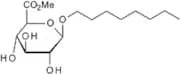
CAS:Octyl D-glucuronide methyl ester is a modification of the oligosaccharide octyl glucuronide. Octyl D-glucuronide methyl ester is a white to off-white solid with a molecular weight of 787. It has been synthesized using a custom synthesis, and is available in high purity and with high purity. The CAS number for this compound is 1423035-40-8.Fórmula:C15H28O7Pureza:Min. 95%Cor e Forma:White PowderPeso molecular:320.39 g/molDecyl b-D-thioglucopyranoside
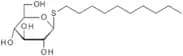
CAS:Decyl b-D-thioglucopyranoside is a saccharide that is a methylated derivative of the sugar glucose. It is used in the synthesis of oligosaccharides, glycosylations, and fluorinated carbohydrates. The compound can be custom synthesized to suit specific needs and has high purity.Fórmula:C16H32O5SPureza:Min. 95%Cor e Forma:PowderPeso molecular:336.49 g/molPolysorbate 80
CAS:Polysorbate 80, is a non-ionic surfactant, also known as Tween 80. It also acts as an emulsifier and a solubilizer, making it a useful tool in scientific industries such as pharmaceuticals, food and cosmetics.
Fórmula:C32H60O10Pureza:Min. 95%Cor e Forma:Clear LiquidPeso molecular:604.81 g/molDecyl 2-acetamido-3,4,6-tri-O-acetyl-2-deoxy-β-D-glucopyranoside
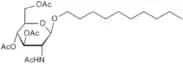
CAS:Decyl 2-acetamido-3,4,6-tri-O-acetyl-2-deoxy-b-D-glucopyranoside is a coordination compound that is used as an indicator for the determination of heavy metal ions in water. It has been shown to be stable and to provide consistent results. Decyl 2-acetamido-3,4,6-tri-O-acetyl-2,6-dideoxyglucopyranoside can be used to measure the concentration of heavy metal ions in aqueous solutions. The optimal conditions of use are pH 6 and a temperature range of 20°C - 25°C. The indicator is sensitive to light and should not be exposed to UV radiation.Fórmula:C24H41NO9Pureza:Min. 95%Peso molecular:487.58 g/molCYMAL-7 neopentyl glycol
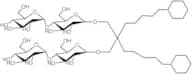
CAS:CYMAL-7 neopentyl glycol is a custom synthesis and is not commercially available. It is a complex carbohydrate that has been modified by methylation, glycosylation, and carbamate formation. CYMAL-7 neopentyl glycol has been modified with a fluorination reaction to give it high purity. This product has CAS No. 1423310-08-0 and is classified as an Oligosaccharide or Polysaccharide.Fórmula:C49H88O22Pureza:Min. 98 Area-%Cor e Forma:PowderPeso molecular:1,029.21 g/molDodecyl β-D-cellobioside
CAS:Dodecyl b-D-cellobioside is a surfactant that has been shown to form lamellar phases at low temperatures and high concentrations. It is primarily used as a stabilizer for emulsions, such as in ice cream, where it prevents the separation of fats and water. Dodecyl b-D-cellobioside is also known to be involved in the formation of bilayers, which are made up of one layer of hydrophobic molecules and one layer of hydrophilic molecules. This surfactant can exist as two conformations: a lyotropic phase with short chains (lamellar) or a synthetic phase with long chains (spreading). The lamellar phase is more stable than the synthetic phase because it has more contact with water. The lyotropic phase would be useful in an environment where water is scarce, like in outer space.Fórmula:C24H46O11Pureza:Min. 98 Area-%Cor e Forma:PowderPeso molecular:510.62 g/molHydroxypropylmethylcellulose acetate succinate
CAS:Produto ControladoHydroxypropylmethylcellulose acetate succinate is a polymer that has been shown to be effective in the treatment of autoimmune diseases. Hydroxypropylmethylcellulose acetate succinate is used as a model system for studying the interactions between polymers and proteins. The structure of this polymer consists of hydroxypropyl, succinate, and hypromellose acetate. This polymer forms hydrogen bonds with other polymers and proteins due to its anhydrous sodium content and amorphous nature.Fórmula:C10H22O9Cor e Forma:White PowderPeso molecular:286.28Octyl α-D-mannopyranoside
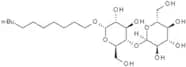
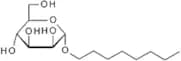
CAS:Octyl α-D-mannopyranoside is an organic chemical compound that is a methylated saccharide. It is the product of the reaction of octanol with mannose and can be used for glycosylation, fluorination, and complex carbohydrate synthesis. This product has high purity, custom synthesis, and CAS No. 124650-29-9. It is also a methylated saccharide that belongs to the group of Polysaccharides. Octyl α-D-mannopyranoside can also be modified by click chemistry or Click modification.Fórmula:C14H28O6Pureza:Min. 95%Cor e Forma:White PowderPeso molecular:292.37 g/molOctyl 3,6-di-O-(a-D-mannopyranosyl)-b-D-mannopyranoside
CAS:Octyl 3,6-di-O-(a-D-mannopyranosyl)-b-D-mannopyranoside is an anti-infective agent that belongs to the functional group of mannosides. It is used as a model system for investigating the inhibitory effects of chemical structures on enzymatic activity. Octyl 3,6-di-O-(a-D-mannopyranosyl)-b-D-mannopyranoside has been shown to have inhibitory effects on alzheimer's disease and other neurodegenerative diseases. The octyl 3,6 di O-(a D mannopyranosyl) b D mannopyranoside molecule can be broken down into two parts: octyl 3,6 di O-(a D mannopyranosyl) b D mannose and octyl 6 b D manno pyranose. The octyl 6 b D manno pyrFórmula:C26H48O16Pureza:Min. 95%Cor e Forma:White To Off-White SolidPeso molecular:616.65 g/molOctadecylthioethyl 4-O-(4-O[6-O-a-D-glucopyranosyl-a-D-glucopyranosyl]-a-D-glucopyranosyl)-b-D-glucopyranoside
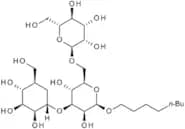
CAS:Octadecylthioethyl 4-O-(4-O[6-O-a-D-glucopyranosyl-a-D-glucopyranosyl]-a-D-glucopyranosyl)-b-D-glucopyranoside is a methylated, fluorinated complex carbohydrate that has been custom synthesized. It is an oligosaccharide with a saccharide and monosaccharides. The chemical name for this compound is 2-[2-(2,3,4,6,7,8,9,10,11,12,13) -octadecylthioethyl] -1-[(6Z)-6-[(4Z)-4-[(4E)-4-(3S)-3-[(R)-1-(2S) -2-(2S) -3-(2S) -5(R) -5(R) -5(R) -Fórmula:C44H82O21SPureza:Min. 95%Cor e Forma:SolidPeso molecular:979.18 g/molOctyl 4-O-(b-D-galactopyranosyl)-b-D-glucopyranoside
CAS:Octyl 4-O-(b-D-galactopyranosyl)-b-D-glucopyranoside is a galactose derivative of octyl 4-O-(b-D-glucopyranosyl)-b-D-glucopyranoside. It has been used to immobilize the enzyme phospholipase A2 in an exothermic reaction. This product is a white solid that is soluble in water. Octyl 4-O-(b-D-galactopyranosyl)-b-D-glucopyranoside has been shown to be effective against mycobacteria such as Mycobacterium avium complex and Mycobacterium tuberculosis, but not against other bacteria. This product may be useful for the treatment of mycobacterial infections because it exhibits excisional activity and can cleave phospholipid membranes.Fórmula:C20H38O11Pureza:Min. 95%Cor e Forma:PowderPeso molecular:454.51 g/molGlycyl-sialyllacto-N-tetraose b
Glycyl-sialyllacto-N-tetraose b is a custom synthesis of an oligosaccharide consisting of four monosaccharides. The monosaccharides are glycyl, sialyllactose and two tetrasaccharides with the configuration of (1,4)-alpha-D-mannopyranosyl-(1,2)-alpha-D-mannopyranosyl-(1,6)-beta-D-glucopyranosyl-(1,4)-alpha-D-mannopyranosyl. Glycyl-sialyllacto-N-tetraose b is a high purity product that can be modified to contain fluorine atoms. This product has been shown to have methylation activity in Methylation reactions.Fórmula:C39H66N4O29Pureza:Min. 95%Peso molecular:1,054.95 g/mol


![1,3,4,6-Tetra-O-acetyl-2-[[2-(acetylthio)acetyl]amino]-2-deoxy-D-galactopyranose](/_next/image/?url=https%3A%2Fstatic.cymitquimica.com%2Fproducts%2F3D%2Fthumb-webp%2FMT145185.webp&w=3840&q=75)



![N,N-Bis[3-D-gluconamidopropyl]cholamide](/_next/image/?url=https%3A%2Fstatic.cymitquimica.com%2Fproducts%2F3D%2Fthumb-webp%2FDB18793.webp&w=3840&q=75)







![Octadecylthioethyl 4-O-(4-O[6-O-a-D-glucopyranosyl-a-D-glucopyranosyl]-a-D-glucopyranosyl)-b-D-glu…](/_next/image/?url=https%3A%2Fstatic.cymitquimica.com%2Fproducts%2F3D%2Fthumb-webp%2FDO05214.webp&w=3840&q=75)