Glicociência
Subcategorias de "Glicociência"
- Amino açúcares(108 produtos)
- Anticorpos Glico-Relacionados(283 produtos)
- Glicolípidos(46 produtos)
- Glicosaminoglicanos (GAGs)(55 produtos)
- Glicosídeos(419 produtos)
- Monossacáridos(6.619 produtos)
- Oligossacarídeos(3.712 produtos)
- Polissacáridos(505 produtos)
Foram encontrados 11026 produtos de "Glicociência"
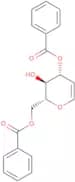
3,6-Di-O-benzoyl-D-glucal
CAS:3,6-Di-O-benzoyl-D-glucal is a glycosylation reagent that can be used to modify proteins with oligosaccharides. It is a naturally occurring sugar that can be synthesized and modified for use in research. 3,6-Di-O-benzoyl-D-glucal has been shown to be effective in Click chemistry, which uses copper ions to produce reactive esters from alcohols and carboxylic acids. This reagent can also be used to fluorinate saccharides and sugars for high purity synthesis.Pureza:Min. 95%2,4-Anhydro-3,5-O-[(S)-phenylmethylene]- D-lyxonic acid methyl ester
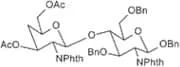
CAS:2,4-Anhydro-3,5-O-[(S)-phenylmethylene]- D-lyxonic acid methyl ester is a synthetic monosaccharide that has a fluorination modification. It is commonly used as a raw material in the synthesis of oligosaccharides and polysaccharides. This chemical can be synthesized using Click chemistry or methylation reactions. 2,4-Anhydro-3,5-O-[(S)-phenylmethylene]- D-lyxonic acid methyl ester is used in the production of complex carbohydrates with glycosylation and polysaccharide modifications. This chemical exhibits high purity and can be custom synthesized to meet specific needs.Fórmula:C13H14O5Pureza:Min. 95%Peso molecular:250.25 g/mol1,3,6-Tri-O-benzyl-4-O-(3,6-di-O-acetyl-2,4-dideoxy-2-phthalimido-b-D-glucopyranosyl)-2-deoxy-2-phthalimido-b-D-glucopyranoside
Methylated, saccharide-containing, polysaccharide-containing, carbohydrate-containing. CAS No.: 169800-74-1. Click modification: Click chemistry reaction with a reactive group on the saccharide or polysaccharide to form a bond with another molecule. Modification: The addition of one or more side chains to a saccharide or polysaccharide to produce a modified carbohydrate. Oligosaccharides: Carbohydrates that are composed of only two to ten monosaccharides. Glycosylation: The process in which a glycosyl group is transferred from an activated donor sugar to an acceptor molecule, forming glycosidic linkage (e.g., between sugars). High purity: The degree of chemical purity as expressed by the percent of impurities that may be present in the product (e.g., 99% pure). Carbohydrate: A class of organic compounds that includes sugars and starches and functionsFórmula:C53H50N2O14Pureza:Min. 95%Peso molecular:938.97 g/molD-Sorbitol hexahydrate
D-Sorbitol hexahydrate is a sugar that is used in the food industry as a substitute for sucrose. It is also an important component of many pharmaceuticals and other products. Sorbitol hexahydrate can be synthesized from glucose, which is oxidized to sorbitol, and then hydrolyzed by sulfuric acid to produce D-sorbitol hexahydrate. The product is often used as a sweetener for diabetic patients because it does not cause blood glucose levels to rise rapidly. Sorbitol hexahydrate also has anti-inflammatory properties and can be used in the treatment of gastric ulcers.Fórmula:C6H14O6·6H2OPureza:Min. 95%Peso molecular:290.26 g/molFrucoste-proline
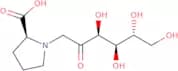
CAS:Frucoste-proline is a l-amino acid that is found in the leaves of tobacco plants. Frucoste-proline is synthesized by dehydration of L-proline, which is catalyzed by the enzyme tabacum l. Frucoste-proline can also be found in maltol and diazepine. The major function of frucoste-proline is to act as a cofactor for enzymes involved in the synthesis of aromatic compounds such as aldehydes and sulfides. This amino acid has been identified as an analytical marker for tobacco leaf, due to its low energy and high specificity.Pureza:Min. 95%Diethylaminoethyl-dextran HCl
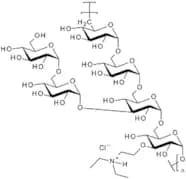
CAS:DEAE-Dextran hydrochloride (DEAE-D) is a positively-charged dextran derivative that can be used for vaccine production, gene therapy, protein stabilisation, dyslipidemia prevention, as flocculating agent, and many other applications. DEAE-D is also used for transfecting animal cells with foreign DNA. DEAE-Sepharose, DEAE-650 and DEAE-Sephadex are commonly used in chromatography for the separation of biological molecules such as proteins and carbohydrates.
Pureza:Min. 95%Cor e Forma:White Off-White Powder4-Toluoyl-α-D-thiomannopyranoside
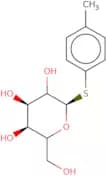
CAS:The 4-Toluoyl-a-D-thiomannopyranoside is a six-membered ring with a hydrogen atom at the center. The structure of this molecule is composed of two chains, each of which has four atoms in their backbone. There are also two conformations to the molecule, one that can be observed as a chair conformation and one that can be seen as a boat conformation. In the chair conformation, there are three bonds that form from the central carbon atom to other carbons on the same chain. These bonds are called alpha bonds, and they connect in a linear fashion. In the boat conformation, these three bonds form an angle of 120 degrees with each other and have staggered geometry. The alpha bonds in this case form an angle of 180 degrees with each other.
Fórmula:C13H18O5SPureza:Min. 95%Peso molecular:286.35 g/mol3'-N-Acetylneuraminyl-N-acetyllactosamine HSA
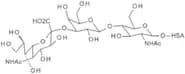
3'-N-Acetylneuraminyl-N-acetyllactosamine HSA is a carbohydrate that is synthesized by the attachment of an acetyl group to a terminal glucose residue. The product is a custom synthesis and can be used for click modification. 3'-N-Acetylneuraminyl-N-acetyllactosamine HSA has been shown to have high purity and is a complex carbohydrate. This product comes in the form of an oligosaccharide or polysaccharide, which are carbohydrates composed of many sugars. 3'-N-Acetylneuraminyl-N-acetyllactosamine HSA has been fluorinated, which may reduce its degradation in vivo.Fórmula:C25H42N2O20Pureza:Min. 95%Peso molecular:690.6 g/mol2,5-Anhydro-D-glucitol-6-phosphate
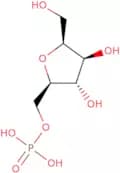
CAS:2,5-Anhydro-D-glucitol-6-phosphate is a phosphorylated derivative of D-glucitol 6 phosphate. It has been shown to be a major metabolic intermediate in the glycolytic pathway. 2,5-Anhydro-D-glucitol 6 phosphate is produced by the enzyme phosphofructokinase and hydrolyzed by the enzyme pyruvate kinase. The conversion of 2,5-anhydro -D-glucitol 6 phosphate to D -fructose 1 phosphate occurs at a rate that is dependent on the availability of oxygen. The activity of 2,5 anhydro -D-glucitol 6 phosphate in cells is also dependent on whether or not there are aerobic glycolytic enzymes present.Fórmula:C6H13O8PPureza:Min. 95%Peso molecular:244.14 g/mol9,10-Dimethoxy-pterocarpane-3-O-b-D-glucoside
9,10-Dimethoxy-pterocarpane-3-O-b-D-glucoside is a custom synthesis that is a polysaccharide with a complex carbohydrate structure. The chemical name for this compound is 9,10-dimethoxy-pterocarpane-3-O-[4′″-(1″″′′)-b′″'-D-glucopyranosyl]-3′′′,4′″’,6′"’] bibenzyl. This compound has been modified by methylation and glycosylation. It can be used in the treatment of cancer and diabetes due to its high purity and fluorination. 9,10-Dimethoxy pterocarpane 3β O glucoside is a sugar or saccharide that can be found in plants such as the roots of tobacco plants. The modification of this sugar by methylation and glycosylation makes it more
Pureza:Min. 95%Mannosucrose
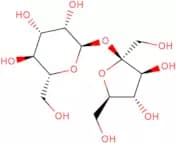
CAS:Mannosucrose (MS) is a natural sugar that is found in various plants, such as sugar cane and sugar beets. It is a disaccharide composed of two molecules of glucose linked by an alpha-1,2 glycosidic bond. Mannosucrose has been shown to have antioxidant properties and may be used as a functional sweetener for food products. This compound acts as a solute and can bind to the surface of the tongue's taste buds, which may result in its use as a microalgal particle to improve the taste of food products containing algae.
Mannosucrose also has been used as a model protein in order to study genetic mechanisms.Fórmula:C12H22O11Pureza:Min. 95%Peso molecular:342.3 g/molMan-1 N-Glycan
CAS:Man-1 N-glycan is a synthetic oligosaccharide with a sugar chain that is terminated by an alpha-D-mannose. It is synthesized using the Click reaction and modified with fluorine. This product can be used in glycosylation, or the addition of sugar chains to proteins or lipids. Man-1 N-Glycan has high purity and can be custom synthesized to order.Fórmula:C22H38N2O16Pureza:Min. 95%Cor e Forma:White to off-white solid.Peso molecular:586.54 g/molN-Acetylneuraminic acid trimer disodium salt
N-Acetylneuraminic acid trimer disodium salt is a methylated saccharide that is used in the synthesis of complex carbohydrates. It can be modified by Click chemistry to produce a variety of compounds, including oligosaccharides. N-Acetylneuraminic acid trimer disodium salt can also be fluorinated for use as an organic fluorinating agent in glycosylation reactions to make sugar derivatives. This compound has high purity and is custom synthesized to meet customer needs.
Fórmula:C33H50N3O25Na3Pureza:Min. 95%Cor e Forma:White PowderPeso molecular:957.72 g/molDimethylthexylsilyl 2,3,6-tri-O-benzyl-b-D-galactopyranoside
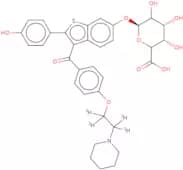
Dimethylthexylsilyl 2,3,6-tri-O-benzyl-b-D-galactopyranoside is a synthetic oligosaccharide with a fluorinated benzene ring. It is an important intermediate for glycosylation and can be modified with methyl groups or click chemistry. This product is of high purity and has been custom synthesized. Dimethylthexylsilyl 2,3,6-tri-O-benzyl-b-D-galactopyranoside has CAS number 69422-24-2.Pureza:Min. 95%Raloxifene 6-D-glucuronide D4
CAS:Produto ControladoRaloxifene 6-D-glucuronide D4 is a complex carbohydrate with a unique sugar modification. It is a custom synthesis that has been fluorinated, monosaccharide, and polysaccharide. It can be glycosylated and methylated as well. The desired purity level is high.
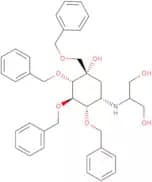
Fórmula:C34H31NO10SD4Pureza:Min. 95%Peso molecular:653.73 g/mol1,5,6,7-Tetra-O-benzylvoglibose
CAS:1,5,6,7-Tetra-O-benzylvoglibose is a naturally occurring pentose that is classified as an inhibitor of protein synthesis. It has been shown to inhibit the growth of tumor cells and may be useful in the treatment of cancer. 1,5,6,7-Tetra-O-benzylvoglibose binds to cation channels and blocks their activity. This prevents the influx of calcium ions into the cell which is required for cell division. 1,5,6,7-Tetra-O-benzylvoglibose also inhibits tumor metastases by inhibiting proliferation of myeloid derived suppressor cells (MDSCs). 1,5,6,7 Tetra-O-benzylvoglibose has been shown to inhibit growth factor signaling pathways in cardiac tissue and reduce the risk of cardiac disease development.Fórmula:C38H45NO7Pureza:Min. 95%Peso molecular:627.77 g/molAllyl 2-acetamido-2,6-dideoxy-6-fluoro-a-D-galactopyranoside
Allyl 2-acetamido-2,6-dideoxy-6-fluoro-a-D-galactopyranoside is a synthetic carbohydrate that has been modified with fluorination. It is a saccharide, which is a type of sugar. Allyl 2-acetamido-2,6-dideoxy-6-fluoro-a-D-galactopyranoside is an oligosaccharide and it belongs to the group of complex carbohydrates. This product can be custom synthesized and has high purity. It has been methylated and glycosylated. Click modification has also been performed on this product.Fórmula:C11H19FNO5Pureza:Min. 95%Cor e Forma:PowderPeso molecular:264.27 g/mol9-cis-Retinoyl b-D-glucuronide
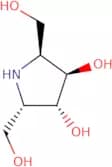
CAS:Produto Controlado9-cis-Retinoyl b-D-glucuronide is a complex carbohydrate that is synthesized by modification of an existing saccharide. It is synthesized through the use of click chemistry, which utilizes a copper catalyst to add fluorine and methyl groups to the sugar. The sugar is then glycosylated and carbamylated in order to produce the desired product. 9-cis-Retinoyl b-D-glucuronide has been shown to have high purity, as well as fluorescence properties when it is modified with fluorine groups.Fórmula:C26H36O8Pureza:Min. 95%Peso molecular:476.56 g/mol(2S,5S)-Bishydroxymethyl-(3R,4R)-bishydroxypyrrolidine
CAS:(2S,5S)-Bishydroxymethyl-(3R,4R)-bishydroxypyrrolidine is a cytotoxic agent that can be used as a reagent to hydrogenolyze chloride. It is also a nucleophilic anion that can react with cisplatin to form the corresponding platinum complex. This anion has been shown to be cytotoxic against Mcf-7 cells in vitro and can inhibit DNA synthesis. (2S,5S)-Bishydroxymethyl-(3R,4R)-bishydroxypyrrolidine may also inhibit protein synthesis by reacting with anthraquinone or benzylidenation products of azasugar. The synthesis of the latter product is catalyzed by the enzyme benzylidene-pyridine dioxygenase which activates carbonyls and azasugars to form benzylic hydrazones. These reactions are sequential and have been shown to occur inFórmula:C6H13NO4Pureza:Min. 95%Peso molecular:163.17 g/molMoexiprilat acyl D-glucuronide
Moexiprilat acyl D-glucuronide is a modification of the parent drug moexipril. It is an oligosaccharide that is synthesized by custom synthesis and has a high purity. The CAS number for this substance is 59710-80-0. Moexiprilat acyl D-glucuronide is a modified form of moexipril. It is a carbohydrate that contains glycosyls, saccharides, and other organic compounds with a variety of chemical structures. The name "glycosyl" refers to the sugar at the end of glycosidic linkage. Moexiprilat acyl D-glucuronide can be synthesized by methylation, glycosylation, or fluorination reactions on either monosaccharides or polysaccharides.Pureza:Min. 95%Sulfamethoxazole b-D-glucuronide
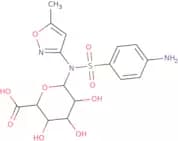
CAS:Sulfamethoxazole b-D-glucuronide is a microbial conjugate that is used to treat bacterial infections. It binds to microbial cell surfaces through covalent bonds, which prevents the synthesis of proteins and DNA, leading to cell death. Sulfamethoxazole b-D-glucuronide has been shown to be activated by the enzyme acetyltransferase in bacteria and may be used as an indicator for the presence of sulfonamide resistance. This antibiotic also has a high affinity for thyroxine and analytes such as acetaminophen and sulfate.Fórmula:C16H19N3O9SPureza:Min. 95%Peso molecular:429.41 g/mol7,7a-Diepialexine
CAS:7,7a-Diepialexine is a molecule that has been shown to inhibit the replication of human immunodeficiency virus (HIV). This drug has been shown to inhibit the growth of bacteria in cell culture. It has been observed that 7,7a-diepialexine inhibits HIV integrase by binding to the enzyme's active site. In addition, this molecule inhibits cellular proliferation and induces apoptosis in animal models. 7,7a-Diepialexine is an enantiomer of 7,7b-diepialexine which is also a potent inhibitor of HIV integrase. The analytical method for separating these two enantiomers is not available at this time.Pureza:Min. 95%D-Glucose-1,6-diphosphate potassium salt
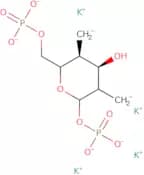
CAS:D-Glucose-1,6-diphosphate potassium salt is a white crystalline powder that has a molecular weight of 594.14 g/mol and a chemical formula of C₁₀H₁₅O₃P. It is used as an intermediate in the synthesis of saccharides. D-Glucose-1,6-diphosphate potassium salt is not known to be toxic to humans or animals.Fórmula:C6H10K4O12P2Pureza:Min. 95%Peso molecular:492.48 g/mol3-O-b-D-Galactosylsucrose
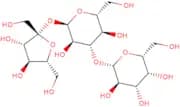
CAS:3-O-b-D-Galactosylsucrose is a synthetic, fluorinated, high purity, oligosaccharide. It is a complex carbohydrate that contains an O-linked glycosylated monosaccharide. This product has been modified with a click modification. The CAS number for this product is 686717-73-7 and it can be synthesized to order.Fórmula:C18H32O16Pureza:Min. 95%Cor e Forma:PowderPeso molecular:504.44 g/mol2-O-Benzyl-D-glucose
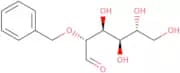
CAS:2-O-Benzyl-D-glucose is a disaccharide that is an intermediate in the synthesis of benzoic acid. It is benzylated with benzaldehyde and then reacted with sodium hydroxide to form 2-O-benzylidene-D-glucose. Spectroscopy has shown that this product has an anomeric proton at δH 7.1 to 7.4 and a pyranoside group at δH 4.2 to 4.6, which are characteristic of 2-O-benzylidene-D-glucose. The sugar's molecular formula is C9H12O5, and its molecular weight is 230. The sugar has been shown to be acylated with acetate or benzoic acid as well as undergo glycosidation reactions in the presence of sulfuric acid or sodium hydroxide.
Fórmula:C13H18O6Pureza:Min. 95%Peso molecular:270.28 g/molSulindac-acyl-b-D-glucuronide
CAS:Sulindac-acyl-b-D-glucuronide is a high purity, custom synthesis, synthetic sugar. It is a complex carbohydrate that contains saccharide, oligosaccharides, and monosaccharides. The CAS number for this compound is 60018-36-2.Fórmula:C26H25FO9SPureza:Min. 95%Peso molecular:532.54 g/molMan-9-Glc N-Glycan
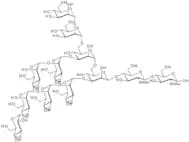
CAS:Man-9-Glc N-Glycan is a synthetic carbohydrate that is a modification of the natural sugar, Man-9-GlcNAc. It can be used as an ingredient in pharmaceutical products, such as vaccines and other therapeutic agents. This product is a custom synthesis that can be produced to order.Fórmula:C76H128N2O61Pureza:Min. 95%Peso molecular:2,045.81 g/mol2,3,4,6-Tetra-O-acetyl-1-O-(2,3,4-tri-O-benzoyl-a-L-fucopyranosyl)-D-galactopyranoside
2,3,4,6-Tetra-O-acetyl-1-O-(2,3,4-tri-O-benzoyl-a-L-fucopyranosyl)-D-galactopyranoside is a glycosylated polysaccharide that has been modified by methylation and fluorination. It is synthesized from the monosaccharide D galactopyranose with a 2,3,4,6 tetra O acetyl group at the 1 position.
Fórmula:C41H42O17Pureza:Min. 95%Peso molecular:806.76 g/mol2-Acetamido-2-deoxy-a-D-galactopyranosyl-(N-Fmoc)-L-threonine tert-butyl ester
CAS:2-Acetamido-2-deoxy-a-D-galactopyranosyl-(N-Fmoc)-L-threonine tert-butyl ester is a fluorinated carbohydrate that is synthesized from 2,3,4,6-tetraacetylorthoquinone and L-threonine tert butyl ester. It has a purity of 99%.Fórmula:C31H40N2O10Pureza:Min. 95%Peso molecular:600.66 g/mol(+)-1,4-Di-O-benzyl-D-threitol
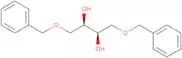
CAS:(+)-1,4-Di-O-benzyl-D-threitol is a carbohydrate which is an enantiomer of D-threitol. It has been used as a model membrane to investigate the interaction of divalent cations with the lipid bilayer. The (+) form of this compound has been shown to be catalytic in the desymmetrization of racemic mixtures of carbohydrates. This enantiomer can be readily chromatographically separated from its mirror image by chiral chromatography techniques.Fórmula:C18H22O4Pureza:Min. 95%Peso molecular:302.36 g/molMethyl 2-deoxy-a-L-ribofuranoside
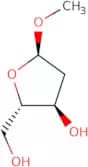
CAS:Methyl 2-deoxy-a-L-ribofuranoside is a modification of a monosaccharide. It is synthesized by reacting 2,3,4,6-tetra-O-methylglucose with sodium nitrite in the presence of hydrochloric acid. Methyl 2-deoxy-a-L-ribofuranoside is used to modify saccharides and polysaccharides.Fórmula:C6H12O4Pureza:Min. 95%Peso molecular:148.16 g/mol4-Methylphenyl 3,4,6-tri-O-acetyl-2-O-benzyl-b-D-thiogalactopyranoside
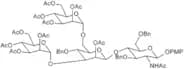
CAS:4-Methylphenyl 3,4,6-tri-O-acetyl-2-O-benzyl-b-D-thiogalactopyranoside is a synthetically produced saccharide typically used as a building block in oligo-saccharide synthesis.Fórmula:C26H30O8SPureza:Min. 95%Peso molecular:502.58 g/mol4-Methoxyphenyl 2-acetamido-4-O-[2-O-acetyl-3,6-di-O-(2,3,4,6-tetra-O-acetyl-a-D-mannopyranosyl)-4-O-benzyl-b-D-mannopyranosyl]-3,6- di-O-benzyl-2-deoxy-b-D-glucopyranoside
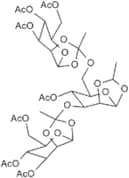
This product is a custom synthesis and modification of a natural product. The chemical name is 4-Methoxyphenyl 2-acetamido-4-O-[2-O-acetyl-3,6-di-O-(2,3,4,6-tetra-O-acetyl-aDmannopyranosyl)-4-ObenzylbDmannopyranosyl]-3,6diOBenzyl2deoxybDglucopyranoside. This molecule has been fluorinated with trifluoromethanesulfonic acid in the presence of polystyrene as an initiator to form the desired compound. The molecular weight of this molecule is 1,895.09 g/mol. This product was synthesized by methylation using methanol and ammonium chloride as reagents in the presence of tetrapropylammonium perruthenate as catalyst for the process.Fórmula:C72H87NO31Pureza:Min. 95 Area-%Cor e Forma:PowderPeso molecular:1,462.45 g/mol4-O-Acetyl-3,6-di-O-(3,4,6-tri-O-acetyl-1,2-ethylidene-b-D-mannopyranosyl)-1,2-ethylidene-b-D-mannopyranose
CAS:Methylation of 4-O-acetyl-3,6-di-O-(3,4,6-tri-O-acetyl-1,2-ethylidene bDmannopyranosyl)-1,2-ethylidene bDmannopyranose with methyl iodide and potassium carbonate in the presence of sodium hydroxide leads to the formation of 4-O-acetyl 3,6 di O-(3,4,6 tri O acetyl 1 , 2 ethylene b D mannopyranosyl)-1 , 2 ethylene b D mannopyranose. This compound is a polysaccharide that is similar to cellulose. It is used in the synthesis of complex carbohydrates.Fórmula:C38H52O25Pureza:Min. 95%Peso molecular:908.8 g/mol1-Hydroxypyrene-d9
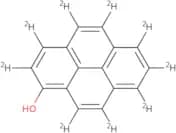
CAS:Produto Controlado1-Hydroxypyrene-d9 is a genotoxic aromatic hydrocarbon that can be found in the environment as a byproduct of combustion and cigarette smoke. It has been shown to cause DNA damage through oxidative stress and genotoxicity. This compound can be used for the detection of naphthalene in bile samples and urine samples. 1-Hydroxypyrene-d9 also has potential use in cancer research as it can be used to detect oxidative damage to DNA in cells. It has been shown to have synchronous fluorescence with DNA, which makes it useful for quantification of DNA. 1-Hydroxypyrene-d9 is analysed using analytical methods such as fluorescence spectrometry, synchronous fluorescence, and sample preparation.Fórmula:C16HD9OPureza:Min. 95%Cor e Forma:PowderPeso molecular:227.3 g/mol4,6-O-Benzylidene-1,3-di-O-methyl-a-D-mannopyranoside
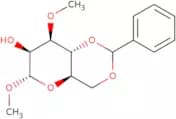
CAS:4,6-O-Benzylidene-1,3-di-O-methyl-a-D-mannopyranoside is an antiviral agent that has been shown to inhibit the replication of a number of RNA and DNA viruses. The compound binds to the active site of the virus and reacts with nucleophilic groups on the sugar ring. This reaction leads to a nitro group being introduced into the sugar ring of the virus. This nitro group is then alkylated by nucleophilic groups in proteins and other cellular components. 4,6-O-Benzylidene-1,3-di-O-methyla D mannopyranoside has been shown to inhibit hepatitis A virus (HAV) infection in vitro and in vivo.Fórmula:C15H20O6Pureza:Min. 95%Peso molecular:296.32 g/mol2,3,6,2',3',4',6'-Hepta-O-acetyl-b-D-cellobiosyl azide
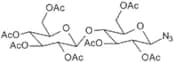
CAS:2,3,6,2',3',4',6'-Hepta-O-acetyl-b-D-cellobiosyl azide is a sugar that belongs to the group of carbohydrates. It is modified with fluorination and glycosylation. The CAS number for this compound is 33012-50-9. 2,3,6,2',3',4',6'-Hepta-O-acetyl-b-D-cellobiosyl azide has been synthesized and its chemical modification has been studied. This compound has an average degree of polymerization (DP) of 10. The molecular weight of 2,3,6,2',3',4',6'-Hepta-O-acetyl-b -D -cellobiosyl azide is 569.27 g/mol.Fórmula:C26H35N3O17Pureza:Min. 95 Area-%Cor e Forma:PowderPeso molecular:661.6 g/mol3-[(2,3,4,6-Tetra-O-acetyl-b-D-galactopyranosyl)thio]-propanoic acid
CAS:3-[(2,3,4,6-Tetra-O-acetyl-b-D-galactopyranosyl)thio]-propanoic acid is a modified carbohydrate with the chemical formula (C14H12O4S). It is an oligosaccharide composed of a saccharide and a sugar. The saccharide portion of 3-[(2,3,4,6-Tetra-O-acetyl-b-D-galactopyranosyl)thio]-propanoic acid is classified as a carbohydrate and has CAS number 79360-05-7. The sugar portion of 3-[(2,3,4,6-Tetra-O-acetyl-b-DFórmula:C17H24O11SPureza:Min. 95%Peso molecular:436.43 g/mol6'-Sulpho Lewisx-BSA
6'-Sulpho Lewisx-BSA is a complex carbohydrate that contains a saccharide moiety with a sulfated Lewisx epitope. It has been synthesized using click chemistry and modified with methylation and fluorination to yield the desired structure. The carbohydrate is of high purity and can be used in research as a model for glycosylation and glycosidic linkage. The carbohydrate also has properties that are analogous to those observed in glycoconjugates, such as antibodies and lectins.
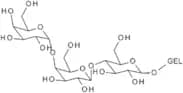
Pureza:Min. 95%Globotriose-GEL
Immobilised on Fractogel with glycosylamine formation of the monosaccharide
Pureza:Min. 95%Cor e Forma:White LiquidD-Gluconic acid calcium salt monohydrate
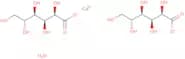
CAS:D-Gluconic acid calcium salt monohydrate (DGC) is a metabolite of the digestion of glucose. It is a calcium salt that is usually formed in the gut due to the neutralization of acids by sodium bicarbonate. DGC has been shown to be effective for treatment of bowel diseases such as ulcerative colitis, but has not been tested for other conditions. DGC has been shown to have antioxidant properties, which may be responsible for its therapeutic effects in treating bowel disease. The structural analysis of DGC show that it can form stable complexes with many drugs and therefore may interfere with their absorption and distribution into tissue cells. It also can increase the risk of drug interactions because it inhibits P-glycoprotein, an efflux pump protein that pumps drugs out of cells. DGC also may cause metabolic disorders due to its ability to inhibit enzymes involved in glycolysis and gluconeogenesis, including pyruvate kinase, phosphofructokinFórmula:C12H22CaO14·H2OPureza:Min. 95%Peso molecular:448.39 g/mol1,2,3,6-Tetra-O-acetyl-4-O-(2,3,4,6-tetra-O-acetyl-b-D-mannopyranosyl)-D-glucopyranose
CAS:1,2,3,6-Tetra-O-acetyl-4-O-(2,3,4,6-tetra-O-acetyl-b-D-mannopyranosyl)-D-glucopyranose is a synthetic sugar that has been modified by the methylation of the hydroxyl groups at C1 and C6 with acetaldehyde. This sugar is used in glycosylation reactions to modify proteins and other biomolecules. The product is a white crystalline solid that has a CAS number of 132341-46-9. It can be custom synthesized for research purposes or as a high purity material for commercial use.Fórmula:C28H38O19Pureza:Min. 95%Peso molecular:678.59 g/mol2-O-Benzyl-D-mannose
2-O-Benzyl-D-mannose is a monosaccharide that is glycosylated with glucose in the 2-position. It is also known as benzylmannoside and can be methylated at the C6 position or fluorinated at the C2 position. It has been shown to be synthetically modified with benzaldehyde, nitrobenzene, or thioacetamide. The CAS number for this compound is 51179-25-4.Pureza:Min. 95%(4-Chlorophenyl)methyl-beta-D-glucopyranoside
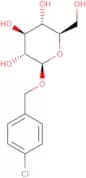
CAS:4-Chlorophenyl)methyl-beta-D-glucopyranoside is a modified saccharide that is used as a synthetic building block in the synthesis of complex carbohydrates. It is also possible to use 4-chlorophenyl)methyl-beta-D-glucopyranoside as an intermediate in the synthesis of oligosaccharides. The compound has been shown to be stable under acidic conditions, making it useful for the modification of polysaccharides.Fórmula:C13H17ClO6Pureza:Min. 95%Peso molecular:304.72 g/molMethyl 6-O-(b-D-galactopyranosyl)-b-D-galactopyranoside
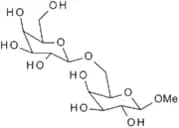
Methyl 6-O-(b-D-galactopyranosyl)-b-D-galactopyranoside is a white crystalline solid that belongs to the category of carbohydrates. It is a synthetic carbohydrate with a molecular weight of 496.06 and a CAS number of 3489-94-3. This product has been custom synthesized for research purposes, and can be purchased in high purity (>98%) from various suppliers. It is an oligosaccharide that contains a single sugar unit, which is galactose. This product has been modified with fluorination and methylation to prevent hydrolysis by esterases and glucuronidases, respectively. It also has glycosylation sites on the terminal glucose residues that allow for further modification with other carbohydrates or proteins. The methyl 6-O-(b-D-galactopyranosyl)-b-D-galactopyranoside can be used as an affinity ligandFórmula:C13H24O11Pureza:Min. 95%Peso molecular:356.32 g/mol5-O-Benzyl-2,3-O-Isopropylidene-L-lyxonic acid-1,4-lactone
5-O-Benzyl-2,3-O-isopropylidene-L-lyxonic acid-1,4-lactone is a modification of the Oligosaccharide. It is an oligomeric sugar that has a complex carbohydrate structure. The 5-O-Benzyl group is a methylation of the hydroxyl group on C5 in the sugar. This compound has been synthetically prepared and is available for custom synthesis. It can also be found as a CAS No., which is assigned to a substance that has been assigned an International Chemical Identifier (CAS) number. The CAS number for 5-O-Benzyl-2,3-O-isopropylidene - L - lyxonic acid - 1,4 - lactone is 90160–28–9. The monosaccharide form of this compound is methylated at C5 and glycosylated at C6Pureza:Min. 95%N-Acetylmuramic acid methyl ester
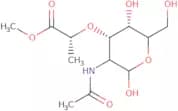
CAS:N-Acetylmuramic acid methyl ester is a methylated form of saccharides that are used in the synthesis of polysaccharides. It is synthesized by the addition of methanol to N-acetylmuramic acid, and can be used as a raw material for glycosylation reactions. This compound has been shown to have high purity and can be custom synthesized. The fluorination of this compound has been reported to improve its reactivity and stability.Fórmula:C12H21NO8Pureza:Min. 95%Peso molecular:307.3 g/molMethyl b1-4-D-xylobioside
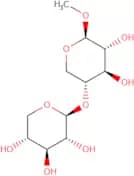
CAS:Methyl b1-4-D-xylobioside is a bioreactor that binds to the carbohydrate binding domain of the enzyme. It has been shown to be reactive with galactose and other glycosides, and is used as a substrate for electrophotographic analysis. This product also has immobilized properties, which make it suitable for use in an acceptor column in order to purify oligosaccharides or gene products with similar sequences. Methyl b1-4-D-xylobioside is used as a selective inhibitor of tuberculosis by binding to the enzyme mycobactin synthase, which is involved in the biosynthesis of mycolic acids.Fórmula:C11H20O9Pureza:Min. 95%Peso molecular:296.27 g/molUDP-a-D-Xylose disodium
CAS:UDP-a-D-Xylose disodium is a fluorinated synthetic monosaccharide that has been synthesized to produce an oligosaccharide. It is a complex carbohydrate with glycosylation and polysaccharide modifications, which can be modified by methylation or click chemistry. This product is usually used as a custom synthesis for research purposes.
Pureza:Min. 95%2-Naphthylmethyl 2-acetamido-2-deoxy-b-D-glucopyranoside
CAS:2-Naphthylmethyl 2-acetamido-2-deoxy-b-D-glucopyranoside is a synthetic, fluorinated monosaccharide. It is a custom synthesis that can be glycosylated and methylated to produce polysaccharides. It has been shown to inhibit cancer cell growth in vitro and in vivo by inhibiting protein synthesis.Fórmula:C19H23NO6Pureza:Min. 95%Peso molecular:361.39 g/mol

![2,4-Anhydro-3,5-O-[(S)-phenylmethylene]- D-lyxonic acid methyl ester](/_next/image/?url=https%3A%2Fstatic.cymitquimica.com%2Fproducts%2F3D%2Fthumb-webp%2FFA76878.webp&w=3840&q=75)







![3-[(2,3,4,6-Tetra-O-acetyl-b-D-galactopyranosyl)thio]-propanoic acid](/_next/image/?url=https%3A%2Fstatic.cymitquimica.com%2Fproducts%2F3D%2Fthumb-webp%2FMT04253.webp&w=3840&q=75)