Glicociência
Subcategorias de "Glicociência"
- Amino açúcares(108 produtos)
- Anticorpos Glico-Relacionados(282 produtos)
- Glicolípidos(46 produtos)
- Glicosaminoglicanos (GAGs)(55 produtos)
- Glicosídeos(419 produtos)
- Monossacáridos(6.624 produtos)
- Oligossacarídeos(3.682 produtos)
- Polissacáridos(504 produtos)
Foram encontrados 11047 produtos de "Glicociência"
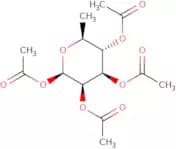
1,2,3,4-Tetra-O-acetyl-a-L-rhamnopyranose
CAS:1,2,3,4-Tetra-O-acetyl-a-L-rhamnopyranose is a modified carbohydrate with the general structure of an oligosaccharide. It is a synthetic compound that has been modified with methylation and glycosylation. The purity of this product is high and it can be synthesized to order. This product has a CAS number of 27821-11-0 and can be found in the Carbohydrate section.Fórmula:C14H20O9Pureza:Min. 95%Peso molecular:332.3 g/mol1,3,4,6-Tetra-O-acetyl-N-(4-methoxybenzylidene)-b-D-glucosamine
CAS:1,3,4,6-Tetra-O-acetyl-N-(4-methoxybenzylidene)-b-D-glucosamine is a high purity custom synthesis sugar that has been fluorinated and glycosylated. It is synthesized from the methylation of 4-(1,3,4,6-tetra-O-acetyl)-N-(4-hydroxybenzylidene)-b-D-glucosamine and can be used for the modification of saccharides or oligosaccharides. This compound has CAS No. 7597-81-1 and is known as a carbohydrate.
Fórmula:C22H27NO10Pureza:Min. 95%Peso molecular:465.45 g/molMethyl 2,3,4-tri-O-methyl-b-D-glucopyranoside
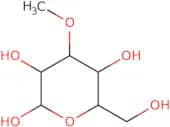
CAS:Methylated glucose glycoside with 6 position free
Pureza:Min. 95%Methyl 4-O-methyl-D-glucopyranosyluronate
Methyl 4-O-methyl-D-glucopyranosyluronate is a fungal metabolite that is produced by the reaction of armillaria with methyl 4-O-methyl-D-glucopyranoside. Methyl 4-O-methylglucuronyluronate has been shown to have an esterase activity, which can hydrolyze esters and linkages in the cell wall of fungi. This enzyme has been shown to have kinetic parameters that are different for different substrates. The catalytic site of this enzyme has also been found to be glutamic acid, which plays a role in the synthesis and degradation of proteins. Methyl 4-O-methylglucuronyluronate has been found to be insoluble in water and is not active against bacteria.
Fórmula:C8H14O7Pureza:Min. 95%Peso molecular:222.2 g/molN-Acetyl-L-lyxosamine
N-Acetyl-L-lyxosamine is a glycosylation that is used in the synthesis of complex carbohydrates. It can be modified with methyl groups, fluorine atoms, and other substances to produce desired products. N-Acetyl-L-lyxosamine can be used in the synthesis of saccharides such as oligosaccharides and polysaccharides. It is also used in the modification of sugars and monosaccharides. This compound has been synthesized from various sources, including natural glycerol or plant oils. The purity of this chemical is greater than 99%.Fórmula:C7H13NO5Pureza:Min. 95%Peso molecular:191.18 g/molPsicose diacetonide
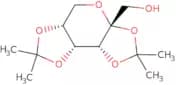
CAS:Psicose diacetonide is a synthetic, custom-synthesized carbohydrate. It is a complex carbohydrate that is made of saccharides and has been modified to have a fluorinated monosaccharide. Psicose diacetonide is an oligosaccharide with a high purity and has been methylated and glycosylated.
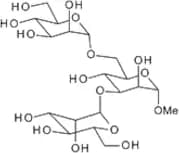
Pureza:Min. 95%Methyl 3,6-di-O-(a-D-mannopyranosyl)-a-D-mannopyranoside
CAS:Used for structural and conformational studies and as enzyme substratesFórmula:C19H34O16Pureza:Min. 95%Cor e Forma:PowderPeso molecular:518.46 g/molGalβ(1-3)[neu5acα(2-6)]GalNAc-α-PNP
CAS:Galβ(1-3)[neu5acα(2-6)]GalNAc-α-PNP is a complex carbohydrate that has been synthesized. It is a modification of the natural monosaccharide galactose by the addition of an alpha-N-acetylneuraminic acid residue. This product is highly pure and can be custom synthesized to customer specifications. Galβ(1-3)[neu5acα(2-6)]GalNAc-α-PNP has been fluorinated and methylated and has glycosylation and click chemistry modifications.Fórmula:C31H45N3O21Pureza:Min. 95%Peso molecular:795.7 g/mol3,5-Di-O-Benzyl-1,2-O-isopropylidene-a-D-ribofuranose
CAS:3,5-Di-O-Benzyl-1,2-O-isopropylidene-a-D-ribofuranose is a modification of a sugar that has been synthesized and modified to increase its stability. It has been synthesized by methylation, glycosylation, and polysaccharide synthesis.br>br> 3,5-Di-O-Benzyl-1,2-O-isopropylidene -a -D -ribofuranose is a monosaccharide with the chemical formula C6H12O6. It is also known as ribose or deoxyribose. This compound is found in many biological systems including DNA and RNA. Ribose can be found naturally in such things as fruit juices and honey. 3,5 Di--O--Benzyl--1,2--O--isopropylidene -a -D -ribofuranose is anFórmula:C22H26O5Pureza:Min. 95%Peso molecular:370.44 g/molEthyl 3,6-di-O-benzyl-2-deoxy-2-phtalimido-b-D-thioglucopyranose
Ethyl 3,6-di-O-benzyl-2-deoxy-2-phtalimido-b-D-thioglucopyranose is a modification of the sugar thioglucose. It is an oligosaccharide that is a complex carbohydrate. This compound is synthesized using custom synthesis methods, and it has purity levels of >98%. Ethyl 3,6-di-O-benzyl-2-deoxy-2-phtalimido-b -D -thioglucopyranose has CAS number 78664–01–1. It can be found in the monosaccharide group, methylation group (methyl ethers), glycosylation group (glycosides), and polysaccharide group. The chemical formula for this compound is C11H21O8N3S.
Pureza:Min. 95%Bromo-2-tetraacetyl galactose
Bromo-2-tetraacetyl galactose is a glycosylation agent that is used for the post-translational modification of proteins. It can be applied to many types of polysaccharides such as saccharide, oligosaccharide, and glycoconjugates. Bromo-2-tetraacetyl galactose has been shown to be an effective methylation agent and can be used in click chemistry. This product has a CAS number and is custom synthesized for high purity.Pureza:Min. 95%2,3,4,6-Tetra-O-benzyl-D-glucopyranosyl fluoride
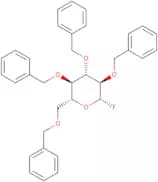
CAS:2,3,4,6-Tetra-O-benzyl-D-glucopyranosyl fluoride is a postulated molecule that has been observed in the gas phase. The molecule is a fluorinated analog of 2,3,4,6-tetra-O-acetyl-D-glucopyranosyl fluoride and was detected by its characteristic nuclear magnetic resonance (NMR) data. It was found to be more nucleophilic than 2,3,4,6-tetra-O-acetyl-D glycosyl fluoride. As with the latter molecule 2,3,4,6-tetra -O benzyl glucopyranosyl fluoride can form adducts with hydrogen fluoride or oxocarbenium ions. 2,3,4,6 tetra -o benzyl glucopyranosyl fluoride has not been prepared and characterized experimentally yet.Fórmula:C34H35FO5Pureza:Min. 95%Peso molecular:542.64 g/mol2,3:5,6-Di-O-isopropylidene-D-gulofuranose
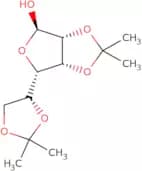
CAS:2,3:5,6-Di-O-isopropylidene-D-gulofuranose is a sugar that belongs to the group of carbohydrates. It can be synthesized from 2,3:5,6-Di-O-isopropylidene-D-mannitol and D-gluconic acid. This sugar has been shown to be an efficient glycosylation agent for alkylation reactions. It has also been used in the synthesis of oligosaccharides and monosaccharides.Pureza:Min. 95%Phenyl 2,3,4-tri-O-acetyl-a-L-thiorhamnopyranoside
CAS:Phenyl 2,3,4-tri-O-acetyl-a-L-thiorhamnopyranoside is a synthetic compound that is used as a protecting group for the synthesis of oligosaccharides. It is also used to synthesize saccharides in a complex carbohydrate modification. The compound can be fluorinated to form an active fluorinated compound. Phenyl 2,3,4-tri-O-acetyl-a-L-thiorhamnopyranoside has been shown to have high purity and low toxicity in animal studies.Fórmula:C18H22O7SPureza:Min. 95%Peso molecular:382.43 g/molEthyl a-D-thiomannopyranoside
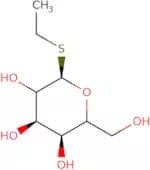
CAS:Ethyl a-D-thiomannopyranoside is an oligosaccharide that is synthesized by the methylation of a-D-mannopyranoside. This product is also known as 3,6-O-(2-acetamido)-a-D-glucopyranose, which is a type of saccharide. It has been fluorinated for use in structural studies. The modification of this product includes click chemistry and glycosylation to produce a complex carbohydrate with high purity and high molecular weight. The monosaccharides include glucose, galactose, and mannose. This product has been used as a synthetic sugar to produce oligosaccharides or polysaccharides.
Fórmula:C8H16O5SPureza:Min. 95%Peso molecular:224.28 g/mol1,3,4,6-Tetra-O-acetyl-2-benzoylamino-2-deoxy-D-glucopyranoside
CAS:1,3,4,6-Tetra-O-acetyl-2-benzoylamino-2-deoxy-D-glucopyranoside is a synthetic carbohydrate with a fluorinated sugar that has been custom synthesized for use in click chemistry. The fluorination at the 2 position of the sugar provides an additional site for modification and has been shown to increase stability. This product is available in high purity, and can be used for oligosaccharide synthesis.
Fórmula:C21H25NO10Pureza:Min. 95%Peso molecular:451.42 g/molRhodionin
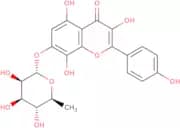
CAS:Rhodionin is a natural product that has been shown to be effective as a food preservative. It is produced through the extraction of usnic acid from Rhodiola rosea and has been used in the study of amyloid protein. Rhodionin is an extractant that has been shown to be able to control analysis of sodium citrate in food composition. The use of rhodionin for this purpose was found to be practical and effective, with no significant changes in the quality or quantity of citric acid. This extractant also shows promise as an analytical method for the detection of ganoderma lucidum, human liver cancer cells, and flavonol glycosides.Fórmula:C21H20O11Pureza:Min. 95%Peso molecular:448.38 g/molEthyl 2,3,4,6-tetra-O-acetyl-b-D-galactopyranoside
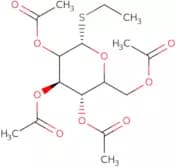
Ethyl 2,3,4,6-tetra-O-acetyl-b-D-galactopyranoside is a modified sugar that is synthesized from the natural sugar galactose. This modification can be done using different methods such as click chemistry or fluorination. The product is available in a range of purities and quantities.Fórmula:C16H24O10Pureza:Min. 95%Peso molecular:376.36 g/molD-Arabinose-1-D
CAS:D-Arabinose-1-D is a potent inhibitor of human kinases, which are enzymes that play a crucial role in the regulation of cell growth and division. This analog has been shown to be effective in inhibiting tumor growth and inducing apoptosis in cancer cells. D-Arabinose-1-D is commonly used as a medicinal compound for its anticancer properties. It has also been found in human urine and Chinese medicinal herbs. As an inhibitor of protein kinases, D-Arabinose-1-D can block the activity of these enzymes, which are often overexpressed in cancer cells. The inhibition of these kinases can lead to the suppression of tumor growth and increase the efficacy of other anticancer drugs.Fórmula:C5H10O5Pureza:Min. 95%Peso molecular:151.14 g/mol3-Methylflavone-8-carboxylic acid acyl-b-D-glucuronide
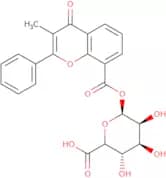
CAS:3-Methylflavone-8-carboxylic acid acyl-b-D-glucuronide is a fluorinated synthetic compound that has been custom synthesized with a high purity. It is an oligosaccharide, monosaccharide, and complex carbohydrate. This chemical can be used for glycosylation, methylation, or click modification. The product is stable at room temperature and does not require any special storage conditions.Fórmula:C23H20O10Pureza:Min. 95%Peso molecular:456.4 g/mol4,5-O-Isopropylidene-b-D-fructopyranose
CAS:4,5-O-Isopropylidene-b-D-fructopyranose is a fluorinated monosaccharide that is synthesized by the glycosylation of an aldonic acid with an appropriate sugar. It is soluble in water and many organic solvents. 4,5-O-Isopropylidene-b-D-fructopyranose can be used to synthesize a variety of oligosaccharides and polysaccharides. This product has been modified with methyl groups at various positions on the sugar ring. The chemical name for this product is 4,5-O-[2-(1,1,3,3,-tetramethylbutyl)phenoxy]isopropylidene b-[2-(2,2,6,6,-tetramethylpiperidiniumoxy)ethoxy] D-[beta]-D -fructopyranFórmula:C9H16O6Pureza:Min. 95%Peso molecular:220.22 g/molL-a-Phosphatidyl-(1,2-dipalmitoyl)-D-myo-inositol
CAS:L-a-Phosphatidyl-(1,2-dipalmitoyl)-D-myo-inositol is a phospholipid that is a major component of the cell membrane. It is derived from myo-inositol and palmitic acid. L-a-Phosphatidyl-(1,2-dipalmitoyl)-D-myo-inositol has been shown to have anticoagulant properties. It binds to the thrombin receptor and inhibits the binding of thrombin to this receptor. This inhibitor does not affect the activity of other proteases such as trypsin or chymotrypsin. L-a-Phosphatidyl-(1,2-dipalmitoyl)-D-myo-inositol can also be used for industrial purposes as an emulsifier or polymer conjugate.Fórmula:C41H79O13PPureza:Min. 95%Peso molecular:811.03 g/molo-Methoxytopolin-9-glucoside
CAS:O-Methoxytopolin-9-glucoside is a sugar that is used in the synthesis of glycoproteins, glycosaminoglycans, and glycoconjugates. It can be used as a fluorinated sugar probe to study glycosylation. This compound has been synthesized with a variety of modifications such as methylation, fluorination, and click chemistry. O-Methoxytopolin-9-glucoside is an oligosaccharide with a monosaccharide at its reducing end. The saccharides are linked through beta 1→4 glycosidic bonds with alpha 1→2 glycosidic bonds at their other ends. O-Methoxytopolin-9-glucoside has been shown to be stable under acidic conditions and can act as both an antioxidant and prooxidant depending on the pH level.Fórmula:C19H23N5O6Pureza:Min. 95%Peso molecular:417.42 g/molGM3-Ganglioside ammonium
CAS:Ganglioside GM3 (ammonium salt) has a core disaccharide structure (Galβ1,4Glc) with sialic acid linked a2,3 to the galactose residue and ceramide linked β to position 1 on the reducing terminal glucose residue (Ledeen, 2009). Ganglioside GM3 is strongly associated with human tumors, such as, lung, brain and melanomas where it is over expressed. It is seen as a possible tumor-associated carbohydrate antigen for cancer immunotherapy (Changping, 2019). GM3 ganlioside is implicated in various other diseases involving chronic inflammation, such as, insulin resistance, leptin resistance, T-cell function and immune disorders (e.g. allergic asthma). GM3 ganglioside has also been shown to play an essential role in murine and human auditory systems, and a common pathological feature of GM3S deficiency is deafness (Inokuchi, 2018).Fórmula:C59H111N3O21xNH4Pureza:Min. 95%Peso molecular:1,198.52 g/mol1,2:5,6-Di-O-isopropylidene-3-O-methyl-a-D-glucofuranose
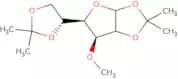
CAS:1,2:5,6-Di-O-isopropylidene-3-O-methyl-a-D-glucofuranose is a glycosylation agent that belongs to the group of complex carbohydrates. It is a synthetic compound that can be modified with methyl groups, fluorine atoms, or click modification. 1,2:5,6-Di-O-isopropylidene-3-O-methyl-a-D-glucofuranose is used as a monosaccharide for the synthesis of oligosaccharides and polysaccharides. This compound has high purity and can be custom synthesized to meet customer specifications.Fórmula:C13H22O6Pureza:Min. 95%Peso molecular:274.31 g/molBlood Group A trisaccharide-(CH2)8COOMe derivative
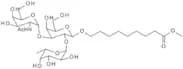
CAS:Blood group antigen derivative with spacer armFórmula:C30H53NO17Pureza:Min. 95%Peso molecular:699.74 g/molrac-Hesperetin-d3 3’-O-bea-D-glucuronide
Hesperetin-3-O-beta-D-glucuronide is a synthetic derivative of hesperidin that can be used as a metabolite marker for the assessment of drug metabolism in humans. Hesperetin-3-O-beta-D-glucuronide is an oligosaccharide that contains three sugar units: D-galactopyranosyl, D-glucopyranosyl, and D-(+)-lactose. This compound has been shown to inhibit the activity of alpha amylase and alpha glucosidase.Fórmula:C22H19D3O12Pureza:Min. 95%Peso molecular:481.42 g/mol2,3,4-Tri-O-acetyl-b-D-ribopyranosyl azide
CAS:2,3,4-Tri-O-acetyl-b-D-ribopyranosyl azide is a high purity chemical with custom synthesis. It has been shown to have a fluorination and glycosylation reaction. This chemical also has methylation and modification properties that may be useful for the synthesis of oligosaccharides and monosaccharides. 2,3,4-Tri-O-acetyl-b-D-ribopyranosyl azide may be used as an intermediate for saccharide or complex carbohydrate synthesis.
Fórmula:C11H15N3O7Pureza:Min. 95%Peso molecular:301.26 g/mol4-O-(b-D-Ribofuranosyl)-L-rhamnopyranose
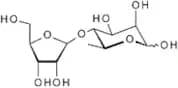
4-O-(b-D-Ribofuranosyl)-L-rhamnopyranose is a custom synthesized monosaccharide that can be modified with fluorination and methylation. This sugar can be used for glycosylation reactions to form oligosaccharides or polysaccharides. The number of sugar molecules that are attached to the sugar determines the complexity of the carbohydrate. 4-O-(b-D-Ribofuranosyl)-L-rhamnopyranose is an example of a complex carbohydrate because it has four sugars attached to it.Fórmula:C11H20O9Pureza:Min. 95%Peso molecular:296.27 g/molα-D-Galactose
CAS:α-D-Galactose is a monosaccharide that is found in the human serum. It is a potent inducer of liver lesions and mitochondrial membrane potential, which may be due to its ability to stimulate the synthesis of proinflammatory cytokines. α-D-Galactose also has anti-inflammatory properties, as well as structural analysis properties that can be used for diagnosis. α-D-Galactose has been used as a model system for studying oligosaccharides, which are carbohydrates with more than one sugar unit. α-D-Galactose binds to sephadex g-100 by hydrogen bonds and can be detected by laser ablation mass spectrometry.Fórmula:C6H12O6Pureza:Min. 95%Peso molecular:180.16 g/molH-Type 2-APE-HSA
H-Type 2-APE-HSA is a custom synthesis, modification, and fluorination of monosaccharides. This molecule has been modified with methyl groups, which are essential for the metabolism of carbohydrates. H-Type 2-APE-HSA is an oligosaccharide that contains saccharide units that have glycosylation. H-Type 2-APE-HSA is a complex carbohydrate that contains a number of different sugars in its structure.Pureza:Min. 95%5-O-tert-Butyldimethylsilyl-2,3-O-isopropylidene-L-lyxofuranose
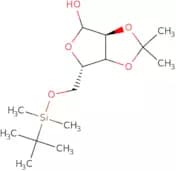
CAS:5-O-tert-Butyldimethylsilyl-2,3-O-isopropylidene-L-lyxofuranose is a modification of D-glucose. It is synthesized by methylation and glycosylation, and fluorinated on the hydroxyl group to give 5-O-tert-butyldimethylsilyloxycarbonylmethyl 2,3-O-(1,1,2,2,-tetrafluoroethoxy)propylidene L -lyxo furanose. 5DMTBSILOXOLFURANOSE has a CAS number of 1266546-81-9.Fórmula:C14H28O5SiPureza:Min. 95%Peso molecular:304.45 g/mol2-C-Methyl-D-mannopyranose
CAS:2-C-Methyl-D-mannopyranose is a low molecular weight sugar that is found in the cell walls of bacteria and some plants. It has been shown to have an immunostimulating effect when administered to mice with murine sarcoma. 2-C-Methyl-D-mannopyranose has also been shown to be cytotoxic against murine leukemia cells. This compound has a glycosidic structure and can be hydrolyzed by acid or alkali to form mannose. 2-C-Methyl-D-mannopyranose can be synthesized using ion exchange chromatography, which separates compounds according to their molecular weight. The molecular weights of this compound range from low to high, with a monomeric unit of 160 Da. The nmr spectra of this compound show peaks at 1.5 ppm corresponding to the C=O stretching vibration and at 7 ppm corresponding to the C=N stretchingFórmula:C7H14O6Pureza:Min. 95%Peso molecular:194.18 g/molD-Fructose-13C1
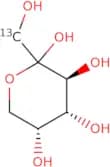
CAS:D-Fructose-13C1 is a custom synthesis that belongs to the class of carbohydrates. It is an oligosaccharide, polysaccharide, and a modification of saccharides. D-Fructose-13C1 is methylated and glycosylated and has a carbonyl group on the C1 position. This product can be used in click chemistry as well as fluorination reactions. The purity of this product is high and it has been synthesized using high purity methods.Fórmula:C513CH12O6Pureza:Min. 95%Peso molecular:181.15 g/molAllyl β-D-lactose
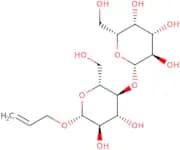
CAS:Allyl β-D-lactose is a disaccharide with an aliphatic alkene functional handle. This can be used as a functionalised monomer in the synthesis of glycopolymers.Fórmula:C15H26O11Pureza:Min. 95 Area-%Cor e Forma:PowderPeso molecular:382.36 g/mol2-Acetamido-3,4,6-tri-O-benzyl-2-deoxy-a-D-galactopyranosyl-(N-Fmoc)-L-serine
CAS:2-Acetamido-3,4,6-tri-O-benzyl-2-deoxy-a-D-galactopyranosyl-(N-Fmoc)-L-serine is a custom synthesis chemical. It is a monosaccharide that can be modified with methylation, fluorination, and click chemistry. This chemical has been used in the synthesis of oligosaccharides and polysaccharides. 2-Acetamido-3,4,6-tri-O-benzyl-2-deoxy--a--D--galactopyranosyl-(N--Fmoc)--L--serine is also an important component of complex carbohydrates.Fórmula:C47H48N2O10Pureza:Min. 95%Peso molecular:800.89 g/molAllyl 2,3-di-O-benzyl-b-D-glucopyranoside
CAS:Allyl 2,3-di-O-benzyl-b-D-glucopyranoside is a compound with a molecular weight of 276.2 g/mol and an empirical formula of C12H22O10. It has a white crystalline appearance with a melting point of 220°C. Allyl 2,3-di-O-benzyl-b-D-glucopyranoside is soluble in water and methanol but not in ethanol. It can be used as an additive for plastics and rubber to improve conductivity or as a plasticizer for cellulose acetate.Fórmula:C23H28O6Pureza:Min. 95%Peso molecular:400.46 g/molColitose
CAS:Colitose is a sugar that has antimicrobial properties. It is a monosaccharide, which means it contains six carbon molecules. Colitose has been shown to inhibit bacterial growth and to prevent the development of resistant mutants in human serum. Colitose has also been shown to have therapeutic potential for infectious diseases such as bowel disease and other inflammatory bowel diseases. The structural analysis of colitose revealed that it contains terminal residues at the end of each chain, which are composed of glucose, galactose, and mannose. The glycan chains are linked together by alpha-1,6-glycosidic bonds. These terminal residues serve as a receptor for Toll-like receptors (TLRs), which are found on cells in the bowel wall and help regulate inflammation.
Fórmula:C6H12O4Pureza:Min. 95%Cor e Forma:PowderPeso molecular:148.16 g/mol3,4,6-Tri-O-acetyl-2-deoxy-2-phthalimido-a-D-glucopyranosyl fluoride
CAS:3,4,6-Tri-O-acetyl-2-deoxy-2-phthalimido-a-D-glucopyranosyl fluoride is a synthetic saccharide that has been modified with the Click chemistry. It is an acetylated derivative of 2,3,4,6-trihydroxybenzoic acid and was prepared by the fluorination of 3,4,6-trihydroxybenzoic acid followed by glycosylation with 4-(N-(1-(ethoxycarbonyl)ethyl)amino)-benzeneboronic acid. The product is a white to off white powder that is soluble in water and low solvents. The purity of this product is >98% as determined by HPLC analysis.Fórmula:C20H20FNO9Pureza:Min. 95%Peso molecular:437.37 g/molMethyl 4-O-[4,6-O-benzylidene)-b-D-galactopyranosyl] b-D-glucopyranoside
CAS:Methyl 4-O-[4,6-O-benzylidene)-b-D-galactopyranosyl] b-D-glucopyranoside is a synthetic sugar with a high purity and custom synthesis. It has been modified by fluorination, methylation, glycosylation, and click modification. This product can be used as a pharmaceutical ingredient for the treatment of tuberculosis.
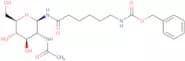
Fórmula:C20H28O11Pureza:Min. 95%Peso molecular:444.43 g/mol2-Acetamido-N',N-cbz-epsilon-aminocaproyl-2-deoxy-b-D-glucopyranosyl amine
CAS:2-Acetamido-N',N-cbz-epsilon-aminocaproyl-2-deoxy-b-D-glucopyranosyl amine is a high purity, fluoroquinolone resistant, custom synthesis that is an Oligosaccharide. This compound has been modified with methylation and glycosylation. Click modification has been used to modify the sugar at the terminal position. It is a carbohydrate that can be used in Polysaccharides and Modification.Fórmula:C22H33N3O8Pureza:Min. 95%Peso molecular:467.51 g/mol4-O-Benzyl-D-galactal
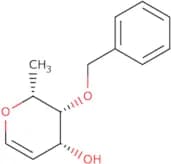
CAS:4-O-Benzyl-D-galactal is a benzylated Oligosaccharide. It can be custom synthesized and modified according to your requirements. 4-O-Benzyl-D-galactal can be used as a raw material for the synthesis of polysaccharides and saccharides. This product has high purity with low impurities, and can be used for the synthesis of highly functional polysaccharides and saccharides.Fórmula:C13H16O4Pureza:Min. 95%Peso molecular:236.26 g/molO-(2-Acetamido-2-deoxy-3,4,6-tri-O-acetyl-D-glucopyranosylidene)amino N-(4-nitrophenyl)carbamate
CAS:O-(2-Acetamido-2-deoxy-3,4,6-tri-O-acetyl-D-glucopyranosylidene)amino N-(4-nitrophenyl)carbamate is a synthetic compound that has been modified with fluorine. The compound is an example of a glycosylation reaction, which is the process of joining two sugars to form a complex carbohydrate. It has been modified with Methylation and Click modification. O-(2-Acetamido-2-deoxy-3,4,6-tri-O-acetyl)-D glucopyranosylidene)amino N-(4 nitrophenyl)carbamate also has a saccharide component and is classified as Polysaccharide. This compound can be custom synthesized for customers who need high purity or oligosaccharides.Fórmula:C21H24N4O12Pureza:Min. 95%Peso molecular:524.44 g/molTri-O-acetyl-4,6-O-benzylidene-D-glucopyranose
CAS:Tri-O-acetyl-4,6-O-benzylidene-D-glucopyranose is a synthetic oligosaccharide that is used as an intermediate in the preparation of triacetylated glycosaminoglycans. This compound is also useful for studying glycosylation reactions and for measuring sugar binding affinity. Tri-O-acetyl-4,6-O-benzylidene-D-glucopyranose has been custom synthesized by our chemists to meet your specific requirements.Fórmula:C19H22O9Pureza:Min. 95%Peso molecular:394.4 g/molMonofucosyl-para-lacto-N-hexaose II
CAS:Monofucosyl-para-lacto-N-hexaose II is a carbohydrate that belongs to the group of modified carbohydrates. This molecule is a monosaccharide with a chemical modification that has not been reported before. The modification is methylation of the hydroxyl group at position C1 and glycosylation of the hydroxyl groups at positions C2 and C3. Monofucosyl-para-lacto-N-hexaose II has shown high purity and can be custom synthesized to meet your needs. It can also be used for click chemistry, which allows for chemists to create new molecules by adding different functional groups to existing molecules.Fórmula:C46H78N2O35Pureza:Min. 95%Peso molecular:1,219.1 g/mol1,3:1,4-b-Glucotetraose (A)
CAS:1,3:1,4-B-glucotetraose (A) is a high purity and custom synthesis of Oligosaccharide. It is an oligosaccharide sugar derived from glucose. The chemical structure contains an alpha-(1,4)-linked 1,4-alpha-D-glucopyranosyl residue with a glycosylation at the 3 position. 1,3:1,4-B-glucotetraose (A) is synthesized by methylation of 1,3:1,4-B-glucotetraose (B), followed by fluorination and then click modification. This compound has CAS No. 58484-04-1 and can be used in applications such as Fluorination or Click Modification.Fórmula:C24H42O21Pureza:Min. 95%Peso molecular:666.58 g/molSecoxyloganin
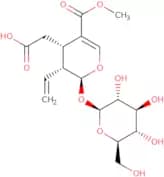
CAS:Secoxyloganin is a 4-hydroxycinnamic acid that belongs to the group of caffeic acids. It is an iridoid, which is a type of monoterpene indole alkaloid that has been found in various plants. Secoxyloganin can be found in the roots, stems, and leaves of plants such as Securigera varia and Digitalis purpurea. Secoxyloganin has shown antimicrobial activity against Gram-positive bacteria such as Staphylococcus aureus and Gram-negative bacteria such as Pseudomonas aeruginosa. It also has antiviral properties, which may be due to its ability to inhibit RNA synthesis and protein synthesis. Secoxyloganin has been shown to have physiological effects in vitro assays, including an increase in glucose uptake by cells after injection of glucose into the cell culture medium.Fórmula:C17H24O11Pureza:Min. 95%Peso molecular:404.37 g/molMethyl 2,3-di-O-acetyl-4,6-O-benzylidene-α-D-glucopyranoside
CAS:Methyl 2,3-di-O-acetyl-4,6-O-benzylidene-a-D-glucopyranoside is a glycosylation agent that is used to attach sugars to proteins, polysaccharides, and other biological molecules. This compound can be synthesized in custom quantities with high purity. It is often used for the modification of saccharides and oligosaccharides. Methyl 2,3-di-O-acetyl-4,6-O-benzylidene-a -D glucopyranoside has been shown to react with a variety of functional groups including amines, alcohols, carboxylic acids, thiols and sulfhydryls.Fórmula:C18H22O8Pureza:Min. 95%Peso molecular:366.37 g/molDihydrozeatin-9-glucoside
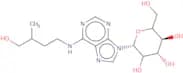
CAS:Dihydrozeatin-9-glucoside is a conjugate of the natural product dihydrozeatin and glucose. The glucoside has been found to inhibit the growth of plants, which may be due to its ability to bind to polyclonal antibodies. Dihydrozeatin-9-glucoside is also an immunogen that has been shown to produce monoclonal antibodies in tissue culture. It has been used for immunoaffinity chromatography and as a biochemical marker for plant tissue cultures. Dihydrozeatin-9-glucoside binds to wheat leaf cells and inhibits their growth, making it a potential tool for the study of plant cell death.Fórmula:C16H25N5O6Pureza:Min. 95 Area-%Cor e Forma:White PowderPeso molecular:383.4 g/mol3,6-Di-O-benzyl-D-glucal
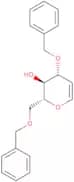
CAS:3,6-Di-O-benzyl-D-glucal is a substrate for the enzyme fatty acid hydroxylase. This enzyme catalyzes the hydroxylation of fatty acids to produce hydroxy fatty acids and 3,6-di-O-benzyl-D-glucal. The stereoselective nature of this enzyme has been shown using microscopy to examine the reaction time in both monolayers and bilayers. The kinetics of this reaction have also been analyzed by kinetic analysis. It is thought that this reaction takes place in the cytosol, although it may also occur in mitochondria or chloroplasts.Fórmula:C20H22O4Pureza:Min. 95%Peso molecular:326.39 g/mol




![Galβ(1-3)[neu5acα(2-6)]GalNAc-α-PNP](/_next/image/?url=https%3A%2Fstatic.cymitquimica.com%2Fproducts%2F3D%2Fthumb-webp%2FRCC82290.webp&w=3840&q=75)














![Methyl 4-O-[4,6-O-benzylidene)-b-D-galactopyranosyl] b-D-glucopyranoside](/_next/image/?url=https%3A%2Fstatic.cymitquimica.com%2Fproducts%2F3D%2Fthumb-webp%2FOM30780.webp&w=3840&q=75)