Glicociência
A glicociência é o estudo dos carboidratos e seus derivados, bem como das interações e funções biológicas em que participam. Este campo de pesquisa é crucial para compreender uma ampla variedade de processos biológicos, incluindo o reconhecimento celular, a sinalização, a resposta imune e o desenvolvimento de doenças. A glicociência tem aplicações importantes na biotecnologia, na medicina e no desenvolvimento de novos medicamentos e terapias. Na CymitQuimica, oferecemos uma ampla seleção de produtos de alta qualidade e pureza para pesquisa em glicociência. Nosso catálogo inclui monossacarídeos, oligossacarídeos, polissacarídeos, glicoconjugados e reagentes específicos, projetados para apoiar os pesquisadores em seus estudos sobre a estrutura, função e aplicações dos carboidratos em sistemas biológicos. Esses recursos são destinados a facilitar descobertas científicas e aplicações práticas em diversas áreas das biociências e da medicina.
Subcategorias de "Glicociência"
- Amino açúcares(108 produtos)
- Anticorpos Glico-Relacionados(282 produtos)
- Glicolípidos(46 produtos)
- Glicosaminoglicanos (GAGs)(55 produtos)
- Glicosídeos(419 produtos)
- Monossacáridos(6.622 produtos)
- Oligossacarídeos(3.682 produtos)
- Polissacáridos(503 produtos)
Foram encontrados 11041 produtos de "Glicociência"
Ordenar por
Pureza (%)
0
100
|
0
|
50
|
90
|
95
|
100
N-Acetyl-D-galactopyranosylthiosemicarbazide
<p>N-Acetyl-D-galactopyranosylthiosemicarbazide is a glycosylation reagent that is used in the synthesis of saccharides, oligosaccharides, and polysaccharides. N-Acetyl-D-galactopyranosylthiosemicarbazide is synthesized by reacting acetamidoacetonitrile with D-galactose and sodium thiosulfate. The reaction product can be easily purified by crystallization or recrystallization. N-Acetyl-D-galactopyranosylthiosemicarbazide has been shown to be a high purity compound, as it does not contain any residual solvents or impurities. The CAS number for this compound is 58437-66-7.</p>Pureza:Min. 95%1-O-(trans-3-Hydroxycotinine)-4-deoxy-4,5-didehydro-b-D-glucuronide methyl ester
CAS:<p>1-O-(trans-3-Hydroxycotinine)-4-deoxy-4,5-didehydro-b-D-glucuronide methyl ester is a synthetic compound that is used as an intermediate in the synthesis of saccharides and oligosaccharides. It has been shown to be a potent inhibitor of glycosylation and can be used to modify complex carbohydrates. The chemical name for this compound is 1-[(trans)-3-hydroxycotinine]-4,5didehydrobis[deoxy]glucuronic acid methyl ester. This product should not be confused with 1-[(trans)-3 hydroxycotinine]-4,5 didehydro b D glucuronic acid methyl ester.</p>Fórmula:C17H20N2O7Pureza:Min. 95%Peso molecular:364.35 g/mol2,5-Anhydro-D-glucitol-1,6-bis-(dibenzylphosphate)
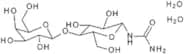
CAS:<p>2,5-Anhydro-D-glucitol-1,6-bis-(dibenzylphosphate) is a synthetic carbohydrate with a complex structure. It can be used in the synthesis of glycosides and saccharides. This product has a molecular weight of 486.83 g/mol, a melting point of 169 oC, and an octanol/water partition coefficient of 3.00.</p>Fórmula:C34H38O11P2Pureza:Min. 95%Peso molecular:684.61 g/molb-Lactosyl ureide dihydrate
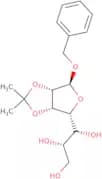
<p>b-Lactosyl ureide dihydrate is a white crystalline powder that is soluble in water. It has a molecular weight of 598.7 and was synthesized by the reaction of b-lactosyl chloride with urea. The compound has been used as a fluoro-protecting group for nucleophilic substitution reactions, and glycosylation reactions.</p>Fórmula:C13H24N2O11·2H2OPureza:Min. 95%Cor e Forma:White/Off-White SolidPeso molecular:420.37 g/molBenzyl 2,3-O-isopropylidene-L-glycero-a-D-mannoheptofuranoside
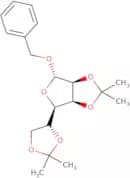
CAS:<p>Benzyl 2,3-O-isopropylidene-L-glycero-a-D-mannoheptofuranoside is a high purity, custom synthesis and modification of sugar. Fluorination, glycosylation and methylation have been utilized in this product. This product is a synthetic oligosaccharide that contains saccharides and monosaccharides. Benzyl 2,3-O-isopropylidene-L-glycero-a-D-mannoheptofuranoside is used as an intermediate in the production of complex carbohydrates.</p>Fórmula:C17H24O7Pureza:Min. 95%Peso molecular:340.37 g/mol4-Acetylphenyl 2,3,4,6-tetra-O-acetyl-b-D-glucopyranoside
CAS:<p>4-Acetylphenyl 2,3,4,6-tetra-O-acetyl-b-D-glucopyranoside is a diagnostic marker for cancer. It is an exosome biomarker that can be used to diagnose and measure the progression of cancer. The measurement of this substance provides a new way to detect and diagnose cancers. This compound has been found in diagnostics samples from patients with lung cancer, colorectal cancer, prostate cancer and breast cancer. 4-Acetylphenyl 2,3,4,6-tetra-O-acetyl-b-D-glucopyranoside is an example of a type of molecule called mirnas that regulate gene expression by binding to messenger RNA (mRNA). Mirnas are used as biomarkers in the diagnosis of cancers because they are over expressed or under expressed in cancers compared to normal cells.</p>Fórmula:C22H26O11Pureza:Min. 95%Peso molecular:466.45 g/molN-(trans-3-Hydroxycotinine)-b-D-glucuronide methyl-D3
Produto Controlado<p>N-(trans-3-Hydroxycotinine)-b-D-glucuronide methyl-D3 is a high purity synthetic oligosaccharide that can be used in the synthesis of complex carbohydrates. It is a glycosylation product of 3-hydroxycotinine, which is a fluorinated monosaccharide, and b-D-glucuronic acid, which is an Oligosaccharide. N-(trans-3-Hydroxycotinine)-b-D-glucuronide methyl-D3 has been shown to exhibit antibacterial activity against Gram positive bacteria such as Staphylococcus aureus and Clostridium perfringens.</p>Fórmula:C16H17D3N2O8Pureza:Min. 95%Peso molecular:371.36 g/molMethyl 2,4-di-O-acetyl-b-D-xylopyranoside
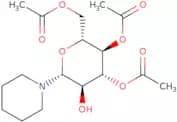
CAS:<p>Methyl 2,4-di-O-acetyl-b-D-xylopyranoside (MDX) is an epoxide that has been found to stimulate the growth of Schizophyllum commune and other fungi. It is structurally related to vicinal diols, which are known to inhibit esterases and hydrolyze acetyl groups. The acetyl groups on MDX can be reduced by hydride reduction or by hydrolysis with acetylated esters. MDX inhibits bacterial growth by inhibiting protein synthesis through its structural similarity to deoxyribose phosphate, a component of DNA.</p>Fórmula:C10H16O7Pureza:Min. 95%Peso molecular:248.2 g/molN-(3,4,6-Tri-O-acetyl-b-D-glucopyranosyl)piperidine
CAS:<p>N-(3,4,6-Tri-O-acetyl-b-D-glucopyranosyl)piperidine is a glycosylation agent that can be used to modify saccharides and oligosaccharides. This compound is used in the synthesis of complex carbohydrates, such as glycogen and starch. It can also be used to modify the sugar chains on glycoproteins and glycolipids. N-(3,4,6-Tri-O-acetyl-b-D-glucopyranosyl)piperidine is a white powder that has not been tested for toxicity.</p>Fórmula:C17H27NO8Pureza:Min. 95%Peso molecular:373.4 g/molBlood Group B trisaccharide-APE,Biotin-BSA
<p>Gala1-3(Fuca1-2)Gal Conjugated to BSA via Biotin & an aminophenyl ethyl spacer</p>Pureza:Min. 95%b-D-Galactopyranosyl-(1,4)-O-b-D-glucopyranosyl-(1,4)-D-glucose
<p>This custom synthesis complex carbohydrate has a CAS number and is a polysaccharide. It is modified by methylation, glycosylation, click modification, and fluorination. This carbohydrate has high purity and is synthesized synthetically.</p>Pureza:Min. 95%(4R)-Benzyl-4-deoxy-4-C-nitrophenyl-b-D-arabinopyranoside
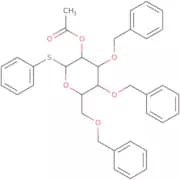
<p>(4R)-Benzyl-4-deoxy-4-C-nitrophenyl-b-D-arabinopyranoside is a synthetic glycoside that has been modified by fluorination and saccharide. It is a custom synthesis, which means it can be synthesized to order with high purity. This compound is used in the modification of glycoconjugates and polysaccharides, as well as the synthesis of oligosaccharides. It is also used in click chemistry, which involves the use of copper and azide ions.</p>Fórmula:C19H21NO6Pureza:Min. 95%Peso molecular:359.37 g/molPhenyl 2-O-Acetyl-3,4,6-tri-O-benzyl-1-thio-b-D-galactopyranoside
CAS:<p>Phenyl 2-O-Acetyl-3,4,6-tri-O-benzyl-1-thio-b-D-galactopyranoside is a glycosylated sugar that is under custom synthesis. The molecule contains a fluorinated benzene ring and an acetyl group. Phenyl 2-O-Acetyl-3,4,6-tri-O-benzyl 1,5 b -D -galactopyranoside can be modified in the laboratory to produce different derivatives and modifications. This product is made of high purity and has CAS No. 18387528 7.</p>Fórmula:C35H36O6SPureza:Min. 95%Peso molecular:584.72 g/molD-Altrose-1-13C
CAS:<p>Please enquire for more information about D-Altrose-1-13C including the price, delivery time and more detailed product information at the technical inquiry form on this page</p>Fórmula:C6H12O6Pureza:Min. 95%Peso molecular:181.15 g/mol5-Deoxy-1,2-O-isopropylidene-5-[(2S-pyridin-2-yl-pyrrolidine)-1-yl]-a-D-xylofuranose
CAS:<p>5-Deoxy-1,2-O-isopropylidene-5-[(2S-pyridin-2-yl-pyrrolidine)-1-yl]-a-D-xylofuranose is a kind of modified oligosaccharide. It has been used as a building block for the synthesis of glycoproteins and glycopeptides. This product is synthesized by our company with high purity and custom synthesis.</p>Fórmula:C17H24N2O4Pureza:Min. 95%Peso molecular:320.39 g/molL-Glucuronic acid sodium salt
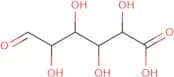
CAS:<p>L-Glucuronic acid sodium salt is a natural product that is used as an excipient and additive in pharmaceuticals. L-Glucuronic acid sodium salt is the sodium salt of L-glucuronic acid, which is a natural compound found in plants, animals and humans. It is used as a protective agent for drugs because it can be easily metabolized by the liver and has low toxicity. L-Glucuronic acid sodium salt inhibits the uptake of radioactive isotopes into cells, which may be due to its ability to bind to cytosolic proteins. The binding of L-glucuronic acid sodium salt to these proteins blocks the binding sites for radioactive isotopes on these proteins. This inhibition leads to reduced uptake of radioactive isotopes by cells.</p>Fórmula:C6H9NaO7Pureza:Min. 95%Peso molecular:216.12 g/mol5-Azido-5-deoxy-α-D-glucofuranose
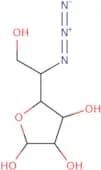
CAS:<p>Please enquire for more information about 5-Azido-5-deoxy-α-D-glucofuranose including the price, delivery time and more detailed product information at the technical inquiry form on this page</p>Fórmula:C6H11N3O5Pureza:Min. 95%Peso molecular:205.17 g/mol6-O-Benzyl-1-(-)-carboxymenthyl-2,3;4,5-di-O-cyclohexylidene-D-myo-inositol
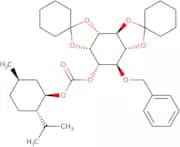
CAS:<p>6-O-Benzyl-1-(-)-carboxymenthyl-2,3;4,5-di-O-cyclohexylidene-D-myo-inositol is a novel glycosylation substrate for the synthesis of oligosaccharides. It is synthesized by fluorination and methylation of 1,2,3,4,5,-pentaacetoxycyclopentane. The fluorinated product can be further modified to produce various saccharides. This compound can be used as a custom synthesis in the synthesis of complex carbohydrates with high purity.</p>Fórmula:C36H52O8Pureza:Min. 95%Peso molecular:612.79 g/molPantoprazole sulfide-b-D-glucuronide
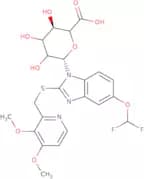
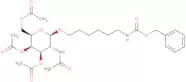
CAS:<p>Pantoprazole sulfide-b-D-glucuronide is a custom synthesis of pantoprazole that has been modified with fluorination, methylation, and click modification. It is an oligosaccharide that consists of a saccharide. The saccharide is a carbohydrate which contains complex carbohydrates.</p>Fórmula:C22H23F2N3O9SPureza:Min. 95%Peso molecular:543.5 g/mol2-Acetamido-3,4,6-tri-O-acetyl-1-O-(N-Cbz-6-aminohexyl)-2-deoxy-b-D-galactopyranose
CAS:<p>2-Acetamido-3,4,6-tri-O-acetyl-1-O-(N-Cbz-6-aminohexyl)-2-deoxy-b-D-galactopyranose is a glycosylation agent that is used in the preparation of complex carbohydrates. It is also a methylation agent, fluorinated saccharide and an oligosaccharide. This compound can be custom synthesized for your specific needs. It is a white to off white powder and has a purity of 99%. The CAS number for this product is 159173 -77 -0.</p>Fórmula:C28H40N2O11Pureza:Min. 95%Peso molecular:580.62 g/mol5-(β-D-Galactopyranosyloxy)-DL-lysine
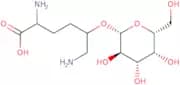
CAS:<p>5-(β-D-Galactopyranosyloxy)-DL-lysine is a custom synthesized compound that has been modified with 5-(β-D-galactopyranosyloxy) groups. It is an oligosaccharide, polysaccharide, and saccharide that belongs to the category of carbohydrates. This product is available for purchase in high purity and has been fluorinated. The CAS number for this product is 35910-05-5.</p>Fórmula:C12H24N2O8Pureza:Min. 95%Cor e Forma:PowderPeso molecular:324.33 g/molPalatinose monohydrate
CAS:<p>Palatinose monohydrate is a hydrogenated form of the natural disaccharide palatinose. It is often used as a solid catalyst in pharmaceutical preparations and has been shown to have a lower molecular weight than sucrose. Palatinose monohydrate may have beneficial effects on postprandial plasma glucose, protein data, and lipid metabolism. The hydrogenation process also produces fatty acids that are less reactive than those found in other sugars. Amine groups are also reduced in palatinose monohydrate, which may improve its taste. Palatinose monohydrate is not toxic at high doses and has been shown to be safe for use in toxicity studies. Surface methodology has been used to characterize the surface properties of palatinose monohydrate crystals, which can be used as a model for other sugar crystals.</p>Fórmula:C12H24O12Pureza:Min. 95%Peso molecular:360.31 g/mol4'-Hydroxypropranolol-2-O-b-D-glucuronide
<p>4'-Hydroxypropranolol-2-O-b-D-glucuronide is a custom synthesis that has been modified with glycosylation, methylation, and fluorination. It is a complex carbohydrate that has CAS number and is a polysaccharide. 4'-Hydroxypropranolol-2-O-b-D-glucuronide is synthesized by the modification of an oligosaccharide, saccharide, or sugar with methylation and glycosylation. This product also contains a click modification.</p>Pureza:Min. 95%Methyl 2-O-allyl-4,6-O-benzylidene-3-O-(2',3',4',6'-tetra-O-acetyl-a-D-mannopyranosyl)-a-D-mannopyranoside
CAS:<p>Methyl 2-O-allyl-4,6-O-benzylidene-3-O-(2',3',4',6'-tetra-O-acetyl-a-D-mannopyranosyl)-a-D-mannopyranoside is a sugar that is synthesized by the methylation of an oligosaccharide. This product is a white crystalline powder that has been shown to have high purity and a CAS number of 82185-93-1. It has also been modified with fluorination, which makes it resistant to degradation. Methyl 2-O-allyl 4,6 O benzylidene 3 O (2',3',4',6'-tetra - O acetyl - a D mannopyranosyl) - a D mannopyranoside is used in the synthesis of complex carbohydrates.</p>Fórmula:C31H40O15Pureza:Min. 95%Peso molecular:652.64 g/mol4-Isothiocyanatophenyl-a-D-glucopyranoside
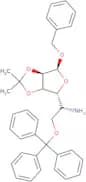
CAS:<p>4-Isothiocyanatophenyl-a-D-glucopyranoside is a synthetic fluorinated glycosylated oligosaccharide. Its chemical formula is C16H13N3O7. It has a molecular weight of 392.</p>Fórmula:C13H15NO6SPureza:Min. 95%Peso molecular:313.33 g/molBenzyl 5-amino-5-deoxy-2,3-O-isopropylidene-6-O-trityl-a-D-mannofuranoside
CAS:<p>Benzyl 5-amino-5-deoxy-2,3-O-isopropylidene-6-O-trityl-a-D-mannofuranoside is a complex carbohydrate that is synthesized by the glycosylation of benzyl 5-amino-5,6,7,8,9,10,11,12,13,14-, 2,3,4-, or 6-(N","N"-dimethylamino)ethyl 5-[(2","N"-dimethylamino)-ethoxycarbonyl]-5-[(2","N"-dimethylamino)ethoxycarbonyl]-4H-[1]benzopyranose with 6-(N","N"-dimethylaminomethylene)-a-"D"mannofuranose. The chemical modification includes fluorination and methylation. This product has a CAS number of 9136415 and purity of more than</p>Fórmula:C35H37NO5Pureza:Min. 95%Peso molecular:551.67 g/molIkshusterol 3-O-glucoside
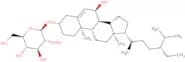
CAS:<p>Ikshusterol 3-O-glucoside is a glycosylation of the monosaccharide ikeshinolin. It is a synthetic, fluorinated, methylated, and modified oligosaccharide with a high purity. Ikshusterol 3-O-glucoside is used in various fields including as an additive to food products, pharmaceuticals, cosmetics and other chemical manufacturing. It has been used as a sugar substitute in low calorie foods and beverages. The modification of ikeshinolin to ikeshusterol 3-O-glucoside can be achieved by click chemistry.</p>Pureza:Min. 95%2-Deoxy-2,2-difluoro-D-threo-pentofuranos-1-ulose-3,5-dibenzoate
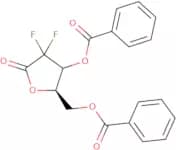
CAS:<p>2-Deoxy-2,2-difluoro-D-threo-pentofuranos-1-ulose-3,5-dibenzoate is a custom synthesis of an oligosaccharide. It is a polysaccharide that contains saccharides and other modifications such as methylation and glycosylation. This product is a sugar with high purity and fluorination. Click modification is the process by which 2,2'-dF (fluorine) is introduced into the furanose ring at the C4 position. Fluorination increases the stability of the molecule and increases its resistance to hydrolysis by enzymes. The addition of this fluorine group also decreases the reactivity of the molecule with water, making it more stable for storage.</p>Fórmula:C19H14F2O6Pureza:Min. 95%Cor e Forma:SolidPeso molecular:376.31 g/mol1,2,3,4,6-Penta-O-acetyl-1-thio-β-D-galactopyranose
CAS:<p>1,2,3,4,6-Penta-O-acetyl-1-thio-beta-D-galactopyranose is a nucleoside that is a derivative of glucopyranose. It is an aprotic molecule and can be used as an aprotic solvent. 1,2,3,4,6-Penta-O-acetyl-1-thio-beta-D-galactopyranose has been shown to inhibit viral growth in vitro by interfering with the synthesis of DNA and RNA. The compound inhibits the growth of herpes simplex virus type 1 (HSV) and vaccinia virus (VACV) but not influenza A virus (IAV). This drug also has antiplasmodial activity against the erythrocytic stages of Plasmodium falciparum.</p>Fórmula:C16H22O10SPureza:Min. 95%Peso molecular:406.41 g/mol2-Deoxy-3,5-di-O-toluoyl-D-ribofuranose
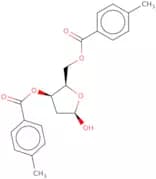
CAS:<p>2-Deoxy-3,5-di-O-toluoyl-D-ribofuranose is a sugar that can be custom synthesized. This product is a white to off-white crystalline solid with a melting point of approximately 200°C. It is soluble in water and ethanol, but not in ether or chloroform. The chemical structure of this sugar includes an oxygen atom at the 3 position of the anomeric carbon and a chlorine atom at the 5 position of the anomeric carbon. 2-Deoxy-3,5-di-O-toluoyl-D-ribofuranose has been shown to inhibit glycosylation, methylation, and modification reactions in both nucleic acids and proteins. This product also has been shown to be helpful in understanding complex carbohydrate synthesis by reducing the size of oligosaccharides and monosaccharides into smaller fragments for analysis.</p>Fórmula:C21H22O6Pureza:Min. 95%Peso molecular:370.4 g/molO-Butanoyl-2,3-O-isopropylidene-a-D-mannofuranoside
CAS:<p>O-Butanoyl-2,3-O-isopropylidene-a-D-mannofuranoside is a high purity sugar with CAS No. 177562-15-1. It is synthesized by the modification of saccharides with methyl groups, glycosylation, and click chemistry. This chemical has a complex structure and can be used as a raw material for the production of complex carbohydrates.</p>Fórmula:C14H26O7Pureza:Min. 95%Peso molecular:304.38 g/molGlobo-H-b-N-acetyl propargyl
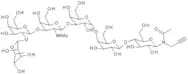
<p>Intermediate in the development of anti-cancer vaccines</p>Fórmula:C43H70N2O30Pureza:Min. 95%Peso molecular:1,095.01 g/mol3-Deoxy-D-gluconic acid calcium
CAS:<p>3-Deoxy-D-gluconic acid calcium is a modification of the sugar 3-deoxy-D-glucono-1,5-lactone. It is an oligosaccharide that has been synthesized from D-glucose and D-xylose with the use of a click reaction. The monosaccharide (3DG) can be methylated to produce 3,6-dimethyl 3DG or fluorinated to make 3,6,9F 2 -3DG. This modification can be glycosylated to form a complex carbohydrate. The saccharide is also found in nature as the sugar component of glycogen and cellulose.</p>Fórmula:C6H12O6CaPureza:Min. 97 Area-%Peso molecular:400.39 g/mol1,2,3,4,6-Penta-O-benzoyl-b-D-glucopyranose
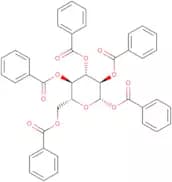
CAS:<p>1,2,3,4,6-Penta-O-benzoyl-b-D-glucopyranose is a synthetic substrate that has been validated for use in heparin assays. It is an inhibitor of the enzyme sulfate protease and can be used to study the role of this enzyme in inflammation. 1,2,3,4,6-Penta-O-benzoyl-b-D-glucopyranose has also been shown to inhibit the activity of neutrophils (a type of white blood cell) and monocytes (a type of white blood cell). This compound has been shown to have antitumor activity as well as antiinflammatory activities.</p>Fórmula:C41H32O11Pureza:Min. 95%Peso molecular:700.69 g/mol1,2,3,4-Tetra-O-benzoyl-a-D-glucuronide methyl ester
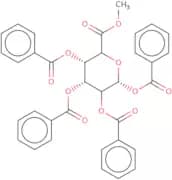
CAS:<p>1,2,3,4-Tetra-O-benzoyl-a-D-glucuronide methyl ester is a synthetic compound that belongs to the class of complex carbohydrates. It has been custom synthesized and modified using glycosylation, methylation, and click chemistry. It is composed of one monosaccharide and four oligosaccharides linked together by O-glycosidic bonds. The carbohydrate moiety contains a benzoyl group attached to the 1 position on the glucose molecule through an ether linkage. This product is available in high purity (≥ 99%) at CAS No. 201789-32-4.</p>Fórmula:C35H28O11Pureza:Min. 95%Peso molecular:624.59 g/moltrans-Zeatin-9-glucoside
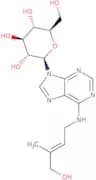
CAS:<p>Trans-zeatin-9-glucoside is a natural product that is produced by plants and is known to have a variety of biological activities. Trans-zeatin-9-glucoside has been shown to affect plant growth and development, as well as the immune system. It has also been shown to exhibit antioxidant activity and inhibit cancer cell proliferation. Trans-zeatin-9-glucoside has been found in barley, wheat, rye, oat straw, corn stover, soybean leaves, potato tubers, and composts. The biosynthesis of this compound begins with the conversion of zeatin into zeaxanthin via a series of enzymatic reactions. Zeaxanthin is then converted into trans-zeatin-9-glucoside through the action of an enzyme called β--cyclodextrin glucanotransferase.</p>Fórmula:C16H23N5O6Pureza:Min. 98 Area-%Cor e Forma:Colorless PowderPeso molecular:381.38 g/mol2,3,4,6-Tetra-O-benzyl-1,5-di-O-mesyl-D-glucitol
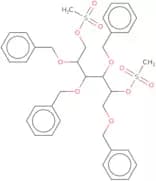
<p>2,3,4,6-Tetra-O-benzyl-1,5-di-O-mesyl-D-glucitol is a substituted sugar alcohol that can exist as either an intramolecular or an intermolecular isomer. The intramolecular isomer has a carboxylate group in the 6 position and the intermolecular isomer has a propionate group in the 6 position. 2,3,4,6-Tetra-O-benzyl-1,5-di-O-mesyl-D-glucitol has conformational properties that depend on which substituent occupies the 4 position. Benzene rings are more flexible than benzyloxy groups. The geometry of 2,3,4,6 - Tetra - O - benzyl - 1 , 5 - di - O - mesyl - D - glucitol changes from chair to boat with substitution at position</p>Fórmula:C36H42O10S2Pureza:Min. 95%Peso molecular:698.84 g/molOuabain - anhydrous
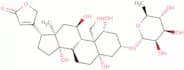
CAS:<p>Ouabain is a potent inhibitor of the Na+/K+-ATPase pump in cardiac and skeletal muscles. It has been shown to inhibit signal pathways that are involved in the regulation of cellular membrane potentials, such as the michaelis–menten kinetics. Ouabain has also been found to be effective against syncytial virus infection. Ouabain inhibits viral replication by inhibiting cellular protein synthesis and reducing cell number due to its cytotoxic effects on myocardial cells. Ouabain has also been found to inhibit neuronal death induced by α1-adrenergic receptor agonists, such as p2y receptors.</p>Fórmula:C29H44O12Pureza:Min. 95%Cor e Forma:PowderPeso molecular:584.65 g/mol1,2,3-Tri-O-acetyl-5-deoxy-D-ribofuranoside
CAS:<p>1,2,3-Tri-O-acetyl-5-deoxy-D-ribofuranoside is an acetylated form of a sugar derivative. It is used as a reagent for the acetylation of alcohols and amines. The reaction yield for this compound is stereoselective and can be prepared from readily available starting materials in good yield. The compound crystallizes in cyclic form with an organic solvent such as n-hexane or pyridine. This product is soluble in organic solvents such as n-hexane, pyridine, or vinyl acetate.</p>Fórmula:C11H16O7Pureza:Min. 95%Peso molecular:260.24 g/mol6-O-Acetyl-2,3,4-tri-O-benzoyl-b-D-mannopyranose
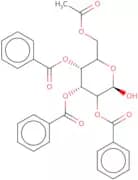
<p>6-O-Acetyl-2,3,4-tri-O-benzoyl-b-D-mannopyranose is a synthetic oligosaccharide that is used as an inhibitor of glycosylation. It is synthesized by the reaction of 6-O-acetylmannopyranosyl fluoride with 2,3,4,6-tetraacetylbromo benzaldehyde and hydrochloric acid in acetic acid. The product can be used for the synthesis of complex carbohydrates such as glycoconjugates or polysaccharides. 6-O-Acetyl -2,3,4 -tri -O -benzoyl -b -D mannopyranose has a purity of > 98% and a CAS number of 118916–00–5.</p>Fórmula:C29H26O10Pureza:Min. 95%Peso molecular:534.51 g/molLacto-N-fucopentaose II-APD-HSA
<p>Lacto-N-fucopentaose II-APD-HSA is a complex carbohydrate that has been chemically modified to include a fucose sugar. Lacto-N-fucopentaose II-APD-HSA is synthesized by the click reaction and then modified with the addition of an acetyl group. The product is then methylated and purified by HPLC. Lacto-N-fucopentaose II-APD-HSA can be used in a wide range of applications, including as a component in glycosylation reactions or as an adjuvant for fluorescence labelling.</p>Pureza:Min. 95%Phenyl 2-O-benzyl-a-L-thiorhamnopyranoside
CAS:<p>Phenyl 2-O-benzyl-a-L-thiorhamnopyranoside (PTBP) is a synthetic glycosylation product. It is used as a monosaccharide building block for oligosaccharides and polysaccharides. PTBP exhibits high purity, custom synthesis capability, and is available in bulk quantities.</p>Fórmula:C19H22O4SPureza:Min. 95%Peso molecular:346.44 g/molBenzyl 2,3:5,6-di-O-isopropylidene-a-D-mannofuranoside
CAS:<p>A customized synthesis of a benzyl 2,3:5,6-di-O-isopropylidene-a-D-mannofuranoside (BMP) derivative was achieved by modifying the original BMP with fluorination, methylation, and click chemistry. The modification of BMP with fluorination and methylation was made to facilitate the synthesis of oligosaccharides and polysaccharides. The monosaccharide is an important building block for glycosylation reactions. Carbohydrates are complex carbohydrates that can be found in a variety of foods including fruits, grains, dairy products, and vegetables.</p>Fórmula:C19H26O6Pureza:Min. 95%Peso molecular:350.41 g/molO-(2-Azido-4,6-O-benzylidene-2-deoxy-a-D-galactopyranosyl)-N-[(9H-fluoren-9-ylmethoxy)carbonyl]-L-serine tert-Butyl Ester
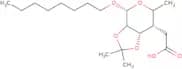
CAS:<p>O-(2-Azido-4,6-O-benzylidene-2-deoxy-a-D-galactopyranosyl)-N-[(9H-fluoren-9-ylmethoxy)carbonyl]-L-serine tert butyl ester (Fluoride) is a modified carbohydrate that has been synthesized from a sugar. The fluorination step of the synthesis has replaced the hydroxyl group at C1 with fluorine. <br>The glycosylation and methylation steps have added a new saccharide to the existing carbohydrate chain. The modification step has introduced an oligosaccharide which has been linked to the monosaccharides by an amide bond. This synthetic carbohydrate was designed to be used as a fluorescent probe for glycoproteins and glycolipids in biomedical research.</p>Fórmula:C35H38N4O9Pureza:Min. 95%Peso molecular:658.7 g/molOctyl 4-O-acetyl-2,3-O-isopropylidene-a-L-rhamnopyranoside
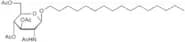
CAS:<p>Octyl 4-O-acetyl-2,3-O-isopropylidene-a-L-rhamnopyranoside is a monosaccharide that is synthesized from the glycosylation of octyl β-D-glucopyranoside and L-rhamnose by means of an acetal exchange reaction. The product is a complex carbohydrate with a molecular weight of 578. This compound can be fluorinated at the hydroxyl group to produce octyl 4-[4-(trifluoromethoxy)phenyl]butanoate, which has been shown to have significant antiinflammatory activities in animal models.</p>Fórmula:C19H34O6Pureza:Min. 95%Peso molecular:358.47 g/molHexadecyl 2-acetamido-3,4,6-tri-O-acetyl-2-deoxy-b-D-glucopyranoside
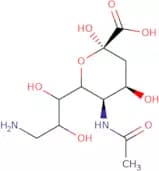
CAS:<p>Hexadecyl 2-acetamido-3,4,6-tri-O-acetyl-2-deoxy-b-D-glucopyranoside (HAT) is an antibiotic that belongs to the class of macrolides. It has been shown to be heritable and its heritability is dependent on the type of animal species. HAT also has a basic structure with substituents that are either acidic or hydroxylated. The heterogeneity in this compound can be seen by the different lactation periods for different animals. Regression analysis was used to find out if there was a correlation between the lactation period and the basicity of HAT. This study found that there was no such correlation and therefore concluded that there is no relationship between HAT's basicity and its heritability.</p>Fórmula:C30H53NO9Pureza:Min. 95%Peso molecular:571.74 g/mol9-Amino-N-acetylneuraminic acid
CAS:<p>9-Amino-N-acetylneuraminic acid (9AAN) is a neuraminidase inhibitor. It blocks the activity of neuraminidase, which is an enzyme that hydrolyzes sialic linkages in glycoproteins and glycolipids. 9AAN prevents the release of influenza virus particles from infected cells. This drug can also inhibit toxins that target the nervous system, such as botulinum neurotoxin and tetanus toxin. 9AAN has been shown to have a stabilizing effect on the conformation of proteins and has been used to study conformational changes in enzymes involved in metabolism. 9AAN is synthesized by recombinant DNA technology and acts as a competitive inhibitor for the enzymatic reaction.</p>Fórmula:C11H20N2O8Pureza:Min. 95%Cor e Forma:PowderPeso molecular:308.29 g/molGala1-3Galb1-4GlcNAca1-HDPE
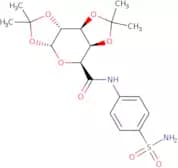
<p>Gala1-3Galb1-4GlcNAca1-HDPE is a high purity, custom synthesis sugar. The monosaccharide Gala is modified by Click chemistry to form the glycosylation and then fluorinated to create the fluorination modification. The glycosylation is then methylated and finally modified with a saccharide. This product has CAS No.</p>Fórmula:C60H116N3PO22Pureza:Min. 95%Peso molecular:1,262.54 g/molN-(4'-Sulfamidophenyl)-1,2:3,4-di-O-isopropylidene-a-D-galactopyranosyluronamide
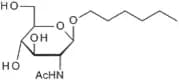
CAS:<p>N-(4'-Sulfamidophenyl)-1,2:3,4-di-O-isopropylidene-a-D-galactopyranosyluronamide is a chemical compound that belongs to the class of carbohydrates. It is a high purity chemical with custom synthesis and modification capabilities. This product can be used in glycosylation, methylation, and oligosaccharide synthesis. N-(4'-Sulfamidophenyl)-1,2:3,4-di-O-isopropylidene-a-D-galactopyranosyluronamide has been shown to have anti cancer properties when combined with other compounds.</p>Fórmula:C18H23NO8SPureza:Min. 95%Peso molecular:413.44 g/molHexyl 2-acetamido-2-deoxy-b-D-glucopyranoside
CAS:<p>Hexyl 2-acetamido-2-deoxy-b-D-glucopyranoside is a sugar that is used in the study of immune reactions. It can be used to measure albumin levels and tissue samples, as well as in animal experiments. Hexyl 2-acetamido-2-deoxy-b-D-glucopyranoside has been shown to have toxic effects on cells, which may be due to its ability to inhibit DNA concentrations. This substance also has a directional fluorescence, which means that it will emit light in one direction only when stimulated with light of a certain wavelength.</p>Fórmula:C14H27NO6Pureza:Min. 95%Peso molecular:305.37 g/mol






![5-Deoxy-1,2-O-isopropylidene-5-[(2S-pyridin-2-yl-pyrrolidine)-1-yl]-a-D-xylofuranose](/_next/image/?url=https%3A%2Fstatic.cymitquimica.com%2Fproducts%2F3D%2Fthumb-webp%2FMD07490.webp&w=3840&q=75)







![O-(2-Azido-4,6-O-benzylidene-2-deoxy-a-D-galactopyranosyl)-N-[(9H-fluoren-9-ylmethoxy)carbonyl]-L-…](/_next/image/?url=https%3A%2Fstatic.cymitquimica.com%2Fproducts%2F3D%2Fthumb-webp%2FMA60610.webp&w=3840&q=75)