Glicociência
A glicociência é o estudo dos carboidratos e seus derivados, bem como das interações e funções biológicas em que participam. Este campo de pesquisa é crucial para compreender uma ampla variedade de processos biológicos, incluindo o reconhecimento celular, a sinalização, a resposta imune e o desenvolvimento de doenças. A glicociência tem aplicações importantes na biotecnologia, na medicina e no desenvolvimento de novos medicamentos e terapias. Na CymitQuimica, oferecemos uma ampla seleção de produtos de alta qualidade e pureza para pesquisa em glicociência. Nosso catálogo inclui monossacarídeos, oligossacarídeos, polissacarídeos, glicoconjugados e reagentes específicos, projetados para apoiar os pesquisadores em seus estudos sobre a estrutura, função e aplicações dos carboidratos em sistemas biológicos. Esses recursos são destinados a facilitar descobertas científicas e aplicações práticas em diversas áreas das biociências e da medicina.
Subcategorias de "Glicociência"
- Amino açúcares(108 produtos)
- Anticorpos Glico-Relacionados(282 produtos)
- Glicolípidos(46 produtos)
- Glicosaminoglicanos (GAGs)(55 produtos)
- Glicosídeos(419 produtos)
- Monossacáridos(6.622 produtos)
- Oligossacarídeos(3.682 produtos)
- Polissacáridos(503 produtos)
Foram encontrados 11041 produtos de "Glicociência"
Ordenar por
Pureza (%)
0
100
|
0
|
50
|
90
|
95
|
100
3-O-(2-Acetamido-2-deoxy-D-glucopyranosyl)-1,2-di-O-benzyl-4,6-O-benzylidene-D-mannopyranoside
<p>3-O-(2-Acetamido-2-deoxy-D-glucopyranosyl)-1,2-di-O-benzyl-4,6-O-benzylidene-D-mannopyranoside is a synthetic sugar that is used in the synthesis of glycosylations. It has been fluorinated and methylated to increase its stability and reactivity. It is also synthetically derived from a saccharide and modified for use in Click chemistry. 3-O-(2-Acetamido-2-deoxy--D--glucopyranosyl)-1,2--di--O--benzyl--4,6--O--benzylidene--D--mannopyranoside is soluble in water and ethanol. This product has CAS No. 5118876–78–3 and can be custom synthesized by us.</p>Fórmula:C35H41NO11Pureza:Min. 95%Peso molecular:651.72 g/mol4-Methylphenyl 2,3,4-tri-O-acetyl-b-D-thioglucuronide methyl ester
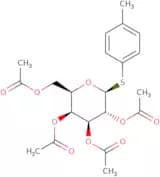
CAS:<p>4-Methylphenyl 2,3,4-tri-O-acetyl-b-D-thioglucuronide methyl ester is a synthetic, fluorinated monosaccharide. It is a custom synthesis for use in glycosylation reactions. The product can be used as a carbohydrate building block in the synthesis of oligosaccharides and polysaccharides. This compound is also suitable for click modification and methylation reactions. 4-Methylphenyl 2,3,4-tri-O-acetyl-b-D-thioglucuronide methyl ester has CAS number 61025-09-0 and purity of >99%.</p>Fórmula:C20H24O9SPureza:Min. 95%Peso molecular:440.47 g/mol3,4,6-Tri-O-benzyl-2-deoxy-D-galactopyranose
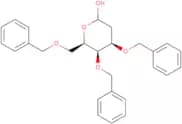
CAS:<p>3,4,6-Tri-O-benzyl-2-deoxy-D-galactopyranose is a synthetic monosaccharide. It is custom synthesized with the desired modifications and can be used in glycosylation, polysaccharide modification, or click chemistry to modify other molecules. 3,4,6-Tri-O-benzyl-2-deoxy-D-galactopyranose is an amber glassy solid that is soluble in water and ethanol. This product has a CAS No. of 94189-64-7 and a molecular weight of 438.23 g/mol.</p>Fórmula:C27H30O5Pureza:Min. 95%Peso molecular:434.52 g/molHyaluronic acid hexasaccharide
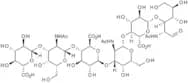
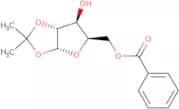
CAS:<p>Hyaluronic acid is a polysaccharide containing repeating disaccharide units of β-1,3-N-acetyl glucosamine and β-1, 4-glucuronicâ¯acid. A series of unsaturated oligosaccharides (oligouronic acids) are released from hyaluronic acid by the action of hyaluronidase on umbilical cord (Weissman, 1954). This hexasaccharide and other enzymatically produced polymer homologs have been of value in the study of hyaluronic acid metabolism in healthy and diseased tissues (Hascall, 2019).</p>Fórmula:C42H65N3O34Pureza:Min. 95%Cor e Forma:White Off-White PowderPeso molecular:1,155.97 g/mol5-O-Benzoyl-1,2-O-isopropylidene-a-D-xylofuranose
CAS:<p>Ai Product Descriptions 50 Creative</p>Fórmula:C15H18O6Pureza:Min. 95%Peso molecular:294.31 g/mol(+)-Casuarine
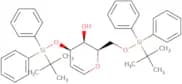
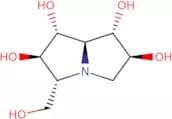
CAS:<p>(+)-Casuarine is a chiral biomolecule that is structurally related to (+)-cinchonine. It has been shown to be an inhibitor of glycosidase, an enzyme that hydrolyzes glycosides, and as such it has potential use in the development of drugs for the treatment of diabetes mellitus. The enolate form of (+)-casuarine can undergo cycloadditions with oxygenated functional groups. This reaction is stereoselective and leads to polyhydroxylated products.</p>Fórmula:C8H15NO5Pureza:Min. 95%Peso molecular:205.21 g/mol4-O-Acetyl-3,6-di-O-tert-butyldiphenylsilyl-D-galactal
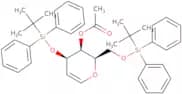
CAS:<p>4-O-Acetyl-3,6-di-O-tert-butyldiphenylsilyl-D-galactal is a synthetic oligosaccharide that has been fluorinated and modified with acetyl groups. It has been shown to have antihypertensive activity in animal studies.</p>Pureza:Min. 95%2-Azidoethyl 2-acetamido-2-deoxy-4,6-O-isopropylidene-b-D-glucopyranoside
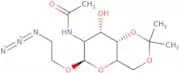
<p>2-Azidoethyl 2-acetamido-2-deoxy-4,6-O-isopropylidene-b-D-glucopyranoside is a synthetic sugar that is used in the synthesis of oligosaccharides and saccharides. This product can be custom synthesized to meet your specifications. It is soluble in water and ethanol, and insoluble in ether. It has a molecular weight of 453.5 g/mol with CAS number 53955-43-0.</p>Fórmula:C13H22N4O6Pureza:Min. 95%Peso molecular:330.34 g/molN-Valinyl-1-deoxy-D-glucitol
CAS:<p>N-Valinyl-1-deoxy-D-glucitol is an inhibitor of protein glycosylation. It prevents the formation of N-glycans on proteins by inhibiting the addition of glucose from UDP-glucose to proteins. This leads to a reduction in the total carbohydrate content of cell membranes and other glycoconjugates. N-Valinyl-1-deoxy-D-glucitol has been shown to be useful for reducing blood sugar levels in diabetic patients, as well as decreasing serum concentrations of hemoglobins and serum albumin in these patients. The use of N-Valinyl-1-deoxy-D-glucitol has also been shown to reduce glycosylation of human albumin, leading to an increase in its solubility. This drug can be used as a control substance for antihuman IgG polyclonal antibody assays.</p>Fórmula:C11H23NO7Pureza:Min. 95%Peso molecular:281.3 g/molDexibuprofen-acyl-b-D-glucuronide
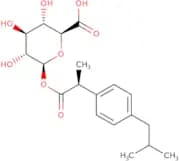
CAS:<p>Dexibuprofen-acyl-b-D-glucuronide is a complex carbohydrate that is synthesized by the acylation of dexibuprofen with b-D-glucuronic acid. The complex is then modified to increase its water solubility and stability. Dexibuprofen-acyl-b-D-glucuronide has been shown to have antiinflammatory activity in mice, which may be due to its ability to inhibit prostaglandin synthesis.</p>Fórmula:C19H26O8Pureza:Min. 95%Peso molecular:382.4 g/molCarboxymethyl-dextran sodium salt 10-20% COOH terminally reduced - Average molecular weight 40000
CAS:<p>Drug carrier for cancer therapy & imaging, biocompatible, soluble, biodegradable</p>Pureza:Min. 95%2,5-Anhydro-D-mannitol-1,6-diphosphate dibarium salt dihydrate
CAS:<p>2,5-Anhydro-D-mannitol-1,6-diphosphate dibarium salt dihydrate is a synthetic sugar that is an intermediate in the synthesis of glycosylation products. It can be modified with methyl groups and fluorine atoms. The CAS number for this product is 352000-03-4. This product can be custom synthesized to meet specifications such as purity and monosaccharide content. It is a white to off white powder with a melting point of 136 - 141 °C and a solubility of 0.01 g/L in water.</p>Fórmula:C6H10Ba2O11P2·2H2OPureza:Min. 95%Peso molecular:630.77 g/molMethyl 4-O-[4,6-O-(benzylidene)-b-D-galactopyranosyl] b-D-galactopyranoside tribenzoate
<p>Methyl 4-O-[4,6-O-(benzylidene)-b-D-galactopyranosyl] b-D-galactopyranoside tribenzoate is a synthetic carbohydrate. It is an oligosaccharide that contains a complex carbohydrate. It is a high purity product and has been custom synthesized. The CAS number for Methyl 4-O-[4,6-O-(benzylidene)-b-D-galactopyranosyl] b-D-galactopyranoside tribenzoate is 59414-33-2. This product has been fluorinated and methylated. It also contains glycosylation and click modification.</p>Pureza:Min. 95%1,2,3,5-Tetra-O-acetyl-b-L-xylofuranose
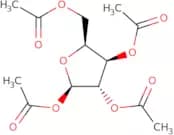
CAS:<p>1,2,3,5-Tetra-O-acetyl-b-L-xylofuranose is a carbohydrate. It is the only tetra-acetoxylated monosaccharide that has been reported to date. The synthesis of 1,2,3,5-tetra-O-acetyl-b-L-xylofuranose was achieved by modifying the glycosylation of bromoacetaldehyde with 1,2,3,5 triacetoxy xylan. This product has high purity and custom synthesis capabilities. It is also available as a methyl ether and can be modified using Click chemistry to incorporate different functional groups at specific positions on the molecule.</p>Fórmula:C13H18O9Pureza:Min. 95%Peso molecular:318.3 g/molAllyl 2,3-di-O-benzyl-a-D-glucopyranoside
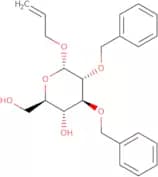
CAS:<p>Allyl 2,3-di-O-benzyl-a-D-glucopyranoside is a plant growth regulator that stimulates callus formation. It belongs to the group of auxins and has been shown to promote callus growth in Arabidopsis thaliana cultivars, such as glaberrima and kinetin. This compound has also been shown to stimulate the formation of calli from coconut explants.</p>Fórmula:C23H28O6Pureza:Min. 95%Peso molecular:400.46 g/mol1-O-tert-Butyldiphenysilyl-2-azido-4,6-O-benzylidene-2-deoxy-b-D-galactopyranoside
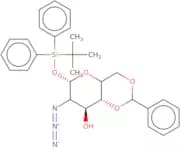
CAS:<p>1-O-tert-Butyldiphenysilyl-2-azido-4,6-O-benzylidene-2-deoxy-b-D-galactopyranoside is a custom synthesis of an oligosaccharide. It is a modification of the original compound by fluorination, methylation and glycosylation. The molecular weight of 1BPSA is 522.08 g/mol and its CAS number is 132183-16-5. This product is soluble in water and can be used for the synthesis of complex carbohydrates.</p>Fórmula:C29H33N3O5SiPureza:Min. 95%Peso molecular:531.68 g/molPhenyl 2,6-di-O-benzoyl-3,4-O-isopropylidene-b-D-thiogalactopyranoside
CAS:<p>Phenyl 2,6-di-O-benzoyl-3,4-O-isopropylidene-b-D-thiogalactopyranoside is a Custom synthesis that can be modified for fluorination, methylation, or monosaccharide. This product has a CAS number of 124477-00-5 and is a saccharide with a molecular weight of 456. Phenyl 2,6-di-O-benzoyl-3,4-O-isopropylidene-b-D-thiogalactopyranoside can be used in the synthesis of oligosaccharides and polysaccharides. It is also used as an intermediate in glycosylation reactions to produce complex carbohydrates.</p>Fórmula:C29H28O7SPureza:Min. 95%Peso molecular:520.59 g/molN-b-D-Glucopyranosyl-L-Asn
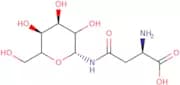
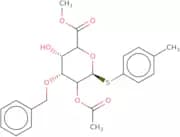
CAS:<p>N-b-D-Glucopyranosyl-L-Asn is a complex carbohydrate that is modified by glycosylation and methylation. It is an Oligosaccharide, Polysaccharide, Modification, saccharide that can be synthesized from D-Glucose or D-Mannose. N-b-D-Glucopyranosyl-L-Asn has high purity and can be fluorinated for modification. This product can be used as a sugar and is also used in Click chemistry for modification.</p>Fórmula:C10H18N2O8Pureza:Min. 95%Peso molecular:294.26 g/mol4-Methylphenyl 2-O-acetyl-3-O-benzyl-b-D-thioglucuronide methyl ester
CAS:<p>4-Methylphenyl 2-O-acetyl-3-O-benzyl-b-D-thioglucuronide methyl ester is a custom synthesis of an oligosaccharide. It has been modified with fluorination and methylation, which are chemical reactions that alter the structure of the substance. Click modification is also a type of chemical reaction involving this substance.</p>Fórmula:C23H26O7SPureza:Min. 95%Peso molecular:446.51 g/mol1-O-Propargyl 3, 4, 6- tri-O-acetyl- D- fructofuranose
<p>1-O-Propargyl 3, 4, 6-tri-O-acetyl-D-fructofuranose is a synthetic oligosaccharide that can be used as a fluorinated building block for the synthesis of glycosides. It can be modified with various reagents such as methylation, monosaccharide or sugar modification. The CAS number for this compound is 54733-90-5.</p>Pureza:Min. 95%2,3,4,3',4'-Penta-O-isovaleryl-sucrose
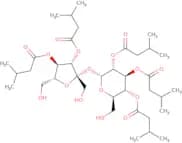
CAS:<p>2,3,4,3',4'-Penta-O-isovaleryl-sucrose is a custom synthesis that has been modified by fluorination and methylation. It is a monosaccharide with a molecular weight of 596.84 g/mol. This compound is synthesized from sucrose through a click modification reaction and then further modified by glycosylation reactions to form an oligosaccharide or polysaccharide. 2,3,4,3',4'-Penta-O-isovaleryl-sucrose can be used in the production of complex carbohydrates such as Sucralose and Stevia.</p>Pureza:Min. 95%Cor e Forma:Powder1,2,3,4-Tetra-O-acetyl-β-D-ribopyranose
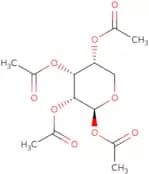
CAS:<p>1,2,3,4-Tetra-O-acetyl-b-D-ribopyranose is a lipase inhibitor that belongs to the class of lipolytic enzymes. It has been shown to be an effective inhibitor of lipases and has demonstrated enantiopure selectivity for the hydrolysis of racemic mixtures. This substance is used in industrial processes as a surrogate for other more expensive substances. The 1,2,3,4-Tetra-O-acetyl-b-D-ribopyranose has been used as a screening tool to identify potential inhibitors of human pancreatic lipase. The results have shown that this compound inhibits the activity of this enzyme with high specificity and sensitivity.</p>Fórmula:C13H18O9Pureza:Min. 95%Cor e Forma:PowderPeso molecular:318.28 g/molCelecoxib carboxylic acid acyl-b-D-glucuronide
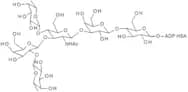
CAS:<p>Celecoxib is a nonsteroidal anti-inflammatory drug (NSAID) that has been used to treat pain and inflammation. Celecoxib carboxylic acid acyl-b-D-glucuronide is an active metabolite of celecoxib that is formed by the conjugation of celecoxib with glucuronic acid. It has been shown to inhibit the synthesis of prostaglandins, which are inflammatory mediators.</p>Fórmula:C23H20F3N3O10SPureza:Min. 95%Peso molecular:587.48 g/molLacto-N-difucohexaose I-APD-HSA
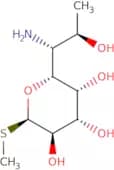
<p>Lacto-N-difucohexaose I-APD-HSA is a custom synthesis of an oligosaccharide with a molecular weight of 5,000 Da. It is modified with fluorine and methyl groups at the C6 and C1 positions. Lacto-N-difucohexaose I-APD-HSA is synthesized by click chemistry and has been shown to be effective in inhibiting the growth of cancer cells. This sugar can be modified by glycosylation or carbohydrate modification.</p>Pureza:Min. 95%Methyl 1-thiolincosaminide
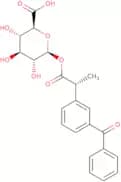
CAS:<p>Intermediate in the production of biosynthetic antibiotics</p>Fórmula:C9H19NO5SPureza:Min. 95%Peso molecular:253.32 g/mol(R)-Ketoprofen b-D-glucuronide
CAS:<p>(R)-Ketoprofen b-D-glucuronide is a synthetic modified sugar that is produced by the glucuronidation of ketoprofen, a nonsteroidal anti-inflammatory drug. The modification of ketoprofen with glucuronic acid can be achieved through an enzymatic process, which is catalyzed by UDP-glucuronyltransferase. This modification increases the solubility of ketoprofen and its ability to penetrate cells. (R)-Ketoprofen b-D-glucuronide has been shown to have antibacterial properties against Gram positive bacteria such as Staphylococcus aureus and Streptococcus pyogenes. It has also shown antiviral activity against HIV-1 due to its inhibition of reverse transcriptase, which is an enzyme important for viral replication.</p>Fórmula:C22H22O9Pureza:Min. 95%Cor e Forma:White to off-white solid.Peso molecular:430.4 g/mol2,6-Di-O-acetyl-3,4-di-O-benzyl-a-D-mannopyranosyl trichloroactimidate
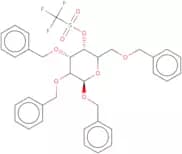
CAS:<p>2,6-Di-O-acetyl-3,4-di-O-benzyl-a-D-mannopyranosyl trichloroactimidate is a synthetic, glycosylate sugar that can be used in the synthesis of oligosaccharides and polysaccharides. This molecule has been fluorinated to increase its lipophilicity and stability. It has been modified with methyl groups to improve its reactivity with other molecules. The purity of 2,6-Di-O-acetyl-3,4-di-O-benzyl-a-D-mannopyranosyl trichloroactimidate is greater than 98%.</p>Fórmula:C26H28Cl3NO8Pureza:Min. 95%Peso molecular:588.86 g/mol1,2,3,6-Tetra-O-benzyl-4-O-trifluoromethanesulfonyl-b-D-mannopyranose
<p>1,2,3,6-Tetra-O-benzyl-4-O-trifluoromethanesulfonyl-b-D-mannopyranose is a synthetic sugar that can be custom synthesized with high purity. It is an oligosaccharide that has a sugar component and a glycosylation component. This product can be modified to order by methylation or fluorination and can be used in the synthesis of complex carbohydrates. It has been shown to have anti-inflammatory effects in rats.</p>Fórmula:C35H35F3O8SPureza:Min. 95%Peso molecular:672.71 g/molPhosphoric acid mono-((2R,3R,4S,5R)-2,3,4,5,7-pentahydroxy-6-hydroxyimino-heptyl) ester disodium salt (compound H)
<p>Phosphoric acid mono-((2R,3R,4S,5R)-2,3,4,5,7-pentahydroxy-6-hydroxyimino-heptyl) ester disodium salt (compound H) is a high purity compound that can be custom synthesized to suit the customer's needs. It is a synthetically modified sugar with Click modification. This product has been fluorinated and glycosylated. Modification and methylation are also available on request.</p>Fórmula:C7H14O10NPNa2Pureza:Min. 95%Peso molecular:349.14 g/mol6-O-tert-Butyldiphenylsilyl-3,4-O-isopropylidene-D-galactal
CAS:<p>6-O-tert-Butyldiphenylsilyl-3,4-O-isopropylidene-D-galactal is a synthetic monosaccharide that is used as a building block for the synthesis of complex carbohydrates. This product is also used in glycosylation reactions and click modification. It is available in high purity and can be custom synthesized to meet customer needs.</p>Pureza:Min. 95%(2S- trans) -4- Hydroxy- N- methyl 2- pyrrolidinecarboxami de
CAS:<p>(2S- trans)-4-Hydroxy-N-methyl 2-pyrrolidinecarboxamide is a modification of the sugar molecule. It is a complex carbohydrate that belongs to the group of oligosaccharides. It has CAS number 143035-54-5 and can be synthesized in high purity with a glycosylation process. This chemical can also be fluorinated and saccharide substituted to create a wide range of products with different properties.</p>Pureza:Min. 95%3,4,6-Tri-O-acetyl-a-D-galactopyranose 1,2-(methyl orthoacetate)
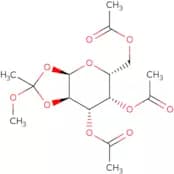
CAS:<p>The survey was conducted to understand the current workforce and their feedback on the automated testing. The median number of respondents exceeded the number that was needed for a statistically significant result. The automated testing has helped to reduce the time it takes to test new features and has also improved the resilience of the developers. Feedback from testers has been positive, with many saying that they would recommend automated testing to other companies. This survey was conducted by an analyst who had an understanding of human-computer interaction and software development.</p>Fórmula:C15H22O10Pureza:Min. 95%Peso molecular:362.33 g/molBenzyl 4-O-(2,3,4,6-tetra-O-benzyl-a-D-galactopyranosyl)-2,3-di-O-benzyl-b-D-galactopyranoside
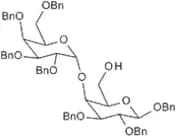
<p>Benzyl 4-O-(2,3,4,6-tetra-O-benzyl-a-D-galactopyranosyl)-2,3-di-O-benzylb -D-galactopyranoside is a Fluorination and Glycosylation product. It is a Custom Synthesis of Monosaccharide and Oligosaccharide. The CAS number for this product is 106835-99-8.</p>Fórmula:C61H64O11Pureza:Min. 95%Peso molecular:973.15 g/mol6-O-Benzoyl-3-O-tert-butyldiphenylsilyl-D-glucal
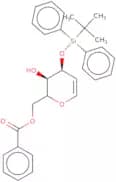
<p>6-O-Benzoyl-3-O-tert-butyldiphenylsilyl-D-glucal is a modification of the oligosaccharide, 6-O-(benzoyloxy)hexyl glucal. The product is used as a synthetic intermediate in the synthesis of complex carbohydrates. It is also used in the production of high purity monosaccharides and polysaccharides. This product has been shown to be effective in methylation reactions, glycosylation reactions, and fluorination reactions.</p>Pureza:Min. 95%Naphthofluorescein di-O-(b-D-galactopyranoside)
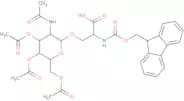
CAS:<p>Naphthofluorescein di-O-(b-D-galactopyranoside) is a fluorescent dye that is used in the study of polysaccharides, saccharides, and carbohydrates. This dye is a methylated derivative of naphthofluorescein with an additional sugar molecule attached to the fluorescing part. The chemical formula for this compound is C12H14N2O7 b-D-Galactopyranoside. The molecular weight of this compound is 542.3 g/mol. Naphthofluorescein di-O-(b-D-galactopyranoside) has CAS No. 133551-98-1 and can be found on the website of Chemical Abstracts Service (CAS).</p>Fórmula:C40H36O15Pureza:Min. 95%Peso molecular:756.7 g/mol2-Acetamido-3,4,6-tri-O-acetyl-2-deoxy-b-D-galactopyranosyl-Fmoc serine
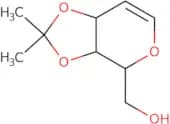
CAS:<p>2-Acetamido-3,4,6-tri-O-acetyl-2-deoxy-b-D galactopyranosyl Fmoc serine is a modification of the natural glycoside 2 acetamido 3,4,6 tri O acetyl 2 deoxy b D galactopyranosyl. It is a synthetic carbohydrate that is used in the synthesis of complex carbohydrates. This product has been shown to be stable under acidic conditions and can be modified for use in glycosylation or other reactions.</p>Fórmula:C32H36N2O13Pureza:Min. 95%Peso molecular:656.64 g/mol3,4-O-Isopropylidene-D-galactal
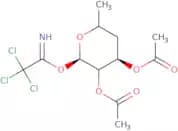
CAS:<p>3,4-O-Isopropylidene-D-galactal is a modified form of galactal. This compound is a methylated derivative of D-galactal that has been synthesized by the click reaction. It can be used in the synthesis of oligosaccharides and polysaccharides. 3,4-O-Isopropylidene-D-galactal is a high purity compound with a CAS number of 124477-12-9.</p>Pureza:Min. 95%2,3-Di-O-acetyl-4,6-dideoxy-a-D-glucopyranosyl trichloroacetimidate
CAS:<p>2,3-Di-O-acetyl-4,6-dideoxy-a-D-glucopyranosyl trichloroacetimidate is a synthetic fluorinated carbohydrate with a complex structure. It is used in the synthesis of oligosaccharides and polysaccharides. 2,3-Di-O-acetyl-4,6-dideoxy-a-D-glucopyranosyl trichloroacetimidate is also used for click modification reactions to modify the sugar moiety of glycans. This product can be custom synthesized to meet customer specifications.<br>2,3 Di O acetyl 4,6 dideoxy a D glucopyranosyl trichloroacetimidate is soluble in water and methanol. It has CAS No. 485809 - 87 - 8 and Molecular Formula C17H19ClO8N2O7. The purity level is > 98</p>Fórmula:C12H16Cl3NO6Pureza:Min. 95%Peso molecular:376.62 g/mol1,3,4,6-Tetra-O-acetyl-2-deoxy-2-N-phthalimido-D-glucopyranose
CAS:<p>1,3,4,6-Tetra-O-acetyl-2-deoxy-2-N-phthalimido-D-glucopyranose is a carbohydrate that has been modified by fluorination and methylation. The fluorination of the sugar provides protection against enzymatic degradation, while the methylation of the sugar provides protection against chemical degradation. This product can be custom synthesized to provide high purity and high quality. It is a monosaccharide that can be used in glycosylation or Click modification.</p>Fórmula:C22H23NO11Pureza:Min. 95%Cor e Forma:Off-White SolidPeso molecular:477.42 g/mol6-Azido-6-deoxy-D-mannose
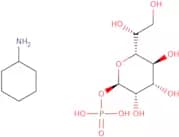
CAS:<p>6-Azido-6-deoxy-D-mannose is a hexose sugar that has been implicated in the binding of lectins to glycoclusters. Lectins are carbohydrate binding proteins found on the surface of cells and some viruses, which bind to specific carbohydrates via their sugar moieties. This process is called lectinosis and it is sometimes used as a form of immune evasion by pathogens. 6-Azido-6-deoxy-D-mannose can be used as a linker to attach affinity ligands or affinity tags to glycoclusters, which are clusters of glycoconjugates that have an important biological function. 6AoDM also has anti-microbial properties, making it an opportunistic pathogen.</p>Fórmula:C6H11N3O5Pureza:Min. 95%Peso molecular:205.17 g/mol(D-Glycero-a-D-manno-heptopyranosyl)-dihydrogenphosphate cyclohexylammonium salt
CAS:<p>The D-Glycero-a-D-manno-heptopyranosyl)-dihydrogenphosphate cyclohexylammonium salt, also known as Glyceroheptaose, is a complex carbohydrate. It is a white powder that can be used in the modification of polysaccharides, oligosaccharides, and saccharides. The CAS number for this substance is 359435-45-3.</p>Fórmula:C7H15O10P·C6H13NPureza:Min. 95%Peso molecular:389.34 g/mol3,6-Di-O-tert-butyldiphenylsilyl-D-galactal
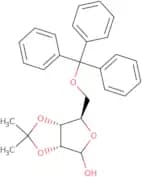
CAS:<p>3,6-Di-O-tert-butyldiphenylsilyl-D-galactal is an oligosaccharide that is a methylated and fluorinated derivative of the natural product D-galactal. The chemical structure of 3,6-di-O-tert-butyldiphenylsilyl-D-galactal is based on a beta-(1->4) linkage of two glucose residues with a terminal alpha-(1->3) linkage to form an alpha-(1->6) linkage. The compound is readily available in high purity, and can be custom synthesized to meet specific customer requirements for glycosylation, modification, or other special requests. 3,6-Di-O-tert-butyldiphenylsilyl--D--galactal has been shown in vitro to inhibit the growth of Mycobacterium tuberculosis and Mycobacterium av</p>Pureza:Min. 95%2,3-O-Isopropylidene-5-O-trityl-D-ribofuranose
CAS:<p>2,3-O-Isopropylidene-5-O-trityl-D-ribofuranose is a metal complex that can be used as an antitumor agent. It has been shown to have antimicrobial activity against Gram positive and Gram negative bacteria and fungi. 2,3-O-Isopropylidene-5-O-trityl-D-ribofuranose is also active against Gram negative bacteria such as Escherichia coli and Pseudomonas aeruginosa. This compound is easily synthesized from acetoacetic acid by the reaction with trifluoroacetic anhydride followed by ammonolysis or azide coupling. The product is then amidated or tosylated to give the desired product.<br>2,3-O-Isopropylidene - 5 - O - trityl - D - ribofuranose has also been shown to inhibit tumor growth in</p>Fórmula:C27H28O5Pureza:Min. 95%Cor e Forma:SolidPeso molecular:432.51 g/molNorcyclobenzaprine N-glucuronide
<p>Norcyclobenzaprine N-glucuronide is a custom synthesis of the complex carbohydrate, oligosaccharides. It has CAS No. and is a polysaccharide that is modified by methylation, glycosylation, click modification and fluorination. Norcyclobenzaprine N-glucuronide also has high purity and can be synthesized using sugar or carbohydrate. This product has been created through synthetic means with the addition of fluorine to the molecule.</p>Fórmula:C25H27NO6Pureza:Min. 95%Peso molecular:437.49 g/molMethyl 4,6-di-O-acetyl-2,3-carbonyl-b-D-mannopyranoside
CAS:<p>Methyl 4,6-di-O-acetyl-2,3-carbonyl-b-D-mannopyranoside is a saccharide that is modified by the Click reaction with osmium tetroxide and methyl iodide. It can be used in glycosylation reactions to produce complex carbohydrates. This product is made of high purity and has a CAS No. 53958-22-8.</p>Fórmula:C12H16O9Pureza:Min. 95%Peso molecular:304.25 g/mol2-Acetamido-3,4,6-tri-O-acetyl-2-deoxy-a-D-glucopyranosyl-Fmoc asparagine
<p>2-Acetamido-3,4,6-tri-O-acetyl-2-deoxy-a-D-glucopyranosyl -Fmoc asparagine is a custom synthesis. It is a high purity product. It is an oligosaccharide that has been modified with methylation and glycosylation. This product has been fluorinated, which makes it useful for click chemistry applications. It is a sugar with a complex carbohydrate structure that can be used in the production of polysaccharides and other carbohydrates.</p>Fórmula:C33H37N3O13Pureza:Min. 95%Peso molecular:683.66 g/mol2-Methoxycarbonylphenyl 2,3,4,6-tetra-O-acetyl-b-D-glucopyranoside
CAS:<p>2-Methoxycarbonylphenyl 2,3,4,6-tetra-O-acetyl-β-D-glucopyranoside is a high purity and custom synthesis sugar that can be fluorinated and glycosylated. This molecule has been modified with methyl groups and is an oligosaccharide. It is a complex carbohydrate with saccharide units, which are monosaccharides or polysaccharides. CAS No. 7791-66-4</p>Fórmula:C22H26O12Pureza:Min. 95%Peso molecular:482.43 g/mol4-Methylphenyl 2,3,4,6-tetra-O-acetyl-β-D-thiogalactopyranoside
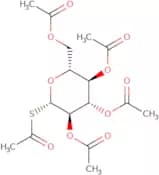
CAS:<p>4-Methylphenyl 2,3,4,6-tetra-O-acetyl-b-D-thiogalactopyranoside is a custom synthesis of an oligosaccharide with a polysaccharide. It is a high purity glycosylated carbohydrate with a CAS number of 28244-99-7. The sugar has been modified by methylation and fluorination, as well as the Click modification.</p>Fórmula:C21H26O9SPureza:Min. 95%Cor e Forma:PowderPeso molecular:454.49 g/mol1,2,3,4,6-Penta-O-acetyl-b-D-thioglucopyranose
CAS:<p>1,2,3,4,6-Penta-O-acetyl-b-D-thioglucopyranose is a custom synthesis that is a complex carbohydrate. It is an Oligosaccharide which is a polysaccharide. The modification of saccharide with the CAS No. 13639-50-4 has been done by glycosylation and carbamylation. The glycogen molecule contains three glucoses and one galactose molecule that are linked by alpha 1,4 linkages. The first two glucose molecules are connected to each other by an alpha 1,4 linkage and the third glucose molecule is connected to the fourth glucose molecule through an alpha 1,6 linkage. The first two glucoses are also linked together by a beta 1,4 linkage. There are many ways in which this glycogen can be modified or synthesized including methylation and fluorination. This product has high purity and can be used in Click</p>Pureza:Min. 95%Benzyl N-acetyl-4,6-O-benzylidene-a-isomuramic acid methyl ester
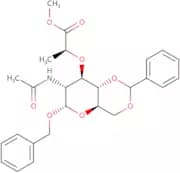
CAS:<p>This product is a custom synthesis that is synthesized in our lab. It is a high purity product with a custom synthesis. This product has been modified with Click chemistry, fluorination, and glycosylation. It was synthesized by methylation and modification of an oligosaccharide monosaccharide saccharide carbohydrate complex carbohydrate.</p>Fórmula:C26H31NO8Pureza:Min. 95%Peso molecular:485.53 g/mol




![Methyl 4-O-[4,6-O-(benzylidene)-b-D-galactopyranosyl] b-D-galactopyranoside tribenzoate](/_next/image/?url=https%3A%2Fstatic.cymitquimica.com%2Fproducts%2F3D%2Fthumb-webp%2FOM30775.webp&w=3840&q=75)