Glicociência
Subcategorias de "Glicociência"
- Amino açúcares(108 produtos)
- Anticorpos Glico-Relacionados(284 produtos)
- Glicolípidos(46 produtos)
- Glicosaminoglicanos (GAGs)(55 produtos)
- Glicosídeos(419 produtos)
- Monossacáridos(6.622 produtos)
- Oligossacarídeos(3.701 produtos)
- Polissacáridos(505 produtos)
Foram encontrados 11034 produtos de "Glicociência"
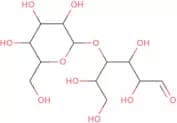
4-Glucopyranosylmannose
CAS:4-Glucopyranosylmannose is a disaccharide compound, which is a synthetic carbohydrate derived from the enzymatic or chemical glycosylation processes. It consists of glucose and mannose units linked through a glycosidic bond. The compound is sourced through advanced synthetic methodologies involving specific glycosyltransferases or chemical catalysts that facilitate the precise attachment of these sugar moieties.
Fórmula:C12H22O11Pureza:Min. 95%Peso molecular:342.3 g/molRef: 3D-QAA76161
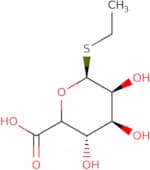
Produto descontinuadoEthyl D-thioglucuronide
CAS:Ethyl D-thioglucuronide is a modification of an oligosaccharide, carbohydrate, complex carbohydrate or sugar. It can be synthesized by custom synthesis or by synthetic methods. The product is highly pure and monosaccharide methylated. The product can be glycosylated, polysaccharide, sugar fluorinated and saccharides click modified.
Fórmula:C8H14O6SPureza:Min. 95%Cor e Forma:Off-White PowderPeso molecular:238.26 g/molRef: 3D-ME10057
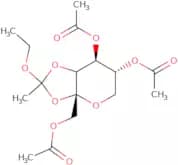
Produto descontinuado3,4,6-Tri-O-acetyl-1,2-O-ethoxyethylidene-a-D-fructopyranose
3,4,6-Tri-O-acetyl-1,2-O-ethoxyethylidene-a-D-fructopyranose is a modified carbohydrate with the chemical formula C 12 H 20 O 8 . It is a white crystalline solid that is soluble in water. 3,4,6-Tri-O-acetyl-1,2-O-ethoxyethylidene-a-Dfructopyranose can be used as a monosaccharide or an oligosaccharide. This compound has been synthesized by methylation and glycosylation of glucose.
Fórmula:C16H24O10Pureza:Min. 95%Peso molecular:376.36 g/molRef: 3D-MT08390
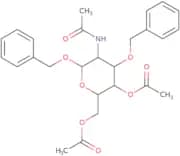
Produto descontinuado1,3-o-Dibenzyl-N-acetyl-β-D-glucosamine 4,6-diacetate
CAS:Please enquire for more information about 1,3-o-Dibenzyl-N-acetyl-β-D-glucosamine 4,6-diacetate including the price, delivery time and more detailed product information at the technical inquiry form on this page
Fórmula:C26H31NO8Pureza:Min. 95%Peso molecular:485.5 g/molRef: 3D-QCA49323
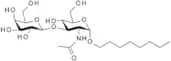
Produto descontinuadoOctyl 2-acetamido-2-deoxy-3-O-(b-D-galactopyranosyl)-a-D-glucopyranoside
CAS:Octyl 2-acetamido-2-deoxy-3-O-(b-D-galactopyranosyl)-a-D-glucopyranoside is a synthetic sugar that is used in the production of various drugs. It is used as an intermediate in the synthesis of a variety of drugs, including antihistamines, antidiabetic agents, and antihypertensive agents. Octyl 2-acetamido-2-deoxy-3-O-(b-D-galactopyranosyl)-a-D--glucopyranoside is also used to modify proteins and carbohydrates. This compound has been shown to be useful for the fluorination of saccharides and for click modification with an azide group.Fórmula:C22H41NO11Pureza:Min. 95%Peso molecular:495.56 g/molRef: 3D-DO16485
Produto descontinuado1,2,3,4-Tetra-O-acetyl-D-fucopyranose
1,2,3,4-Tetra-O-acetyl-D-fucopyranose is a glycosylation agent that can be used in the synthesis of complex carbohydrates or in the modification of natural polysaccharides. It can be fluorinated to produce 1,2,3,4-tetra-O-fluoro-D-fucopyranose or modified with a click reagent to produce 1,2,3,4-tetra-[5-(N'-diethylamino)pentyl]-D-fucopyranose. The CAS number for this product is 109712-63-7. This product is available for custom synthesis and is sold at a purity of >99%.
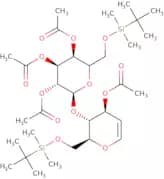
Pureza:Min. 95%3,2',3',4'-Tetra-O-acetyl-6,6'-di-O-tert-butyldimethylsilyl-lactal
CAS:3,2',3',4'-Tetra-O-acetyl-6,6'-di-O-tert-butyldimethylsilyl-lactal is a glycosylation agent that can be used in the synthesis of oligosaccharides and polysaccharides. It can be fluorinated to create a reactive site for methylation and click modification. 3,2',3',4'-Tetra-O-acetyl-6,6'-di-O-tert-butyldimethylsilyl-lactal is an acetylated lactal with a silyl ether protecting group. This product has been custom synthesized and is available in high purity.
Pureza:Min. 95%1,2,3,5-Tetra-O-acetyl-D-ribofuranose
CAS:1,2,3,5-Tetra-O-acetyl-D-ribofuranose is a dietary supplement that can be found in the form of palladium complexes. This compound has been shown to have anti-inflammatory properties and may be effective against cancer cells. 1,2,3,5-Tetra-O-acetyl-D-ribofuranose is an acetylated pyridazine derivative with antimicrobial and antibacterial effects. It has also been shown to inhibit the synthesis of purines and pyrimidines by cleaving the 6th carbon from ribose. 1,2,3,5-Tetra-O-acetyl-D-ribofuranose is synthesized by chlorination of 2,6-, 3-, 5-, or 7-(chloropurinomethyl)pyridine with mercuric chloride or nitrosyl chloride. The cleavage products are hydroxyl group
Pureza:Min. 95%6-O-Benzyl-D-glucose
CAS:6-O-Benzyl-D-glucose is an aglycon of 6-O-benzylglycosides, which are synthesized from glucose by alkaline hydrolysis in the presence of silver oxide. The benzyl group can be removed by a variety of methods, including treatment with hydrogen chloride gas. 6-O-Benzyl-D-glucose has been used in research to demonstrate that carbohydrates have a common structural feature that can be identified by looking at their molecular structure. This molecule has also been used to study the synthesis and reactivity of benzyl groups.
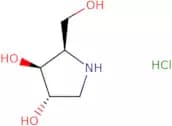
Fórmula:C13H18O6Pureza:Min. 95%Peso molecular:270.28 g/mol1,4-Dideoxy-1,4-imino-D-xylitol HCl
CAS:1,4-Dideoxy-1,4-imino-D-xylitol HCl (DDX) is a potent inhibitor of the enzyme carboxypeptidase A2. DDX has been shown to inhibit the growth of HIV in vitro and in vivo. DDX also inhibits the production of proinflammatory cytokines and neurotrophic factors from HL60 cells. It has been shown to be a potential drug target for the treatment of infectious diseases such as alphaviruses, which produce a severe neuroinvasive disease in humans. DDX binds to dna with high affinity and specificity, but does not bind to RNA or proteins. DDX inhibits mitochondrial membrane potential by binding to ATP synthase and blocking the synthesis of ATP. DDX has also been shown to have an anti-oxidative injury effect on mitochondria, which may contribute to its inhibition of viral replication.
Fórmula:C5H11NO3·HClPureza:Min. 95%Peso molecular:169.61 g/molRef: 3D-MD10116
Produto descontinuadoFructose-L-tryptophan
CAS:Please enquire for more information about Fructose-L-tryptophan including the price, delivery time and more detailed product information at the technical inquiry form on this page
Fórmula:C17H22N2O7Pureza:Min. 95%Peso molecular:366.37 g/molTetra-O-acetyl-2-acetamido-2-deoxy-b-D-mannose
Tetra-O-acetyl-2-acetamido-2-deoxy-b-D-mannose is a modified sugar that is synthesized by the methylation of 2,4,6-trichloroacetimidate. This compound has been used in the synthesis of glycosylations and other modifications. Tetra-O-acetyl-2-acetamido-2-deoxy-b-D mannose can be custom synthesized to your specifications with high purity.
Pureza:Min. 95%Ref: 3D-MT58668
Produto descontinuado1-Deoxy-L-ribose
CAS:1-Deoxy-L-ribose is a metabolite of acetone. It is a monosaccharide that contains one less oxygen atom than its parent compound. 1-Deoxy-L-ribose is found in the urine and blood of humans and animals. In animals, it can be synthesized from glucose by the enzyme ribose 1-phosphate reductase. This reaction requires an energy source such as ATP or NADH to reduce ribose 1,5-bisphosphate to 1,4-dihydroxyacetone phosphate, which then undergoes spontaneous dehydration to form 1-deoxy-D-ribose.
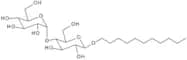
Fórmula:C5H10O4Pureza:Min. 95%Peso molecular:134.13 g/molUndecyl b-D-maltopyranoside
CAS:Undecyl b-D-maltopyranoside is a cell culture reagent that belongs to the group of monomers. It is used in the synthesis of dodecyl maltoside and is also used as a substrate for bacterial enzymes. Undecyl b-D-maltopyranoside has been shown to inhibit the activity of leukotriene A4 hydrolase, an enzyme involved in the metabolism of leukotrienes. This product has been shown to be effective in chromatographic separation of metal ions from other components. Undecyl b-D-maltopyranoside can also be used for solubilizing peptides and proteins, including those that are neutral or have a low pH. This product is also used as a substrate for recombinant monoclonal antibodies and viral coat proteins.
Fórmula:C23H44O11Pureza:Min. 95%Cor e Forma:PowderPeso molecular:496.59 g/molRef: 3D-DU05738
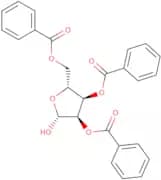
Produto descontinuado2,3,5-Tri-O-benzoyl-b-D-ribofuranose
CAS:2,3,5-Tri-O-benzoyl-b-D-ribofuranose is a custom synthesis of an oligosaccharide. It has been modified with fluorination and methylation. This is a synthetic carbohydrate that belongs to the class of saccharides. It has been synthesized from a monosaccharide and has glycosylation. The chemical formula for 2,3,5-Tri-O-benzoyl-b-D-ribofuranose is C10H14O7.
Fórmula:C26H22O8Pureza:Min. 95%Peso molecular:462.45 g/molRef: 3D-MT63375
Produto descontinuado2,3,4,6-Tetra-O-benzoyl-b-D-glucopyranosyl isothiocyanate
CAS:2,3,4,6-Tetra-O-benzoyl-b-D-glucopyranosyl isothiocyanate (TBG) is a fluorescent compound that has been shown to inhibit the activity of proteinase and other enzymes. TBG is also an inhibitor of human blood glucose levels. This compound is not chiral, but it can be used as a reagent for the production of chiral compounds. TBG binds to DNA with high affinity and specificity. It has been shown to act as a growth factor for some cancer cells by inhibiting the expression of p21 protein.
Fórmula:C35H27NO9SPureza:Min. 95%Peso molecular:637.66 g/molRef: 3D-MT05028
Produto descontinuado3'-Sialyllactose-APD-HSA
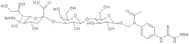
3'-Sialyllactose-APD-HSA is a complex carbohydrate with Oligosaccharide and Polysaccharide. It is a modification of saccharides, which are composed of monosaccharides or simple sugars. 3'-Sialyllactose-APD-HSA is a synthetic compound that has been modified by the addition of fluorine atoms to the sugar molecule. This modification prevents the sugar from being broken down by enzymes in the body and ensures that it remains intact until it reaches its target site. 3'-Sialyllactose-APD-HSA is used as a drug delivery system for cancer drugs, such as doxorubicin and paclitaxel.
Pureza:Min. 95%5-(β-D-Galactopyranosyloxy)-DL-lysine
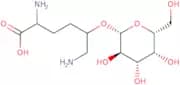
CAS:5-(β-D-Galactopyranosyloxy)-DL-lysine is a custom synthesized compound that has been modified with 5-(β-D-galactopyranosyloxy) groups. It is an oligosaccharide, polysaccharide, and saccharide that belongs to the category of carbohydrates. This product is available for purchase in high purity and has been fluorinated. The CAS number for this product is 35910-05-5.
Fórmula:C12H24N2O8Pureza:Min. 95%Cor e Forma:PowderPeso molecular:324.33 g/molRef: 3D-FG181089
Produto descontinuado3-Deoxy-3-fluoro-D-fructose
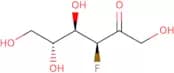
CAS:3-Deoxy-3-fluoro-D-fructose is a monosaccharide that has been used as an inhibitor of glucose uptake and metabolism in the lymphocytic leukemia cell line. This compound has been shown to inhibit the glucose transporter GLUT1, which is responsible for the transport of glucose across the plasma membrane. 3-Deoxy-3-fluoro-D-fructose inhibits cancer cells by inhibiting galactitol production through inhibition of gluconeogenesis. It also inhibits oxidative phosphorylation in lymphocytic leukemia cells, leading to apoptosis. 3-Deoxy-3-fluoro-D-fructose has been shown to inhibit cancer growth by blocking glucose uptake in xenopus oocytes.
Pureza:Min. 95%cis-Zeatin-9-glucoside
CAS:Cis-Zeatin-9-glucoside is a plant hormone known as a cytokinin, which is primarily synthesized in plants such as Zea mays (corn) and other monocots. Cytokinins play a critical role in regulating plant growth and development by promoting cell division, influencing nutrient allocation, and delaying leaf senescence. The mode of action of cis-Zeatin-9-glucoside involves its role as a signaling molecule that interacts with specific receptors in plant cells, thereby triggering a cascade of gene expression changes that modulate physiological processes.
Fórmula:C16H23N5O6Pureza:Min. 95%Cor e Forma:PowderPeso molecular:381.38 g/molRef: 3D-MZ30324
Produto descontinuadoPalatinose monohydrate
CAS:Palatinose monohydrate is a hydrogenated form of the natural disaccharide palatinose. It is often used as a solid catalyst in pharmaceutical preparations and has been shown to have a lower molecular weight than sucrose. Palatinose monohydrate may have beneficial effects on postprandial plasma glucose, protein data, and lipid metabolism. The hydrogenation process also produces fatty acids that are less reactive than those found in other sugars. Amine groups are also reduced in palatinose monohydrate, which may improve its taste. Palatinose monohydrate is not toxic at high doses and has been shown to be safe for use in toxicity studies. Surface methodology has been used to characterize the surface properties of palatinose monohydrate crystals, which can be used as a model for other sugar crystals.
Fórmula:C12H24O12Pureza:Min. 95%Peso molecular:360.31 g/molRef: 3D-ICA02413
Produto descontinuadoGlcnacβ(1-3)GalNAc-α-Thr
CAS:Glcnacβ(1-3)GalNAc-α-Thr is a polysaccharide that is found in the human body, which is a complex carbohydrate. It is an oligosaccharide modification of galactose and alpha-threonine. Glcnacβ(1-3)GalNAc-α-Thr can be custom synthesized to order with high purity and monosaccharide content. This product is used for research purposes and has not been approved for therapeutic use. The CAS number for this compound is 286959-52-2.
Fórmula:C20H35N3O13Pureza:Min. 95%Peso molecular:525.5 g/molRef: 3D-LLA95952
Produto descontinuado2-Amino-2-deoxy-D-altrose
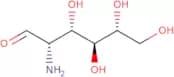
CAS:2-Amino-2-deoxy-D-altrose (2AD) is a molecule with the chemical formula C6H14N2O4. It belongs to the class of compounds known as uronic acids. 2AD is an acetylated molecule that has been structurally studied by X-ray crystallography and NMR spectroscopy. The molecule contains a ring of six carbon atoms, two of which are epoxide groups. The nature of this compound is glycosidic, with focus on hexamethylphosphoramide and diamino oligosaccharides. 2AD has been shown to have anti-inflammatory activities in animals, but its exact mechanism of action remains unknown. This compound may act through a ring-opening reaction or by inhibiting prostaglandin synthesis.
Fórmula:C6H13NO5Pureza:Min. 95%Peso molecular:179.17 g/mol2-Deoxy-2-fluoro-L-[UL-13C]fucose
CAS:2-Deoxy-2-fluoro-L-[UL-13C]fucose is a modified sugar molecule used in various scientific applications, particularly in glycobiology and drug development. It's used to study fucose-containing glycans, enzyme interactions, metabolic pathways, and glycoengineering. For instance, it can be incorporated into proteins to investigate the effects of fucose modifications on their function or used to develop drugs targeting fucose-metabolizing enzymes
Fórmula:C6H12O5Pureza:Min. 95%Peso molecular:164.16 g/molPhenyl 2,3,6-tri-O-benzyl-b-D-thioglucopyranoside
CAS:Phenyl 2,3,6-tri-O-benzyl-b-D-thioglucopyranoside is a high purity, custom synthesis sugar that has been modified with Click modification, fluorination and glycosylation. It is a synthetic compound in the form of an oligosaccharide and monosaccharide. Phenyl 2,3,6-tri-O-benzyl-b-D-thioglucopyranoside has CAS No. 97974-20-4 and can be found under Modification.
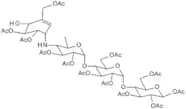
Fórmula:C33H34O5SPureza:Min. 95%Peso molecular:542.69 g/molAcarbose tridecaacetate
CAS:Acarbose tridecaacetate is a bacterial extract that has been shown to inhibit the growth of various strains of bacteria. This extract was extracted from the fields and contains aluminum oxide impurities. Acarbose tridecaacetate has shown efficacy in seed culture and actinomyces, which are two types of bacteria. The sequence of this extract has been determined using aluminum oxide. Acarbose tridecaacetate is soluble in a variety of solvents, including organic solvents and solvents. It can be purified by chromatography to remove any bulk drug or organic solvent that may be present.
Fórmula:C51H69NO31Pureza:Min. 95%Cor e Forma:White PowderPeso molecular:1,192.08 g/molRef: 3D-OA16497
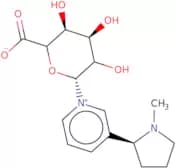
Produto descontinuadoNicotine-N-b-D-glucuronide hydrate
CAS:Nicotine-N-b-D-glucuronide hydrate is a metabolite of nicotine that is excreted in the urine as an organic anion. It has been shown to have anticancer activity against a variety of human cancer cell lines, including lung, stomach, colon, and prostate. Nicotine-N-b-D-glucuronide hydrate has also been shown to inhibit protein synthesis in vitro by interfering with the ability of cells to import amino acids such as tryptophan and phenylalanine. The same study also showed that this metabolite can cause symptoms similar to those caused by nicotine withdrawal.
Fórmula:C16H22N2O6·xH2OPureza:Min. 95%Peso molecular:338.36 g/molRef: 3D-MN09846
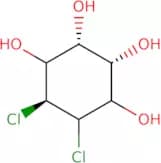
Produto descontinuado1,2-Dichloro-1,2-dideoxy-myo-inositol
1,2-Dichloro-1,2-dideoxy-myo-inositol is a methylated saccharide. It is used in the synthesis of complex carbohydrates and can be modified to include fluorine atoms. 1,2-Dichloro-1,2-dideoxy-myo-inositol has been shown to inhibit the growth of Staphylococcus aureus and Clostridium perfringens.
Pureza:Min. 95%Ref: 3D-MD08932
Produto descontinuadoMirabegron N-glucuronide
CAS:Mirabegron is a drug that is used to treat overactive bladder. Mirabegron N-glucuronide is the major metabolite of mirabegron, which has been shown to be excreted in urine. This metabolite can be detected using a validated assay and can be measured using a mass spectrometer. The concentration of mirabegron N-glucuronide in the blood sample was measured at various timepoints after administration of mirabegron. Pharmacokinetic studies were performed in humans and human liver tissue, giving information on how long it takes for the drug to reach its maximum concentration in the body and how long it stays there before being eliminated.
Pureza:Min. 95%Ref: 3D-MM59497
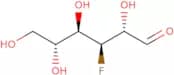
Produto descontinuado3-Deoxy-3-fluoro-D-mannose
CAS:3-Deoxy-3-fluoro-D-mannose (3DFM) is a synthetic sugar molecule that acts as an inhibitor of bacterial growth. It binds to the 6-phosphate group of nucleic acids, which prevents the addition of sugar molecules to ribose or deoxyribose groups. 3DFM also inhibits the synthesis of proteins and RNA, which are necessary for bacterial growth. 3DFM is a structural analog of mannose and glucose, and has been shown to be effective against chronic infections caused by bacteria that produce lectins, such as C. difficile. This drug can be used in combination with other antibiotics to enhance their effectiveness.
Fórmula:C6H11FO5Pureza:Min. 95%Cor e Forma:PowderPeso molecular:182.15 g/molRef: 3D-MD06720
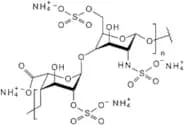
Produto descontinuadoHeparin derived dp16 saccharide ammonium salt
Heparin derived dp16 saccharide ammonium salt is a synthetic oligosaccharide with a molecular weight of approximately 16,000 Da. The compound is an amine-modified heparin sulfate fragment containing 16 saccharides linked in a linear fashion. It has been used for the click modification of proteins, and as a carbohydrate receptor in glycosylation studies. Heparin derived dp16 saccharide ammonium salt can also be custom synthesized to meet specific needs. Click modification and fluorination are two modifications that have been applied to the compound for various purposes.
Pureza:Min. 95%Cor e Forma:PowderRef: 3D-OH10451
Produto descontinuadoGal[2346Ac]b(1-3)GlcN3[46Bzd]-b-MP
Gal[2346Ac]b(1-3)GlcN3[46Bzd]-b-MP is a custom synthesis that has been modified with fluorination, methylation, and modification. The product contains a monosaccharide, oligosaccharide, saccharides, and complex carbohydrates.
Fórmula:C34H39N3O15Pureza:Min. 95%Peso molecular:729.68 g/molRef: 3D-OG60595
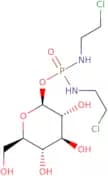
Produto descontinuadoGlufosfamide
CAS:Glufosfamide is a cytotoxic drug that is used in the treatment of some types of cancer. It is a prodrug that requires conversion to its active form, glufosfamid, by esterase enzymes before it can exert its genotoxic effects. Glufosfamide has shown to be active against platinum-resistant ovarian cancer and solid tumours. This drug also has been shown to inhibit the growth of prostate cancer cells and miapaca-2 cells, which are derived from pancreatic cancer. Glufosfamide has been found to have low toxicity in mice, but there may be adverse reactions when combined with other drugs such as erythromycin or ketoconazole.
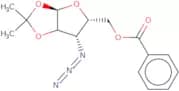
Fórmula:C10H21Cl2N2O7PPureza:Min. 95%Peso molecular:383.16 g/mol3-Azido-5-O-benzoyl-3-deoxy-1,2-O-isopropylidene-a-D-ribofuranose
3-Azido-5-O-benzoyl-3-deoxy-1,2-O-isopropylidene a D-ribofuranose (3ABI) is a synthetic monosaccharide that can be synthesized via a custom synthesis. 3ABI is an oligosaccharide that has the ability to modify glycosylation and polysaccharide synthesis. The fluorination of this sugar provides it with high purity and stability. 3ABI has been shown to have a CAS number of 44793-23-2.
Fórmula:C15H17N3O5Pureza:Min. 95%Peso molecular:319.31 g/molRef: 3D-MA08750
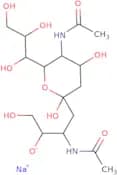
Produto descontinuado3'-a-Sialyl-N-acetyllactosamine sodium salt
CAS:3'-a-Sialyl-N-acetyllactosamine sodium salt is a high purity, custom synthesis sugar. It has been modified with fluorination, glycosylation, and methylation to provide the desired properties. This product is also available in other forms such as monosaccharide and saccharide. 3'-a-Sialyl-N-acetyllactosamine sodium salt can be used in various applications including Click modification, fluoroamination, glycosylation, carbonylation and methylation. CAS No. 350697-53-9
Fórmula:C25H42N2O19NaPureza:Min. 95%Peso molecular:697.59 g/molRef: 3D-MS182937
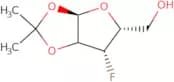
Produto descontinuado1,2-O-Isopropylidene-3-deoxy-3-fluoro-a-D-ribofuranose
CAS:1,2-O-Isopropylidene-3-deoxy-3-fluoro-a-D-ribofuranose is a custom synthesis. It is a complex carbohydrate that has been modified by methylation and glycosylation. This molecule has been fluorinated to produce a high purity product with the desired properties. The 1,2-O-isopropylidene group provides for increased stability and solubility of the product.
Fórmula:C8H13FO4Pureza:Min. 95%Peso molecular:192.18 g/molCYMAL-5 neopentyl glycol
CAS:CyMAL-5 neopentyl glycol is a membrane protein that is n-glycosylated. Its deglycosylation has been shown to be inhibited by light exposure, which may lead to an increase in the population of this protein. CyMAL-5 neopentyl glycol is a ligand for the G protein coupled receptor and can be used as a fluorescent probe for labeling and staining. It has been shown that the binding of this ligand to the receptor alters its conformation, causing it to activate downstream signaling pathways. The crystal structure of CyMAL-5 neopentyl glycol has also been determined, revealing its large size and shape.
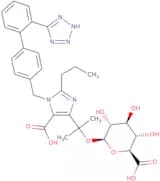
Fórmula:C45H80O22Pureza:Min. 95%Peso molecular:973.1 g/molOlmesartan acid O-b-D-glucuronide
CAS:Olmesartan acid O-b-D-glucuronide is a synthetic, high purity, and custom synthesis oligosaccharide. It can be fluorinated in the presence of a base to give a fluorinated compound with the following CAS number: 369395-57-3. Olmesartan acid O-b-D-glucuronide is an oligosaccharide that has been modified by click chemistry. This modification results in a polysaccharide that contains saccharides connected through ether linkages. The saccharides are made up of monosaccharides and disaccharides, which are all sugars.
Fórmula:C30H34N6O9Pureza:Min. 95%Peso molecular:622.63 g/molEthyl 2,3-di-O-(4-methoxybenzyl)-4,6-O-(4-methoxybenzylidene)-b-D-thiogalactopyranoside
Ethyl 2,3-di-O-(4-methoxybenzyl)-4,6-O-(4-methoxybenzylidene)-b-D-thiogalactopyranoside is a high purity, custom synthesis sugar that can be modified with fluorination, glycosylation, and methylation. This product has CAS number 401071-27-8. Ethyl 2,3-di-O-(4-methoxybenzyl)-4,6-O-(4-methoxybenzylidene)-b-D-thiogalactopyranoside is an oligosaccharide and monosaccharide of the carbohydrate complex.
Fórmula:C32H38O8SPureza:Min. 95%Peso molecular:582.7 g/molo-(A-D-Galactopyranosyl)-D-galactose
CAS:O-(A-D-Galactopyranosyl)-D-galactose is a sugar that is used in the synthesis of complex carbohydrates. O-(A-D-Galactopyranosyl)-D-galactose can be fluorinated and methylated to produce o-(A-D-Galactopyranosyl)-2,6-dideoxy--glucose. This sugar has been shown to inhibit the growth of bacteria such as Mycobacterium tuberculosis and Mycobacterium avium complex. Synthesis of this sugar is done through a custom synthesis process with high purity and quality.
Fórmula:C12H22O11Pureza:Min. 95%Peso molecular:342.3 g/molRef: 3D-NAA11726
Produto descontinuadoRamipril acyl-b-D-glucuronide
CAS:Ramipril acyl-b-D-glucuronide is a glycosylated prodrug that is the active form of ramipril, an ACE inhibitor. It is metabolized in the liver to ramipril and excreted in the urine. Ramipril acyl-b-D-glucuronide has been shown to have an increased bioavailability and a longer half-life than ramipril due to its glycosylation. The synthesis of this drug has been modified by methylation, fluorination, and saccharide modification. This compound is also available as a custom synthesis for research purposes with high purity.
Fórmula:C29H40N2O11Pureza:Min. 95%Peso molecular:592.63 g/molPhenyl a-L-thiorhamnopyranoside
CAS:Phenyl a-L-thiorhamnopyranoside is a monosaccharide that is synthesized by the methylation of alpha-D-glucose. It is a custom synthesis that is used in the synthesis of oligosaccharides, polysaccharides, and sugar drugs. Phenyl a-L-thiorhamnopyranoside can be fluorinated to create an active form that has antibacterial activity. This compound has shown no signs of toxicity in animal studies and has been used as a food additive.
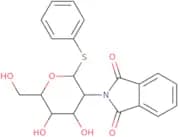
Fórmula:C12H16O4SPureza:Min. 95%Peso molecular:256.32 g/molPhenyl 2-deoxy-2-phthalimido-b-D-thioglucopyranoside
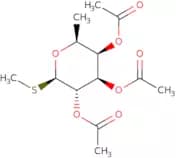
CAS:Phenyl 2-deoxy-2-phthalimido-b-D-thioglucopyranoside is a glycosylation agent that has a glycone with a pyranoside at the 3′ position and an amide bond at the 2′ position. It is used in the synthesis of oligosaccharides and polysaccharides, as well as for Click modification. The compound is also used to modify proteins and saccharides. Phenyl 2-deoxy-2-phthalimido-b-D-thioglucopyranoside has been shown to be stable when heated, making it useful for complex carbohydrate synthesis.Fórmula:C20H19NO6SPureza:Min. 98 Area-%Cor e Forma:PowderPeso molecular:401.43 g/molMethyl 2,3,4-tri-O-acetyl-β-L-thiofucopyranoside
CAS:Methyl 2,3,4-tri-O-acetyl-b-L-thiofucopyranoside is a ferrite that is important for the growth of cells. It can be used as a growth factor to promote the growth of cells. Covid®-19 pandemic A/Aureus strain is resistant to this drug and it has been shown to inhibit cellular transformation in human epidermal cells. The drug also reduces the size and number of cancerous lesions in mice by inhibiting tumor angiogenesis. Methyl 2,3,4-tri-O-acetyl-b-L-thiofucopyranoside can cause an overload of Ca2+ ions in the cell, which may lead to apoptosis or necrosis.
Fórmula:C13H20O7SPureza:Min. 95%Peso molecular:320.36 g/molL-Sorbosone
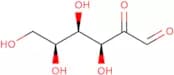
CAS:L-Sorbosone is an antioxidant that can be used as a food additive or dietary supplement. It has been shown to have antioxidative properties and has the ability to inhibit oxidation reactions. The optimum concentration of L-sorbosone is 0.1 milligrams per liter and it is effective at inhibiting chemical reactions in a wide range of pH levels, from 2 to 8. L-Sorbosone belongs to the genus sorbose, which is a sugar alcohol that does not contain an aldehyde group. It also converts sorbose into dehydroascorbic acid and inhibits the enzyme activities of two important enzymes involved in cell culture, namely glutathione reductase and cytochrome p450, which are necessary for maintaining cellular redox balance.
Fórmula:C6H10O6Pureza:Min. 95%Peso molecular:178.14 g/molBlood Group B type II tetrasaccharide
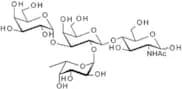
CAS:Blood Group B type II tetrasaccharide is a carbohydrate that is synthesized by custom synthesis. It is a complex carbohydrate with a molecular weight of 909890-21-7. It has the chemical formula C6H14O6 and CAS No. 909890-21-7. Blood group B type II tetrasaccharide can be modified, methylated, glycosylated, and fluorinated. It is an oligosaccharide with a monosaccharide repeating unit that can be found in the blood group B type II antigen on erythrocytes. This saccharide has six sugar units (three glucose and three galactose) connected in a chain by alpha 1-3 glycosidic linkages. The sugar units are attached to each other by beta 1-4 glycosidic linkages.
Fórmula:C26H45NO20Pureza:Min. 95%Peso molecular:691.63 g/molRef: 3D-OB13921
Produto descontinuadoo-Topolin-9-glucoside
CAS:O-topolin-9-glucoside is a custom synthesis of a sugar. It can be modified with fluorination, methylation, and click modification. O-topolin-9-glucoside is an oligosaccharide sugar that can be glycosylated or polysaccharided.
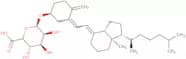
Fórmula:C18H21N5O6Pureza:Min. 95%Peso molecular:403.39 g/molVitamin D3 b-D-glucuronide
CAS:Vitamin D3 b-D-glucuronide is a modified version of vitamin D3. It is a high purity chemical with a purity level of at least 99%. This product can be used in the synthesis of complex carbohydrates and saccharides.
Fórmula:C33H52O7Pureza:Min. 95%Peso molecular:560.76 g/molRef: 3D-MV16894
Produto descontinuado3,4,6-Tri-O-acetyl-2-deoxy-2-phthalimido-b-D-glucopyranosyl chloride
CAS:3,4,6-tri-O-acetyl-2-deoxy-2-phthalimido-b-D-glucopyranosyl chloride is a modification of the carbohydrate. It is a complex carbohydrate that has been custom synthesized for research purposes. It can be used as a monosaccharide or polysaccharide in glycosylation reactions. This compound has not been fluorinated and the CAS number is 7772-87-4.
Fórmula:C20H20ClNO9Pureza:Min. 95%Peso molecular:453.83 g/molRef: 3D-MT05342
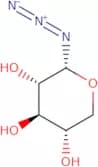
Produto descontinuadoa-D-Xylopyranosyl azide
CAS:a-D-Xylopyranosyl azide is a sugar that can be synthesized from the reaction of 1,2-dichloroethane with 2,3,4,6-tetra-O-acetyl-a-D-xylopyranose. This compound has a high purity and can be custom synthesized to order. It is used in glycosylation reactions to modify saccharides and oligosaccharides. It has been shown to be useful for click modification and fluorination reactions.
Pureza:Min. 95%Ref: 3D-MX44941
Produto descontinuado








![2-Deoxy-2-fluoro-L-[UL-13C]fucose](/_next/image/?url=https%3A%2Fstatic.cymitquimica.com%2Fproducts%2F3D%2Fthumb-webp%2FMD45885.webp&w=3840&q=75)

![Gal[2346Ac]b(1-3)GlcN3[46Bzd]-b-MP](/_next/image/?url=https%3A%2Fstatic.cymitquimica.com%2Fproducts%2F3D%2Fthumb-webp%2FOG60595.webp&w=3840&q=75)