Glicociência
A glicociência é o estudo dos carboidratos e seus derivados, bem como das interações e funções biológicas em que participam. Este campo de pesquisa é crucial para compreender uma ampla variedade de processos biológicos, incluindo o reconhecimento celular, a sinalização, a resposta imune e o desenvolvimento de doenças. A glicociência tem aplicações importantes na biotecnologia, na medicina e no desenvolvimento de novos medicamentos e terapias. Na CymitQuimica, oferecemos uma ampla seleção de produtos de alta qualidade e pureza para pesquisa em glicociência. Nosso catálogo inclui monossacarídeos, oligossacarídeos, polissacarídeos, glicoconjugados e reagentes específicos, projetados para apoiar os pesquisadores em seus estudos sobre a estrutura, função e aplicações dos carboidratos em sistemas biológicos. Esses recursos são destinados a facilitar descobertas científicas e aplicações práticas em diversas áreas das biociências e da medicina.
Subcategorias de "Glicociência"
- Amino açúcares(108 produtos)
- Anticorpos Glico-Relacionados(282 produtos)
- Glicolípidos(46 produtos)
- Glicosaminoglicanos (GAGs)(55 produtos)
- Glicosídeos(419 produtos)
- Monossacáridos(6.624 produtos)
- Oligossacarídeos(3.682 produtos)
- Polissacáridos(503 produtos)
Foram encontrados 11046 produtos de "Glicociência"
Ordenar por
Pureza (%)
0
100
|
0
|
50
|
90
|
95
|
100
1,3,4,6-Tetra-O-acetyl-2-azido-2-deoxy-D-galactopyranose
CAS:1,3,4,6-Tetra-O-acetyl-2-azido-2-deoxy-D-galactopyranose is a carbohydrate that has been shown to bind to the lectin domain of the human insulin receptor. This binding is thought to modulate the activity of this protein. The carbohydrate has also been shown to inhibit the uptake of galactose by pancreatic beta cells in vitro. 1,3,4,6-Tetra-O-acetyl-2-azido-2-deoxy-D-galactopyranose is postulated to have anti cancer properties and may be used as a blocker for tumor growth.Fórmula:C14H19N3O9Pureza:Min. 95%Cor e Forma:White PowderPeso molecular:373.32 g/molβ-1,3-Glucan
CAS:β-1,3-Glucan is a bioactive polysaccharide, which is located predominantly in the cell walls of yeast, fungi, and certain cereals. This compound is characterized by its unique branched structure, which is crucial for its biological function. The mode of action of β-1,3-Glucan involves the binding to specific receptors on immune cells, such as dectin-1, which triggers a cascade of immune responses. This interaction enhances the activity of macrophages, neutrophils, and natural killer cells, thus bolstering the body's innate immune defenses.The uses and applications of β-1,3-Glucan are broad, primarily focused on immunological research and potential therapeutic strategies. It is extensively utilized in studies examining its effects as an immunomodulator, leveraging its ability to potentiate immune system function and examining its role in adjunctive cancer therapies, where it may enhance the efficacy of certain treatments. Additionally, β-1,3-Glucan is investigated for its potential benefits in reducing infection rates and improving recovery times in clinical settings. Moreover, its applications in dietary supplements and functional foods continue to be a subject of scientific inquiry, aiming to harness its health-promoting properties within nutrition science.Pureza:Min. 95%Cor e Forma:PowderUDP-b-L-arabinofuranose
CAS:UDP-b-L-arabinofuranose is a custom synthesis product that is used to modify polysaccharides. It is a high purity sugar nucleotide. UDP-b-L-arabinofuranose has CAS number 331001-44-6.Fórmula:C14H22N2O16P2Pureza:Min. 95%Cor e Forma:PowderPeso molecular:536.28 g/molD-Sedoheptulose
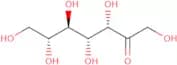
CAS:<p>D-Sedoheptulose is a sugar that is a member of the pentoses. It has been shown to have a ph optimum of 4.5 and oxidizing potential of -0.18 V. It is also an important intermediate in carbohydrate metabolism and can be used as an energy source by cells. D-Sedoheptulose plays a role in transcriptional regulation and cellular physiology, as well as being involved in the production of acyl chains and disulfide bonds for proteins. D-Sedoheptulose has also been found to have synergic effects with other sugars such as glucose, sucrose, or fructose, which may be due to its ability to act as an inducer of reductive enzymes such as glucose-6-phosphate dehydrogenase (G6PD).</p>Fórmula:C7H14O7Pureza:Min. 95%Cor e Forma:PowderPeso molecular:210.18 g/molN-5-Carboxypentyl-1-deoxygalactonojirimycin
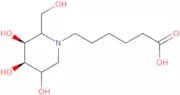
CAS:<p>N-5-Carboxypentyl-1-deoxygalactonojirimycin is an inhibitor of glycolipid hydrolase and a potential drug for the treatment of lysosomal storage disorders. N-5-Carboxypentyl-1-deoxygalactonojirimycin is derived from the natural product galactonojirimycin, which has been shown to inhibit glycolipid hydrolase in vitro. The compound was developed by modifying the peptide sequence to increase its affinity for the enzyme. N-5-Carboxypentyl-1-deoxygalactonojirimycin displays a higher affinity for glycolipid hydrolase than galactonojirimycin, and it also has a greater inhibitory effect on this enzyme.<br>N-5-Carboxypentyl-1-deoxygalactonojirimycin is</p>Fórmula:C12H23NO6Pureza:Min. 95%Cor e Forma:White PowderPeso molecular:277.31 g/molPolysorbate 60
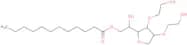
CAS:<p>Polysorbate 60 is a polyoxyethylene-polyoxypropylene block copolymer that is composed of two different saturated fatty acid chains. It has been used as a surfactant and stabilizer in the manufacture of pharmaceuticals, foods, cosmetics, and other products. Polysorbate 60 has been shown to inhibit the growth of epidermal cells by binding to epidermal growth factor (EGF) receptors on the cell surface. The effects of polysorbate 60 are also mediated through hydrogen bonding with the EGF receptor. The pharmacokinetic properties of polysorbate 60 have been studied in vitro using human serum. This polymer is used as an excipient in solid dispersions for oral administration and can be administered intravenously or subcutaneously. Polysorbate 60 is chemically stable at acidic pH levels and hydrochloric acid does not affect its structure. Polysorbate 60 also has protease activity against trypsin at high temperatures,</p>Fórmula:C64H126O26Pureza:Min. 95%Cor e Forma:Light (Or Pale) Yellow To Yellow Solid Or Liquid (May Vary)Peso molecular:1,311.67 g/mol1,2,3,4-Tetra-O-benzyl-6-O-trityl-a-D-mannopyranose
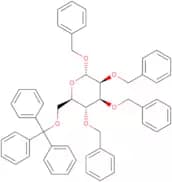
CAS:1,2,3,4-Tetra-O-benzyl-6-O-trityl-a-D-mannopyranose is a methylated form of mannopyranose. It can be custom synthesized and modified with various functional groups to produce a wide range of saccharide derivatives and oligosaccharides. The 1,2,3,4-tetra-O-benzyl group is commonly used for glycosylation reactions because it can be easily removed by acid hydrolysis. The methylation of the sugar molecule also increases its stability and prevents further reactions from occurring. This product is available in high purity and has been fluorinated on one or more hydroxyl groups to make it resistant to hydrolysis.Fórmula:C53H50O6Pureza:Min. 95%Cor e Forma:White PowderPeso molecular:782.96 g/molβ-Estradiol 3-(β-D-glucuronide) 17-sulfate dipotassium
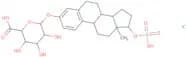
CAS:<p>β-Estradiol 3-(β-D-glucuronide) 17-sulfate dipotassium is a synthetic, nonsteroidal estrogen with a high affinity for the human estrogen receptor. It is used in the treatment of various types of breast cancer and as hormone replacement therapy. β-Estradiol 3-(β-D-glucuronide) 17-sulfate dipotassium is a part of the drug class selective estrogen receptor modulators (SERMs). The compound has been shown to have antiestrogenic activity through its ability to compete with estradiol for binding to the estrogen receptor. This compound also has some antiandrogenic effects and can inhibit sex hormone binding globulin (SHBG), leading to increased levels of free testosterone in blood plasma.</p>Fórmula:C24H32O11S•K2Pureza:Min. 95%Peso molecular:606.77 g/mola-D-Glucoheptonic acid calcium salt hydrate
CAS:a-D-Glucoheptonic acid calcium salt hydrate is a modification of a glycosylation reaction that is typically used in the synthesis of oligosaccharides. The modification is called Click chemistry, and it occurs through a copper-catalyzed reaction between an azide and an alkyne. This type of modification can be used to produce complex carbohydrates by linking together different monosaccharides or polysaccharides. It is also used for the production of high-purity monosaccharides and polysaccharides with custom syntheses. The methylation, glycosylation, fluorination, and saccharide modifications are all variations on this process.Fórmula:C14H26CaO16·xH2OCor e Forma:White PowderPeso molecular:490.42 g/molα-D-Mannopyranosyl amine
CAS:<p>a-D-Mannopyranosyl amine is a synthetic product that is used as a sugar donor in glycosylation reactions. It can be custom synthesized to suit the needs of the customer. The chemical structure contains a methyl group and an oxygen atom, which are both in their highest oxidation state. This product is not intended for use as a food additive or dietary supplement.</p>Fórmula:C6H13NO5Pureza:Min. 95%Peso molecular:179.17 g/molD-Maltose monohydrate
CAS:Please enquire for more information about D-Maltose monohydrate including the price, delivery time and more detailed product information at the technical inquiry form on this pageFórmula:C12H24O12Pureza:Min. 98 Area-%Cor e Forma:White PowderPeso molecular:360.31 g/mol1,6-Di-O-galloyl-b-D-glucopyranose
CAS:1,6-Di-O-galloyl-β-D-glucopyranose is a plant active compound that has been shown to have insecticidal and antifungal properties. It is also an inhibitor of serine proteases. 1,6-Di-O-galloyl-β-D-glucopyranose may be used to control the spread of human immunodeficiency virus (HIV) in humans. In an in vitro study, 1,6-di galloyl β-D glucopyranose was found to inhibit HIV by binding to the viral envelope gp120 protein and preventing it from attaching to CD4 receptor sites on T cells. This inhibition prevents the virus from entering the cell and infecting it. 1,6 - di - O - galloyl - β - D - glucopyranose also inhibits HIV by blocking its entry into the host cell through interaction with gp41 protein on theFórmula:C20H20O5Pureza:Min. 95%Peso molecular:340.37 g/molDipyridamole di-O-b-D-glucuronide
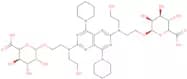
CAS:Dipyridamole di-O-b-D-glucuronide is a fluorinated oligosaccharide that has been synthesized using the click chemistry reaction. It is a monosaccharide that has been glycosylated and modified with methyl groups to produce a high purity product. The carbohydrate consists of one or more sugar units linked by glycosidic bonds. Carbohydrates are classified by their number of sugar units and by the presence of other chemical groups such as phosphate, sulfate, or hydroxyl. This product is also used in the synthesis of complex carbohydrates and polysaccharides.Fórmula:C36H56N8O16Pureza:Min. 95%Peso molecular:856.87 g/mol1,2,3-Tri-O-methyl-D-glucopyranoside
CAS:<p>1,2,3-Tri-O-methyl-D-glucopyranoside is a custom synthesis and modification of the natural product 1,2,3-tri-O-methyl-D-mannopyranoside. The compound was synthesized by fluorination of the 3' hydroxyl group followed by methylation of the 2', 3' hydroxyl groups to form a triol. This sugar was then glycosylated with D-glucose to produce an oligosaccharide. 1,2,3 - Tri -O - methyl - D - glucopyranoside is a natural product that can be found in plants such as barley and wheat. It has been shown to have antiinflammatory properties.</p>Fórmula:C9H18O6Pureza:Min. 95%Peso molecular:222.24 g/molMethyl 2-deoxy-L-ribofuranoside
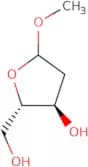
CAS:Methyl 2-deoxy-L-ribofuranoside is an intermediate in the synthesis of l-arabinose. It can be obtained by the reaction of methyl 2,3-dideoxy-D-ribofuranoside with pivaloyl chloride. The antiviral activity of this compound has been shown by its ability to inhibit the replication of influenza A virus. Methyl 2-deoxy-L-ribofuranoside is a fluorinating agent that can be used for the synthesis of oligosaccharides and nucleosides. This intermediate also serves as a substrate for a number of organic reactions, including regioselective and stereoselective chlorination.Fórmula:C6H12O4Pureza:Min. 95%Cor e Forma:PowderPeso molecular:148.16 g/molGlobotriose-sp-biotin
Globotriose-sp-biotin is a custom synthesis that contains a fluorinated, methylated, and modified monosaccharide. It is a synthetic oligosaccharide with glycosylation at the reducing end. Globotriose-sp-biotin can be used in the modification of polysaccharides and complex carbohydrates to improve their bioactivity. This product has a CAS number of 127798-73-5 and is listed as an Oligosaccharide under Glycosylations in the Carbohydrate section.Pureza:Min. 95%Cor e Forma:PowderN-Propionyl-D-glucosamine
CAS:N-Propionyl-D-glucosamine is a sugar used in the synthesis of peptidoglycan, a structural component of bacterial cell walls. N-Propionyl-D-glucosamine is synthesized from formaldehyde and propionic acid. It is used as an antibiotic to treat bacterial infections caused by Gram-positive bacteria such as streptococci and staphylococci. N-Propionyl-D-glucosamine has also been shown to have anti-fungal properties against Candida albicans and Saccharomyces cerevisiae. The biosynthesis of this compound takes place through phosphorylation of the amide group on the sugar residue, which is catalyzed by a number of enzymes including phosphotransacetylase, acetate kinase, and phosphoenolpyruvate synthase. This process requires ATP, phosphate ions, ammonium ion, and water molecules.Fórmula:C9H17NO6Pureza:Min. 95%Cor e Forma:White PowderPeso molecular:235.23 g/molOnitin 2'-O-glucoside
CAS:Onitin 2'-O-glucoside is a sugar that is custom synthesized and purified. It is a modification of oligosaccharides, complex carbohydrates, and polysaccharides. Onitin 2'-O-glucoside is an Oligosaccharide Carbohydrate which can be used in the synthesis of high purity monosaccharides and methylations. It also has the ability to form glycosylation with saccharides, such as glucose or fructose. This product can also be fluorinated to produce saccharides that are water soluble.Pureza:Min. 95%D-Melibiose anhydrous
CAS:D-Melibiose anhydrous is a disaccharide that is used as an excipient in the pharmaceutical industry. It has been shown to be an active enzyme, which may be due to its ability to sequester galactose. D-Melibiose anhydrous has a redox potential of -0.2 V, indicating that it has a high number of oxidizable groups. The molecular weight of this sugar is 324.14 g/mol, and it has a polarizability of 0.16 D, which classifies it as a polyol with hydrogen bonding properties. This sugar is not soluble in water but can be dissolved in ethanol or propylene glycol. D-Melibiose anhydrous also has carbohydrate properties and may be considered a sugar alcohol because it contains six carbon atoms and one oxygen atom.Fórmula:C12H22O11Pureza:Min. 95%Cor e Forma:PowderPeso molecular:342.3 g/mol3-Azido-3-deoxy-1,2-O-isopropylidene-a-D-ribofuranose
CAS:<p>3-Azido-3-deoxy-1,2-O-isopropylidene-a-D-ribofuranose is a synthetic carbohydrate that contains fluorine and is used as a glycosylation and methylation reagent. It has been shown to react with various saccharides, including glucose, maltose, lactose, sucrose, and cellobiose. In addition to its use in glycosylation reactions, 3-azido-3-deoxy-1,2-O-isopropylidene -a D ribofuranose can be used for click chemistry. This reagent is available in high purity and is synthesized from the natural sugar ribofuranose.</p>Pureza:Min. 95%