Glicociência
A glicociência é o estudo dos carboidratos e seus derivados, bem como das interações e funções biológicas em que participam. Este campo de pesquisa é crucial para compreender uma ampla variedade de processos biológicos, incluindo o reconhecimento celular, a sinalização, a resposta imune e o desenvolvimento de doenças. A glicociência tem aplicações importantes na biotecnologia, na medicina e no desenvolvimento de novos medicamentos e terapias. Na CymitQuimica, oferecemos uma ampla seleção de produtos de alta qualidade e pureza para pesquisa em glicociência. Nosso catálogo inclui monossacarídeos, oligossacarídeos, polissacarídeos, glicoconjugados e reagentes específicos, projetados para apoiar os pesquisadores em seus estudos sobre a estrutura, função e aplicações dos carboidratos em sistemas biológicos. Esses recursos são destinados a facilitar descobertas científicas e aplicações práticas em diversas áreas das biociências e da medicina.
Subcategorias de "Glicociência"
- Amino açúcares(108 produtos)
- Anticorpos Glico-Relacionados(282 produtos)
- Glicolípidos(46 produtos)
- Glicosaminoglicanos (GAGs)(55 produtos)
- Glicosídeos(419 produtos)
- Monossacáridos(6.624 produtos)
- Oligossacarídeos(3.682 produtos)
- Polissacáridos(503 produtos)
Foram encontrados 11046 produtos de "Glicociência"
Ordenar por
Pureza (%)
0
100
|
0
|
50
|
90
|
95
|
100
Disialyllacto-N-hexaose I
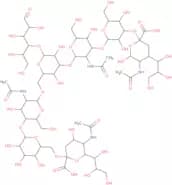
CAS:<p>Disialyllacto-N-hexaose I is a complex carbohydrate that belongs to a class of saccharides called polysaccharides. Disialyllacto-N-hexaose I is synthesized through the methylation and glycosylation of sucrose. It has been modified by Click chemistry with a maleimide group to create an amide bond between the terminal alpha position on the glucose residue and the terminal alpha position on the N-acetylglucosamine residue. This modification can be used for Polysaccharide analysis, such as MALDI TOF MS. Disialyllacto-N-hexaose I has a CAS number of 137636-98-7 and has been shown to have high purity without any impurities or contaminants.</p>Fórmula:C62H102N4O47Pureza:Min. 95%Peso molecular:1,655.47 g/mola-D-Galactose-sp-biotin
a-D-Galactose-sp-biotin is a glycosylation product with a complex carbohydrate structure. It is synthesized by reacting a galactose with a spacer arm and biotin. The product has been modified to include fluorination, saccharide modification, and Oligosaccharide synthesis. This product is available in high purity and CAS No.Fórmula:C25H44N4O9SPureza:Min. 95%Cor e Forma:PowderPeso molecular:576.7 g/mol1,3-Di-O-acetyl-5-O-benzoyl-2-deoxy-D-xylofuranose
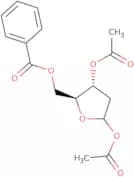
CAS:<p>1,3-Di-O-acetyl-5-O-benzoyl-2-deoxy-D-xylofuranose is a complex carbohydrate that has been custom synthesized. It is a monosaccharide with a methyl group at the C1 position and an acetyl group at the C3 position. The chemical formula for 1,3 Di-O-acetyl 5 O benzoyl 2 deoxy D xylofuranose is C11H21NO6. The molecular weight of 1,3 Di O acetyl 5 O benzoyl 2 deoxy D xylofuranose is 277.27 g/mol. 1,3 Di O acetyl 5 O benzoyl 2 deoxy D xylofuranose may have glycosidic bonds and be used in the synthesis of other carbohydrates or as a reagent in organic chemistry reactions.</p>Fórmula:C16H18O7Pureza:Min. 95%Peso molecular:322.31 g/mol2-Acetamido-2-deoxy-alpha-D-galactopyranosyl L-threonine hydrochloride
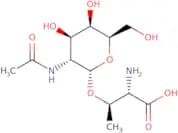
CAS:<p>2-Acetamido-2-deoxy-alpha- D-galactopyranosyl L-threonine is a synthetic sugar. It has a CAS number of 67315-18-8 and a molecular weight of 289.05 g/mol. This sugar is synthesized by the Click modification, fluorination, glycosylation, and methylation methods. The synthesis can be modified to produce 2-acetamido-2,3,4,5,-tetra deoxygalactose or 2 acetamido 4,6 deoxy galactose. This sugar also has saccharide properties as it is classified as an oligosaccharide or monosaccharide.</p>Fórmula:C12H22N2O8•HClPureza:Min. 95%Cor e Forma:PowderPeso molecular:358.77 g/molMethyl 1,2,3,4-tetra-O-acetyl-a-L-idopyranuronate
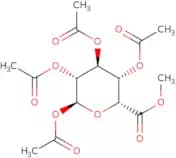
CAS:<p>Methyl 1,2,3,4-tetra-O-acetyl-a-L-idopyranuronate is a carbohydrate standard that belongs to the group of L-iduronic acid derivatives. Methyl 1,2,3,4-tetra-O-acetyl-a-L-idopyranuronate is commonly used in the synthesis of glycosides and glycoconjugates. Its fluorescence properties make it useful for labeling and detection purposes in biochemical assays. This compound can also serve as a substrate for enzymes involved in carbohydrate metabolism. Overall, Methyl 1,2,3,4-tetra-O-acetyl-a-L-idopyranuronate is an essential tool for researchers in the field of glycobiology and biochemistry.</p>Fórmula:C15H20O11Pureza:Min. 95%Peso molecular:376.31 g/molD-Idonic acid-1,4-lactone
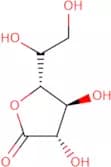
CAS:<p>D-Idonic acid-1,4-lactone is a modification of a carbohydrate which can be custom synthesized. The product is an oligosaccharide that has a high purity and is synthetically produced. This product is composed of monosaccharides, methylation, glycosylation, polysaccharides and sugar. It also contains fluorination and saccharide.</p>Fórmula:C6H10O6Pureza:Min. 95%Cor e Forma:Colorless PowderPeso molecular:178.14 g/molMaltohexaose spacer fluorescein
<p>Fluorescent diagnostic reagent used for tumor diagnosis</p>Pureza:Min. 95%D-Glucose ethylenedithioacetal
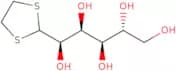
CAS:<p>D-Glucose ethylenedithioacetal is a biological agent. It is a white to off-white crystalline powder that has a molecular weight of 204.3. D-Glucose ethylenedithioacetal is soluble in water and ethanol, but not in ether or chloroform. It is stable in air, but will react with alkali to form the corresponding salt of D-glucose.</p>Fórmula:C8H16O5S2Pureza:Min. 95%Peso molecular:256.34 g/molCMP-N-acetylneuraminic acid 9-sp-biotin
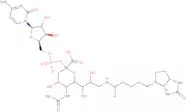
<p>CMP-N-acetylneuraminic acid 9-sp-biotin is a biotinylated sugar nucleotide</p>Pureza:Min. 95%Sodium alginate, viscosity 100 - 150 mPa.s
CAS:Sodium alginate is a soluble fiber that is extracted from brown seaweed. It is a natural carbohydrate that can be modified to create a variety of sugar-based derivatives, such as Oligosaccharides, Monosaccharides, and Custom Synthesis. Sodium alginate has been modified with Fluorination, Methylation, Glycosylation, and Click Modification to create high-purity products for various applications.Pureza:90.8 To 106.0%Cor e Forma:Powder4-O-(b-D-Galactopyranosyl)-D-mannopyranose
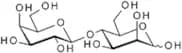
CAS:<p>Inhibitor of conversion of primary bile acids to secondary bile acids</p>Fórmula:C12H22O11Pureza:Min. 95%Cor e Forma:White PowderPeso molecular:342.3 g/mol3-Deoxy-2-keto-D-xylonate lithium
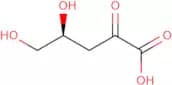
CAS:3-Deoxy-2-keto-D-xylonate lithium salt is a synthetic compound that is used in the synthesis of protamine. It is produced by the reduction of an aldehyde with borohydride. 3-Deoxy-2-keto-D-xylonate lithium salt has been shown to be active against E. cloacae, which can cause diarrhea and other gastrointestinal disorders. 3-Deoxy-2-keto-D-xylonate lithium salt inhibits the growth of E. cloacae by inhibiting glycolaldehyde reductase and aldolases, which are enzymes that are essential for glycolysis and citrate metabolism, respectively. The cleavage products formed by this reaction inhibit bacterial growth by interfering with cell wall biosynthesis, preventing protein synthesis, or blocking ATP production (oxidative phosphorylation).Fórmula:C5H8O5•LixPureza:Min. 95%Cor e Forma:PowderPeso molecular:148.11 g/molLewis X trisaccharide-sp-biotin
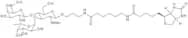
<p>Lewis X trisaccharide-sp-biotin is a synthetic compound with fluorination, monosaccharide, and oligosaccharide. The sugar is a complex carbohydrate. It is synthesized by glycosylation and polysaccharide modification. The product has high purity and is custom synthesis for research purposes only. This product does not have CAS number because it is a custom synthesis.</p>Fórmula:C39H67N5O18SPureza:Min. 95 Area-%Cor e Forma:White Off-White PowderPeso molecular:926.04 g/moltrans-Zeatin-O-glucoside
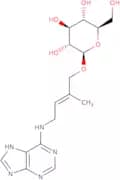
CAS:<p>trans-Zeatin-O-glucoside is a cytokinin metabolite, which is a compound derived from the naturally occurring plant hormone zeatin. This product is synthesized or can be naturally found in plants, where it plays a crucial role in the regulation of growth and development. As a glucoside, it involves a glucose molecule attached to the cytokinin, which affects the compound's solubility, stability, and transport within the plant system.</p>Fórmula:C16H23N5O6Pureza:Min. 95%Peso molecular:381.38 g/molCellooctaose
CAS:<p>Cellooctaose is a synthetic, water-soluble oligosaccharide with a molecular weight of 1,000 daltons. It is produced by the reaction of propionate and intramolecular hydrogen with a water molecule to form glycosidic bonds. Cellooctaose can be used as a coating for pharmaceutical tablets and capsules to prevent dissolution in gastric acid. Cellooctaose is homologous to cellulose and has been used in recombinant protein production for the purpose of modifying viscosity. Cellooctaose has also been shown to inhibit the growth of cancer cells via lysosomal membrane permeability enhancement. This may be due to its ability to bind to fatty acids on the surface of cancer cells, which then leads to increased cell death.</p>Fórmula:C48H82O41Pureza:Min. 95%Cor e Forma:PowderPeso molecular:1,315.14 g/molChondroitin disaccharide di-UA2S disodium salt
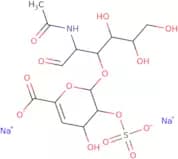
CAS:<p>Chondroitin disaccharide di-UA2S disodium salt is a high purity, custom synthesis, sugar, click modification, fluorination, glycosylation, synthetic oligosaccharide. It is a complex carbohydrate of the monosaccharide and saccharides which are composed of glucose and glucuronic acid. The molecular weight is 721.00 g/mol with a CAS number of 149368-04-7. This product has been modified to include methyl groups on N-6 and N-2 positions in the side chains of both uronic acids. Chondroitin disaccharide di-UA2S disodium salt is an oligosaccharide that has been synthesized from chondroitin sulfate with a molecular weight of 5400.00 g/mol.</p>Fórmula:C14H19NNa2O14SPureza:Min. 90 Area-%Cor e Forma:PowderPeso molecular:503.34 g/molBlood Group A trisaccharide, spacer-biotin conjugate
CAS:Blood group A antigen conjugated to spacer arm and biotinFórmula:C39H67N5O18SPureza:Min. 95 Area-%Cor e Forma:PowderPeso molecular:926.04 g/molDihydrozeatin-7-glucoside
CAS:<p>Dihydrozeatin-7-glucoside (DZG) is a plant hormone that belongs to the group of abscisic acid. It is biosynthesized from zeatin, an intermediate in the synthesis of the plant hormone gibberellin. DZG has been shown to regulate water loss in plants and plays a role in the regulation of photosynthesis and seed germination. The uptake of DZG by plant cells is complex and can be influenced by both physiological and environmental factors. It can be conjugated with small molecules such as typhasterol, which is found in tobacco leaves, or tabacum l., which is found in certain species of tobacco plants. Dihydrozeatin-7-glucoside also interacts with other hormones such as 24-epibrassinolide and regulates various biochemical processes such as protein synthesis and cell growth.</p>Fórmula:C16H25N5O6Pureza:Min. 95%Peso molecular:383.4 g/molBlood Group B trisaccharide, spacer-biotin conjugate
CAS:<p>Blood group B antigen conjugated to spacer arm and biotin</p>Fórmula:C37H64N4O18SPureza:Min. 95%Cor e Forma:PowderPeso molecular:884.99 g/molSialyl Lewis X cholesterol
<p>Sialyl Lewis X Cholesterol is a synthetically modified sugar</p>Pureza:Min. 95%