Glicociência
A glicociência é o estudo dos carboidratos e seus derivados, bem como das interações e funções biológicas em que participam. Este campo de pesquisa é crucial para compreender uma ampla variedade de processos biológicos, incluindo o reconhecimento celular, a sinalização, a resposta imune e o desenvolvimento de doenças. A glicociência tem aplicações importantes na biotecnologia, na medicina e no desenvolvimento de novos medicamentos e terapias. Na CymitQuimica, oferecemos uma ampla seleção de produtos de alta qualidade e pureza para pesquisa em glicociência. Nosso catálogo inclui monossacarídeos, oligossacarídeos, polissacarídeos, glicoconjugados e reagentes específicos, projetados para apoiar os pesquisadores em seus estudos sobre a estrutura, função e aplicações dos carboidratos em sistemas biológicos. Esses recursos são destinados a facilitar descobertas científicas e aplicações práticas em diversas áreas das biociências e da medicina.
Subcategorias de "Glicociência"
- Amino açúcares(108 produtos)
- Anticorpos Glico-Relacionados(282 produtos)
- Glicolípidos(46 produtos)
- Glicosaminoglicanos (GAGs)(55 produtos)
- Glicosídeos(419 produtos)
- Monossacáridos(6.624 produtos)
- Oligossacarídeos(3.682 produtos)
- Polissacáridos(503 produtos)
Foram encontrados 11046 produtos de "Glicociência"
Ordenar por
Pureza (%)
0
100
|
0
|
50
|
90
|
95
|
100
Exopolysaccharide - from Bacillus polymixa
<p>Bacterial exopolysaccharide from gram negative Bacillus polymixa</p>Fórmula:C23H36O18Pureza:Min. 95%Cor e Forma:PowderPeso molecular:600.52 g/molD-Allose pentaacetate
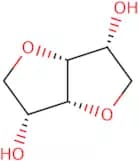
CAS:<p>D-Allose pentaacetate is a modified oligosaccharide that can be used as a synthetic intermediate in the production of complex carbohydrates. It has been shown to have high purity and is easily synthesized in a laboratory setting. D-Allose pentaacetate is a monosaccharide with five acetate groups that can be methylated or glycosylated, which makes it an ideal candidate for modification. D-Allose pentaacetate has CAS No. 144071-49-8 and can be found on PubChem CID: 1215965.</p>Fórmula:C16H22O11Pureza:Min. 95%Cor e Forma:PowderPeso molecular:390.34 g/mol1,4:3,6-Dianhydro-D-mannitol
CAS:<p>Building block for polymers synthesis, ionic liquids and chiral auxiliaries</p>Fórmula:C6H10O4Pureza:Min. 95%Cor e Forma:PowderPeso molecular:146.14 g/molRef: 3D-MD06655
Produto descontinuado1-O-Methyl-α-D-glucopyranoside
CAS:<p>Methyl α-D- glucopyranoside is a methylated sugar used as an inhibitor of lectin-conjugate binding. Methyl α-D- glucopyranoside is commonly used in protein purification for eluting glycoproteins and other glycoconjugates from affinity chromatography columns of agarose lectin. Methyl α-D- glucopyranoside is also known as Methyl alpha-D-glucoside or alpha-Methyl-glucoside.</p>Fórmula:C7H14O6Pureza:Min. 99.0 Area-%Peso molecular:194.19 g/molRef: 3D-M-3593
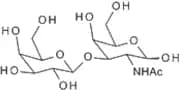
Produto descontinuadoGalacto-N-biose
CAS:<p>2-Acetamido-2-deoxy-3-O-(b-D-galactopyranosyl)-D-galactopyranose (also known as galacto-N-biose, GNB and T antigen) is a β 1-3’ linked disaccharide which is found in the gastrointestinal tract as a core component of mucin. GNB has been shown to have potential to protect against glutamate excitotoxicity, a process in which nerve cells can be damaged or destroyed. GNB, along with lactose-N-biose, are found in human milk but are not metabolised by gut enzymes and are instead broken down to a digestible form by bifidobacteria found in the intestinal systems of infants in a symbiotic process.</p>Fórmula:C14H25NO11Pureza:Min. 95%Cor e Forma:White Off-White PowderPeso molecular:383.35 g/molRef: 3D-OA01686
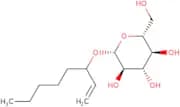
Produto descontinuado1-Octen-3-ol glucoside
CAS:<p>1-Octen-3-ol glucoside is a synthetic, fluorinated sugar that is modified with glycosylation, methylation, and click chemistry. It contains a high degree of purity and is custom synthesized to order. This product can be used as a substitute for other sugars in the production of oligosaccharides, saccharides, and polysaccharides.<br>1-Octen-3-ol glucoside has been shown to have various modifications including glycosylation, methylation, and click chemistry. It is often used when there are restrictions on the types of sugars that can be used in the synthesis of complex carbohydrates.</p>Fórmula:C14H26O6Pureza:Min. 95%Cor e Forma:PowderPeso molecular:290.35 g/molRef: 3D-MO182722
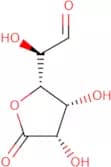
Produto descontinuadoD-Glucuronolactone
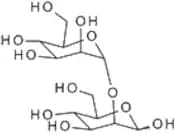
CAS:<p>D-Glucuronolactone is supposed to be involved in detoxification processes.</p>Fórmula:C6H8O6Peso molecular:176.13 g/mol2-O-(a-D-Mannopyranosyl)-D-mannopyranose
CAS:<p>Synthesized by the action of zinc chloride on tetra-O-acetylmannose and 1-chloro-3,4,6- tri-0-acetylmannose. Isolated from partial acetolysates of baker's yeast mannan and Saccharomyces rouxii mannan.</p>Fórmula:C12H22O11Pureza:Min. 95 Area-%Cor e Forma:White PowderPeso molecular:342.3 g/mol2,4,6-Tri-O-benzoyl-3-O-benzyl-D-mannopyranose
<p>2,4,6-Tri-O-benzyl-3-O-benzyl-D-mannopyranose is a modification of the monosaccharide D-mannopyranose. It is a carbohydrate that can be custom synthesized and has high purity with a CAS number. The 2,4,6-tri-O-benzoyl group can be used for glycosylation reactions to produce polysaccharides. This modification also has the ability to be fluorinated or methylated by using the corresponding reagents.<br>2,4,6-Tri-O-benzoyl-3-O-benzyl mannopyranose is an oligosaccharide that can serve as a building block for more complicated carbohydrates like polysaccharides. It has not been shown to have any toxicity in animals and is used as a food additive in some countries.</p>Fórmula:C34H30O9Pureza:Min. 95%Peso molecular:582.6 g/molb-D-Glucose - 85%
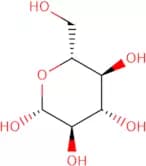
CAS:<p>Glycol ethers are compounds that are used as solvents and plasticizers. They have been shown to inhibit the activity of enzymes, such as glucose-6-phosphate dehydrogenase, which is involved in the conversion of glucose to phosphate. Glycol ethers also promote sugar transport by inhibiting the sodium-dependent glucose transporter (SGLT). This transport mechanism is important for maintaining normal blood sugar levels and preventing diabetic neuropathy. Glycol ethers are also anti-diabetic agents that can increase insulin sensitivity by stimulating insulin release from pancreatic beta cells and improving the response of peripheral tissues to insulin stimulation.</p>Fórmula:C6H12O6Pureza:Min. 95%Cor e Forma:White PowderPeso molecular:180.16 g/molRef: 3D-MG09278
Produto descontinuado(1S,3S,4R,8S)-8-Benzyloxy-1-hydroxymethyl-3-methoxy-2,6-dioxabicyclo[3,2,1]octane
CAS:<p>1-Hydroxymethyl-8-benzyloxy-3-methoxy-2,6-dioxabicyclo[3,2,1]octane is a sugar that can be modified with various functional groups. This compound is synthesized by modification of the 1S,3S,4R,8S configuration of 8-Benzyloxy-1-(hydroxymethyl)-3-methoxy-2,6 dioxabicyclo[3,2,1]octane. The synthesis can be performed in two steps: first the hydroxymethyl group is replaced by benzyloxymethyl using 1-(benzyloxy)propanol and then the methoxy group is replaced by a methoxy group with sodium methoxide.</p>Fórmula:C15H20O5Pureza:Min. 95%Peso molecular:280.32 g/molN-Acetyl-D-mannosamine
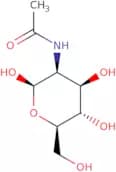
CAS:<p>N-Acetyl D-mannosamine (ManNAc) is an aldohexose (2-acetamido-2-deoxymannose) in which the axial hydroxyl group at position 2 is replaced by a N-acetyl group (Collins, 2006). It has been reported that N-acetyl D-mannosamine supplementation, may provide novel means to break the link between obesity and hypertension (Peng, 2019). N-Acetyl-D-mannosamine and N-acetyl-D-glucosamine are the essential precursors of sialic acid, the specific monomer of polysialic acid, a bacterial pathogenic determinant, for example, Escherichia coli K1 uses both amino sugars as carbon sources. It has been reported that ManNAc can be used as a treatment for hereditary inclusion body myopathy, an adult-onset, progressive neuromuscular disorder and also for renal disorders involving proteinuria and hematuria due to podocytopathy and/or segmental splitting of the glomerular basement membrane (Galeano, 2007).</p>Fórmula:C8H15NO6Pureza:Min. 98 Area-%Cor e Forma:White PowderPeso molecular:221.21 g/molRef: 3D-MA05269
Produto descontinuado3-Deoxy-D-glucose
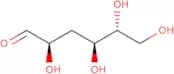
CAS:<p>3-Deoxy-D-glucose (3DG) is a molecule that belongs to the class of carbohydrates. It is an analog of D-glucose, which is the key substrate for the production of energy in mammalian cells. 3DG has been shown to inhibit the uptake of glucose by trypanosomes and also inhibits glycolysis in mammalian cells. The inhibition of glycolysis may be due to its ability to prevent the phosphorylation of glucose by hexokinase, thus blocking the conversion of glucose into glucose 6-phosphate. 3DG is biosynthesized from d-xylose, which is a five carbon sugar that can be oxidized to form CO2 and H2O.</p>Fórmula:C6H12O5Pureza:Min. 98 Area-%Cor e Forma:White Off-White PowderPeso molecular:164.16 g/molD-Maltose monohydrate
CAS:<p>Please enquire for more information about D-Maltose monohydrate including the price, delivery time and more detailed product information at the technical inquiry form on this page</p>Fórmula:C12H24O12Pureza:Min. 98 Area-%Peso molecular:360.31 g/molUDP-Gal 2Na
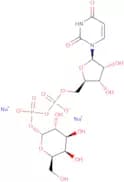
CAS:<p>UDP-a-D-galactose disodium salt (UDP-Gal) is a sugar-nucleotide substrate of galactosyltransferases. It’s used as the donor of galactose in the biosyntheses of glycoproteins and glycolipids. Its low cellular content is also hypothetically linked to the defective galactosylation in galactosemia.</p>Fórmula:C15H22N2O17P2·2NaPureza:Min. 95 Area-%Cor e Forma:PowderPeso molecular:610.27 g/molRef: 3D-MU06699
Produto descontinuado(2S, 3R, 4R) -3- Benzyloxy- 1- butyl-4- (hydroxymethyl) - N- methyl- 2- azetidinecarboxylic acid methyl ester
<p>(2S, 3R, 4R) -3-Benzyloxy-1-butyl-4-(hydroxymethyl)-N-methyl-2-azetidinecarboxylic acid methyl ester is a modification of an oligosaccharide. This product is custom synthesized and has a high purity. It is a methylated carbohydrate that contains a fluorinated saccharide.</p>Pureza:Min. 95%Di-O-isopropylidene psicose
<p>Di-O-isopropylidene psicose is a synthetic sugar that is a modification of the natural compound, psicose. It can be used for the synthesis of oligosaccharides, polysaccharides and other complex carbohydrates. Di-O-isopropylidene psicose can be methylated and glycosylated to form other sugar derivatives or fluorinated to form fluoroquinolones. This sugar has been shown to have high purity and stability under a wide range of conditions.</p>Pureza:Min. 95%1-Deoxy-L-allitol
CAS:<p>1-Deoxy-L-allitol is a naturally occurring compound found in human urine. It has been shown to have a role in the regulation of glucose metabolism, as it is catalysed by liver enzymes and can affect the synthesis of glycogen. 1-Deoxy-L-allitol also has been found to be an activator of t-cells, which are immune cells that help regulate the body's response to infection.</p>Fórmula:C6H14O5Pureza:Min. 95%Peso molecular:166.17 g/molD-Fructose 1-phosphate disodium
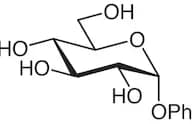
CAS:<p>Please enquire for more information about D-Fructose 1-phosphate disodium including the price, delivery time and more detailed product information at the technical inquiry form on this page</p>Fórmula:C6H11Na2O9PPureza:90%Cor e Forma:PowderPeso molecular:304.1 g/molPhenyl α-D-Glucopyranoside
CAS:Fórmula:C12H16O6Pureza:>97.0%(GC)Cor e Forma:White to Light yellow powder to crystalPeso molecular:256.25




![(1S,3S,4R,8S)-8-Benzyloxy-1-hydroxymethyl-3-methoxy-2,6-dioxabicyclo[3,2,1]octane](/_next/image/?url=https%3A%2Fstatic.cymitquimica.com%2Fproducts%2F3D%2Fthumb-webp%2FMB10613.webp&w=3840&q=75)