Glicociência
A glicociência é o estudo dos carboidratos e seus derivados, bem como das interações e funções biológicas em que participam. Este campo de pesquisa é crucial para compreender uma ampla variedade de processos biológicos, incluindo o reconhecimento celular, a sinalização, a resposta imune e o desenvolvimento de doenças. A glicociência tem aplicações importantes na biotecnologia, na medicina e no desenvolvimento de novos medicamentos e terapias. Na CymitQuimica, oferecemos uma ampla seleção de produtos de alta qualidade e pureza para pesquisa em glicociência. Nosso catálogo inclui monossacarídeos, oligossacarídeos, polissacarídeos, glicoconjugados e reagentes específicos, projetados para apoiar os pesquisadores em seus estudos sobre a estrutura, função e aplicações dos carboidratos em sistemas biológicos. Esses recursos são destinados a facilitar descobertas científicas e aplicações práticas em diversas áreas das biociências e da medicina.
Subcategorias de "Glicociência"
- Amino açúcares(108 produtos)
- Anticorpos Glico-Relacionados(282 produtos)
- Glicolípidos(46 produtos)
- Glicosaminoglicanos (GAGs)(55 produtos)
- Glicosídeos(419 produtos)
- Monossacáridos(6.624 produtos)
- Oligossacarídeos(3.682 produtos)
- Polissacáridos(503 produtos)
Foram encontrados 11046 produtos de "Glicociência"
Ordenar por
Pureza (%)
0
100
|
0
|
50
|
90
|
95
|
100
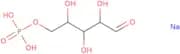
D-Ribulose-5-phosphate sodium
CAS:<p>D-ribulose-5-phosphate sodium is a nucleotide sugar that is one of the ribonucleotides, which are fundamental components of RNA. D-ribulose 5-phosphate sodium has been shown to be an intermediate in the metabolism of ribulose and catalyzes the oxidation of d-arabinose. This enzyme also catalyses the synthesis of fatty acids and participates in reactions involving glycerolipids and phospholipids. The reaction mechanism involves a double displacement with simultaneous attack by a water molecule on C2' and C3'. When deuterium is present, it affects the rate of these reactions in a way that depends on the orientation of the substrate to the enzyme.</p>Fórmula:C5H11NaO8PPureza:Min. 95%Peso molecular:253.1 g/molRef: 3D-BDA05475
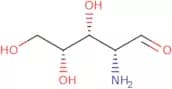
Produto descontinuado2-Amino-2-deoxy-D-xylose
CAS:<p>2-Amino-2-deoxy-D-xylose is a metal chelator that can be used in the treatment of infections caused by bacteria. It has been shown to have synergistic effects with metaperiodate, a compound that inhibits bacterial growth by blocking the synthesis of folic acid. 2-Amino-2-deoxy-D-xylose also chelates and removes heavy metals such as mercury and lead from the bloodstream and other tissues. In addition, this drug is an efficient method for producing amino function pyrimidine nucleosides, which are precursors to DNA and RNA synthesis. The metal chelate ring is formed through dehydration of a furanose molecule with a chloride ion. This leads to an advanced carbohydrate product that contains chlorine.</p>Pureza:Min. 95%Lacto-N-fucopentaose II-APD-HSA
<p>Lacto-N-fucopentaose II-APD-HSA is a complex carbohydrate that has been chemically modified to include a fucose sugar. Lacto-N-fucopentaose II-APD-HSA is synthesized by the click reaction and then modified with the addition of an acetyl group. The product is then methylated and purified by HPLC. Lacto-N-fucopentaose II-APD-HSA can be used in a wide range of applications, including as a component in glycosylation reactions or as an adjuvant for fluorescence labelling.</p>Pureza:Min. 95%1,5-α-L-Arabinooctaose
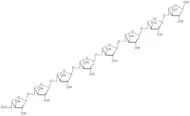
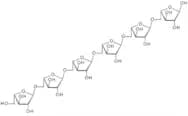
CAS:<p>Please enquire for more information about 1,5-α-L-Arabinooctaose including the price, delivery time and more detailed product information at the technical inquiry form on this page</p>Fórmula:C40H66O33Pureza:Min. 95%Peso molecular:1,074.93 g/molTri-b-GalNAc-b-alanine-PEG3-FITC
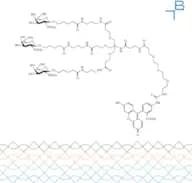
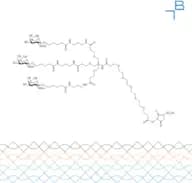
<p>Tri-b-GalNAc-b-alanine-PEG3-FITC is a synthetic probe consisting of three GalNAc ( N-acetylgalactosamine) residues linked to a beta-alanine spacer, followed by a PEG3 linker and a fluorescein isothiocyanate (FITC) fluorophore. This probe is designed to mimic the natural glycosylation patterns found in mucins and other glycoproteins, allowing for the investigation of carbohydrate-protein interactions, particularly those involving the asialoglycoprotein receptor (ASGPR) expressed on hepatocytes. The PEG3 linker provides flexibility and spacing between the glycan and the fluorescent tag, while the FITC moiety enables the detection and tracking of the probe using fluorescence-based techniques such as flow cytometry, fluorescence microscopy, and high-throughput screening assays. This versatile tool is valuable for researchers studying glycobiology, cell-cell interactions, and the development of targeted drug delivery systems.</p>Fórmula:C94H143N13O37SPureza:Min. 95%Peso molecular:2,079.3 g/mol2-Acetamido-1,3,4,6-tetra-O-acetyl-2-deoxy-a-D-galactopyranose
CAS:<p>2-Acetamido-1,3,4,6-tetra-O-acetyl-2-deoxy-a-D-galactopyranose is a fluorinated complex carbohydrate that has been modified by methylation and acetylation. This product is a custom synthesis that has not been previously described in the scientific literature. It is synthesized from 2, 3, 4, 6 tetraacetyl alpha D galactopyranoside and 2 deoxy alpha D galactopyranose. The chemical properties of this compound are similar to those of other complex carbohydrates such as glycogen and heparin.</p>Fórmula:C16H23NO10Pureza:Min. 90.0 Area-%Peso molecular:389.35 g/molTri-b-GalNAc-PEG5-sulfo-NHS ester
<p>Tri-b-GalNAc-PEG5-sulfo-NHS ester is similar to tri-b-GalNAc-PEG5-NHS ester with the difference of the presence of a sulfo group introducing a negative charge to this molecule, potentially influencing its stability and interaction with biological systems. This negatively charged group can improve water solubility further compared to uncharged PEG linkers and potentially influence the biodistribution of the conjugate. The NHS ester, which permits further conjugation, and the unique properties of the sulfo group, permit the development of unique targeted drug-GalNAc conjugates for new therapies.</p>Fórmula:C79H136N11NaO40SPureza:Min. 95%Peso molecular:1,935.03 g/molN’-Nitrosonornicotine N-β-D-glucuronide (mixture of diastereomers) hydrate
CAS:<p>Please enquire for more information about N’-Nitrosonornicotine N-β-D-glucuronide (mixture of diastereomers) hydrate including the price, delivery time and more detailed product information at the technical inquiry form on this page</p>Fórmula:C15H19N3O7•(H2O)xPureza:Min. 95%Ref: 3D-MN183993
Produto descontinuadoBlood group B trisacchharide-APE-HSA
<p>Blood group B trisacchharide-APE-HSA is a synthetic carbohydrate that inhibits the synthesis of complex carbohydrates. The methylation of saccharides and polysaccharides can be accomplished by the addition of an amine to the 3′ hydroxyl group. In this reaction, the sugar is attached to a protein carrier (e.g., human serum albumin) via an amide bond, which prevents its degradation by proteases in the body. The modification of saccharides and polysaccharides is also accomplished through click chemistry, which is based on copper catalysis. This process involves attaching two functional groups through a copper-mediated reaction, forming a new carbon-carbon bond. Modification of saccharides and oligosaccharides can be accomplished using either chemical or enzymatic methods. Sugar modification can be achieved using high purity enzymes that have been custom synthesized for specific purposes (e.g., glycosylation). Carbohydrate modification can</p>Pureza:Min. 95%Monofucosyl, monosialyllacto-N-neohexaose-APD-HSA
<p>Monofucosyl, monosialyllacto-N-neohexaose-APD-HSA is a complex carbohydrate that is synthesized through the enzymatic polymerization of glucose. This synthetic oligosaccharide is composed of a single monosaccharide, fucose, and two sialic acid residues. Monofucosyl, monosialyllacto-N-neohexaose-APD-HSA can be used in the synthesis of various glycoconjugates such as glycoproteins, glycolipids, or proteoglycans. The chemical modification of this sugar molecule can also be performed to produce a variety of products with different properties.</p>Pureza:Min. 95%4-Deoxy-D-glucose
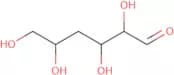
CAS:<p>4-Deoxy-D-glucose is a sugar that is synthesized by the condensation of two molecules of erythrose. It has been shown to be an efficient donor substrate for nucleophilic attack, which can lead to the synthesis of glycosides and other natural products. 4-Deoxy-D-glucose is also a competitive inhibitor of uridine diphosphate (UDP) glucose, which is an enzyme involved in the biosynthesis of UDP sugars and glycoproteins. The concentration of 4-deoxy-D-glucose affects its catalytic mechanism, as it acts as a competitive inhibitor at high concentrations. Molecular modeling has revealed that this molecule adopts a chair conformation with significant solvent exposure.</p>Fórmula:C6H12O5Pureza:Min. 98 Area-%Cor e Forma:PowderPeso molecular:164.16 g/molRef: 3D-MD180432
Produto descontinuado2,3,4-Triacetate-beta- D- glucopyranosyl bromide
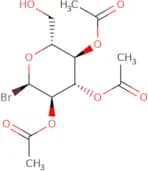
CAS:<p>2,3,4-Triacetate-beta-D-glucopyranosyl bromide is a custom synthesis of an oligosaccharide. It is a complex carbohydrate that can be modified to create a saccharide with methylation and glycosylation. This product has CAS No. 13032-61-6 and can be used in research for the modification of saccharides and carbohydrates.</p>Pureza:Min. 95%2-O-Benzoyl-4,6-O-benzylidene-a-D-glucopyranoside
<p>2-O-Benzoyl-4,6-O-benzylidene-a-D-glucopyranoside is a synthetic carbohydrate with a structure that is similar to that of glucose. It has been shown to have anti-inflammatory properties in animal models and can be used for the treatment of inflammatory bowel disease and Crohn's disease. This compound has also been shown to inhibit the growth of bacteria such as Streptococcus pyogenes, Staphylococcus aureus, and Escherichia coli. 2-O-Benzoyl-4,6-O-benzylidene--aD glucopyranoside is soluble in water and has high purity with an average of 98%.</p>Fórmula:C20H20O7Pureza:Min. 95%Peso molecular:372.37 g/mol1,5-α-L-Arabinohexaose
CAS:<p>1,5-α-L-Arabinohexaose is a carbohydrate. It is a nonreducing sugar that can be found in plants. 1,5-α-L-Arabinohexaose has an optimum pH of 5 and an ethanol concentration of 0.02%. The enzyme form of 1,5-α-L-Arabinohexaose is α-(1→6)-glycosidase. This enzyme hydrolyzes the α-(1→6) glycosidic bond between two glucose residues in a polysaccharide chain to produce β-(1→4) bonds. It also hydrolyzes the β-(1→4) glycosidic bond between two galactose residues to produce β-(1→2) bonds and oxidizes the terminal carbon atom to produce aldehyde products.<br>A structural analysis of this carbohydrate was conducted using marine microorganisms and it was found that they contain galacturonic acid and sugar residues</p>Fórmula:C30H50O25Pureza:Min. 95%Cor e Forma:PowderPeso molecular:810.7 g/mol10-Beta-D-glucopyranosyl-1,8-dihydroxy-3-(hydroxymethyl)-anthrone heptaacetate
CAS:<p>10-Beta-D-glucopyranosyl-1,8-dihydroxy-3-(hydroxymethyl)-anthrone heptaacetate is a synthetic saccharide that can be used as a fluorescent probe. It is synthesized by reacting methyl anthrone with 10-beta-D-glucopyranosyl chloride and sodium hydroxide under basic conditions. The fluorination of the compound leads to its fluorescent properties. This product has been custom synthesized for use in click chemistry reactions.</p>Fórmula:C35H36O16Pureza:Min. 95%Peso molecular:712.60 g/molRef: 3D-NAA92872
Produto descontinuadoD-Xylulose 5-phosphate sodium
CAS:<p>D-Xylulose 5-phosphate sodium salt is a synthetic monosaccharide that can be used in the synthesis of oligosaccharides, polysaccharides, and complex carbohydrates. It is also used in glycosylation reactions. D-Xylulose 5-phosphate sodium salt has been fluorinated to provide better stability and solubility. The compound has a molecular weight of 206.06 g/mol and a CAS number of 105931-44-0. This product is available for custom synthesis upon request.</p>Fórmula:C5H11O8PNaPureza:Min. 95%Cor e Forma:PowderPeso molecular:252.09 g/molRef: 3D-MX182933
Produto descontinuadoOctyl b-D-mannopyranoside
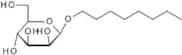
CAS:<p>Octyl b-D-mannopyranoside is a sugar that belongs to the group of complex carbohydrates. It is used in chemical synthesis and is commonly used for click modification, fluorination, glycosylation, carbamoylation, methylation, and other modifications. Octyl b-D-mannopyranoside is a white or off-white powder that can be dissolved in water or alcohols. It has a molecular weight of 536.88 g/mol.</p>Fórmula:C14H28O6Pureza:Min. 95%Cor e Forma:White To Off-White SolidPeso molecular:292.37 g/molRef: 3D-DO06378
Produto descontinuado4-Glucopyranosylmannose
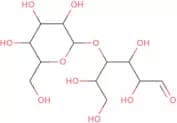
CAS:<p>4-Glucopyranosylmannose is a disaccharide compound, which is a synthetic carbohydrate derived from the enzymatic or chemical glycosylation processes. It consists of glucose and mannose units linked through a glycosidic bond. The compound is sourced through advanced synthetic methodologies involving specific glycosyltransferases or chemical catalysts that facilitate the precise attachment of these sugar moieties.</p>Fórmula:C12H22O11Pureza:Min. 95%Peso molecular:342.3 g/molRef: 3D-QAA76161
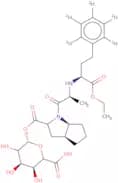
Produto descontinuadoRamipril-D5 acyl-b-D-glucuronide
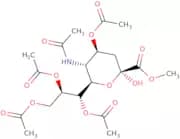
Produto Controlado<p>Ramipril-D5 acyl-b-D-glucuronide is a custom synthesis of the complex carbohydrate, oligosaccharide. It has been modified with saccharide, methylation, glycosylation, and click modification. Ramipril-D5 acyl-b-D-glucuronide is a high purity product that has been fluorinated and synthesized.</p>Fórmula:C29H35D5N2O11Pureza:Min. 95%Peso molecular:597.66 g/mol4,7,8,9-Tetra-O-acetyl-N-acetyl-D-neuraminic acid methyl ester
CAS:<p>4,7,8,9-Tetra-O-acetyl-N-acetyl-D-neuraminic acid methyl ester is a modified form of sialic acid. This compound is a glycosylation product that has been modified with methyl groups and fluorine atoms. The fluorination of the molecule increases its stability and prevents it from being hydrolyzed by enzymes such as β-galactosidase. 4,7,8,9-Tetra-O-acetyl-N-acetyl-D-neuraminic acid methyl ester is often used in the synthesis of polysaccharides and oligosaccharides for medical purposes. This compound can be custom synthesized for research purposes or to meet special requirements.</p>Fórmula:C20H29NO13Pureza:Min. 95%Cor e Forma:White to off-white solid.Peso molecular:491.44 g/mol