Compostos Relacionados com Enzimas, Peptídeos e Proteínas
Os compostos relacionados a enzimas, peptídeos e proteínas são críticos para o estudo e manipulação de vias bioquímicas. Estes compostos incluem enzimas que catalisam reações bioquímicas, peptídeos que atuam como hormônios e moléculas de sinalização, e proteínas que desempenham uma ampla gama de funções nos organismos. Esta categoria abrange inibidores, ativadores, substratos e outros reagentes essenciais para enzimologia, proteômica e pesquisa de peptídeos. Na CymitQuimica, oferecemos uma ampla seleção de compostos de alta qualidade para facilitar a sua pesquisa em cinética enzimática, função proteica e síntese de peptídeos, garantindo resultados precisos e confiáveis.
Subcategorias de "Compostos Relacionados com Enzimas, Peptídeos e Proteínas"
- Aminoácidos (AA)(40.558 produtos)
- Enzimas(3.561 produtos)
- Peptídeos(30.674 produtos)
- Proteínas(15.026 produtos)
Foram encontrados 1312 produtos de "Compostos Relacionados com Enzimas, Peptídeos e Proteínas"
Ordenar por
Pureza (%)
0
100
|
0
|
50
|
90
|
95
|
100
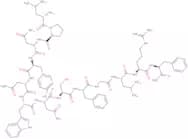
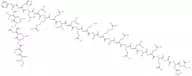
Kisspeptin-13 (human) trifluoroacetate salt
CAS:<p>Please enquire for more information about Kisspeptin-13 (human) trifluoroacetate salt including the price, delivery time and more detailed product information at the technical inquiry form on this page</p>Fórmula:C78H107N21O18Pureza:Min. 95%Peso molecular:1,626.81 g/molGLP-1 (1-37) (human, bovine, guinea pig, mouse, rat) trifluoroacetate salt
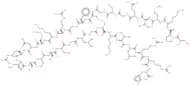
CAS:<p>GLP-1 (1-37) (human, bovine, guinea pig, mouse, rat) trifluoroacetate salt is a posttranslational modification of the endogenous human hormone GLP-1. It is a synthetic form of this hormone that has been modified to allow for improved stability and solubility. This peptide is found in the pancreatic alpha cells and intestinal L cells and stimulates the release of insulin from pancreatic beta cells. GLP-1 (1-37) (human, bovine, guinea pig, mouse, rat) trifluoroacetate salt has also been shown to increase glucose uptake by muscle tissue as well as stimulate the release of incretin hormones such as glucagon-like peptide 1 and gastric inhibitory polypeptide. GLP-1 (1-37) (human, bovine, guinea pig, mouse, rat) trifluoroacetate salt</p>Fórmula:C186H275N51O59Pureza:Min. 95%Peso molecular:4,169.48 g/molSodium stearate
CAS:<p>Sodium stearate is a sodium salt that is commonly used as a surfactant and emulsifying agent in the food industry. The drug interactions with sodium stearate are not well known, but it has been shown to have an effect on fetal bovine serum (FBS) cell viability at concentrations above 10%. Sodium stearate typically shows a thermal expansion of 5–6% per degree Celsius. It is also used in conjunction with CO2 flow to produce anhydrous sodium carbonate and sodium bicarbonate. Sodium stearate can be found in foods such as margarine, shortening, and baking powder. It also has metabolic effects such as promoting the production of insulin and reducing blood sugar levels. It has also been shown to inhibit tumor growth in bone cancer cell lines.</p>Fórmula:C18H35NaO2Pureza:Min. 95%Cor e Forma:White/Off-White SolidPeso molecular:306.46 g/mol...(Ala13)-Apelin-13 (human, bovine, mouse, rat) trifluoroacetate salt
CAS:<p>Apelin-13 is a peptide hormone that is involved in the regulation of cardiovascular, respiratory and gastrointestinal functions. It has been shown to stimulate receptor activity and pain sensitivity in animal models. Apelin-13 has been shown to act as an opioid receptor agonist, meaning that it binds to the opioid receptors and activates them. This activation leads to an increase in the production of growth factors and matrix metalloproteinases, which are proteins that break down collagen and other substances in the body. The increased production of these substances can lead to inflammation and tissue destruction. Apelin-13 also interacts with several other receptors including CB2 (a cannabinoid receptor), GPCR (a G protein-coupled receptor), CRHR1 (a corticotropin releasing hormone receptor 1) and Naloxone (an opioid antagonist).</p>Fórmula:C63H107N23O16S·xC2HF3O2Pureza:Min. 95%Peso molecular:1,474.74 g/mol(Leu15)-Gastrin I (human)
CAS:<p>Gastrin I (human) Pyr-Gly-Pro-Trp-Leu-Glu-Glu-Glu-Glu-Glu-Ala-Tyr-Gly-Trp-Leu-Asp, is a peptide that belongs to the family of cholecystokinin. It is synthesized by solid phase synthesis on a carboxyl group with an efficiency of more than 95%. Gastrin I (human) Pyr-Gly-Pro-Trp... has been shown to be selective towards amide bond cleavage and has high yield. It is also stable in acidic conditions and can be detritylated with phenoxy.</p>Fórmula:C98H126N20O31Pureza:Min. 95%Peso molecular:2,080.17 g/molVIP sulfoxide (human, mouse, rat) trifluoroacetate salt
CAS:<p>Please enquire for more information about VIP sulfoxide (human, mouse, rat) trifluoroacetate salt including the price, delivery time and more detailed product information at the technical inquiry form on this page</p>Fórmula:C147H238N44O43SPureza:Min. 95%Peso molecular:3,341.8 g/molNeuroendocrine Regulatory Peptide-1 (human) trifluoroacetate salt
CAS:<p>Please enquire for more information about Neuroendocrine Regulatory Peptide-1 (human) trifluoroacetate salt including the price, delivery time and more detailed product information at the technical inquiry form on this page</p>Fórmula:C113H192N36O39Pureza:Min. 95%Peso molecular:2,678.95 g/molCRF (6-33) (human, rat)
CAS:<p>CRF (6-33) is a neuropeptide that is found in the human cerebral cortex and rat liver. It has been shown to inhibit protein synthesis and sequenced by Edmond H. Fischer, who also discovered corticotropin-releasing factor (CRF). CRF (6-33) binds to its receptor CRFR1, which activates phospholipase C and generates inositol 1,4,5-triphosphate. This leads to the release of calcium from intracellular stores and the activation of protein kinase C. The release of calcium ions into the cytosol causes an increase in intracellular levels of cAMP, which activates a series of reactions responsible for the cellular effects of CRF. CRF (6-33) has been shown to be involved in depression by controlling neurotransmitter levels.br></p>Fórmula:C141H231N41O43SPureza:Min. 95%Peso molecular:3,220.66 g/molBNP-32 (human) hydrochloride
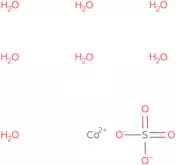
CAS:<p>BNP-32 is a peptide hormone that regulates the volume of blood in the heart and lungs. It is used to diagnose congestive heart failure, and also as a treatment for decompensated congestive heart failure. When given as an intravenous infusion, BNP-32 reduces the levels of natriuretic peptides in the blood stream by increasing their breakdown in the kidneys. The disulfide bond between cysteine residues (Cys-Cys) is essential for its activity. BNP-32 has been shown to be effective against infectious diseases such as HIV, hepatitis C, and tuberculosis. It is also used in combination with other drugs to treat high blood pressure. This drug can be administered orally or intravenously and is biocompatible with human tissue because it is chemically stable and non-toxic at therapeutic doses.</p>Fórmula:C143H244N50O42S4Pureza:Min. 95%Peso molecular:3,464.04 g/molCobalt sulfate heptahydrate
CAS:<p>Cobalt sulfate heptahydrate is an inorganic compound that is used as a pigment and a catalyst. It has been shown to be carcinogenic in vivo and in vitro. Cobalt sulfate heptahydrate appears to have carcinogenic activity, producing high values in the electrochemical impedance spectroscopy (EIS) spectrum of human serum. The carcinogenicity of cobalt sulfate heptahydrate was demonstrated by the induction of liver tumors in rats and mice, with no evidence of a threshold dose.</p>Fórmula:CoSO4•(H2O)7Pureza:Min. 95%Cor e Forma:PowderPeso molecular:281.1 g/molPrepro VIP (81-122) (human) trifluoroacetate salt
CAS:<p>Please enquire for more information about Prepro VIP (81-122) (human) trifluoroacetate salt including the price, delivery time and more detailed product information at the technical inquiry form on this page</p>Fórmula:C202H325N53O64SPureza:Min. 95%Peso molecular:4,552.13 g/molGRF (human) acetate salt
CAS:<p>Growth hormone-releasing factor (GRF) or GHRH (growth hormone-releasing hormone).Binds to the growth hormone-releasing hormone receptor (GHRH-R), causing growth hormone secretion.porcine: H-YADAIFTNSYRKVLGQLSARKLLQDIMSRQQGERNQEQGARVRL-NH2bovine: H-YADAIFTNSYRKVLGQLSARKLLQDIMNRQQGERNQEQGAKVRL-NH2ovine: H-YADAIFTNSYRKILGQLSARKLLQDIMNRQQGERNQEQGAKVRL-NH2human: H-YADAIFTNSYRKVLGQLSARKLLQDIMSRQQGESNQERGARARL-NH2</p>Fórmula:C215H358N72O66SPureza:Min. 98 Area-%Cor e Forma:PowderPeso molecular:5,039.65 g/molNesfatin-1 (30-59) (mouse, rat) trifluoroacetate salt
<p>Please enquire for more information about Nesfatin-1 (30-59) (mouse, rat) trifluoroacetate salt including the price, delivery time and more detailed product information at the technical inquiry form on this page</p>Fórmula:C167H260N40O54Pureza:Min. 95%Peso molecular:3,692.09 g/molOrphan GPCR SP9155 Agonist P550 (mouse) trifluoroacetate salt
CAS:<p>Please enquire for more information about Orphan GPCR SP9155 Agonist P550 (mouse) trifluoroacetate salt including the price, delivery time and more detailed product information at the technical inquiry form on this page</p>Fórmula:C126H195N37O37Pureza:Min. 95%Peso molecular:2,820.12 g/mol(D-Pro194)-IL-1β (193-195) (human)
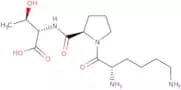
CAS:<p>IL-1beta is a pro-inflammatory cytokine that belongs to the group of interleukins. It is synthesized as a preproprotein which undergoes proteolytic processing to produce a mature 34 kDa protein with an N-terminal lys-pro sequence. IL-1beta has been shown to induce allergic reactions in animals and humans, constrictions in airways, and antigen presentation by antigen presenting cells, such as macrophages and dendritic cells. This cytokine also has costimulatory effects on immune responses and has been shown to be involved in autoimmune diseases and inflammatory diseases. The IL-1beta gene contains a hydroxyl group at the COOH terminus that allows for the formation of an aspirin binding site.</p>Fórmula:C15H28N4O5Pureza:Min. 95%Peso molecular:344.41 g/molPACAP-38 (human, mouse, ovine, porcine, rat) trifluoroacetate salt
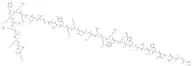
CAS:<p>PACAP-38 is a peptide that has been shown to have a variety of physiological effects, including the regulation of brain functions and immunological responses. PACAP-38 has been found to bind to toll-like receptor 4 (TLR4) in macrophages and neutrophils, which stimulates the production of proinflammatory cytokines. It also interacts with adenylate cyclase, which leads to an increase in cAMP levels. This may be the mechanism by which PACAP-38 regulates brain functions. The biological function of PACAP-38 is not yet clear but it may act as a signal peptide, regulating protein synthesis and gene expression.</p>Fórmula:C203H331N63O53SPureza:Min. 95%Peso molecular:4,534.26 g/mol(Hyp 474·477,Gln479)-cyclo-a-Fetoprotein (471-479) (human, lowland gorilla)
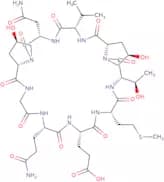
CAS:<p>Please enquire for more information about (Hyp 474·477,Gln479)-cyclo-a-Fetoprotein (471-479) (human, lowland gorilla) including the price, delivery time and more detailed product information at the technical inquiry form on this page</p>Fórmula:C40H63N11O16SPureza:Min. 95%Peso molecular:986.06 g/molAdrenomedullin (rat) trifluoroacetate salt
CAS:<p>Please enquire for more information about Adrenomedullin (rat) trifluoroacetate salt including the price, delivery time and more detailed product information at the technical inquiry form on this page</p>Fórmula:C242H381N77O75S5Pureza:Min. 95%Peso molecular:5,729.42 g/molPACAP-38 (31-38) (human, chicken, mouse, ovine, porcine, rat) trifluoroacetate salt
CAS:<p>Please enquire for more information about PACAP-38 (31-38) (human, chicken, mouse, ovine, porcine, rat) trifluoroacetate salt including the price, delivery time and more detailed product information at the technical inquiry form on this page</p>Fórmula:C47H83N17O11Pureza:Min. 95%Peso molecular:1,062.27 g/mol(Pyr 16)-VIP (16-28) (human, mouse, rat)
CAS:<p>Please enquire for more information about (Pyr 16)-VIP (16-28) (human, mouse, rat) including the price, delivery time and more detailed product information at the technical inquiry form on this page</p>Fórmula:C68H114N18O18SPureza:Min. 95%Peso molecular:1,503.81 g/mol