Antifúngicos
Os antifúngicos são compostos especificamente projetados para interromper, prevenir e eliminar o crescimento de fungos. Nesta categoria, você encontrará uma ampla variedade de agentes antifúngicos essenciais para pesquisa e aplicações terapêuticas. Esses compostos são cruciais no tratamento de infecções fúngicas e na prevenção de sua recorrência, tornando-os ferramentas vitais tanto em ambientes médicos quanto agrícolas. Pesquisadores e profissionais de saúde podem explorar inúmeros antifúngicos para entender seus mecanismos, otimizar sua eficácia e desenvolver novos tratamentos para combater cepas fúngicas resistentes. A extensa seleção de antifúngicos apoia os avanços contínuos na pesquisa sobre fungos e no desenvolvimento de terapias antifúngicas eficazes.
Foram encontrados 874 produtos de "Antifúngicos"
Ordenar por
Pureza (%)
0
100
|
0
|
50
|
90
|
95
|
100
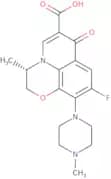
Levofloxacin
CAS:<p>Levofloxacin is a fluoroquinolone antibiotic with a mode of action that inhibits bacterial DNA gyrase and topoisomerase IV. It is used for treating bacterial infections like pneumonia and urinary tract infections.</p>Fórmula:C18H20FN3O4Pureza:Min. 95%Cor e Forma:PowderPeso molecular:361.37 g/molAureothin
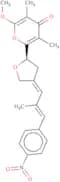
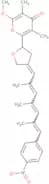
CAS:<p>Aureothin is a bioactive compound, classified as a polyketide antibiotic, which is derived from the culture of the bacterium Streptomyces thioluteus. This compound operates primarily through the inhibition of protein synthesis by interfering with the aminoacylation of tRNA with specific amino acids. Its mode of action disrupts cellular protein synthesis, which is essential for cell growth and function, leading to its potent antibacterial and antifungal activities.</p>Fórmula:C22H23NO6Pureza:Min. 95%Cor e Forma:PowderPeso molecular:397.42 g/molBeauvericin
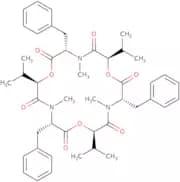
CAS:<p>Beauvericin is a cyclic peptide that is isolated from the fungus Fusarium. It has been shown to have antimicrobial activity against bacteria, as well as a variety of other biological properties. Beauvericin has been shown to inhibit mitochondrial membrane potential and induce toxicity in some animal models. Beauvericin also inhibits protein synthesis and causes cell death by inhibiting DNA polymerase activity. This compound is active against cancer cells, including HL-60 cells, which are derived from human lymphocytes and are used as a model for leukemia. Beauvericin can be extracted from an ETOA extract of the fungus Fusarium oxysporum; this extract has shown anti-cancer effects in vitro assays.</p>Fórmula:C45H57N3O9Pureza:Min. 95%Peso molecular:783.95 g/molCaerulomycin A
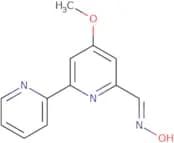
CAS:<p>Caerulomycin A is a bioactive compound classified as a natural broad-spectrum antibiotic, which is derived from various Streptomyces species found in soil. Its mode of action involves inhibiting fungal and bacterial growth by interfering with essential cellular processes, effectively curbing the proliferation of pathogenic microorganisms. This potent molecule achieves its effects by binding to specific cellular targets, thereby disrupting cell wall synthesis and other critical metabolic pathways.</p>Fórmula:C12H11N3O2Pureza:Min. 95%Peso molecular:229.23 g/molFilipin III
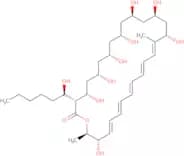
CAS:<p>Filipin III is a polyene macrolide antibiotic, which is extracted from Streptomyces filipinensis. Known for its unique mode of action, Filipin III interferes with cholesterol-rich membranes by binding to ergosterol and cholesterol. This interaction disrupts the membrane structure, altering membrane permeability and ultimately affecting cell viability.</p>Pureza:Min. 95%2-Methyl-4-isothiazolin-3-one
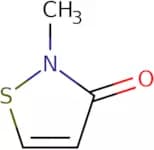
CAS:Produto Controlado<p>2-Methyl-4-isothiazolin-3-one or MIT is a powerful antimicrobial and antifungal agent which is widely used in personal care products. It is also used in industrial applications as a preservative and antifouling agent.</p>Fórmula:C4H5NOSPureza:Min. 96%Cor e Forma:Yellow PowderPeso molecular:115.15 g/mol21-Norrapamycin
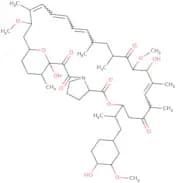
CAS:<p>21-Norrapamycin is a macrocyclic lactone antibiotic, which is derived from the bacterium Streptomyces hygroscopicus. Its chemical structure is closely related to that of rapamycin, a well-known immunosuppressant. The mode of action of 21-Norrapamycin involves the inhibition of the mechanistic target of rapamycin (mTOR) signaling pathway. By binding to the FK506-binding protein 12 (FKBP12), it forms a complex that then inhibits mTOR, a crucial regulator of cell growth, proliferation, and survival.</p>Fórmula:C50H77NO13Pureza:Min. 95%Peso molecular:900.1 g/molZelkovamycin
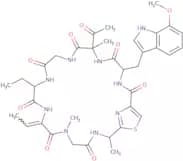
CAS:Zelkovamycin is a novel antibacterial compound isolated from endophytic microorganisms, specifically Streptomyces sp. Endophytes are bacteria or fungi that reside within plant tissues, forming symbiotic relationships and often producing bioactive metabolites. The mode of action of Zelkovamycin involves the inhibition of bacterial cell wall synthesis, interfering with the biosynthesis pathways essential for maintaining the structural integrity and function of bacterial cell walls, particularly in Gram-positive strains.Fórmula:C36H45N9O9SPureza:Min. 95%Cor e Forma:PowderPeso molecular:779.86 g/molNaftifine N-Oxide
CAS:<p>Naftifine N-Oxide is an antifungal agent, which is derived from synthetic chemical processes. Its structure is based on the modification of the known antifungal, naftifine, by introducing an N-oxide functional group, which may enhance certain pharmacokinetic properties. As a synthetic derivative, Naftifine N-Oxide is specifically designed to interfere with the biosynthesis of ergosterol, an essential component of fungal cell membranes. By inhibiting squalene epoxidase, an enzyme crucial to the ergosterol pathway, Naftifine N-Oxide effectively disrupts the development and maintenance of the fungal cell membrane, compromising cell integrity and leading to antifungal activity.</p>Fórmula:C21H21NOPureza:Min. 95%Peso molecular:303.4 g/molSordarin sodium salt
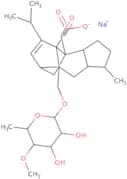
CAS:<p>Sordarin sodium salt is an antifungal agent, characterized as a semisynthetic derivative produced from the fermentation products of filamentous fungi, specifically belonging to the phylum Ascomycota. This compound exerts its effects by selectively inhibiting fungal protein synthesis. It achieves this by obstructing the function of elongation factor 2 (EF-2), an essential component of fungal ribosomal activity, thereby disrupting the translational elongation step of protein synthesis.</p>Fórmula:C27H39NaO8Pureza:Min. 95%Peso molecular:514.58 g/molPropiconazole
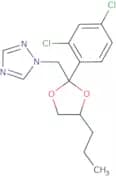
CAS:<p>Propiconazole is a triazole fungicide with action on fungal cell membranes by inhibiting ergosterol biosynthesis and is used for controlling fungal diseases in crops and turf.</p>Fórmula:C15H17Cl2N3O2Pureza:Min. 95%Cor e Forma:Clear LiquidPeso molecular:342.22 g/molNeoaureothin
CAS:<p>Neoaureothin is a natural antibiotic product, which is derived from marine actinomycetes with a complex polyketide structure. Its mode of action involves the inhibition of bacterial protein synthesis by binding selectively to the ribosomal subunits, thereby obstructing the translation process in susceptible microbial strains. The specificity of its action allows it to target a broad spectrum of Gram-positive bacteria while presenting a lower risk of resistance development compared to traditional antibiotics.</p>Fórmula:C28H31NO6Pureza:Min. 95%Peso molecular:477.5 g/mol41-Oxo-rapamycin
CAS:<p>41-Oxo-rapamycin is a synthetic derivative of rapamycin, which is a macrocyclic lactone. It is derived from Streptomyces hygroscopicus, a gram-positive bacterium known for producing various bioactive compounds. The mode of action of 41-Oxo-rapamycin involves binding to the FK506-binding protein (FKBP12), forming a complex that subsequently inhibits the mammalian target of rapamycin (mTOR) pathway. This inhibition results in the suppression of T-cell proliferation and modulation of immune responses.</p>Fórmula:C51H77NO13Pureza:Min. 95%Peso molecular:912.2 g/molMalformin C
CAS:<p>Malformin C is a cyclic pentapeptide, which is a secondary metabolite derived from certain strains of the fungus Aspergillus. Its mode of action involves disrupting cellular processes by interfering with cell division. Specifically, it is thought to affect mitotic spindle formation, leading to abnormal cell cycle progression.</p>Fórmula:C23H39N5O5S2Pureza:Min. 95%Cor e Forma:PowderPeso molecular:529.72 g/molMiconazole
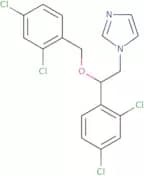
CAS:<p>Anti-fungal; sterol 14α-demethylase inhibitor</p>Fórmula:C18H14Cl4N2OPureza:Min. 95 Area-%Cor e Forma:White Off-White PowderPeso molecular:416.13 g/molTebuconazole-d9
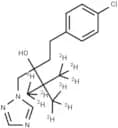
CAS:<p>Tebuconazole-d9 is a GC/LC-MS standard for quantifying the triazole fungicide tebuconazole, affecting seed/foliar fungi and androgen receptors.</p>Fórmula:C16H13ClD9N3OCor e Forma:SolidPeso molecular:316.87CYP51/HDAC-IN-1
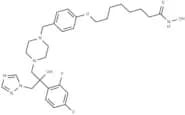
CAS:Orally active CYP51/HDAC-IN-1 dual inhibitor targets virulence factors and resistance genes; effective against Candidiasis and Cryptococcal meningitis.Fórmula:C30H40F2N6O4Cor e Forma:SolidPeso molecular:586.67Succinate dehydrogenase-IN-1
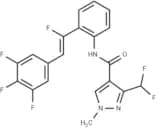
CAS:<p>Succinate dehydrogenase-IN-1 (Compound 34) acts as an inhibitor of succinate dehydrogenase (SDH), exhibiting an IC50 value of 0.94 μM and a KD of 22.4 μM. This compound also demonstrates antifungal activity, with EC50 values against Rhizoctonia solani, Sclerotinia sclerotiorum, Monilinia fructicola, and Botrytis cinerea measured at 0.04 μM, 1.13 μM, 1.61 μM, and 1.21 μM, respectively.</p>Fórmula:C20H13F6N3OCor e Forma:SolidPeso molecular:425.33Diamthazole hydrochloride
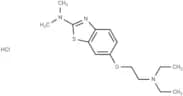
CAS:Diamthazole (Dimazole) hydrochloride, an antifungal agent, is utilized in infection research.Fórmula:C15H24ClN3OSCor e Forma:SolidPeso molecular:329.89Antibacterial agent 67
CAS:Antibacterial agent 67 blocks succinate dehydrogenase more effectively than haloperidol, with IC50 of 0.03 μM vs 4.40 μM.Fórmula:C24H15F6N5OCor e Forma:SolidPeso molecular:503.4