Antimicrobianos
Os antimicrobianos são agentes que destroem ou inibem o crescimento de microrganismos, incluindo bactérias, vírus, fungos e parasitas. Esses compostos são essenciais na prevenção e tratamento de infecções, desempenhando um papel crucial na medicina, agricultura e indústria alimentícia. Na CymitQuimica, oferecemos uma ampla gama de antimicrobianos de alta qualidade e pureza, adequados para diversas aplicações científicas e industriais. Nosso catálogo inclui antibióticos, antifúngicos, antivirais e desinfetantes, todos projetados para atender às necessidades de pesquisa e desenvolvimento, bem como para aplicações clínicas e de produção. Com nossos produtos, os profissionais podem garantir a eficácia e a segurança no controle de infecções e na proteção da saúde pública.
Subcategorias de "Antimicrobianos"
- Antibióticos(4.131 produtos)
- Antifúngicos(909 produtos)
- Antiparasitários(703 produtos)
- Antivíricos(766 produtos)
Foram encontrados 2425 produtos de "Antimicrobianos"
Ordenar por
Pureza (%)
0
100
|
0
|
50
|
90
|
95
|
100
Validamycin C
CAS:Validamycin C is an aminoglycoside antifungal antibiotic, which is derived from the soil bacterium Streptomyces hygroscopicus. It functions primarily by inhibiting the synthesis of trehalase, an enzyme crucial for the breakdown of trehalose into glucose monomers. This inhibition disrupts the cellular function of fungi, particularly affecting their osmotic balance and cellular integrity, ultimately leading to the control of fungal growth.Fórmula:C26H45NO18Pureza:Min. 95%Peso molecular:659.6 g/molPyrasulfotole-desmethyl
CAS:<p>Pyrasulfotole-desmethyl is a metabolite of pyrasulfotole, which is an herbicidal compound derived synthetically. It operates as a 4-hydroxyphenylpyruvate dioxygenase (HPPD) inhibitor, effectively disrupting the biosynthesis of carotenoids. This disruption leads to a depletion in essential pigments necessary for plant growth, ultimately causing chlorosis and plant death.</p>Fórmula:C13H11F3N2O4SPureza:Min. 95%Peso molecular:348.3 g/molCefoselis hydrochloride
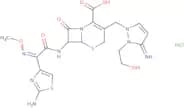
CAS:Cefoselis hydrochloride is a broad-spectrum antibiotic, which is a synthetic cephalosporin derived from a semi-synthetic process involving modifications of naturally occurring cephalosporin C. Its mode of action involves inhibiting bacterial cell wall synthesis by binding to specific penicillin-binding proteins, leading to cell lysis and death.Fórmula:C19H23ClN8O6S2Pureza:Min. 95%Peso molecular:559 g/molAmidithion
CAS:Amidithion is an insecticidal and acaricidal compound, which is a derivative of organophosphorus chemistry. This compound is chiefly synthesized through the complex chemical manipulation of phosphoryl groups, rendering it a potent inhibitor of enzymatic activity in target organisms.Fórmula:C7H16NO4PS2Pureza:Min. 95%Peso molecular:273.3 g/molMepanipyrim-2-hydroxypropyl
CAS:Mepanipyrim-2-hydroxypropyl is a fungicide, which is synthesized from chemical sources, specifically targeting pathogens by inhibiting their metabolic processes. Its mode of action involves the disruption of enzymatic activities crucial for fungal cell survival, leading to halted growth and eventual death of the fungus.Fórmula:C14H17N3OPureza:Min. 95%Peso molecular:243.3 g/molCeftobiprole medocaril
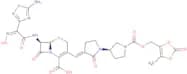
CAS:<p>Ceftobiprole medocaril is a prodrug of the cephalosporin class, which is a beta-lactam antibiotic. It is synthetically derived, designed to combat Gram-positive and Gram-negative bacteria. The mode of action involves binding to penicillin-binding proteins (PBPs), crucial for bacterial cell wall synthesis, ultimately leading to bacterial cell lysis and death.</p>Fórmula:C26H26N8O11S2Pureza:Min. 95%Peso molecular:690.66 g/molCephalosporin 87/359(cefoxitin impurity H)
CAS:<p>Cephalosporin 87/359 (cefoxitin impurity H) is an analytical reference standard, which is a secondary metabolite that can arise during the synthesis or degradation of the cephalosporin antibiotic, cefoxitin. It is sourced from chemical synthesis processes where isolation and purification of impurities are essential for ensuring the efficacy and safety of pharmaceutical products. The mode of action of this impurity is not therapeutic but crucial for analytical purposes, serving as a comparator to detect and quantify potential contaminants in cefoxitin production.</p>Fórmula:C15H15N3O6S2Pureza:Min. 95%Peso molecular:397.40 g/molNSC-60339
CAS:<p>NSC-60339 is a synthetic antineoplastic agent derived from laboratory synthesis known for its targeted inhibition of specific cancer cell pathways. The compound operates by interfering with crucial cellular processes such as DNA replication or protein synthesis, depending on its exact mode of action.</p>Fórmula:C26H23ClN6O2Pureza:Min. 95%Peso molecular:487 g/molCefixime methyl ester
CAS:Cefixime methyl ester is a chemical compound often used in the development of antibiotics, specifically as a semi-synthetic cephalosporin derivative. It is derived from Cephalosporium acremonium, a type of fungus, which serves as a source for the initial cephalosporin structure. The compound functions as a beta-lactam antibiotic by inhibiting bacterial cell wall synthesis. It achieves this through the acylation of penicillin-binding proteins, effectively halting the transpeptidation or cross-linking of the peptidoglycan layer, which is crucial for bacterial survival and division.Fórmula:C17H17N5O7S2Pureza:Min. 95%Peso molecular:467.50 g/molDDD107498 succinate
CAS:DDD107498 succinate is a potent antimalarial agent, which is a synthetic compound discovered through target-based drug screening. This compound is derived from intensive research initiatives focusing on eliminating malaria by disrupting a unique biochemical pathway in the parasite. It primarily acts by inhibiting the translation elongation factor 2, a critical protein that facilitates protein synthesis within the Plasmodium species responsible for malaria. By targeting this specific mechanism, the compound effectively halts the growth and replication of the parasite within the human bloodstream.Fórmula:C31H37FN4O6Pureza:Min. 95%Peso molecular:580.6 g/mol4-Epianhydrotetracycline
CAS:<p>4-Epianhydrotetracycline is a chemical compound that is a derivative of tetracycline, a well-known antibiotic. It is primarily a byproduct arising from the chemical degradation of tetracycline antibiotics, occurring under acidic or basic conditions. The source of this compound is the structural transformation of tetracycline, resulting in an altered molecular configuration.</p>Fórmula:C22H22N2O7Pureza:Min. 95%Peso molecular:426.4 g/molSTAADIUM™ PeptiZide L-Pyr
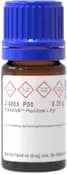
CAS:<p>STAADIUM⢠PeptiZide L-Pyr is a targeted inhibitor for pyroglutamyl-aminopeptidase-producing bacteria. The antibacterial activity of STAADIUM⢠PeptiZide L-Pyr is triggered by the enzyme pyroglutamyl aminopeptidase (a.k.a. pyrase or pyrrolidonyl peptidase) that is present, not only in bacteria, but also in archaea, plants and animals. STAADIUM⢠PeptiZide can be used to suppress the growth of Citrobacter freundii on diagnostic agar plates for Salmonella. L-pyrrolidonyl peptidase activity has also been exploited to distinguish Enterococcus species and Streptococcus pyogenes from other Streptococaceae species. More details in the application notes document.</p>Fórmula:C17H17N3O3SPureza:Min. 95 Area-%Peso molecular:343.41 g/molEquisetin
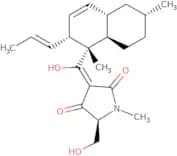
CAS:<p>Equisetin is a secondary metabolite, which is produced by the fungus *Fusarium equiseti*. It operates predominantly through the inhibition of protein synthesis and interference with cellular processes within target organisms. Equisetin exhibits potent antibacterial and antifungal activities primarily by interfering with cell wall synthesis in bacteria and disrupting key pathways in fungi.</p>Pureza:Min. 95%3-Phenanthrenebutyric acid
CAS:3-Phenanthrenebutyric acid is a synthetic compound that serves as an analogue of phenanthrene derivatives, commonly utilized in biochemical and pharmacological research. Its source lies in laboratory synthesis, designed to mimic the structural properties of naturally occurring phenanthrene compounds, which are typically found in fossil fuels and plant sources.Fórmula:C18H16O2Pureza:Min. 95%Peso molecular:264.3 g/molMiloxacin
CAS:Miloxacin is an antibacterial agent, which is sourced as a synthetic derivative of quinolone compounds. It exhibits its mode of action through the inhibition of bacterial DNA gyrase and topoisomerase IV, enzymes pivotal for DNA replication, transcription, and repair processes. This interference disrupts bacterial cell division, leading to cell death in susceptible organisms.Fórmula:C12H9NO6Pureza:Min. 95%Peso molecular:263.2 g/mol3,4,5-Trichlorophenol acetate
CAS:3,4,5-Trichlorophenol acetate is a chlorinated aromatic compound, which is a derivative of trichlorophenol. It is typically sourced from chemical synthesis involving the chlorination and acetylation of phenolic compounds. The mode of action involves its interaction and potential binding with biological molecules, making it a subject of interest for biochemical studies.Fórmula:C8H5Cl3O2Pureza:Min. 95%Peso molecular:239.5 g/molChlortetracycline-13C-d3 hydrochloride
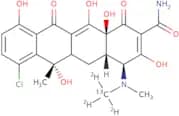
Produto Controlado<p>Chlortetracycline-13C-d3 hydrochloride is a stable isotope-labeled antibiotic with action on bacterial protein synthesis inhibition and is used for research in bacterial resistance and analytical studies.</p>Fórmula:C2113CH21D3Cl2N2O8Cor e Forma:PowderPeso molecular:519.35 g/molRestanza
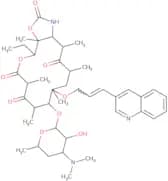
CAS:<p>Restanza is an antibiotic, which is derived from novel sources to combat resistant bacterial strains. It functions through the inhibition of bacterial protein synthesis by binding to the 50S ribosomal subunit, effectively halting the translation process. This mechanism of action is designed to disrupt the proliferation of bacteria, making it a powerful tool in the fight against various infections.</p>Fórmula:C42H59N3O10Pureza:Min. 95%Peso molecular:765.9 g/molGatifloxacin hydrochloride
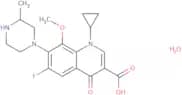
CAS:Gatifloxacin hydrochloride is a synthetic antibacterial agent, which is derived from the fourth-generation fluoroquinolone class of antibiotics. It exhibits a broad-spectrum bactericidal activity by targeting bacterial DNA gyrase and topoisomerase IV enzymes, essential for bacterial DNA replication, transcription, and repair processes.Fórmula:C19H24FN3O5Pureza:Min. 95%Peso molecular:393.4 g/molTriclosan methyl-d3 ether
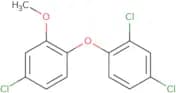
CAS:Triclosan methyl-d3 ether is a labeled compound, which is a derivative of triclosan, commonly sourced from synthetic chemical synthesis involving deuterium incorporation. It serves as a stable isotope-labeled analog, specifically created to aid in the study of triclosan's metabolic pathways. The incorporation of deuterium atoms allows for precise tracking within biological systems using analytical techniques such as mass spectrometry. This approach enables researchers to differentiate the labeled compound from its naturally occurring counterpart effectively.Fórmula:C13H9Cl3O2Pureza:Min. 95%Peso molecular:306.6 g/mol