Antimicrobianos
Os antimicrobianos são agentes que destroem ou inibem o crescimento de microrganismos, incluindo bactérias, vírus, fungos e parasitas. Esses compostos são essenciais na prevenção e tratamento de infecções, desempenhando um papel crucial na medicina, agricultura e indústria alimentícia. Na CymitQuimica, oferecemos uma ampla gama de antimicrobianos de alta qualidade e pureza, adequados para diversas aplicações científicas e industriais. Nosso catálogo inclui antibióticos, antifúngicos, antivirais e desinfetantes, todos projetados para atender às necessidades de pesquisa e desenvolvimento, bem como para aplicações clínicas e de produção. Com nossos produtos, os profissionais podem garantir a eficácia e a segurança no controle de infecções e na proteção da saúde pública.
Subcategorias de "Antimicrobianos"
- Antibióticos(4.131 produtos)
- Antifúngicos(909 produtos)
- Antiparasitários(703 produtos)
- Antivíricos(766 produtos)
Foram encontrados 2424 produtos de "Antimicrobianos"
Ordenar por
Pureza (%)
0
100
|
0
|
50
|
90
|
95
|
100
Erythromycin B
CAS:<p>Erythromycin B is a semisynthetic macrolide antibiotic, which is derived from the actinomycete *Saccharopolyspora erythraea*. Its mode of action involves inhibiting bacterial protein synthesis by binding to the 50S ribosomal subunit. This interference with protein synthesis effectively hampers bacterial growth, making it a potent bacteriostatic agent.</p>Fórmula:C37H67NO12Pureza:90%NmrPeso molecular:717.93 g/molClenpenterol d5 hydrochloride
CAS:<p>Clenpenterol d5 hydrochloride is a deuterated chemical compound, which is a stable isotopic variant of the beta-agonist Clenpenterol, commonly used in research and analytical studies. This compound is synthetically derived to enhance specificity and precision in scientific investigations. Deuteration involves the replacement of hydrogen atoms with deuterium, which contributes to the increased stability and differentiation of the isotopes during analysis.</p>Fórmula:C13H21Cl3N2OPureza:Min. 95%Peso molecular:332.7 g/molLascufloxacin
CAS:<p>Lascufloxacin is a synthetic fluoroquinolone antibiotic, which is derived from chemical synthesis. Its mode of action involves inhibiting bacterial DNA gyrase and topoisomerase IV, enzymes crucial for DNA replication, transcription, repair, and recombination. By targeting these enzymes, lascufloxacin effectively hampers bacterial cell division and growth, leading to cell death. This mechanism specifically affects Gram-positive and Gram-negative bacterial strains, making it a versatile agent in antibacterial therapy.</p>Fórmula:C21H24F3N3O4Pureza:Min. 95%Peso molecular:439.4 g/molIsoflucypram
CAS:<p>Please enquire for more information about Isoflucypram including the price, delivery time and more detailed product information at the technical inquiry form on this page</p>Fórmula:C19H21ClF3N3OPureza:Min. 95%Peso molecular:399.8 g/mol6-o-Methacrylate
CAS:6-o-Methacrylate is a monomer used in the synthesis of polymers, which is predominantly sourced from petroleum-based feedstocks through chemical synthesis. Its mode of action involves free radical polymerization, a process where the methacrylate group participates in chain reactions to form complex polymer structures. This compound is a key building block in the creation of various copolymers and homopolymers.Fórmula:C23H30O9Pureza:Min. 95%Peso molecular:450.5 g/molEtofenprox-carboxy
CAS:Etofenprox-carboxy is an insecticide, which is a synthetic chemical derivative with a unique pyrethroid-like structure. It acts on the nervous system of target insect species by disrupting their neuronal function. This disruption occurs through the stimulation of sodium channels, which, unlike traditional pyrethroids, provides a lower risk to mammals and non-target organisms. It is especially favored for its selective toxicity and reduced environmental persistence.Fórmula:C25H26O4Pureza:Min. 95%Peso molecular:390.5 g/molSulbactam Related Compound A
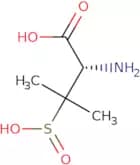
CAS:<p>Sulbactam Related Compound A is a chemical compound often used in pharmaceutical research and development. It is typically derived from the synthetic modification of existing antibiotics to explore new potential therapeutic benefits. The compound functions as a beta-lactamase inhibitor, which is of significant interest to researchers due to its potential to enhance the efficacy of beta-lactam antibiotics. By inhibiting the action of bacterial beta-lactamase enzymes, it permits these antibiotics to remain effective against resistant strains of bacteria.</p>Fórmula:C5H11NO4SPureza:Min. 95%Peso molecular:181.21 g/molRibocil B
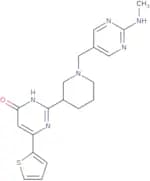
CAS:<p>Ribocil B is an analog of riboflavin, functioning as a synthetic antibiotic. It is derived from chemical synthesis, designed to mimic the structure of natural riboflavin analogs which are crucial for bacterial growth. Ribocil B acts by specifically inhibiting riboswitches, a type of non-coding RNA that regulates gene expression in response to small molecules. This inhibition disrupts RNA synthesis in bacteria by targeting the flavin mononucleotide (FMN) riboswitch.</p>Fórmula:C19H22N6OSPureza:Min. 95%Peso molecular:382.5 g/molClofoctol
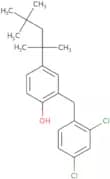
CAS:<p>Clofoctol is an antibacterial agent, which is derived from synthetic origins, specifically designed for therapeutic applications in bacterial infections. Its mode of action involves inhibiting bacterial protein synthesis, thereby preventing the growth and proliferation of harmful bacteria. This compound is particularly effective against Gram-positive bacteria.</p>Fórmula:C21H26Cl2OPureza:Min. 95%Peso molecular:365.34 g/molHexazinone metabolite D
CAS:<p>Hexazinone metabolite D is a derivative compound that results from the biotransformation of Hexazinone, which is a systemic herbicide. This metabolite originates from the breakdown processes mediated by biological or environmental factors in ecosystems where Hexazinone is applied. Its mode of action involves the inhibition of photosynthesis by targeting photosystem II, ultimately reducing the transfer of electrons, which leads to the disruption of energy production in susceptible plant species.</p>Fórmula:C10H15N3O3Pureza:Min. 95%Peso molecular:225.24 g/molOmomycin
CAS:<p>Omomycin is a novel antibiotic, specifically a macrolide, which is derived from microbial sources, primarily soil-dwelling actinomycetes. Its mode of action involves inhibiting bacterial protein synthesis by binding to the 50S ribosomal subunit. This interaction prevents the translocation of peptides during translation, thereby halting bacterial growth and proliferation.</p>Fórmula:C29H39NO4Pureza:Min. 95%Peso molecular:465.6 g/molSparsomycin
CAS:<p>Sparsomycin is an antibiotic compound, which is a secondary metabolite isolated from Streptomyces species. Its mode of action involves the inhibition of protein synthesis by targeting the large subunit of the ribosome, specifically binding to the 50S subunit in bacterial ribosomes and the 60S subunit in eukaryotic ribosomes. This binding interferes with peptide bond formation, thereby disrupting the translational process essential for protein synthesis.</p>Fórmula:C13H19N3O5S2Pureza:Min. 95%Peso molecular:361.4 g/molBesifloxacin hydrochloride
CAS:Besifloxacin hydrochloride is a fourth-generation fluoroquinolone antibiotic, which is a synthetic derivative of the broad-spectrum quinolone class. Its origin can be traced to laboratory chemical synthesis, tailored specifically to target bacterial infections in ocular applications. The mode of action of besifloxacin involves the inhibition of bacterial enzymes DNA gyrase and topoisomerase IV. These enzymes play crucial roles in bacterial DNA replication, transcription, repair, and recombination. By disrupting these processes, besifloxacin effectively impedes bacterial cell division, leading to the death of the bacterial cells.Fórmula:C19H21ClFN3O3·HClPureza:Min. 95%Peso molecular:430.3 g/molValidamycin B
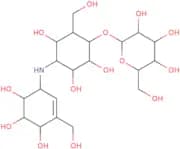
CAS:Validamycin B is an aminoglycoside antibiotic, which is a type of product derived from the bacterium *Streptomyces hygroscopicus*. Its mode of action involves inhibiting the trehalase enzyme, an essential component for fungal cell viability, thereby disrupting the energy supply within the fungal cells. This disruption leads to impediments in fungal growth and proliferation.Fórmula:C20H35NO14Pureza:Min. 95%Peso molecular:513.5 g/mol7-Deazaadenosine, Antibiotic for Culture Media Use Only
CAS:7-Deazaadenosine is a chemical compound used as an antibiotic for culture media, which is a synthetic nucleoside analog derived from adenosine. Its structure is modified by replacing a nitrogen atom in the purine ring with a carbon atom, thus altering its biological interactions. The primary mode of action of 7-Deazaadenosine involves its incorporation into nucleic acids, where it acts as an inhibitor of nucleic acid-processing enzymes. This interference can effectively impede processes like DNA and RNA synthesis.Fórmula:C11H14N4O4Pureza:Min. 97.0 Area-%Peso molecular:266.25 g/molRef: 3D-W-203540
1gA consultar100mgA consultar250mgA consultar500mgA consultar2500mgA consultar-Unit-ggA consultarAztreonam-d6
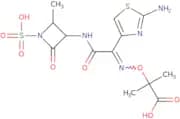
CAS:<p>Aztreonam-d6 is an isotopically labeled antibiotic, which is a synthetic monobactam derived from bacterial fermentation processes with deuterium enrichment. With a beta-lactam structure, Aztreonam-d6 acts by inhibiting bacterial cell wall synthesis, specifically targeting the penicillin-binding protein 3 (PBP3) in Gram-negative bacteria. This action disrupts cell wall construction, leading to cell lysis and death, making it an effective option against certain resistant bacterial strains.</p>Fórmula:C13H17N5O8S2Pureza:Min. 95%Peso molecular:441.5 g/molErythromycin, Antibiotic for Culture Media Use Only
CAS:Erythromycin, Antibiotic for Culture Media Use Only, is a macrolide antibiotic derived from the bacterium *Saccharopolyspora erythraea*. It functions by inhibiting protein synthesis, specifically targeting the 50S ribosomal subunit in susceptible bacteria. This action results in the prevention of peptide chain elongation, effectively halting bacterial growth and proliferation.Fórmula:C37H67NO13Pureza:Min. 93.0 Area-%Peso molecular:733.93 g/molRef: 3D-E-3250
1kgA consultar100gA consultar250gA consultar500gA consultar2500gA consultar-Unit-ggA consultarCefluprenam
CAS:<p>Cefluprenam is a cephalosporin antibiotic, which is a synthetic derivative of the fungus Cephalosporium. It functions by inhibiting bacterial cell wall synthesis, effectively disrupting the peptidoglycan cross-linking process essential for bacterial structural integrity. This inhibition leads to cell lysis and ultimately bacterial death.</p>Fórmula:C20H25FN8O6S2Pureza:Min. 95%Peso molecular:556.60 g/molCefoxitin EP impurity B
Cefoxitin EP impurity B is a chemical reference standard, which is derived from the synthesis and purification processes involved in producing Cefoxitin. As an impurity standard, its primary role is to serve as a benchmark for quality control in pharmaceutical formulations. The mode of action of Cefoxitin EP impurity B involves the structural analysis and quantification of impurity levels, ensuring that the primary pharmaceutical products meet necessary safety and efficacy criteria.Fórmula:C16H17N3O7S2Pureza:Min. 95%Peso molecular:427.45 g/molChlortetracycline-13C-d3 hydrochloride
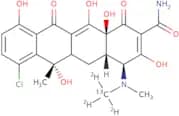
Produto Controlado<p>Chlortetracycline-13C-d3 hydrochloride is a stable isotope-labeled antibiotic with action on bacterial protein synthesis inhibition and is used for research in bacterial resistance and analytical studies.</p>Fórmula:C2113CH21D3Cl2N2O8Cor e Forma:PowderPeso molecular:519.35 g/mol