Antimicrobianos
Subcategorias de "Antimicrobianos"
- Antibióticos(4.132 produtos)
- Antifúngicos(886 produtos)
- Antiparasitários(682 produtos)
- Antivíricos(765 produtos)
Foram encontrados 2438 produtos de "Antimicrobianos"
Plazomicin sulfate
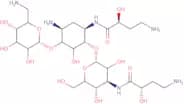
CAS:An aminoglycoside antibiotic. Found applications in treatment of UTi's as it decreases the ability of bacteria to make protein.
Fórmula:C25H48N6O10·XH2SO4Pureza:Min. 85%Cor e Forma:PowderPeso molecular:592.69 g/mol1-Ethyl-6-fluoro-7-(piperazin-1-yl)quinolin-4(1H)-one
CAS:1-Ethyl-6-fluoro-7-(piperazin-1-yl)quinolin-4(1H)-one is a fluoroquinolone antibiotic, which is a synthetic derivative sourced from the quinolone family. This compound functions by targeting bacterial DNA gyrase and topoisomerase IV, which are crucial enzymes involved in the replication and transcription of bacterial DNA. By inhibiting these enzymes, the antibiotic effectively disrupts DNA replication in susceptible bacterial strains, leading to cell death.
Fórmula:C15H18FN3OPureza:Min. 95%Peso molecular:275.32 g/molGanciclovir hydrate
CAS:Ganciclovir hydrate is an antiviral compound, which is a synthetic analogue of 2'-deoxy-guanosine derived from chemical synthesis. It functions through selective inhibition of viral DNA polymerase, specifically by incorporating into the viral DNA during replication. This incorporation leads to chain termination, effectively impeding the synthesis of viral DNA and curbing viral proliferation.
Fórmula:C9H15N5O5Pureza:Min. 95%Peso molecular:273.25 g/molOmomycin
CAS:Omomycin is a novel antibiotic, specifically a macrolide, which is derived from microbial sources, primarily soil-dwelling actinomycetes. Its mode of action involves inhibiting bacterial protein synthesis by binding to the 50S ribosomal subunit. This interaction prevents the translocation of peptides during translation, thereby halting bacterial growth and proliferation.Fórmula:C29H39NO4Pureza:Min. 95%Peso molecular:465.6 g/molSparsomycin
CAS:Sparsomycin is an antibiotic compound, which is a secondary metabolite isolated from Streptomyces species. Its mode of action involves the inhibition of protein synthesis by targeting the large subunit of the ribosome, specifically binding to the 50S subunit in bacterial ribosomes and the 60S subunit in eukaryotic ribosomes. This binding interferes with peptide bond formation, thereby disrupting the translational process essential for protein synthesis.
Fórmula:C13H19N3O5S2Pureza:Min. 95%Peso molecular:361.4 g/molPeplomycin sulfate
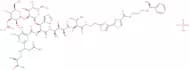
CAS:Peplomycin sulfate is an anticancer antibiotic, which is a derivative of the bleomycin family of glycopeptide antibiotics produced by the bacterium *Streptomyces verticillus*. This antibiotic operates through a mode of action that involves the induction of DNA strand breaks by forming a complex with iron and oxygen, leading to the generation of free radicals. These radicals cleave DNA strands, thereby inhibiting DNA synthesis and inducing apoptosis in cancerous cells.Fórmula:C61H90N18O25S3Pureza:Min. 95%Peso molecular:1,571.67 g/molRifamycin PR-14
CAS:Rifamycin PR-14 is a semi-synthetic antibiotic, which is derived from the naturally occurring antibiotic rifamycin. Originating from a fermentation process involving the bacterium Amycolatopsis mediterranei, rifamycin is modified to create the PR-14 variant to enhance its antibacterial properties and pharmacokinetic profile. This compound functions by inhibiting bacterial DNA-dependent RNA polymerase, effectively halting RNA synthesis and subsequent protein production, leading to bacterial cell death.
Fórmula:C43H54N2O12Pureza:Min. 95%Peso molecular:790.9 g/mol7-Deazaadenosine, Antibiotic for Culture Media Use Only
CAS:7-Deazaadenosine is a chemical compound used as an antibiotic for culture media, which is a synthetic nucleoside analog derived from adenosine. Its structure is modified by replacing a nitrogen atom in the purine ring with a carbon atom, thus altering its biological interactions. The primary mode of action of 7-Deazaadenosine involves its incorporation into nucleic acids, where it acts as an inhibitor of nucleic acid-processing enzymes. This interference can effectively impede processes like DNA and RNA synthesis.Fórmula:C11H14N4O4Pureza:Min. 97.0 Area-%Peso molecular:266.25 g/molRef: 3D-W-203540
1gA consultar100mgA consultar250mgA consultar500mgA consultar2500mgA consultar-Unit-ggA consultar1,3''-Di-HABA kanamycin A
CAS:1,3''-Di-HABA kanamycin A is a chemically modified antibiotic derivative. It is derived from kanamycin A, a well-known aminoglycoside antibiotic that is originally sourced from the bacterium *Streptomyces kanamyceticus*. The modification with 1,3''-Di-HABA alters its pharmacodynamic properties, potentially influencing its specificity and interaction with biological targets.Fórmula:C26H50N6O15Pureza:Min. 95%Peso molecular:686.71 g/molAztreonam-d6
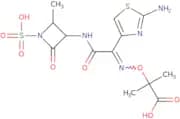
CAS:Aztreonam-d6 is an isotopically labeled antibiotic, which is a synthetic monobactam derived from bacterial fermentation processes with deuterium enrichment. With a beta-lactam structure, Aztreonam-d6 acts by inhibiting bacterial cell wall synthesis, specifically targeting the penicillin-binding protein 3 (PBP3) in Gram-negative bacteria. This action disrupts cell wall construction, leading to cell lysis and death, making it an effective option against certain resistant bacterial strains.Fórmula:C13H17N5O8S2Pureza:Min. 95%Peso molecular:441.5 g/molCephradine monohydrate
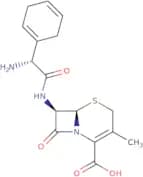
CAS:Cephradine monohydrate is a first-generation cephalosporin antibiotic, which is derived from the fungus Acremonium. It operates by inhibiting bacterial cell wall synthesis, a critical process necessary for bacterial growth and replication. This inhibition occurs through the binding of the antibiotic to penicillin-binding proteins, leading to cell lysis and subsequent bacterial death.
Fórmula:C16H19N3O4S·H2OPureza:Min. 95%Peso molecular:367.42 g/molGatifloxacin hydrochloride
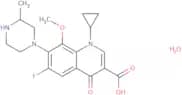
CAS:Gatifloxacin hydrochloride is a synthetic antibacterial agent, which is derived from the fourth-generation fluoroquinolone class of antibiotics. It exhibits a broad-spectrum bactericidal activity by targeting bacterial DNA gyrase and topoisomerase IV enzymes, essential for bacterial DNA replication, transcription, and repair processes.Fórmula:C19H24FN3O5Pureza:Min. 95%Peso molecular:393.4 g/mol3-Phenanthrenebutyric acid
CAS:3-Phenanthrenebutyric acid is a synthetic compound that serves as an analogue of phenanthrene derivatives, commonly utilized in biochemical and pharmacological research. Its source lies in laboratory synthesis, designed to mimic the structural properties of naturally occurring phenanthrene compounds, which are typically found in fossil fuels and plant sources.Fórmula:C18H16O2Pureza:Min. 95%Peso molecular:264.3 g/mol2-Amino-5-(4-hydroxy-3,5-dimethoxybenzyl)pyrimidin-4-ol
CAS:2-Amino-5-(4-hydroxy-3,5-dimethoxybenzyl)pyrimidin-4-ol is a synthetic pyrimidine derivative, which is meticulously engineered through organic synthesis pathways. This compound emerges from a tailored chemical reaction involving the strategic manipulation of a pyrimidine core to incorporate specific functional groups. The unique structural configuration of this molecule allows it to interact with biological macromolecules, primarily through hydrogen bonding and pi-pi interactions, potentially influencing biochemical pathways.
Fórmula:C13H15N3O4Pureza:Min. 95%Peso molecular:277.28 g/molEquisetin
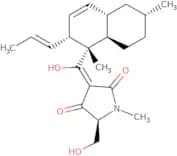
CAS:Equisetin is a secondary metabolite, which is produced by the fungus *Fusarium equiseti*. It operates predominantly through the inhibition of protein synthesis and interference with cellular processes within target organisms. Equisetin exhibits potent antibacterial and antifungal activities primarily by interfering with cell wall synthesis in bacteria and disrupting key pathways in fungi.
Pureza:Min. 95%Cefixime methyl ester
CAS:Cefixime methyl ester is a chemical compound often used in the development of antibiotics, specifically as a semi-synthetic cephalosporin derivative. It is derived from Cephalosporium acremonium, a type of fungus, which serves as a source for the initial cephalosporin structure. The compound functions as a beta-lactam antibiotic by inhibiting bacterial cell wall synthesis. It achieves this through the acylation of penicillin-binding proteins, effectively halting the transpeptidation or cross-linking of the peptidoglycan layer, which is crucial for bacterial survival and division.Fórmula:C17H17N5O7S2Pureza:Min. 95%Peso molecular:467.50 g/molIvermectin 8α-hydroperoxide
**Ivermectin 8α-hydroperoxide** is a derivative of the antiparasitic agent ivermectin, which is synthesized through chemical modification. Ivermectin originally derives from the fermentation products of the bacterium *Streptomyces avermitilis*. The modification to form 8α-hydroperoxide involves the addition of a hydroperoxide group, potentially altering its biological properties.Fórmula:C48H74O16Pureza:Min. 95%Peso molecular:907.09 g/molEthofumesate-2-hydroxy
CAS:Ethofumesate-2-hydroxy is a selective herbicide, which is a synthetic chemical compound with a specific mode of action. This herbicide primarily originates from chemical synthesis processes designed to interfere with plant growth at a biochemical level. The mode of action of Ethofumesate-2-hydroxy involves the inhibition of lipid synthesis, which disrupts cell membrane formation and hampers weed growth. It effectively targets susceptible weed species by inhibiting essential biochemical pathways, thus leading to their decline or death.
Fórmula:C11H14O5SPureza:Min. 95%Peso molecular:258.29 g/molNSC-60339
CAS:NSC-60339 is a synthetic antineoplastic agent derived from laboratory synthesis known for its targeted inhibition of specific cancer cell pathways. The compound operates by interfering with crucial cellular processes such as DNA replication or protein synthesis, depending on its exact mode of action.
Fórmula:C26H23ClN6O2Pureza:Min. 95%Peso molecular:487 g/molThiosildenafil-despiperazine
CAS:Thiosildenafil-despiperazine is a derivative of sildenafil, which is a phosphodiesterase type 5 (PDE5) inhibitor. This compound is synthesized through structural modifications of sildenafil, leading to alterations in its pharmacological profile and potential applications. The source of this derivative involves chemical synthesis techniques to modify the core structure of sildenafil, specifically targeting modifications in the piperazine ring and replacing it with a thioside group to enhance or alter desired effects.
Fórmula:C17H20N4O4S2Pureza:Min. 95%Peso molecular:408.5 g/mol