Antimicrobianos
Os antimicrobianos são agentes que destroem ou inibem o crescimento de microrganismos, incluindo bactérias, vírus, fungos e parasitas. Esses compostos são essenciais na prevenção e tratamento de infecções, desempenhando um papel crucial na medicina, agricultura e indústria alimentícia. Na CymitQuimica, oferecemos uma ampla gama de antimicrobianos de alta qualidade e pureza, adequados para diversas aplicações científicas e industriais. Nosso catálogo inclui antibióticos, antifúngicos, antivirais e desinfetantes, todos projetados para atender às necessidades de pesquisa e desenvolvimento, bem como para aplicações clínicas e de produção. Com nossos produtos, os profissionais podem garantir a eficácia e a segurança no controle de infecções e na proteção da saúde pública.
Subcategorias de "Antimicrobianos"
- Antibióticos(4.130 produtos)
- Antifúngicos(909 produtos)
- Antiparasitários(703 produtos)
- Antivíricos(766 produtos)
Foram encontrados 2424 produtos de "Antimicrobianos"
Ordenar por
Pureza (%)
0
100
|
0
|
50
|
90
|
95
|
100
Alisporivir
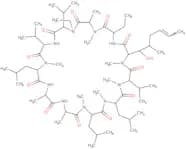
CAS:Alisporivir is an investigational antiviral agent, which is a synthetic derivative of cyclosporine A. It originates from the structural modification of naturally occurring cyclosporines, specifically designed to retain potent antiviral activity while minimizing immunosuppressive effects. Its mode of action involves the inhibition of cyclophilin, an essential cellular protein that facilitates the replication of hepatitis C virus (HCV) by interacting with viral proteins. By binding to cyclophilin, alisporivir disrupts this interaction, effectively halting the viral replication process.Fórmula:C63H113N11O12Pureza:Min. 95%Peso molecular:1,216.6 g/molThiosildenafil-despiperazine
CAS:<p>Thiosildenafil-despiperazine is a derivative of sildenafil, which is a phosphodiesterase type 5 (PDE5) inhibitor. This compound is synthesized through structural modifications of sildenafil, leading to alterations in its pharmacological profile and potential applications. The source of this derivative involves chemical synthesis techniques to modify the core structure of sildenafil, specifically targeting modifications in the piperazine ring and replacing it with a thioside group to enhance or alter desired effects.</p>Fórmula:C17H20N4O4S2Pureza:Min. 95%Peso molecular:408.5 g/molBasic violet 3 d6
CAS:<p>Basic Violet 3 is a synthetic dye, which is derived from coal tar sources with a mechanism of action involving the disruption of cellular components. This compound intercalates with nucleic acids, allowing it to bind to specific cellular structures. Its primary mode of action targets the chromosomal material, leading to colorimetric changes that enhance visualization.</p>Fórmula:C25H30ClN3Pureza:Min. 95%Peso molecular:414 g/molRiamilovir
CAS:<p>Riamilovir is an antiviral agent, which is synthesized chemically, designed to combat the replication of specific viruses. It acts as a nucleoside analogue, interfering with viral nucleic acid synthesis. By incorporating itself into the viral RNA, it effectively hampers the ability of the virus to replicate its genetic material, thereby inhibiting its proliferation within the host.</p>Fórmula:C5H4N6O3SPureza:Min. 95%Peso molecular:228.19 g/molL-Carnitine fumarate
CAS:L-Carnitine fumarate is a compound that functions as a dietary supplement, which is synthesized by combining L-carnitine, an amino acid derivative naturally found in the body, with fumaric acid. This product is primarily sourced from fermentation or chemical synthesis processes to produce L-carnitine, which is then reacted with fumaric acid to form the fumarate salt. This combination enhances the stability and bioavailability of L-carnitine.Fórmula:C7H15NO3·C4H4O4Pureza:Min. 95%Peso molecular:277.27 g/molSPR741
CAS:<p>SPR741 is an antimicrobial potentiator, which is derived from polymyxin B, an antibiotic sourced from the bacterium *Bacillus polymyxa*. Its mode of action involves permeabilizing the outer membrane of Gram-negative bacteria, allowing otherwise impermeable antibiotics to enter the bacterial cell. This potentiation effect significantly enhances the efficacy of co-administered antibiotics against resistant strains.</p>Fórmula:C44H73N13O13Pureza:Min. 95%Peso molecular:992.1 g/mol6-(2-Chlorophenoxy)-5-fluoro-4(3H)-pyrimidinone
CAS:<p>6-(2-Chlorophenoxy)-5-fluoro-4(3H)-pyrimidinone is a heterocyclic compound, which is a synthetic derivative developed for biochemical research. This compound is synthesized through a series of organic reactions, involving halogenation and cyclization techniques, typically conducted in a controlled laboratory setting. Its design incorporates specific structural features, such as the chlorophenoxy and fluoro groups, which are strategically positioned to enhance its binding affinity and specificity.</p>Fórmula:C10H6ClFN2O2Pureza:Min. 95%Peso molecular:240.62 g/molQuinocarcin
CAS:<p>Quinocarcin is an antitumor antibiotic, which is a potent chemical compound derived from the bacterium Streptomyces. This compound exhibits its mode of action through interaction with DNA, where it induces DNA cross-linking and inhibits DNA replication, ultimately leading to cell death. The mechanism makes it particularly effective as a cytotoxic agent against rapidly dividing cancer cells.</p>Fórmula:C18H22N2O4Pureza:Min. 95%Peso molecular:330.4 g/molMagainin 1
CAS:Magainin 1 is a peptide antibiotic, which is sourced from the skin secretions of the African clawed frog, *Xenopus laevis*. It operates through a membranolytic mode of action, whereby it integrates into microbial cell membranes, forming pores and causing cell lysis by disrupting membrane integrity. This mechanism is largely non-specific, making it effective against a broad spectrum of bacteria and fungi.Fórmula:C112H177N29O28SPureza:Min. 95%Peso molecular:2,409.85 g/molTerrelulamide A
CAS:Terrelulamide A is a bioactive compound, specifically a cyclic peptide, which is derived from marine cyanobacteria. The source of Terrelulamide A is primarily marine environments where these cyanobacteria undergo complex biosynthetic processes to produce such metabolites. This compound's mode of action involves the disruption of cellular processes by binding to specific molecular targets that are critical in cell cycle regulation. It exhibits cytotoxic activity, effectively inhibiting cancer cell proliferation through its interaction with those pathways.Fórmula:C20H26N6O7Pureza:Min. 95%Peso molecular:462.5 g/molBiotinyl tobramycin amide
CAS:<p>Biotinyl tobramycin amide is a biotinylated form of the antibiotic tobramycin, which is derived from the actinobacterium Streptomyces tenebrarius. It features a tobramycin core, a potent aminoglycoside antibiotic, chemically linked to biotin. This modification allows for the specific attachment to avidin or streptavidin-labeled probes due to the strong biotin-streptavidin interaction, facilitating various labeling and detection techniques in research.</p>Fórmula:C28H51N7O11SPureza:Min. 95%Peso molecular:693.81 g/molTebuthiuron-N-hydroxymethyl
CAS:Tebuthiuron-N-hydroxymethyl is a derivative herbicide, primarily sourced from synthetic chemical processes. It functions as a broad-spectrum soil-active herbicide with systemic properties. Its mode of action involves the inhibition of photosynthesis by disrupting electron transport in the chloroplasts, thereby stunting plant growth and effectively controlling a wide range of vegetation.Fórmula:C9H16N4O2SPureza:Min. 95%Peso molecular:244.32 g/molFenamiphos-sulfoxide d3 (S-methyl d3)
CAS:<p>Fenamiphos-sulfoxide d3 (S-methyl d3) is a deuterated, labeled pesticide intermediate, which is often utilized in advanced laboratory settings for precise analytical studies. This compound is synthesized as a stable isotope-labeled analog, enabling researchers to conduct sophisticated mass spectrometric analyses. Its mode of action involves serving as a reference or tracer in studies concerning the metabolism and degradation of fenamiphos, a well-known organophosphate pesticide.</p>Fórmula:C13H22NO4PSPureza:Min. 95%Peso molecular:322.38 g/molCefquinome
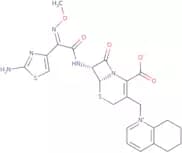
CAS:<p>Cefquinome is a broad-spectrum antibiotic, which is a fourth-generation cephalosporin. It is derived from the β-lactam class of antibiotics and is specifically designed for veterinary applications. Its mode of action involves the inhibition of bacterial cell wall synthesis, leading to cell lysis and death. This action is facilitated through the binding of cefquinome to penicillin-binding proteins, which undermines the structural integrity of bacterial cell walls, proving effective against both Gram-positive and Gram-negative bacteria.</p>Fórmula:C23H24N6O5S2Pureza:Min. 95%Peso molecular:528.61 g/molDesmethyl doxorubicin oxalate
CAS:<p>Desmethyl doxorubicin oxalate is an anthracycline-type chemotherapeutic agent, which is derived from the naturally occurring antibiotic doxorubicin. This compound comprises a desmethylated form of doxorubicin combined with oxalate. Its mode of action involves intercalating DNA strands and inhibiting topoisomerase II, thereby disrupting DNA replication and transcription. This interference leads to the inhibition of cancer cell proliferation and induces apoptosis.</p>Fórmula:C26H27NO11Pureza:Min. 95%Peso molecular:529.49 g/molBPH-1358
CAS:BPH-1358 is a novel synthetic inhibitor, which is derived from a series of advanced chemoinformatics-based design strategies. It functions through the targeted binding to specific cell surface receptors involved in the modulation of immune responses. By blocking these receptors, BPH-1358 effectively alters signaling pathways that are crucial for immune activation and inflammatory responses.Fórmula:C32H28N6O2Pureza:Min. 95%Peso molecular:528.6 g/molN,N′-1,2-Ethanediylbis[3-nitrobenzenesulfonamide]
CAS:N,N′-1,2-Ethanediylbis[3-nitrobenzenesulfonamide] is a chemical compound, specifically a bis-sulfonamide derivative. It is synthesized through the reaction of sulfonamide derivatives with ethylenediamine, resulting in a unique structure characterized by its two nitrobenzenesulfonamide groups linked by an ethylene bridge. As a source, it is obtained through synthetic organic chemistry methods involving nitration and sulfonamidation processes.Fórmula:C14H14N4O8S2Pureza:Min. 95%Peso molecular:430.4 g/molSARS-CoV-IN-1
CAS:SARS-CoV-IN-1 is a small-molecule inhibitor, which is a synthetic compound designed to interfere with viral replication. This compound is sourced through rigorous combinatorial chemistry methods, enabling the precise targeting of viral enzymes. SARS-CoV-IN-1 specifically inhibits the activity of the SARS-CoV-2 main protease (Mpro), an essential enzyme responsible for processing viral polyproteins into functional units necessary for virus replication.Fórmula:C23H16ClFEN3OPureza:Min. 95%Peso molecular:441.69 g/molRifampicin, Antibiotic for Culture Media Use Only
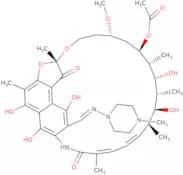
CAS:Rifampicin is a drug that inhibits protein synthesis in bacteria and is used to treat tuberculosis. Rifampicin binds to the beta subunit of the bacterial RNA polymerase, inhibiting transcription and translation. It has been shown to inhibit the acetylcholine receptor function in rats, which may be related to its antituberculosis activity. Histopathological studies have shown that rifampicin inhibits the growth of human tumors in mice, including lung cancer, breast cancer, and leukemia. The drug is also being studied for its potential use in treating Alzheimer's disease. The pharmacokinetics and oral bioavailability of rifampicin have been studied and Rifampicin has been shown to be an effective anti-tuberculosis drug.Fórmula:C43H58N4O12Pureza:Min. 90.0 Area-%Peso molecular:822.94 g/molRef: 3D-R-6000
1gA consultar1kgA consultar100gA consultar250gA consultar500gA consultar-Unit-ggA consultarAcequinocyl-hydroxy
CAS:<p>Acequinocyl-hydroxy is an acaricide, which is a chemical agent used to manage and control mite populations in various agricultural settings. It is derived from a combination of synthetic organic compounds designed specifically to disrupt the normal biological processes of target pests. The mode of action of Acequinocyl-hydroxy involves interference with the mitochondrial electron transport chain of mites, ultimately disrupting cellular respiration and leading to the death of the pest.</p>Fórmula:C22H30O3Pureza:Min. 95%Peso molecular:342.5 g/mol






![N,N′-1,2-Ethanediylbis[3-nitrobenzenesulfonamide]](/_next/image/?url=https%3A%2Fstatic.cymitquimica.com%2Fproducts%2F3D%2Fthumb-webp%2FAAA09662.webp&w=3840&q=75)