Antimicrobianos
Os antimicrobianos são agentes que destroem ou inibem o crescimento de microrganismos, incluindo bactérias, vírus, fungos e parasitas. Esses compostos são essenciais na prevenção e tratamento de infecções, desempenhando um papel crucial na medicina, agricultura e indústria alimentícia. Na CymitQuimica, oferecemos uma ampla gama de antimicrobianos de alta qualidade e pureza, adequados para diversas aplicações científicas e industriais. Nosso catálogo inclui antibióticos, antifúngicos, antivirais e desinfetantes, todos projetados para atender às necessidades de pesquisa e desenvolvimento, bem como para aplicações clínicas e de produção. Com nossos produtos, os profissionais podem garantir a eficácia e a segurança no controle de infecções e na proteção da saúde pública.
Subcategorias de "Antimicrobianos"
- Antibióticos(4.130 produtos)
- Antifúngicos(909 produtos)
- Antiparasitários(703 produtos)
- Antivíricos(766 produtos)
Foram encontrados 2424 produtos de "Antimicrobianos"
Ordenar por
Pureza (%)
0
100
|
0
|
50
|
90
|
95
|
100
WF-3681
CAS:WF-3681 is a chemical compound utilized as an insecticide, which is synthesized from organic compounds through a controlled chemical process. The mode of action for WF-3681 involves the disruption of the neural pathways in target insects, leading to paralysis and eventual death. This mechanism specifically interferes with neurotransmitter functions, ensuring efficacy against a broad range of agricultural pests. The compound's specificity minimizes impacts on non-target organisms and the surrounding environment.Fórmula:C13H12O5Pureza:Min. 95%Peso molecular:248.23 g/molA2ti-2
CAS:A2ti-2 is an advanced metallurgical alloy, which is a synthesized product combining high-grade titanium and aluminum elements. It is engineered through a precise metallurgical process that involves controlled alloying at elevated temperatures, optimizing the atomic structure for superior performance traits. The mode of action for A2ti-2 involves its exceptional ability to maintain stability under extreme temperatures, providing resistance to thermal degradation and mechanical stress.Fórmula:C18H18N4O2SPureza:Min. 95%Peso molecular:354.4 g/molUniconazole
CAS:Uniconazole is a synthetic plant growth regulator, which is derived from triazole compounds. It acts as a potent inhibitor of gibberellin biosynthesis, specifically targeting enzymes involved in gibberellin production. By inhibiting gibberellins, uniconazole reduces internode elongation and alters growth patterns, resulting in shorter, more compact plants.Fórmula:C15H18ClN3OPureza:Min. 95%Peso molecular:291.78 g/mol2'-O-Acetylspiramycin I
CAS:<p>2'-O-Acetylspiramycin I is a semi-synthetic derivative of spiramycin, which is a macrolide antibiotic originally sourced from the bacterium *Streptomyces ambofaciens*. The modification involves the acetylation at the 2'-hydroxyl group of spiramycin, enhancing certain pharmacokinetic properties.</p>Fórmula:C45H76N2O15Pureza:Min. 95%Peso molecular:885.09 g/molFosfomycin calcium monohydrate
CAS:Fosfomycin calcium monohydrate is an antibacterial agent, derived from Streptomyces species. This compound functions as a structural analog of phosphoenolpyruvate, interfering with cell wall synthesis. Specifically, it targets and irreversibly inhibits the enzyme UDP-N-acetylglucosamine enolpyruvyl transferase (MurA), which is critical in the early stages of bacterial cell wall biosynthesis. This inhibition prevents the formation of peptidoglycan, leading to bacterial cell lysis.Fórmula:C3H7CaO5PPureza:Min. 95%Peso molecular:194.14 g/molSultasin
CAS:<p>Sultasin is a combination antibiotic product, which is derived from the synthesis of sulbactam, a β-lactamase inhibitor, and ampicillin, a β-lactam antibiotic. The mode of action of Sultasin involves the inhibition of bacterial cell wall synthesis. Ampicillin works by attaching to penicillin-binding proteins (PBPs) inside the bacterial cell wall, disrupting the final transpeptidation step of peptidoglycan synthesis, which leads to cell lysis. Sulbactam enhances the efficacy of ampicillin by inhibiting β-lactamase enzymes produced by resistant bacterial strains, thereby preventing the degradation of the antibiotic.</p>Fórmula:C25H29N3Na2O9S2Pureza:Min. 95%Peso molecular:625.6 g/molAlbendazole-2-aminosulfoxide
CAS:Albendazole-2-aminosulfoxide is a metabolite of the benzimidazole class of antiparasitic agents, which is derived from the biotransformation of albendazole in the liver. As a potent bioactive compound, its mode of action primarily involves the selective binding to the β-tubulin of parasitic organisms, disrupting the polymerization of microtubules necessary for their cellular structures. This disruption impedes vital processes such as glucose uptake and cellular division, leading to parasite death.Fórmula:C10H13N3OSPureza:Min. 95%Peso molecular:223.3 g/molBO3482
CAS:Please enquire for more information about BO3482 including the price, delivery time and more detailed product information at the technical inquiry form on this pageFórmula:C14H20N2NaO5S2Pureza:Min. 95%Peso molecular:383.4 g/molMitomycin D
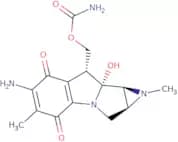
CAS:<p>Mitomycin D is an antibiotic and chemotherapeutic agent known for its ability to inhibit DNA synthesis, making it a potent antitumor agent. It is derived from the bacterium *Streptomyces caespitosus*. Mitomycin D functions as a DNA crosslinking agent by alkylating the DNA strands, which interferes with DNA replication and transcription. This mechanism leads to the cessation of cellular division and ultimately induces apoptosis in rapidly dividing cells.</p>Fórmula:C15H18N4O5Pureza:Min. 95%Peso molecular:334.33 g/molCycloxydim-sulfone-glutaric acid
CAS:<p>Cycloxydim-sulfone-glutaric acid is a synthesized herbicide, which is a derivative of cycloxydim, a cyclohexanedione compound. It is characterized by its ability to effectively inhibit acetyl-CoA carboxylase, an enzyme crucial in fatty acid biosynthesis within plant systems. The source of this compound is primarily through complex chemical synthesis processes that combine its constituent elements to enhance its stability and efficacy as a herbicide.</p>Fórmula:C10H16O6SPureza:Min. 95%Peso molecular:264.3 g/molAclacinomycin HCl
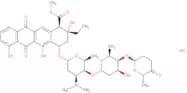
CAS:<p>Aclacinomycin HCl is a cytotoxic antibiotic that inhibits the growth of tumor cells. It has been shown to induce apoptosis in human leukemia cells by altering the transmembrane potential and inhibiting cell proliferation. Aclacinomycin HCl also induces DNA damage response, which leads to caspase activities and cell death. This drug is highly selective for tumor cells, with no effect on normal cells. It has been shown to be effective against primary liver cancer in animal models, as well as developmental disorders such as autism spectrum disorder (ASD).</p>Fórmula:C42H53NO15·HClPureza:Min. 95%Cor e Forma:Orange PowderPeso molecular:848.33 g/molAcivicin hydrochloride
CAS:Acivicin hydrochloride is a synthetic compound that acts as a glutamine antagonist, sourced from microbial fermentation processes. It functions primarily through the inhibition of glutamine-utilizing enzymes, such as gamma-glutamyl transferase and carbamoyl phosphate synthetase, which play critical roles in nucleotide biosynthesis and other metabolic pathways. By disrupting these biochemical processes, Acivicin hydrochloride can hinder the proliferation of rapidly dividing cells, displaying potential antitumor properties.Fórmula:C5H8Cl2N2O3Pureza:Min. 95%Peso molecular:215.03 g/molNeticonazole
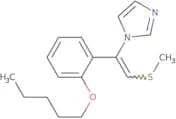
CAS:<p>Neticonazole is a synthetic antifungal compound, which is derived from pharmaceutical chemical synthesis. It functions primarily as an imidazole derivative, disrupting the synthesis of ergosterol, a crucial component of fungal cell membranes. This interference leads to increased cell membrane permeability, ultimately causing cell lysis and death of the fungal organism.</p>Fórmula:C17H22N2OSPureza:Min. 95%Peso molecular:302.4 g/molPropicillin
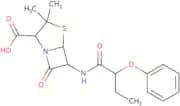
CAS:<p>Propicillin is a broad-spectrum antimicrobial agent that has been shown to be effective against both gram-positive and gram-negative bacteria. Propicillin belongs to the group of nonsteroidal anti-inflammatory drugs. It is a particle that is soluble in water and lipid. Propicillin does not inhibit the growth of Streptococcus species, but does cause cell lysis by attaching to fatty acids on the surface of cells. Propicillin also inhibits microbial infection by inhibiting enzymes involved in fatty acid synthesis. The human serum pharmacokinetics of propicillin have been studied and found to be similar to those of ampicillin, which allows for use as an intravenous drug in humans. The pharmacokinetics, biochemical properties, and cellular mechanisms are complex, but it is known that propicillin binds to bacterial ribosomes and inhibits protein synthesis by binding to the peptidyl transferase centre on the ribosome.</p>Fórmula:C18H22N2O5SPureza:Min. 95%Peso molecular:378.4 g/molGatifloxacin hydrate
CAS:<p>Gatifloxacin hydrate is a fluoroquinolone antibiotic, which is synthesized chemically. It exerts its bactericidal effects primarily by inhibiting bacterial DNA gyrase and topoisomerase IV. These enzymes are crucial for bacterial DNA replication, transcription, and repair. By preventing these processes, gatifloxacin effectively halts bacterial cell division, ultimately leading to cell death.</p>Fórmula:C19H24FN3O5Pureza:Min. 95%Peso molecular:393.4 g/molPropiconazole
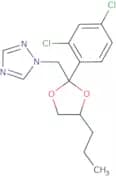
CAS:<p>Propiconazole is a triazole fungicide with action on fungal cell membranes by inhibiting ergosterol biosynthesis and is used for controlling fungal diseases in crops and turf.</p>Fórmula:C15H17Cl2N3O2Pureza:Min. 95%Cor e Forma:Clear LiquidPeso molecular:342.22 g/molBleomycin HCl
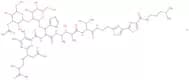
CAS:Inducer of DNA strand breaks; glycopeptide antibiotic, anti-neoplasticFórmula:C50H71N16O21S2R•(HCl)xPureza:Min. 95%Cor e Forma:White To Off-White SolidDimethenamid-oxalamid
CAS:<p>Dimethenamid-oxalamid is a pre-emergent herbicide, which is a synthetic compound developed for agricultural use. It is derived from research focused on improving crop protection through chemical innovation. The mode of action involves inhibiting the synthesis of very long-chain fatty acids (VLCFAs) in weeds, disrupting their cell division and growth processes, ultimately leading to the prevention of weed emergence.</p>Fórmula:C12H17NO4SPureza:Min. 95%Peso molecular:271.33 g/mol7-epi-Clindamycin
CAS:<p>7-epi-Clindamycin is a clindamycin derivative, which is a semisynthetic antibiotic derived from the bacterium *Streptomyces lincolnensis*. Its mode of action involves binding to the 50S subunit of the bacterial ribosome, thereby inhibiting protein synthesis. This results in the suppression of bacterial growth, making it effective against certain Gram-positive bacteria and anaerobic species.</p>Fórmula:C18H34Cl2N2O5SPureza:Min. 95%Cor e Forma:White To Off-White SolidPeso molecular:461.44 g/molFaldaprevir
CAS:Hepatitis C virus protease inhibitorFórmula:C40H49BrN6O9SPureza:Min. 95%Cor e Forma:White PowderPeso molecular:869.82 g/mol