


Antimicrobianos
Subcategorias de "Antimicrobianos"
- Antibióticos(4.132 produtos)
- Antifúngicos(886 produtos)
- Antiparasitários(682 produtos)
- Antivíricos(765 produtos)
Foram encontrados 2438 produtos de "Antimicrobianos"
Cadazolid
CAS:Cadazolid is an investigational antibiotic, which is a synthetic oxazolidinone-cephalosporin hybrid, with a novel mechanism of action. It is engineered to disrupt bacterial protein synthesis by binding to the 50S ribosomal subunit, while also exerting strong bactericidal effects. This dual-action approach combines attributes of both linezolid and cephalosporins to target and disrupt essential bacterial processes.Fórmula:C29H29F2N3O8Pureza:Min. 95%Peso molecular:585.55 g/mol2'-Deoxycoformycin
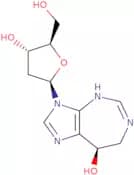
CAS:2'-Deoxycoformycin is a potent adenosine deaminase inhibitor, which is derived from the fermentation of Streptomyces antibioticus, a species of actinomycete bacteria. This compound acts by specifically inhibiting the enzyme adenosine deaminase, leading to an accumulation of toxic deoxyadenosine triphosphate in lymphocytes. This buildup hinders DNA synthesis, effectively suppressing the proliferation of lymphoid cells.Fórmula:C11H16N4O4Pureza:Min. 95%Peso molecular:268.27 g/molPirodavir
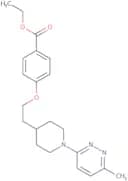
CAS:Pirodavir is a potent antiviral compound, which is a synthetic molecule developed through pharmaceutical research. It acts by targeting the rhinovirus, the most common viral infectious agent in humans, primarily responsible for the common cold. Pirodavir's mode of action involves binding to the viral capsid, thereby preventing the uncoating process essential for viral replication.Fórmula:C21H27N3O3Pureza:Min. 95%Peso molecular:369.46 g/molAlisporivir
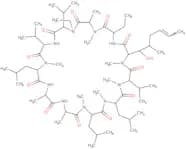
CAS:Alisporivir is an investigational antiviral agent, which is a synthetic derivative of cyclosporine A. It originates from the structural modification of naturally occurring cyclosporines, specifically designed to retain potent antiviral activity while minimizing immunosuppressive effects. Its mode of action involves the inhibition of cyclophilin, an essential cellular protein that facilitates the replication of hepatitis C virus (HCV) by interacting with viral proteins. By binding to cyclophilin, alisporivir disrupts this interaction, effectively halting the viral replication process.Fórmula:C63H113N11O12Pureza:Min. 95%Peso molecular:1,216.6 g/molDermaseptin
CAS:Dermaseptin is a type of antimicrobial peptide, which is sourced predominantly from the skin secretions of frogs, specifically from the Phyllomedusinae subfamily. These peptides function by disrupting the microbial cell membranes through their amphipathic and cationic nature, leading to cell lysis and death. Dermaseptins exhibit a broad spectrum of antimicrobial activity, including action against bacteria, fungi, protozoa, and certain viruses, making them of significant interest in biomedical research.
Fórmula:C152H257N43O44S2Pureza:Min. 95%Peso molecular:3,455.1 g/molBasic violet 3 d6
CAS:Basic Violet 3 is a synthetic dye, which is derived from coal tar sources with a mechanism of action involving the disruption of cellular components. This compound intercalates with nucleic acids, allowing it to bind to specific cellular structures. Its primary mode of action targets the chromosomal material, leading to colorimetric changes that enhance visualization.
Fórmula:C25H30ClN3Pureza:Min. 95%Peso molecular:414 g/molL-Carnitine fumarate
CAS:L-Carnitine fumarate is a compound that functions as a dietary supplement, which is synthesized by combining L-carnitine, an amino acid derivative naturally found in the body, with fumaric acid. This product is primarily sourced from fermentation or chemical synthesis processes to produce L-carnitine, which is then reacted with fumaric acid to form the fumarate salt. This combination enhances the stability and bioavailability of L-carnitine.Fórmula:C7H15NO3·C4H4O4Pureza:Min. 95%Peso molecular:277.27 g/mol6'-N-Cbz-kanamycin A
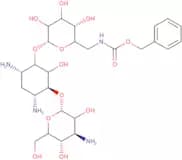
CAS:6'-N-Cbz-kanamycin A is a semi-synthetic aminoglycoside antibiotic derivative, specifically a Cbz (carbobenzyloxy) protected form of kanamycin A. It is derived from the natural product kanamycin, which is an antibiotic obtained from the bacterium *Streptomyces kanamyceticus*. The modification involves the introduction of a protective Cbz group at the 6' position, which can improve solubility, stability, or enable further chemical modifications.
Fórmula:C26H42N4O13Pureza:Min. 95%Peso molecular:618.63 g/molPeramivir
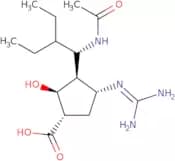
CAS:Selective and potent inhibitor of sialidases (neuraminidases) in influenza A and B viruses. The compound binds tightly to the viral neuraminidase active site in late stages of viral life-cycle. It inhibits shedding sialic acids from host cell surface glycans, which interact with viral hemagglutinin, and consequently prevents release of new viral particles from the host cell surface.
Fórmula:C15H28N4O4Pureza:Min. 95%Cor e Forma:PowderPeso molecular:328.41 g/mol(-)-Actinonin
CAS:Antibiotic peptide; inhibitor of aminopeptidase M and leucine aminopeptidaseFórmula:C19H35N3O5Pureza:Min. 95%Peso molecular:385.5 g/molMagainin 1
CAS:Magainin 1 is a peptide antibiotic, which is sourced from the skin secretions of the African clawed frog, *Xenopus laevis*. It operates through a membranolytic mode of action, whereby it integrates into microbial cell membranes, forming pores and causing cell lysis by disrupting membrane integrity. This mechanism is largely non-specific, making it effective against a broad spectrum of bacteria and fungi.Fórmula:C112H177N29O28SPureza:Min. 95%Peso molecular:2,409.85 g/molTerrelulamide A
CAS:Terrelulamide A is a bioactive compound, specifically a cyclic peptide, which is derived from marine cyanobacteria. The source of Terrelulamide A is primarily marine environments where these cyanobacteria undergo complex biosynthetic processes to produce such metabolites. This compound's mode of action involves the disruption of cellular processes by binding to specific molecular targets that are critical in cell cycle regulation. It exhibits cytotoxic activity, effectively inhibiting cancer cell proliferation through its interaction with those pathways.Fórmula:C20H26N6O7Pureza:Min. 95%Peso molecular:462.5 g/molCloxacillin benzathine
CAS:Cloxacillin benzathine is a beta-lactam antibiotic, which is synthesized from Penicillium fungi-derived penicillins. It acts by inhibiting bacterial cell wall synthesis. The mechanism involves the irreversible inhibition of penicillin-binding proteins (PBPs). This disruption in the bacterial cell wall structure ultimately leads to cell lysis and death.Fórmula:C54H56Cl2N8O10S2Pureza:Min. 95 Area-%Cor e Forma:White PowderPeso molecular:1,112.11 g/molTenatoprazole sodium
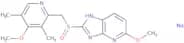
CAS:Tenatoprazole sodium is a proton pump inhibitor, which is a synthetic pharmaceutical compound designed to selectively inhibit the hydrogen-potassium ATPase enzyme in the gastric parietal cells. This enzyme is essential for the final step of gastric acid production. Originating from organic chemical synthesis processes, Tenatoprazole sodium features a unique imidazopyridine structure, distinguishing it from other members of the proton pump inhibitor class such as omeprazole, which belongs to the benzimidazole family.Fórmula:C16H18N4NaO3SPureza:Min. 95%Peso molecular:369.4 g/molArbekacin sulfate
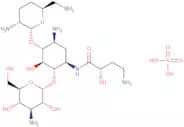
CAS:Inhibitor of DNA replication; aminoglycoside classFórmula:C22H44N6O10·xH2SO4Pureza:Min. 95%Cor e Forma:White PowderPeso molecular:650.7 g/molMorinamide hydrochloride
CAS:Morinamide hydrochloride is a synthetic antitubercular agent, which is derived from chemical synthesis processes. Its mode of action involves disrupting the synthesis of mycolic acids in the cell walls of Mycobacterium tuberculosis, thereby inhibiting bacterial growth and proliferation. The compound serves primarily as an antimicrobial agent targeting tuberculosis infections. In a laboratory setting, Morinamide hydrochloride is utilized in the study of bacterial resistance mechanisms and the development of novel therapeutic agents. Its specific action on mycolic acid synthesis makes it a valuable tool for researchers aiming to elucidate the pathways involved in mycobacterial cell wall construction and to develop more targeted chemotherapeutic interventions. Due to its crucial role, understanding the mechanisms and efficacy of Morinamide hydrochloride can greatly benefit scientific efforts in combating tuberculosis, especially in light of increasing drug resistance.
Fórmula:C10H15ClN4O2Pureza:Min. 95%Peso molecular:258.7 g/molLysostaphin, from staphylococcus staphylolyticus
CAS:Lysostaphin, from Staphylococcus staphylolyticus is a zinc metalloenzyme with action on bacterial cell walls by cleaving polyglycine cross-links and is used for treating staphylococcal infections and in research applications.Pureza:Min. 95%Cor e Forma:PowderNifurquinazol
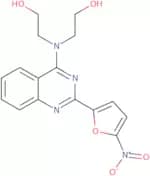
CAS:Nifurquinazol is an antimicrobial agent, which is a synthetic compound derived from the nitrofuran class of antibiotics. Its mode of action involves inhibition of bacterial enzymes critical for DNA and protein synthesis, thereby interfering with microbial cell replication and survival.
Fórmula:C16H16N4O5Pureza:Min. 95%Peso molecular:344.32 g/molN,N′-1,2-Ethanediylbis[3-nitrobenzenesulfonamide]
CAS:N,N′-1,2-Ethanediylbis[3-nitrobenzenesulfonamide] is a chemical compound, specifically a bis-sulfonamide derivative. It is synthesized through the reaction of sulfonamide derivatives with ethylenediamine, resulting in a unique structure characterized by its two nitrobenzenesulfonamide groups linked by an ethylene bridge. As a source, it is obtained through synthetic organic chemistry methods involving nitration and sulfonamidation processes.Fórmula:C14H14N4O8S2Pureza:Min. 95%Peso molecular:430.4 g/molMtbHU-IN-1
CAS:MtbHU-IN-1 is a small-molecule inhibitor designed specifically for targeting the HU protein in Mycobacterium tuberculosis. This compound is derived through rational drug design and computational modeling efforts, exploiting the vulnerabilities of the bacterial DNA-binding proteins. Its mode of action involves binding to the HU protein, inhibiting its function, which is crucial for DNA structuring and stability within the bacterial cell. By disrupting HU protein function, MtbHU-IN-1 impairs bacterial chromosomal architecture, leading to an inability to replicate and ultimately cell death.Fórmula:C44H36N4O12S2Pureza:Min. 95%Peso molecular:876.9 g/mol








![N,N′-1,2-Ethanediylbis[3-nitrobenzenesulfonamide]](/_next/image/?url=https%3A%2Fstatic.cymitquimica.com%2Fproducts%2F3D%2Fthumb-webp%2FAAA09662.webp&w=3840&q=75)
