Antimicrobianos
Os antimicrobianos são agentes que destroem ou inibem o crescimento de microrganismos, incluindo bactérias, vírus, fungos e parasitas. Esses compostos são essenciais na prevenção e tratamento de infecções, desempenhando um papel crucial na medicina, agricultura e indústria alimentícia. Na CymitQuimica, oferecemos uma ampla gama de antimicrobianos de alta qualidade e pureza, adequados para diversas aplicações científicas e industriais. Nosso catálogo inclui antibióticos, antifúngicos, antivirais e desinfetantes, todos projetados para atender às necessidades de pesquisa e desenvolvimento, bem como para aplicações clínicas e de produção. Com nossos produtos, os profissionais podem garantir a eficácia e a segurança no controle de infecções e na proteção da saúde pública.
Subcategorias de "Antimicrobianos"
- Antibióticos(4.126 produtos)
- Antifúngicos(874 produtos)
- Antiparasitários(699 produtos)
- Antivíricos(764 produtos)
Foram encontrados 2423 produtos de "Antimicrobianos"
Ordenar por
Pureza (%)
0
100
|
0
|
50
|
90
|
95
|
100
Validamycin D
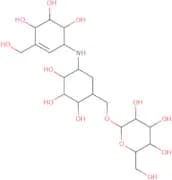
CAS:<p>Validamycin D is an antifungal antibiotic produced by the fermentation of certain Streptomyces species. This compound acts by inhibiting the synthesis of trehalose, a crucial component in the cell structure and stress response of fungi. By disrupting trehalose production, Validamycin D effectively impairs the growth and viability of fungal cells, making it a potent agent in the management of fungal pathogens.</p>Fórmula:C20H35NO13Pureza:Min. 95%Peso molecular:497.5 g/molBonducellpin D
CAS:Bonducellpin D is an experimental bioactive compound derived from the seeds of Caesalpinia bonduc, a tropical plant species known for its rich phytochemical composition. This product is of natural botanical origin, harnessed through advanced extraction and purification techniques to ensure its high purity and activity.Fórmula:C22H28O7Pureza:Min. 95%Peso molecular:404.5 g/molRiamilovir
CAS:<p>Riamilovir is an antiviral agent, which is synthesized chemically, designed to combat the replication of specific viruses. It acts as a nucleoside analogue, interfering with viral nucleic acid synthesis. By incorporating itself into the viral RNA, it effectively hampers the ability of the virus to replicate its genetic material, thereby inhibiting its proliferation within the host.</p>Fórmula:C5H4N6O3SPureza:Min. 95%Peso molecular:228.19 g/molTebuthiuron-N-hydroxymethyl
CAS:<p>Tebuthiuron-N-hydroxymethyl is a derivative herbicide, primarily sourced from synthetic chemical processes. It functions as a broad-spectrum soil-active herbicide with systemic properties. Its mode of action involves the inhibition of photosynthesis by disrupting electron transport in the chloroplasts, thereby stunting plant growth and effectively controlling a wide range of vegetation.</p>Fórmula:C9H16N4O2SPureza:Min. 95%Peso molecular:244.32 g/molAmidosulfuron-o-desmethyl
CAS:<p>Amidosulfuron-o-desmethyl is a metabolite derivative, which is studied primarily as a secondary product originating from the breakdown of the herbicide amidosulfuron. Synthesized through microbial and environmental degradation processes, it is part of the sulfonylurea class of compounds. The mode of action involves inhibition of the plant enzyme acetolactate synthase (ALS), leading to disrupted synthesis of essential branched-chain amino acids, ultimately affecting plant growth and survival.</p>Fórmula:C8H13N5O7S2Pureza:Min. 95%Peso molecular:355.4 g/molAspterric acid
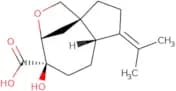
CAS:<p>Plant growth regulator</p>Fórmula:C15H22O4Pureza:Min. 95%Peso molecular:266.33 g/molTropodithietic acid
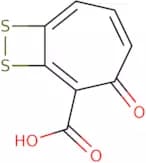
CAS:<p>Tropodithietic acid is a bioactive compound, which is a potent antibacterial agent derived from certain marine bacteria, including the genus Phaeobacter. This antibiotic is characterized by its ability to disrupt quorum sensing, a mechanism that bacteria use for communication and coordination of group behaviors, including virulence. By interfering with this process, tropodithietic acid impedes bacterial colonization and biofilm formation, effectively inhibiting pathogenic activity.</p>Pureza:Min. 95%Tri-O-benzyl FR 900098
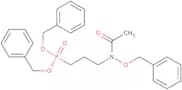
CAS:<p>Tri-O-benzyl FR 900098 is a chemical compound, often referenced in biochemical research contexts. It is a synthetic derivative that originates from complex chemical synthesis, involving multiple benzylation steps to modify the original molecular framework. This structural transformation lends the compound unique chemical properties.</p>Fórmula:C26H30NO5PPureza:Min. 95%Peso molecular:467.49 g/molN4-Methyl-5-(3,4,5-trimethoxybenzyl)-pyrimidine-2,4-diamine
CAS:<p>N4-Methyl-5-(3,4,5-trimethoxybenzyl)-pyrimidine-2,4-diamine is a synthetic organic compound, classified as an antimicrobial agent. This compound is developed through chemical synthesis processes, derived from pyrimidine analogs, and is commonly used in medicinal chemistry and pharmacology research. It operates by inhibiting key enzymes involved in the folic acid pathway, crucial for bacterial growth and proliferation. By targeting this pathway, the compound prevents nucleic acid synthesis, ultimately leading to bacterial cell death.</p>Fórmula:C15H20N4O3Pureza:Min. 95%Peso molecular:304.34 g/mol28-Epirapamycin
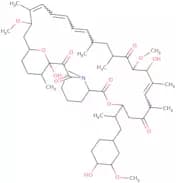
CAS:28-Epirapamycin is a semisynthetic derivative of the macrolide antibiotic rapamycin, which is derived from the bacterium *Streptomyces hygroscopicus*. This compound functions primarily as an mTOR (mechanistic target of rapamycin) inhibitor. The mTOR pathway is crucial for regulating cell growth, proliferation, and survival by integrating signals from nutrients, growth factors, and cellular energy status.Fórmula:C51H79NO13Pureza:Min. 95%Peso molecular:914.2 g/molGramicidin
CAS:<p>Gramicidin is an antibiotic, which is derived from soil bacteria of the genus Bacillus, specifically Bacillus brevis. This polypeptide antibiotic exerts its antibacterial effects by disrupting the cell membranes of susceptible bacteria. Gramicidin forms channels in the phospholipid bilayers of bacterial cell membranes, leading to uncontrolled cation fluxes, which ultimately results in cell death. This mechanism is particularly effective against Gram-positive bacteria due to their specific cell wall structure.</p>Fórmula:C99H140N20O17Pureza:A1.A2.B1.C1 And C2) 95%Cor e Forma:PowderPeso molecular:1,882.3 g/molPyrenophorin
CAS:<p>Pyrenophorin is a polyketide metabolite, which is derived from certain fungi, specifically from the genus Pyrenophora. This compound demonstrates its biological efficacy through its unique mode of action as an antimicrobial agent, interfering with cellular processes in target microorganisms, leading to their inhibition or death.</p>Fórmula:C16H20O6Pureza:Min. 95%Peso molecular:308.33 g/molAcephate d3
CAS:<p>Acephate d3 is an isotopically labeled organophosphorus insecticide, which is a synthetic chemical compound used primarily for its insecticidal properties. It is derived by incorporating deuterium, a stable hydrogen isotope, into the molecular structure of acephate. The inclusion of deuterium isotopes is instrumental in tracing and studying the biochemical pathways and metabolic degradation of acephate within target organisms and ecosystems.</p>Fórmula:C4H10NO3PSPureza:Min. 95%Peso molecular:186.19 g/molAtherosperminine
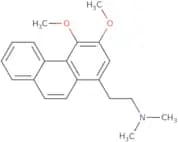
CAS:Produto Controlado<p>Atherosperminine is an alkaloid compound, which is a bioactive chemical derived from plants. Specifically, it is sourced from members of the Lauraceae family, such as Atherosperma moschatum. This compound exhibits a range of pharmacological activities that are of significant interest to researchers. The mode of action of atherosperminine involves interactions with various biological pathways, potentially affecting physiological processes and exhibiting therapeutic effects.</p>Fórmula:C20H23NO2Pureza:Min. 95%Peso molecular:309.4 g/molNeticonazole hydrochloride
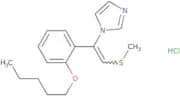
CAS:<p>Neticonazole hydrochloride is an antifungal agent, which is a synthetic imidazole derivative with potent antifungal properties. It is synthesized through a multi-step chemical process in a laboratory setting, designed to enhance its efficacy and stability. Its mode of action involves the inhibition of ergosterol synthesis, a critical component of fungal cell membranes. By hindering this pathway, Neticonazole hydrochloride compromises the integrity and function of the fungal cell membrane, ultimately leading to cell death.</p>Fórmula:C17H23ClN2OSPureza:Min. 95%Peso molecular:338.9 g/molPenciclovir diacetate
CAS:<p>Penciclovir diacetate is an antiviral compound, which is synthesized as a prodrug derivative of penciclovir. This compound originates from chemical modification processes designed to improve the pharmacokinetic properties of its active metabolite. Once administered, penciclovir diacetate undergoes in vivo conversion to penciclovir, an active nucleoside analog. The mode of action involves selective inhibition of viral DNA polymerase after being phosphorylated to its triphosphate form, thereby impeding viral DNA synthesis and replication.</p>Fórmula:C14H19N5O5Pureza:Min. 95%Peso molecular:337.33 g/molPhenamacril
CAS:<p>Phenamacril is a synthetic fungicide, which is derived from chemical synthesis processes with a unique mode of action that targets fungal signaling pathways. It operates by inhibiting the myosin-5 ATPase activities within filamentous fungi, disrupting key cellular functions and effectively halting fungal growth.</p>Fórmula:C12H12N2O2Pureza:Min. 95%Peso molecular:216.24 g/mol(E)-Cefotaxime
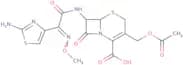
CAS:<p>(E)-Cefotaxime is a third-generation cephalosporin antibiotic, which is derived from the actinomycete mold Acremonium. Its mode of action involves inhibiting bacterial cell wall synthesis by binding to penicillin-binding proteins, leading to cell lysis and death. This mechanism is highly effective against a wide range of Gram-positive and Gram-negative bacteria, including strains resistant to earlier cephalosporins and penicillins.</p>Fórmula:C16H17N5O7S2Pureza:Min. 95%Peso molecular:455.5 g/molTriadimenol-tert-butylhydroxy
CAS:<p>Triadimenol-tert-butylhydroxy is a systemic fungicide, originating from synthetic chemical processes, characterized by its ability to inhibit fungal sterol biosynthesis. This sterol biosynthesis disruption occurs through the demethylation of lanosterol or 24-methylene dihydrolanosterol, which impedes the production of ergosterol, a crucial component in fungal cell membranes. The inhibition results in disrupted cell membrane integrity and impaired fungal growth, leading to effective control over a range of plant-pathogenic fungi.</p>Fórmula:C14H18ClN3O3Pureza:Min. 95%Peso molecular:311.76 g/molHBV-IN-4
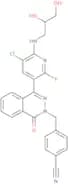
CAS:<p>HBV-IN-4 is an antiviral compound that serves as a potent and selective inhibitor of hepatitis B virus (HBV). It is derived from chemical synthesis with a focus on targeting the viral replication machinery. The mode of action involves interrupting the HBV lifecycle by inhibiting the functioning of viral polymerase, thereby preventing the synthesis of viral DNA and subsequent viral propagation.</p>Fórmula:C24H19ClFN5O3Pureza:Min. 95%Peso molecular:479.9 g/mol