Antimicrobianos
Os antimicrobianos são agentes que destroem ou inibem o crescimento de microrganismos, incluindo bactérias, vírus, fungos e parasitas. Esses compostos são essenciais na prevenção e tratamento de infecções, desempenhando um papel crucial na medicina, agricultura e indústria alimentícia. Na CymitQuimica, oferecemos uma ampla gama de antimicrobianos de alta qualidade e pureza, adequados para diversas aplicações científicas e industriais. Nosso catálogo inclui antibióticos, antifúngicos, antivirais e desinfetantes, todos projetados para atender às necessidades de pesquisa e desenvolvimento, bem como para aplicações clínicas e de produção. Com nossos produtos, os profissionais podem garantir a eficácia e a segurança no controle de infecções e na proteção da saúde pública.
Subcategorias de "Antimicrobianos"
- Antibióticos(4.126 produtos)
- Antifúngicos(874 produtos)
- Antiparasitários(699 produtos)
- Antivíricos(764 produtos)
Foram encontrados 2423 produtos de "Antimicrobianos"
Ordenar por
Pureza (%)
0
100
|
0
|
50
|
90
|
95
|
100
Levomecol
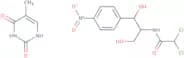
CAS:<p>Levomekol is a topical antibiotic ointment, which is a synthesized pharmaceutical product with antibacterial and anti-inflammatory properties. It contains chloramphenicol, a broad-spectrum antibiotic, and methyluracil, which promotes tissue repair and regeneration. The mode of action involves the inhibition of bacterial protein synthesis by binding to the 50S ribosomal subunit of susceptible microorganisms, effectively curbing bacterial growth and proliferation. Concurrently, methyluracil stimulates leukocyte activity and enhances the healing process by promoting cellular regeneration and collagen production.</p>Fórmula:C16H18Cl2N4O7Pureza:Min. 95%Peso molecular:449.2 g/mol8-Methylpyrido[2,3-d]pyridazin-5(6H)-one
CAS:<p>8-Methylpyrido[2,3-d]pyridazin-5(6H)-one is a heterocyclic compound used in the field of medicinal chemistry. This compound is synthesized through complex organic reactions involving pyridazine and pyridine derivatives. As a molecule, its primary mode of action involves interactions with specific biochemical pathways, potentially influencing enzymatic activity or receptor bindings, leading to modulation of biological activities.</p>Fórmula:C8H7N3OPureza:Min. 95%Peso molecular:161.16 g/molDiclobutrazol
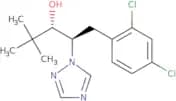
CAS:<p>Diclobutrazol is a plant growth regulator, a synthetic compound primarily derived from chemical synthesis methods. This compound acts by inhibiting the biosynthesis of gibberellins, which are plant hormones that regulate various aspects of growth and development. The inhibition of gibberellin biosynthesis results in reduced plant elongation, leading to more compact growth forms.</p>Fórmula:C15H19Cl2N3OPureza:Min. 95%Peso molecular:328.24 g/molValidamycin E
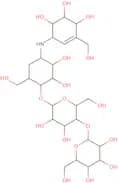
CAS:<p>Validamycin E is an antifungal antibiotic, which is a secondary metabolite derived from the actinobacterium Streptomyces hygroscopicus. Its mode of action involves the inhibition of trehalase, an enzyme crucial for the hydrolysis of trehalose into glucose, disrupting essential energy pathways in fungi. By inhibiting trehalase, Validamycin E effectively interferes with the growth and development of fungal pathogens.</p>Fórmula:C26H45NO18Pureza:Min. 95%Peso molecular:659.6 g/molPirlimycin HCl
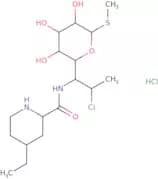
CAS:<p>Pirlimycin HCl is an antibacterial product, which is a semi-synthetic derivative of the natural antibiotic lincomycin produced by Streptomyces lincolnensis. Its mode of action involves the inhibition of bacterial protein synthesis by binding to the 50S ribosomal subunit, thereby preventing the elongation of peptide chains. This action is particularly effective against Gram-positive bacteria, including Staphylococcus and Streptococcus species.</p>Fórmula:C17H31ClN2O5S·HClPureza:Min. 95%Cor e Forma:White PowderPeso molecular:447.42 g/molIonomycin
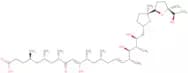
CAS:<p>Ionomycin is an ionophore compound with a mode of action that facilitates calcium ion transport across cell membranes. It is used in research to study calcium signaling and T-cell activation.</p>Fórmula:C41H72O9Pureza:Min. 98 Area-%Cor e Forma:PowderPeso molecular:709.01 g/molPseudomonic acid F
CAS:Pseudomonic acid F is a naturally occurring secondary metabolite, which is derived from the bacterium *Pseudomonas fluorescens*. Its mode of action involves the inhibition of bacterial protein synthesis by targeting the bacterial isoleucyl-tRNA synthetase enzyme. This inhibition disrupts the addition of isoleucine to the growing polypeptide chain, effectively impeding bacterial growth and proliferation.Fórmula:C24H40O9Pureza:Min. 95%Peso molecular:472.60 g/molABT-072
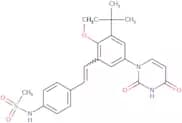
CAS:<p>ABT-072 is a direct-acting antiviral (DAA) agent, specifically designed as an inhibitor of the hepatitis C virus (HCV) NS5B polymerase. This compound originates from advanced pharmaceutical research and development efforts aimed at targeting viral replication mechanisms. Being an NS5B polymerase inhibitor, ABT-072 functions by interfering with the viral RNA-dependent RNA polymerase. This enzyme plays a critical role in the replication cycle of the hepatitis C virus, facilitating the synthesis of new viral RNA strands. By inhibiting this enzyme, ABT-072 effectively halts viral replication.</p>Fórmula:C24H27N3O5SPureza:Min. 95%Peso molecular:469.6 g/molCPFX2090
CAS:<p>CPFX2090 is a sophisticated software platform designed for advanced data analytics and visualization, which is developed by a team of computational scientists utilizing cutting-edge algorithms and machine learning techniques. It operates through a dynamic interface that enables automated data processing, multidimensional analysis, and real-time visualization. The platform's mode of action involves ingesting large datasets, performing parallel computations, and visualizing results with interactive graphical tools.</p>Fórmula:C28H28ClNO6Pureza:Min. 95%Peso molecular:510 g/molTizoxanide - 98%
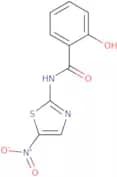
CAS:<p>Anti-parasitic; pyruvate ferredoxin oxidoreductase inhibitor</p>Fórmula:C10H7N3O4SPureza:Min. 95%Peso molecular:265.01573Vapendavir diphosphate
CAS:<p>Vapendavir diphosphate is an antiviral compound, which is a synthesized small molecule with selective activity targeting picornaviruses. This compound is derived from rigorous medicinal chemistry efforts focusing on the inhibition of viral replication. Vapendavir diphosphate functions by binding to a specific site on the viral capsid, thereby inhibiting the uncoating process essential for viral RNA release into the host cell. This mode of action effectively prevents the virus from replicating within the host.</p>Fórmula:C21H32N4O11P2Pureza:Min. 95%Peso molecular:578.4 g/molML303
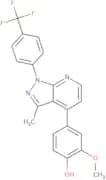
CAS:<p>Please enquire for more information about ML303 including the price, delivery time and more detailed product information at the technical inquiry form on this page</p>Fórmula:C21H16F3N3O2Pureza:Min. 95%Peso molecular:399.4 g/molRifamycin pr-3
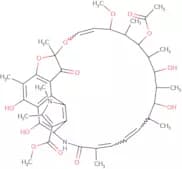
CAS:<p>Rifamycin PR-3 is an antibiotic, which is derived from bacterial fermentation, specifically from the bacterium Amycolatopsis rifamycinica. It acts by inhibiting DNA-dependent RNA polymerase, thereby blocking RNA synthesis in susceptible bacteria. This inhibition disrupts protein synthesis, ultimately leading to bacterial cell death. Rifamycin PR-3 is primarily used for the treatment of various bacterial infections, particularly those caused by gram-positive bacteria and certain mycobacteria. Its application is crucial in managing diseases such as tuberculosis, where it targets the Mycobacterium tuberculosis. As a member of the rifamycin class of antibiotics, it is also explored for use in treating refractory cases and in combinations to prevent the development of resistance. This compound’s efficacy in penetrating phagocytic cells makes it an important player in addressing intracellular infections. Scientists continue to study its pharmacokinetics and potential for synergistic combinations, which may expand its utility in infectious disease therapy.</p>Fórmula:C43H54N2O13Pureza:Min. 95%Peso molecular:806.9 g/molBRL 42715
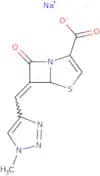
CAS:<p>BRL 42715 is an antibacterial agent, which is a synthetic compound with a unique mechanism of action. This compound is derived from rational drug design aimed at targeting specific bacterial enzymes critical for cell wall synthesis. By irreversibly inhibiting these enzymes, BRL 42715 disrupts the bacterial cell wall formation, leading to cell lysis and death.</p>Fórmula:C10H7N4NaO3SPureza:Min. 95%Peso molecular:286.24 g/molAnhydro erythromycin A
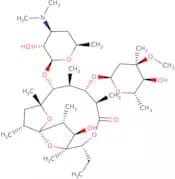
CAS:<p>Anhydro erythromycin A is a semi-synthetic derivative of erythromycin A, which has been shown to be an effective inhibitor of bacterial growth, showing higher selectivity for this inhibition. It is a prodrug that is activated by acid catalysis and can be used as a substitute against methicillin-resistant staphylococcus. Anhydro erythromycin A was developed with the goal of increasing its stability and its potency against methicillin-resistant Staphylococcus aureus, which has been shown to be resistant to erythromycin.</p>Fórmula:C37H65NO12Pureza:Min. 95%Cor e Forma:White PowderPeso molecular:715.91 g/molOmaciclovir
CAS:<p>Please enquire for more information about Omaciclovir including the price, delivery time and more detailed product information at the technical inquiry form on this page</p>Fórmula:C10H15N5O3Pureza:Min. 95%Peso molecular:253.26 g/molMethyl 6-(2,3-dichlorophenyl)-2-methyl-4-oxocyclohex-2-ene-1-carboxylate
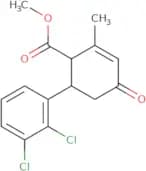
CAS:<p>Methyl 6-(2,3-dichlorophenyl)-2-methyl-4-oxocyclohex-2-ene-1-carboxylate is a synthetic organic compound that can be classified as a specialized chemical reagent. It is primarily sourced from chemical synthesis, utilizing a series of controlled reactions involving halogenated aromatic compounds and cyclohexene derivatives.</p>Fórmula:C15H14Cl2O3Pureza:Min. 95%Peso molecular:313.2 g/molThiostrepton
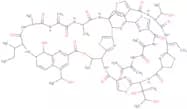
CAS:<p>Thiostrepton is a thiopeptide antibiotic with action on bacterial protein synthesis by binding to the ribosome and is used for treating bacterial infections in veterinary medicine and research applications.</p>Fórmula:C72H85N19O18S5Pureza:Min. 95%Cor e Forma:White To Light (Or Pale) Yellow SolidPeso molecular:1,664.89 g/molOligomycin
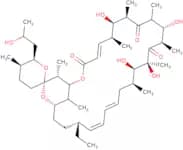
CAS:<p>Oligomycin is a macrolide antibiotic, which is derived from species of the bacterium Streptomyces. It acts as a potent inhibitor of the mitochondrial ATP synthase complex, specifically targeting the F₀ portion of the enzyme. This interference results in the blockage of proton translocation across the mitochondrial membrane, thereby preventing ATP synthesis. Due to this mode of action, Oligomycin is primarily utilized in biochemical research to study cellular respiration and energy metabolism. It serves as a valuable tool in elucidating the mechanisms of oxidative phosphorylation and the role of ATP in various cellular processes. In addition, its application extends to investigations on mitochondrial dysfunctions and the screening of mitochondrial-targeted drugs.</p>Fórmula:C45H74O11Pureza:Min. 95%Peso molecular:791.06 g/molAscomycin
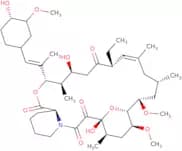
CAS:<p>Ascomycin is an immunosuppressant macrolide lactone, which is derived from the soil bacterium *Streptomyces hygroscopicus*. It functions primarily by inhibiting the T-cell activation pathway. The mechanism involves binding to the immunophilin FKBP-12, forming a complex that inhibits the calcium-dependent phosphatase, calcineurin. This inhibition prevents the dephosphorylation and subsequent translocation of nuclear factor of activated T cells (NFAT), which is crucial for the transcription of interleukin-2 and other cytokines. Consequently, this suppresses the activation and proliferation of T-cells, which are essential components of the adaptive immune response.</p>Fórmula:C43H69NO12Pureza:Min. 95%Peso molecular:792.01 g/mol

![8-Methylpyrido[2,3-d]pyridazin-5(6H)-one](/_next/image/?url=https%3A%2Fstatic.cymitquimica.com%2Fproducts%2F3D%2Fthumb-webp%2FQDA00407.webp&w=3840&q=75)