Antimicrobianos
Os antimicrobianos são agentes que destroem ou inibem o crescimento de microrganismos, incluindo bactérias, vírus, fungos e parasitas. Esses compostos são essenciais na prevenção e tratamento de infecções, desempenhando um papel crucial na medicina, agricultura e indústria alimentícia. Na CymitQuimica, oferecemos uma ampla gama de antimicrobianos de alta qualidade e pureza, adequados para diversas aplicações científicas e industriais. Nosso catálogo inclui antibióticos, antifúngicos, antivirais e desinfetantes, todos projetados para atender às necessidades de pesquisa e desenvolvimento, bem como para aplicações clínicas e de produção. Com nossos produtos, os profissionais podem garantir a eficácia e a segurança no controle de infecções e na proteção da saúde pública.
Subcategorias de "Antimicrobianos"
- Antibióticos(4.126 produtos)
- Antifúngicos(874 produtos)
- Antiparasitários(699 produtos)
- Antivíricos(764 produtos)
Foram encontrados 2423 produtos de "Antimicrobianos"
Ordenar por
Pureza (%)
0
100
|
0
|
50
|
90
|
95
|
100
(2RS,4S)-2-[[(phenylacetyl)amino]methyl]-5,5-dimethylthiazolidine-4-carboxylic acid (penilloic acids of benzylpenicillin)
CAS:<p>(2RS,4S)-2-[[(Phenylacetyl)amino]methyl]-5,5-dimethylthiazolidine-4-carboxylic acid, commonly referred to as penilloic acids, is a hydrolytic degradation product of benzylpenicillin. It is derived through the enzymatic or chemical cleavage of the β-lactam ring of benzylpenicillin, which is a classic β-lactam antibiotic.</p>Fórmula:C15H20N2O3SPureza:Min. 95%Peso molecular:308.4 g/molAcepromazine hydrochloride
CAS:<p>Acepromazine hydrochloride is a phenothiazine derivative tranquilizer, which is synthesized chemically. Its mode of action is primarily through antagonism of dopamine receptors in the central nervous system, leading to a sedative effect. Additionally, it exerts peripheral actions, including alpha-adrenergic blockade and diminished release of hypothalamic and hypophyseal hormones, contributing to vasodilation and other physiological effects.</p>Fórmula:C19H23ClN2OSPureza:Min. 95%Peso molecular:362.9 g/molDicloxacillin sodium salt monohydrate
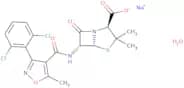
CAS:<p>Dicloxacillin sodium salt monohydrate is a beta-lactam antibiotic with action on bacterial cell wall synthesis and is used for treating infections caused by penicillinase-producing bacteria.</p>Fórmula:C19H16Cl2N3NaO5S·H2OPureza:Min. 95%Cor e Forma:White PowderPeso molecular:510.32 g/molMafoprazine
CAS:<p>Mafoprazine is an experimental psychotropic drug, which is an organic compound synthetically derived from the azapirone family. It functions primarily as a serotonin receptor agonist, specifically targeting the 5-HT1A receptors, while also exhibiting moderate affinity for dopamine and adrenergic receptors. This dual action on neurotransmitter systems is thought to contribute to its therapeutic effects.</p>Fórmula:C22H28FN3O3Pureza:Min. 95%Peso molecular:401.5 g/molDihydrostreptomycin sesquisulfate
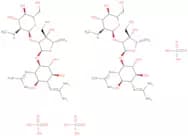
CAS:<p>Dihydrostreptomycin sesquisulfate is an aminoglycoside antibiotic, which is derived from the bacterium Streptomyces griseus. Its mode of action involves binding to the 30S subunit of the bacterial ribosome, leading to the disruption of protein synthesis. This binding interferes with the initiation complex formation, causing misreading of mRNA and ultimately inhibiting bacterial growth.</p>Fórmula:C21H41N7O12•(H2SO4)1Pureza:Min. 95%Peso molecular:730.71 g/molSulfamoyldapsone
CAS:<p>Sulfamoyldapsone is a synthetic antimicrobial compound, which is derived from the dapsone family. Its source is primarily synthetic, designed through chemical modifications of the parent compound dapsone, a well-known antibacterial agent. The mode of action of sulfamoyldapsone involves the inhibition of bacterial folic acid synthesis. By targeting dihydropteroate synthase, an enzyme essential for the production of folic acid in microorganisms, the compound effectively interferes with bacterial growth and replication.</p>Fórmula:C12H13N3O4S2Pureza:Min. 95%Peso molecular:327.4 g/molLincomycin 2-palmitate hydrochloride
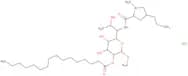
CAS:<p>Lincomycin 2-palmitate hydrochloride is a semi-synthetic antibiotic, derived from the natural antibiotic lincomycin through chemical modification. It is sourced from fermentative processes involving the bacterium *Streptomyces lincolnensis*. The compound exerts its action by inhibiting protein synthesis in susceptible bacteria. This occurs through its binding to the 50S subunit of the bacterial ribosome, thereby hindering peptide chain elongation and ultimately arresting bacterial growth.</p>Fórmula:C34H65ClN2O7SPureza:Min. 95%Peso molecular:681.41 g/mol3,4-Dihydro-2H,6H-pyrimido[1,2-c][1,3]benzothiazin-6-imine
CAS:3,4-Dihydro-2H,6H-pyrimido[1,2-c][1,3]benzothiazin-6-imine is a chemical compound classified as a heterocyclic organic compound, which is synthesized through chemical processes in the laboratory. This compound belongs to a novel class of molecules with potential pharmacological applications, particularly in the realm of infectious diseases. Its mode of action involves the inhibition of specific enzymatic pathways essential for the survival of certain pathogenic organisms, such as Plasmodium species responsible for malaria.Fórmula:C11H11N3SPureza:Min. 95%Peso molecular:217.29 g/molImazethapyr-1-hydroxyethyl
CAS:Imazethapyr-1-hydroxyethyl is a selective, systemic herbicide, which is synthesized through chemical processes. It functions primarily by inhibiting the acetohydroxyacid synthase (AHAS) enzyme, also known as acetolactate synthase (ALS). This enzyme is vital for the biosynthesis of branched-chain amino acids like valine, leucine, and isoleucine, which are essential for plant growth. By hindering this enzyme's action, Imazethapyr-1-hydroxyethyl effectively stunts the growth and development of susceptible plant species.Fórmula:C15H19N3O4Pureza:Min. 95%Peso molecular:305.33 g/molL-689502
CAS:<p>L-689502 is a synthetic compound that functions as a selective antagonist for neuropeptide Y1 receptors. It is derived from chemical synthesis processes specifically designed to target and modulate these receptors. As an antagonist, its primary mode of action involves binding to the neuropeptide Y1 receptors and inhibiting their activity, thereby blocking the effects of the naturally occurring ligand, neuropeptide Y (NPY).</p>Fórmula:C39H51N3O7Pureza:Min. 95%Peso molecular:673.8 g/molGatifloxacin related compound E
CAS:<p>Gatifloxacin related compound E is a chemical reference standard, which is often used in pharmaceutical and analytical chemistry research for the identification and quantification of impurities. It is generally synthesized or isolated as part of the quality control and validation process for the production of the antibiotic Gatifloxacin. The mode of action of this compound revolves around its structural similarity to Gatifloxacin, which allows it to serve as a benchmark to ensure the accuracy and reliability of high-performance liquid chromatography (HPLC) and other analytical techniques.</p>Fórmula:C19H22FN3O4·HClPureza:Min. 95%Peso molecular:411.86 g/molBecliconazole
CAS:<p>Please enquire for more information about Becliconazole including the price, delivery time and more detailed product information at the technical inquiry form on this page</p>Fórmula:C18H12Cl2N2OPureza:Min. 95%Peso molecular:343.2 g/mol4-Epianhydrotetracycline
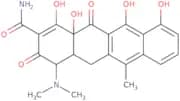
CAS:<p>4-Epianhydrotetracycline is a chemical compound that is a derivative of tetracycline, a well-known antibiotic. It is primarily a byproduct arising from the chemical degradation of tetracycline antibiotics, occurring under acidic or basic conditions. The source of this compound is the structural transformation of tetracycline, resulting in an altered molecular configuration.</p>Fórmula:C22H22N2O7Pureza:Min. 95%Peso molecular:426.4 g/molPiperacillin oxalylamide
CAS:<p>Piperacillin oxalylamide is an investigational antibiotic, which is a synthetic derivative of the widely used β-lactam antibiotic, piperacillin. Its development is rooted in the quest to combat β-lactamase-producing resistant bacterial strains, which are a growing threat in clinical settings. It operates by inhibiting bacterial cell wall synthesis, similar to other β-lactam antibiotics, but possesses a modified structure that enhances its resistance to enzymatic degradation by β-lactamases.</p>Fórmula:C23H29N5O8SPureza:Min. 95%Peso molecular:535.57 g/molPF 1022A
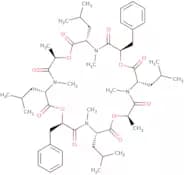
CAS:<p>PF 1022A is a cyclooctadepsipeptide, which is a type of cyclic peptide composed of amino acids and hydroxy acids. It is derived from the fermentation products of the fungus *Mycelia sterilia*, a member of the *Rosellinia* genus. Its mode of action involves disrupting glutamate-gated chloride channels in parasitic nematodes, which leads to paralysis and eventual death of the parasite.</p>Fórmula:C52H76N4O12Pureza:Min. 95%Peso molecular:949.18 g/molN-Acetyl glyphosate-13C2,15N
CAS:<p>N-Acetyl glyphosate-13C2,15N is a stable isotope-labeled analog of the well-known herbicide glyphosate. This product is synthesized using isotopically enriched carbon and nitrogen sources. Its mode of action involves inhibiting the shikimate pathway by targeting the enzyme 5-enolpyruvylshikimate-3-phosphate synthase (EPSPS), crucial for aromatic amino acid biosynthesis in plants. This pathway is not present in animals, making it a valuable target for selective herbicidal action.</p>Fórmula:C5H10NO6PPureza:Min. 95%Peso molecular:214.09 g/molSolithromycin
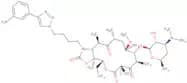
CAS:<p>Solithromycin is a novel macrolide antibiotic, which is derived from the compound ketolide. It functions by binding to the bacterial 50S ribosomal subunit, effectively inhibiting protein synthesis. This mechanism of action enables Solithromycin to exert its effects against a wide range of bacterial pathogens, including strains resistant to traditional macrolides. The unique binding capability to multiple sites on the ribosome enhances its potency and reduces the likelihood of resistance development.</p>Fórmula:C43H65FN6O10Pureza:Min. 95%Peso molecular:845.01 g/molDecoyinine
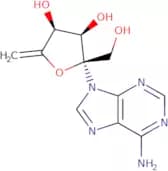
CAS:<p>Decoyinine is an antibiotic compound, which is derived from the bacterium *Streptomyces hygroscopicus*. Its mode of action involves the inhibition of guanine nucleotide synthesis. By targeting the biosynthesis pathway of nucleotides, Decoyinine effectively impedes the growth and proliferation of bacterial cells.</p>Fórmula:C11H13N5O4Pureza:Min. 95%Peso molecular:279.25 g/molFinafloxacin
CAS:Finafloxacin is a fluoroquinolone antibacterial agent, which is a synthetic compound derived from the quinolone family. It functions through the inhibition of bacterial DNA gyrase and topoisomerase IV, crucial enzymes in the replication, transcription, and repair of bacterial DNA. This mechanism leads to the prevention of bacterial cell division and ultimately results in cell death.Fórmula:C20H19FN4O4Pureza:Min. 95%Peso molecular:398.39 g/molSarecycline Hydrochloride
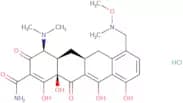
CAS:Sarecycline Hydrochloride is a narrow-spectrum tetracycline antibiotic with action on bacterial protein synthesis inhibition and is used for treating moderate to severe acne vulgaris.Fórmula:C24H30ClN3O8Pureza:Min. 95%Cor e Forma:PowderPeso molecular:523.96 g/mol
![(2RS,4S)-2-[[(phenylacetyl)amino]methyl]-5,5-dimethylthiazolidine-4-carboxylic acid (penilloic aci…](/_next/image/?url=https%3A%2Fstatic.cymitquimica.com%2Fproducts%2F3D%2Fthumb-webp%2FAAA50134.webp&w=3840&q=75)

![3,4-Dihydro-2H,6H-pyrimido[1,2-c][1,3]benzothiazin-6-imine](/_next/image/?url=https%3A%2Fstatic.cymitquimica.com%2Fproducts%2F3D%2Fthumb-webp%2FXCA59674.webp&w=3840&q=75)