Antimicrobianos
Os antimicrobianos são agentes que destroem ou inibem o crescimento de microrganismos, incluindo bactérias, vírus, fungos e parasitas. Esses compostos são essenciais na prevenção e tratamento de infecções, desempenhando um papel crucial na medicina, agricultura e indústria alimentícia. Na CymitQuimica, oferecemos uma ampla gama de antimicrobianos de alta qualidade e pureza, adequados para diversas aplicações científicas e industriais. Nosso catálogo inclui antibióticos, antifúngicos, antivirais e desinfetantes, todos projetados para atender às necessidades de pesquisa e desenvolvimento, bem como para aplicações clínicas e de produção. Com nossos produtos, os profissionais podem garantir a eficácia e a segurança no controle de infecções e na proteção da saúde pública.
Subcategorias de "Antimicrobianos"
- Antibióticos(4.115 produtos)
- Antifúngicos(841 produtos)
- Antiparasitários(704 produtos)
- Antivíricos(763 produtos)
Foram encontrados 2422 produtos de "Antimicrobianos"
Ordenar por
Pureza (%)
0
100
|
0
|
50
|
90
|
95
|
100
Cadazolid
CAS:<p>Cadazolid is an investigational antibiotic, which is a synthetic oxazolidinone-cephalosporin hybrid, with a novel mechanism of action. It is engineered to disrupt bacterial protein synthesis by binding to the 50S ribosomal subunit, while also exerting strong bactericidal effects. This dual-action approach combines attributes of both linezolid and cephalosporins to target and disrupt essential bacterial processes.</p>Fórmula:C29H29F2N3O8Pureza:Min. 95%Peso molecular:585.55 g/molPirodavir
CAS:<p>Pirodavir is a potent antiviral compound, which is a synthetic molecule developed through pharmaceutical research. It acts by targeting the rhinovirus, the most common viral infectious agent in humans, primarily responsible for the common cold. Pirodavir's mode of action involves binding to the viral capsid, thereby preventing the uncoating process essential for viral replication.</p>Fórmula:C21H27N3O3Pureza:Min. 95%Peso molecular:369.46 g/molFGI 106
CAS:<p>FGI 106 is an antifungal agent, which is derived from natural sources with a mechanism of action involving disruption of fungal cell wall integrity. The compound is isolated from naturally occurring substances, specifically targeting the structural components of the cell walls in various fungal species. By compromising the protective barrier of the cell wall, FGI 106 effectively inhibits fungal growth and proliferation, making it a potent tool against a variety of fungal pathogens.</p>Fórmula:C28H42Cl4N6Pureza:Min. 95%Peso molecular:604.5 g/molAlisporivir
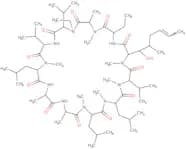
CAS:<p>Alisporivir is an investigational antiviral agent, which is a synthetic derivative of cyclosporine A. It originates from the structural modification of naturally occurring cyclosporines, specifically designed to retain potent antiviral activity while minimizing immunosuppressive effects. Its mode of action involves the inhibition of cyclophilin, an essential cellular protein that facilitates the replication of hepatitis C virus (HCV) by interacting with viral proteins. By binding to cyclophilin, alisporivir disrupts this interaction, effectively halting the viral replication process.</p>Fórmula:C63H113N11O12Pureza:Min. 95%Peso molecular:1,216.6 g/molBasic violet 3 d6
CAS:<p>Basic Violet 3 is a synthetic dye, which is derived from coal tar sources with a mechanism of action involving the disruption of cellular components. This compound intercalates with nucleic acids, allowing it to bind to specific cellular structures. Its primary mode of action targets the chromosomal material, leading to colorimetric changes that enhance visualization.</p>Fórmula:C25H30ClN3Pureza:Min. 95%Peso molecular:414 g/molUniconazole
CAS:<p>Uniconazole is a synthetic plant growth regulator, which is derived from triazole compounds. It acts as a potent inhibitor of gibberellin biosynthesis, specifically targeting enzymes involved in gibberellin production. By inhibiting gibberellins, uniconazole reduces internode elongation and alters growth patterns, resulting in shorter, more compact plants.</p>Fórmula:C15H18ClN3OPureza:Min. 95%Peso molecular:291.78 g/molMomfluorothrin
CAS:<p>Momfluorothrin is a synthetic pyrethroid insecticide, which is a man-made derivative based on the natural pyrethrins. It functions primarily as a neurotoxic agent, targeting the sodium channels in the nervous system of insects, leading to paralysis and eventual death. This specific mode of action involves delaying the closing of the sodium channels, resulting in prolonged nerve impulses.</p>Fórmula:C19H19F4NO3Pureza:Min. 95%Peso molecular:385.4 g/molL-Carnitine fumarate
CAS:<p>L-Carnitine fumarate is a compound that functions as a dietary supplement, which is synthesized by combining L-carnitine, an amino acid derivative naturally found in the body, with fumaric acid. This product is primarily sourced from fermentation or chemical synthesis processes to produce L-carnitine, which is then reacted with fumaric acid to form the fumarate salt. This combination enhances the stability and bioavailability of L-carnitine.</p>Fórmula:C7H15NO3·C4H4O4Pureza:Min. 95%Peso molecular:277.27 g/molAmidithion
CAS:<p>Amidithion is an insecticidal and acaricidal compound, which is a derivative of organophosphorus chemistry. This compound is chiefly synthesized through the complex chemical manipulation of phosphoryl groups, rendering it a potent inhibitor of enzymatic activity in target organisms.</p>Fórmula:C7H16NO4PS2Pureza:Min. 95%Peso molecular:273.3 g/mol4-Epitetracycline hydrochloride
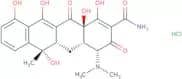
CAS:<p>4-Epitetracycline hydrochloride is a tetracycline antibiotic derivative, which is a secondary metabolite derived from bacterial sources, particularly Streptomyces species. It functions primarily by inhibiting protein synthesis in bacteria through binding to the 30S ribosomal subunit, preventing the attachment of aminoacyl-tRNA to the RNA-ribosome complex. This action hinders bacterial growth by interfering with vital processes necessary for bacterial survival and replication.</p>Fórmula:C22H25ClN2O8Pureza:Min. 95%Cor e Forma:PowderPeso molecular:480.9 g/molMagainin 1
CAS:<p>Magainin 1 is a peptide antibiotic, which is sourced from the skin secretions of the African clawed frog, *Xenopus laevis*. It operates through a membranolytic mode of action, whereby it integrates into microbial cell membranes, forming pores and causing cell lysis by disrupting membrane integrity. This mechanism is largely non-specific, making it effective against a broad spectrum of bacteria and fungi.</p>Fórmula:C112H177N29O28SPureza:Min. 95%Peso molecular:2,409.85 g/molTerrelulamide A
CAS:<p>Terrelulamide A is a bioactive compound, specifically a cyclic peptide, which is derived from marine cyanobacteria. The source of Terrelulamide A is primarily marine environments where these cyanobacteria undergo complex biosynthetic processes to produce such metabolites. This compound's mode of action involves the disruption of cellular processes by binding to specific molecular targets that are critical in cell cycle regulation. It exhibits cytotoxic activity, effectively inhibiting cancer cell proliferation through its interaction with those pathways.</p>Fórmula:C20H26N6O7Pureza:Min. 95%Peso molecular:462.5 g/molSulfadiazine-d4
CAS:<p>Sulfadiazine-d4 is an isotopically labeled antibiotic, which is a derivative of sulfadiazine containing four deuterium atoms. This compound is synthesized using advanced chemical techniques to replace hydrogen atoms with deuterium in the molecular structure. The mechanism of action involves inhibition of bacterial dihydropteroate synthase, an enzyme critical in the folate synthesis pathway. By preventing the production of folic acid, sulfadiazine-d4 effectively halts bacterial growth and replication.</p>Fórmula:C10H6D4N4O2SPureza:Min. 95%Peso molecular:254.3 g/molAcivicin hydrochloride
CAS:<p>Acivicin hydrochloride is a synthetic compound that acts as a glutamine antagonist, sourced from microbial fermentation processes. It functions primarily through the inhibition of glutamine-utilizing enzymes, such as gamma-glutamyl transferase and carbamoyl phosphate synthetase, which play critical roles in nucleotide biosynthesis and other metabolic pathways. By disrupting these biochemical processes, Acivicin hydrochloride can hinder the proliferation of rapidly dividing cells, displaying potential antitumor properties.</p>Fórmula:C5H8Cl2N2O3Pureza:Min. 95%Peso molecular:215.03 g/molPropiconazole
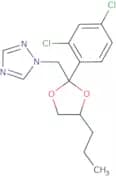
CAS:<p>Propiconazole is a triazole fungicide with action on fungal cell membranes by inhibiting ergosterol biosynthesis and is used for controlling fungal diseases in crops and turf.</p>Fórmula:C15H17Cl2N3O2Pureza:Min. 95%Cor e Forma:Clear LiquidPeso molecular:342.22 g/molCefdinir monohydrate
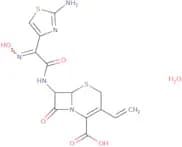
CAS:<p>Cefdinir monohydrate is a third-generation cephalosporin antibiotic, which is synthetically derived from cephalosporin C, a compound originally isolated from the fungus Acremonium. This antibiotic works by inhibiting bacterial cell wall synthesis through binding to penicillin-binding proteins (PBPs), which results in the interruption of peptidoglycan cross-linking. Consequently, this action leads to cell lysis and death of the bacterium.</p>Fórmula:C14H15N5O6S2Pureza:Min. 95%Peso molecular:413.4 g/molEnzaplatovir
CAS:<p>Enzaplatovir is a novel antiviral agent, which is a synthetic compound developed through advanced medicinal chemistry techniques. It functions as an inhibitor of RNA-dependent RNA polymerase, a critical enzyme in the replication cycle of various RNA viruses. By targeting this enzyme, Enzaplatovir effectively impedes viral RNA synthesis, thus disrupting viral replication.</p>Fórmula:C20H19N5O3Pureza:Min. 95%Peso molecular:377.4 g/molAlthiomycin
CAS:<p>Althiomycin is a macrolide antibiotic, which is derived from Actinobacteria, specifically the genus Streptomyces. Its mode of action involves binding to the 50S subunit of the bacterial ribosome, thereby inhibiting protein synthesis. This mechanism effectively suppresses bacterial growth by interfering with the translation process, ultimately leading to pathogen elimination.</p>Fórmula:C16H17N5O6S2Pureza:Min. 95%Peso molecular:439.50 g/molPPA-904
CAS:<p>PPA-904 is an organophosphate compound, which is a chemically synthesized product. It functions as an additive, often utilized in industrial applications due to its unique chemical properties. As an organophosphate, PPA-904 acts through phosphorylation processes, interacting with various substrates to alter their chemical and physical characteristics. This mechanism is utilized to enhance material properties such as stability, functionality, or resistance to environmental conditions.</p>Fórmula:C28H42BrN3SPureza:Min. 95%Peso molecular:532.6 g/mol3'-N-Desmethyl-3'-N-tosyl azithromycin
CAS:<p>3'-N-Desmethyl-3'-N-tosyl azithromycin is a semi-synthetic macrolide antibiotic analog, which is a derivative of azithromycin, a well-known member of the macrolide class of antibiotics. This compound is synthesized through chemical modifications of the parent molecule, azithromycin, to potentially enhance its pharmacokinetic and pharmacodynamic properties.</p>Fórmula:C44H76N2O14SPureza:Min. 95%Peso molecular:889.15 g/molN,N′-1,2-Ethanediylbis[3-nitrobenzenesulfonamide]
CAS:<p>N,N′-1,2-Ethanediylbis[3-nitrobenzenesulfonamide] is a chemical compound, specifically a bis-sulfonamide derivative. It is synthesized through the reaction of sulfonamide derivatives with ethylenediamine, resulting in a unique structure characterized by its two nitrobenzenesulfonamide groups linked by an ethylene bridge. As a source, it is obtained through synthetic organic chemistry methods involving nitration and sulfonamidation processes.</p>Fórmula:C14H14N4O8S2Pureza:Min. 95%Peso molecular:430.4 g/molFenoprofen sodium salt dihydrate
CAS:<p>Fenoprofen sodium salt dihydrate is a nonsteroidal anti-inflammatory drug (NSAID), which is a synthetic compound derived from propionic acid. It acts by inhibiting the cyclooxygenase (COX) enzymes, COX-1 and COX-2, leading to decreased synthesis of prostaglandins. This reduction in prostaglandin synthesis is responsible for its analgesic, anti-inflammatory, and antipyretic effects.</p>Fórmula:C15H13NaO3·2H2OPureza:Min. 95%Peso molecular:264.25 g/molAcequinocyl-hydroxy
CAS:<p>Acequinocyl-hydroxy is an acaricide, which is a chemical agent used to manage and control mite populations in various agricultural settings. It is derived from a combination of synthetic organic compounds designed specifically to disrupt the normal biological processes of target pests. The mode of action of Acequinocyl-hydroxy involves interference with the mitochondrial electron transport chain of mites, ultimately disrupting cellular respiration and leading to the death of the pest.</p>Fórmula:C22H30O3Pureza:Min. 95%Peso molecular:342.5 g/molVancomycin hydrochloride from streptomyces orientalis
CAS:<p>Vancomycin hydrochloride is a glycopeptide antibiotic, derived from the bacterium *Streptomyces orientalis*. This compound functions by inhibiting bacterial cell wall synthesis, specifically targeting the D-alanyl-D-alanine termini in peptidoglycan chains. It disrupts transglycosylation and transpeptidation, critical steps in cell wall biosynthesis, ultimately leading to cell lysis.</p>Fórmula:C66H75Cl2N9O24·HClPureza:Min. 95%Peso molecular:1,485.71 g/mol8-Oxo-gtp 8-hydroxy-gtp
CAS:<p>8-Oxo-GTP, also known as 8-Hydroxy-GTP, is a nucleotide analog, which is synthetically derived. It closely resembles the naturally occurring guanosine triphosphate (GTP) but contains a modified 8-hydroxy group, making it a valuable tool for studying oxidative damage and nucleotide modification processes.</p>Fórmula:C10H16N5O15P3Pureza:Min. 95%Peso molecular:539.18 g/molLobucavir
CAS:<p>Lobucavir is an antiviral compound with a mode of action that inhibits viral DNA polymerase. It is used for treating infections caused by herpesviruses and hepatitis B virus.</p>Fórmula:C11H15N5O3Pureza:Min. 95%Peso molecular:265.27 g/molFosravuconazole L-lysine ethanolate
CAS:<p>Fosravuconazole L-lysine ethanolate is an antifungal prodrug, which is a derivative of the widely used antifungal agent ravuconazole. This compound is synthesized through chemical modification to enhance its bioavailability and aqueous solubility, addressing limitations found in its parent compound. Fosravuconazole is designed to undergo in vivo conversion to ravuconazole, its active form, by enzymatic processes within the body.</p>Fórmula:C31H40F2N7O8PSPureza:Min. 95%Peso molecular:739.7 g/molDDD107498 succinate
CAS:<p>DDD107498 succinate is a potent antimalarial agent, which is a synthetic compound discovered through target-based drug screening. This compound is derived from intensive research initiatives focusing on eliminating malaria by disrupting a unique biochemical pathway in the parasite. It primarily acts by inhibiting the translation elongation factor 2, a critical protein that facilitates protein synthesis within the Plasmodium species responsible for malaria. By targeting this specific mechanism, the compound effectively halts the growth and replication of the parasite within the human bloodstream.</p>Fórmula:C31H37FN4O6Pureza:Min. 95%Peso molecular:580.6 g/molTyrothricin
CAS:<p>Tyrothricin is a peptide antibiotic, which is derived from the bacterium Bacillus brevis. This compound comprises a mixture of polypeptides, primarily gramicidin and tyrocidine, both of which are instrumental in its antimicrobial activity. The mode of action of tyrothricin involves disrupting bacterial cell membranes, leading to cell lysis and death. Gramicidin increases the permeability of the bacterial membrane to ions, while tyrocidine promotes disruption of membrane integrity, which together exert bactericidal and bacteriostatic effects.</p>Fórmula:C65H85N11O13Pureza:Min. 95%Peso molecular:1,228.44 g/molAqabamycin A
CAS:<p>Aqabamycin A is an antibiotic compound, which is derived from marine microorganisms, specifically actinomycetes. These marine bacteria are known for producing a wide array of bioactive compounds, including antibiotics, due to their unique metabolites shaped by the oceanic environment. Aqabamycin A operates by inhibiting bacterial RNA polymerase, thereby disrupting the transcription process essential for bacterial protein synthesis. This specific mode of action targets the growth and replication of bacteria, making it a potent agent against pathogenic strains.</p>Fórmula:C16H11NO3Pureza:Min. 95%Peso molecular:265.26 g/molCefquinome sulfate
CAS:<p>Cefquinome sulfate is a cephalosporin antibiotic, which is a synthetic, broad-spectrum antimicrobial agent. It is derived from the beta-lactam family, specifically designed to combat Gram-positive and Gram-negative bacterial pathogens. The mode of action involves inhibiting bacterial cell wall synthesis. It achieves this by binding to penicillin-binding proteins (PBPs) within the bacterial cell wall, ultimately leading to cell lysis and death due to the interruption of necessary cell wall components.</p>Fórmula:C23H26N6O9S3Pureza:Min. 95%Cor e Forma:White To Light (Or Pale) Yellow To Beige To Light Brown SolidPeso molecular:626.69 g/molCephradine
CAS:<p>Cephradine is a broad-spectrum antibiotic, which is a synthetic derivative of cephalosporin C, originating from the mold Cephalosporium acremonium. Its mode of action involves interfering with bacterial cell wall synthesis. Cephradine binds to penicillin-binding proteins (PBPs) located inside the bacterial cell wall, inhibiting the final transpeptidation step of peptidoglycan synthesis, which leads to cell lysis and death.</p>Fórmula:C16H23N3O6SPureza:Min. 95%Peso molecular:385.4 g/molDichlobentiazox
CAS:<p>Dichlobentiazox is a fungicide, which is synthesized from synthetic chemical sources with a mode of action that targets specific fungal processes. It works by inhibiting the biosynthesis of essential cellular components in pathogenic fungi, thereby disrupting their growth and ability to proliferate.</p>Fórmula:C11H6Cl2N2O3S2Pureza:Min. 95%Peso molecular:349.2 g/molCefacetrile sodium
CAS:<p>Cefacetrile sodium is a broad-spectrum antibiotic belonging to the cephalosporin class. It is a semi-synthetic derivative sourced from cephalosporin C, a naturally occurring compound derived from the Acremonium fungus. Its mode of action involves the inhibition of bacterial cell wall synthesis. This occurs by binding to penicillin-binding proteins within the bacterial cell membrane, ultimately leading to cell lysis and death due to the inability to synthesize peptidoglycan, a critical component of the bacterial cell wall.</p>Fórmula:C13H13N3NaO6SPureza:Min. 95%Peso molecular:362.31 g/mol(10E)-3-O-De(a-L-cladinose)-10-dehydro-11-dehydroxy-6-O-methyl-erythromycin
CAS:<p>Erythromycin derivative</p>Fórmula:C30H53NO9Pureza:Min. 95%Peso molecular:571.74 g/molCarbovir monophosphate
CAS:<p>Carbovir monophosphate is an antiviral agent, which is a metabolite derived from the prodrug abacavir. It functions as a nucleotide analog that interferes with viral replication. The source of Carbovir monophosphate is the metabolic conversion of abacavir, an antiretroviral medication used in the treatment of HIV. This conversion occurs primarily in the liver, facilitated by cellular enzymes.</p>Fórmula:C11H14N5O5PPureza:Min. 95%Peso molecular:327.23 g/molDarunavir-D9
CAS:<p>Darunavir-D9 is a prodrug of darunavir, which is an HIV protease inhibitor. Darunavir-D9 has been shown to be bioequivalent in pharmacokinetic parameters to darunavir given as a tablet. The drug exhibits a low plasma concentration profile and high clearance values. This may be due to rapid absorption and distribution of the drug, with a short elimination half-life. Darunavir-D9 also has little effect on the matrix effect and reproducibility of the reaction monitoring assay, making it an ideal candidate for use in clinical trials.</p>Fórmula:C27H28D9N3O7SPureza:Min. 95%Peso molecular:556.72 g/molZabofloxacin
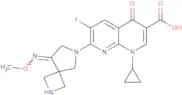
CAS:<p>Zabofloxacin is a synthetic fluoroquinolone antibiotic, which is derived from chemical synthesis with a distinct bactericidal mode of action. Its mechanism involves the inhibition of bacterial DNA gyrase and topoisomerase IV, enzymes critical for DNA replication, transcription, and repair. This dual targeting results in potent antibacterial activity against a wide range of Gram-positive and Gram-negative pathogens.</p>Fórmula:C19H20FN5O4Pureza:Min. 95%Peso molecular:401.4 g/molWybutosine
CAS:<p>Modified nucleoside of phenylalanine tRNA</p>Fórmula:C21H28N6O9Pureza:Min. 95%Peso molecular:508.48 g/molDicloxacillin sodium salt
CAS:<p>Dicloxacillin is a penicillin antibiotic that is used to treat bacterial infections of the gastrointestinal tract, skin, and urinary tract. It binds to the penicillin-binding proteins in bacterial cell walls by competitive inhibition. Dicloxacillin inhibits bacterial growth by binding to the enzyme cell wall synthesis that is required for cell wall biosynthesis, inhibiting protein synthesis and cell division. This drug also has a toxic effect on respiratory system cells, which may be due to its ability to induce apoptosis. Dicloxacillin sodium salt is available as tablets for oral administration or as an intravenous solution for injection. It can interact with other drugs, such as benzalkonium chloride and matrix effect; it also has analytical methods such as chromatographic analysis and rate constant.</p>Fórmula:C19H17Cl2N3O5S·NaPureza:Min. 95%Peso molecular:493.32 g/molMiloxacin
CAS:<p>Miloxacin is an antibacterial agent, which is sourced as a synthetic derivative of quinolone compounds. It exhibits its mode of action through the inhibition of bacterial DNA gyrase and topoisomerase IV, enzymes pivotal for DNA replication, transcription, and repair processes. This interference disrupts bacterial cell division, leading to cell death in susceptible organisms.</p>Fórmula:C12H9NO6Pureza:Min. 95%Peso molecular:263.2 g/molIndaziflam-desindenyl
CAS:<p>Indaziflam-desindenyl is an advanced herbicide, which is a product of synthetic chemistry, specifically designed for controlling the germination and growth of a broad spectrum of weed species. It operates through cellulose biosynthesis inhibition, targeting the cellulose production in plant cell walls, thus preventing proper cell division and development. This mode of action disrupts essential mechanisms in the plant's early growth stages, making it particularly effective as a pre-emergent herbicide.</p>Fórmula:C5H8FN5Pureza:Min. 95%Peso molecular:157.15 g/molRifamycin PR-14
CAS:<p>Rifamycin PR-14 is a semi-synthetic antibiotic, which is derived from the naturally occurring antibiotic rifamycin. Originating from a fermentation process involving the bacterium Amycolatopsis mediterranei, rifamycin is modified to create the PR-14 variant to enhance its antibacterial properties and pharmacokinetic profile. This compound functions by inhibiting bacterial DNA-dependent RNA polymerase, effectively halting RNA synthesis and subsequent protein production, leading to bacterial cell death.</p>Fórmula:C43H54N2O12Pureza:Min. 95%Peso molecular:790.9 g/mol3,4,5-Trichlorophenol acetate
CAS:3,4,5-Trichlorophenol acetate is a chlorinated aromatic compound, which is a derivative of trichlorophenol. It is typically sourced from chemical synthesis involving the chlorination and acetylation of phenolic compounds. The mode of action involves its interaction and potential binding with biological molecules, making it a subject of interest for biochemical studies.Fórmula:C8H5Cl3O2Pureza:Min. 95%Peso molecular:239.5 g/molLedipasvir diacetone
CAS:<p>Ledipasvir is a synthetic drug that inhibits the viral enzyme NS5A, which is necessary for viral replication. Ledipasvir has been shown to inhibit the growth of microorganisms such as bacteria and fungi. It also has antiviral properties, and is active against HIV-1. Ledipasvir can be used in chemotherapy to treat cancer and other diseases. This drug has high purity and is available at life science stores.</p>Fórmula:C55H66F2N8O8Pureza:Min. 95%Peso molecular:1,005.2 g/mol(+)-Oxanthromicin
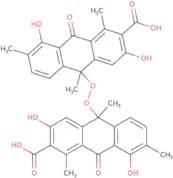
CAS:<p>(+)-Oxanthromicin is a natural compound classified as a polyketide antibiotic, which is derived from certain strains of soil-dwelling actinomycetes. These microorganisms are known to produce a variety of biologically active secondary metabolites. The mode of action of (+)-Oxanthromicin involves the inhibition of specific bacterial enzymes, disrupting essential processes within the microbial cells. This interference can lead to growth inhibition or cell death, showcasing its potential as a therapeutic agent.</p>Fórmula:C36H30O12Pureza:Min. 95%Peso molecular:654.6 g/mol8-Fluoro erythromycin
CAS:<p>8-Fluoro erythromycin is a synthetic derivative of the macrolide antibiotic erythromycin. It is derived from the fermentation of *Streptomyces erythraeus*, a species known for producing erythromycin, which is chemically modified to include a fluorine atom at the eighth position. This modification enhances its pharmacokinetic properties, improving its stability and bioavailability compared to the parent compound.</p>Fórmula:C37H66FNO13Pureza:Min. 95%Peso molecular:751.92 g/molWF-3681
CAS:<p>WF-3681 is a chemical compound utilized as an insecticide, which is synthesized from organic compounds through a controlled chemical process. The mode of action for WF-3681 involves the disruption of the neural pathways in target insects, leading to paralysis and eventual death. This mechanism specifically interferes with neurotransmitter functions, ensuring efficacy against a broad range of agricultural pests. The compound's specificity minimizes impacts on non-target organisms and the surrounding environment.</p>Fórmula:C13H12O5Pureza:Min. 95%Peso molecular:248.23 g/molA2ti-2
CAS:<p>A2ti-2 is an advanced metallurgical alloy, which is a synthesized product combining high-grade titanium and aluminum elements. It is engineered through a precise metallurgical process that involves controlled alloying at elevated temperatures, optimizing the atomic structure for superior performance traits. The mode of action for A2ti-2 involves its exceptional ability to maintain stability under extreme temperatures, providing resistance to thermal degradation and mechanical stress.</p>Fórmula:C18H18N4O2SPureza:Min. 95%Peso molecular:354.4 g/molCyclopentylalbendazole
CAS:<p>Cyclopentylalbendazole is an anthelmintic compound, which is a synthetic derivative of benzimidazole, originally sourced from chemical synthesis processes. Its mode of action involves the selective binding to beta-tubulin, disrupting the polymerization of microtubules within the parasites. This inhibition of microtubule formation is crucial for cellular processes such as nutrient uptake and intracellular transport, eventually leading to immobilization and subsequent death of the parasites.</p>Fórmula:C14H17N3O2SPureza:Min. 95%Peso molecular:291.37 g/mol









![N,N′-1,2-Ethanediylbis[3-nitrobenzenesulfonamide]](/_next/image/?url=https%3A%2Fstatic.cymitquimica.com%2Fproducts%2F3D%2Fthumb-webp%2FAAA09662.webp&w=3840&q=75)