Antimicrobianos
Os antimicrobianos são agentes que destroem ou inibem o crescimento de microrganismos, incluindo bactérias, vírus, fungos e parasitas. Esses compostos são essenciais na prevenção e tratamento de infecções, desempenhando um papel crucial na medicina, agricultura e indústria alimentícia. Na CymitQuimica, oferecemos uma ampla gama de antimicrobianos de alta qualidade e pureza, adequados para diversas aplicações científicas e industriais. Nosso catálogo inclui antibióticos, antifúngicos, antivirais e desinfetantes, todos projetados para atender às necessidades de pesquisa e desenvolvimento, bem como para aplicações clínicas e de produção. Com nossos produtos, os profissionais podem garantir a eficácia e a segurança no controle de infecções e na proteção da saúde pública.
Subcategorias de "Antimicrobianos"
- Antibióticos(4.132 produtos)
- Antifúngicos(897 produtos)
- Antiparasitários(702 produtos)
- Antivíricos(764 produtos)
Foram encontrados 2423 produtos de "Antimicrobianos"
Ordenar por
Pureza (%)
0
100
|
0
|
50
|
90
|
95
|
100
Acetyl-pepstatin
CAS:Acetyl-pepstatin is a potent protease inhibitor, which is synthesized from a naturally occurring peptide source. Its primary mode of action involves the inhibition of aspartic proteases, a class of enzymes responsible for protein digestion and processing within biological systems. By specifically targeting these enzymes, Acetyl-pepstatin effectively halts the hydrolytic activity, which makes it an invaluable tool in the study of protease function and the regulation of proteolytic pathways.Fórmula:C31H57N5O9Pureza:Min. 95%Peso molecular:643.8 g/molCephamycin C
CAS:<p>Cephamycin C is a cephalosporin antibiotic, which is a type of β-lactam antibiotic. It is derived from the fermentation process of certain Streptomyces species and other actinomycetes. Its mode of action involves inhibiting bacterial cell wall synthesis by binding to penicillin-binding proteins (PBPs). This inhibition disrupts the structural integrity of the bacterial cell wall, leading to cell lysis and death.</p>Fórmula:C16H22N4O9SPureza:Min. 95%Cor e Forma:PowderPeso molecular:446.4 g/mol7,8-Didemethyl-8-hydroxy-5-deazariboflavin
CAS:<p>7,8-Didemethyl-8-hydroxy-5-deazariboflavin is a cofactor often referred to as a deazaflavin. It is a derivative of riboflavin and is primarily sourced from methanogenic archaea. These microorganisms are found in anaerobic environments and play a crucial role in the process of methanogenesis.</p>Fórmula:C16H17N3O7Pureza:Min. 95%Peso molecular:363.32 g/molMomfluorothrin
CAS:<p>Momfluorothrin is a synthetic pyrethroid insecticide, which is a man-made derivative based on the natural pyrethrins. It functions primarily as a neurotoxic agent, targeting the sodium channels in the nervous system of insects, leading to paralysis and eventual death. This specific mode of action involves delaying the closing of the sodium channels, resulting in prolonged nerve impulses.</p>Fórmula:C19H19F4NO3Pureza:Min. 95%Peso molecular:385.4 g/molFludazonium chloride
CAS:<p>Fludazonium chloride is a quaternary ammonium compound, which is chemically synthesized. It functions primarily as an antibacterial agent by disrupting microbial cell membranes, leading to cell lysis and death. This compound is particularly effective against a broad spectrum of bacteria due to its ability to interact with phospholipid bilayers.</p>Fórmula:C26H20Cl5FN2O2Pureza:Min. 95%Peso molecular:588.7 g/molBlasticidin S
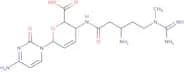
CAS:Blasticidin S is an antibiotic, which is derived from the bacterium *Streptomyces griseochromogenes*. It operates by inhibiting protein synthesis in both prokaryotic and eukaryotic cells. This inhibition is achieved by interfering with the peptide bond formation in the ribosome, thus preventing the elongation of the polypeptide chain. Blasticidin S is particularly useful in molecular biology and cell culture applications, where it is employed to selectively kill non-transformed cells. This allows for the maintenance and expansion of cells that have been stably transfected with a blasticidin resistance gene, thereby ensuring the selection and propagation of cells with the desired genetic modifications. Its precise mechanism and specific action make Blasticidin S a valuable tool for researchers working on gene expression studies, recombinant protein production, and other genetic engineering endeavors.Fórmula:C17H26N8O5Pureza:Min. 95%Peso molecular:422.4 g/mol7,10-Dihydroxy-8(E)-octadecenoic acid
CAS:<p>7,10-Dihydroxy-8(E)-octadecenoic acid is a hydroxylated fatty acid, which is derived from the microbial transformation of oleic acid by certain bacterial species, particularly Pseudomonas aeruginosa. This compound features a unique structure characterized by its dihydroxy modifications and a cis double bond. The compound's mode of action involves modulating bacterial growth and metabolic pathways, possessing antimicrobial properties that result from its ability to interfere with cell membrane integrity and function.</p>Fórmula:C18H34O4Pureza:Min. 95%Peso molecular:314.50 g/molRifamdin
CAS:<p>Rifamdin is an antibiotic, which is a chemical substance derived from the source compound rifampicin. Its mode of action involves the inhibition of bacterial DNA-dependent RNA polymerase, which effectively suppresses bacterial RNA synthesis, leading to cell death. This mechanism primarily targets Mycobacterium tuberculosis, the causative agent of tuberculosis.</p>Fórmula:C46H64N4O12Pureza:Min. 95%Peso molecular:865.02 g/molDuocarmycin analog
CAS:Duocarmycin analog is a chemotherapeutic compound, which is a synthetic analog derived from natural products originally isolated from Streptomyces bacteria. These analogs operate through a unique mode of action by binding to the minor groove of DNA and subsequently alkylating adenine bases. This process results in DNA strand scission, preventing replication and leading to cell death, particularly in rapidly dividing cancer cells.Fórmula:C34H31ClN4O5Pureza:Min. 95%Peso molecular:611.1 g/molStreptidine dihydrochloride
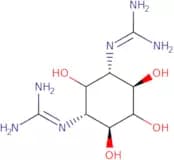
CAS:<p>Streptidine dihydrochloride is a biochemical compound, specifically a derivative of streptomycin, which is obtained through chemical modification of the aminoglycoside antibiotic streptomycin. It is composed of streptidine, a constituent sugar derivative, that is integral to the structure of streptomycin, rendered as a hydrochloride salt to enhance solubility and stability.</p>Fórmula:C8H18N6O4·2HClPureza:Min. 95%Bombinin-like peptide (blp-1)
CAS:<p>Bombinin-like peptide (blp-1) is an antimicrobial peptide, which is derived from the skin secretion of certain amphibians, specifically the *Bombina* species of frogs. This peptide functions by disrupting microbial cell membranes, leading to cell lysis and death. Its ability to compromise the integrity of the cell membrane makes it effective against a range of pathogenic microorganisms, including bacteria and fungi.</p>Fórmula:C115H194N34O33Pureza:Min. 95%Peso molecular:2,581 g/molErythromycin B
CAS:<p>Erythromycin B is a semisynthetic macrolide antibiotic, which is derived from the actinomycete *Saccharopolyspora erythraea*. Its mode of action involves inhibiting bacterial protein synthesis by binding to the 50S ribosomal subunit. This interference with protein synthesis effectively hampers bacterial growth, making it a potent bacteriostatic agent.</p>Fórmula:C37H67NO12Pureza:90%NmrPeso molecular:717.93 g/molCefteram
CAS:<p>Cefteram is a third-generation cephalosporin antibiotic, which is synthesized through chemical processes starting from cephalosporin C, a compound derived from the fungus Acremonium. As a cephalosporin, it functions by inhibiting bacterial cell wall synthesis. This is achieved through the binding to penicillin-binding proteins (PBPs), which are critical in the formation of the bacterial cell wall. By disrupting this process, Cefteram leads to the lysis and death of the bacteria.</p>Fórmula:C16H17N9O5S2Pureza:Min. 95%Cor e Forma:White To Off-White SolidPeso molecular:479.5 g/molTCA1
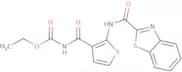
CAS:<p>TCA1 is a synthetic small molecule, which is specifically derived from complex organic synthesis processes, designed to target bacterial metabolic pathways. It operates primarily by inhibiting essential enzymatic functions, thereby disrupting normal metabolic activity within bacterial cells. This inhibitory action results in weakened or halted protein synthesis, directly affecting bacterial growth and proliferation.</p>Fórmula:C16H13N3O4S2Pureza:Min. 95%Peso molecular:375.4 g/molMacrolactin Z
CAS:Please enquire for more information about Macrolactin Z including the price, delivery time and more detailed product information at the technical inquiry form on this pageFórmula:C29H40O8Pureza:Min. 95%Peso molecular:516.6 g/molPotassium clavulanate - 1:1 mixture with cellulose, Antibiotic for Culture Media Use Only
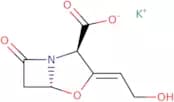
CAS:Potassium clavulanate is a beta-lactamase inhibitor and an antibacterial agent. The presence of potassium clavulanate in culture media inhibits the activity of beta-lactamases, which are enzymes that confer resistance to penicillin and other beta-lactam antibiotics. It also has been shown to be active against bacterial infections such as tuberculosis, sepsis, and pneumonia, where it can inhibit the growth of bacteria by interfering with their ability to form cell walls.Fórmula:C8H8KNO5Pureza:Min. 95.0 Area-%Peso molecular:237.25 g/mol25-O-Deacetyl rifabutin
CAS:<p>25-O-Deacetyl rifabutin is an antibiotic derivative, which is sourced from the semi-synthetic modification of rifabutin, a compound originally derived from the fermentation of the bacterium Amycolatopsis mediterranei. This derivative works by inhibiting bacterial RNA synthesis. It achieves this by specifically targeting the DNA-dependent RNA polymerase enzyme, which is essential for bacterial transcription. The mechanism involves binding to the beta-subunit of the polymerase, thereby blocking the elongation of the RNA chain, which ultimately leads to the death of the bacterial cell.</p>Fórmula:C44H60N4O10Pureza:Min. 95%Cor e Forma:Purple PowderPeso molecular:804.97 g/molSulbactam Related Compound A
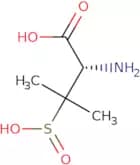
CAS:<p>Sulbactam Related Compound A is a chemical compound often used in pharmaceutical research and development. It is typically derived from the synthetic modification of existing antibiotics to explore new potential therapeutic benefits. The compound functions as a beta-lactamase inhibitor, which is of significant interest to researchers due to its potential to enhance the efficacy of beta-lactam antibiotics. By inhibiting the action of bacterial beta-lactamase enzymes, it permits these antibiotics to remain effective against resistant strains of bacteria.</p>Fórmula:C5H11NO4SPureza:Min. 95%Peso molecular:181.21 g/molNarasin
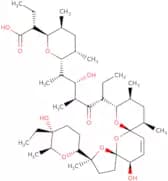
CAS:<p>Narasin is an ionophore antibiotic, which is a fermentation product derived from certain strains of the bacterium *Streptomyces aureofaciens*. It functions by disrupting the ion gradients across cell membranes, specifically facilitating the transport of sodium and potassium ions. This action interferes with the energy metabolism of certain pathogenic microorganisms, rendering them unable to proliferate effectively.</p>Fórmula:C43H72O11Pureza:Min. 95%Peso molecular:765.03 g/molOmomycin
CAS:<p>Omomycin is a novel antibiotic, specifically a macrolide, which is derived from microbial sources, primarily soil-dwelling actinomycetes. Its mode of action involves inhibiting bacterial protein synthesis by binding to the 50S ribosomal subunit. This interaction prevents the translocation of peptides during translation, thereby halting bacterial growth and proliferation.</p>Fórmula:C29H39NO4Pureza:Min. 95%Peso molecular:465.6 g/mol