Terpenóides
Os terpenoides, também conhecidos como isoprenoides, são a maior classe de compostos orgânicos naturais, derivados de unidades de isopreno de cinco carbonos. Eles são encontrados em diversas plantas e são conhecidos por suas propriedades aromáticas, bem como por seu papel na defesa e sinalização das plantas. Os terpenoides têm sido amplamente estudados por seus efeitos terapêuticos, incluindo propriedades anti-inflamatórias, antimicrobianas e anticancerígenas. Eles são usados nas indústrias farmacêutica, cosmética e alimentícia devido aos seus benefícios para a saúde e qualidades aromáticas. Na CymitQuimica, você encontrará uma ampla seleção de terpenoides, essenciais para a pesquisa em biologia vegetal, farmacologia e síntese de produtos naturais.
Subcategorias de "Terpenóides"
- Diterpenos (C₂₀)(671 produtos)
- Hemiterpenos (C₅)(21 produtos)
- Monoterpenos (C₁₀)(709 produtos)
- Sesquiterpenos (C₂₅)(452 produtos)
- Tetraterpenos (C₄₀)(63 produtos)
- Triterpenos (C₃₀)(1.130 produtos)
Foram encontrados 1423 produtos de "Terpenóides"
Ordenar por
Pureza (%)
0
100
|
0
|
50
|
90
|
95
|
100
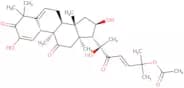
Cucurbitacin E
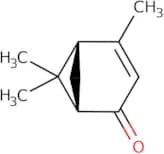
CAS:Produto Controlado<p>Cucurbitacin E is a triterpenoid compound, which is a natural product derived from plants in the Cucurbitaceae family. This bioactive compound exerts its effects primarily through the disruption of cytoskeletal integrity, inhibition of the JAK/STAT signaling pathway, and induction of apoptosis. These molecular activities make it a potent agent in research focusing on cellular proliferation and inflammation.</p>Fórmula:C32H44O8Pureza:Min. 95%Peso molecular:556.69 g/mol(1S)-(-)-(-)-Verbenone
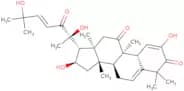
CAS:<p>(1S)-(-)-(-)-Verbenone is a bicyclic monoterpene, which is a type of terpenoid compound. It is naturally sourced from various plants, predominantly from the essential oils of pines and other coniferous trees. The mode of action of Verbenone is intriguing; it acts as an anti-aggregation pheromone in certain beetle species, disrupting their communication and reducing infestation levels. This mechanism is particularly effective against bark beetles, which are known to cause significant damage to forestry ecosystems.</p>Fórmula:C10H14OPureza:Min. 98 Area-%Cor e Forma:Clear LiquidPeso molecular:150.22 g/molCucurbitacin I
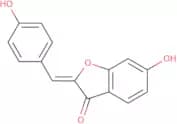
CAS:Produto ControladoInhibitor of STAT3/JAK2 signaling; radiosensitizerFórmula:C30H42O7Pureza:Min. 98 Area-%Cor e Forma:White PowderPeso molecular:514.65 g/molHispidol
CAS:Hispidol is a naturally occurring flavonoid compound, which is extracted from the Leguminosae family of plants. This class of compounds is characterized by its polyphenolic structure, contributing to its role within plant defense mechanisms. With an origin primarily in legumes, hispidol’s bioactive properties stem from its ability to interact with various enzymatic and receptor pathways.Fórmula:C15H10O4Pureza:Min. 95%Cor e Forma:Slightly Brown PowderPeso molecular:254.24 g/molbeta-Caryophyllene
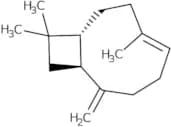
CAS:<p>Beta-Caryophyllene is a bicyclic sesquiterpene, which is a natural product found in essential oils derived from various plants, including black pepper, cloves, and cannabis. This compound is characterized by its unique ability to selectively bind to cannabinoid receptor type 2 (CB2), acting as a full agonist. Unlike typical cannabinoids, beta-Caryophyllene does not interact substantially with CB1 receptors, making it non-psychoactive.</p>Fórmula:C15H24Pureza:Min. 80%Cor e Forma:Clear LiquidPeso molecular:204.35 g/molGinkgolide C
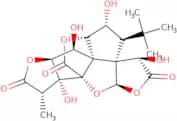
CAS:Ginkgolide C is a terpenoid lactone, which is a natural compound isolated from the leaves of the Ginkgo biloba tree. Ginkgolide C is primarily known for its activity as a specific antagonist of platelet-activating factor (PAF), a potent phospholipid activator and mediator of many leukocyte functions, including platelet aggregation. Its mode of action involves the inhibition of PAF binding to its receptor, thereby reducing PAF-related inflammatory responses and platelet aggregation.Fórmula:C20H24O11Pureza:Min. 95%Cor e Forma:PowderPeso molecular:440.4 g/molGinsenoside Rf
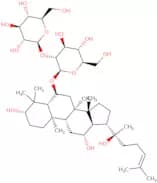
CAS:Ginsenoside Rf is a steroidal saponin, which is a bioactive compound found primarily in the roots of Panax ginseng, a plant widely used in traditional medicine. As a part of the ginsenoside family, this compound exerts its effects through modulation of several cellular pathways, including anti-inflammatory and antioxidant mechanisms. It is known to interact with glucocorticoid receptors and influence calcium ion channels, contributing to its potential neuroprotective and immunomodulatory effects.Fórmula:C42H72O14Pureza:Min. 95%Cor e Forma:White PowderPeso molecular:801.03 g/molIridogermanal
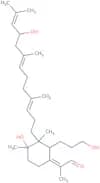
CAS:Please enquire for more information about Iridogermanal including the price, delivery time and more detailed product information at the technical inquiry form on this pageFórmula:C30H50O4Pureza:Min. 95%Peso molecular:474.72 g/molDeltoidin
CAS:Deltoidin is a cutting-edge biochemical compound, which is developed through intricate synthetic processes involving organic precursors. It functions by interacting at the molecular level with specific biochemical pathways, thereby modulating cellular responses precisely and effectively. This mode of action makes it highly valuable for targeted research applications where specific cellular mechanisms need to be studied or manipulated.Fórmula:C20H22O9Pureza:Min. 95%Peso molecular:406.38 g/molDigitoxose
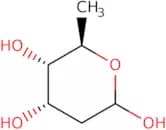
CAS:<p>Digitoxose is a deoxy sugar, which is an integral component of certain cardiac glycosides. These glycosides, such as digitoxin, are predominantly sourced from the leaves of the digitalis species, particularly Digitalis purpurea or Digitalis lanata. The sugar moiety, digitoxose, is critical for the glycoside's ability to exert its pharmacological effects through interactions with cellular components.</p>Fórmula:C6H12O4Pureza:Min. 95%Cor e Forma:Off-White Yellow PowderPeso molecular:148.16 g/molα-Amyrin
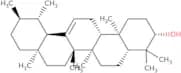
CAS:Produto Controlado<p>α-Amyrin is a pentacyclic triterpene, which is commonly found in the resins and latex of various plant species. It is primarily sourced from the lipophilic extracts of angiosperms, where it is often present in both the free form and as esters. Its mode of action involves modulation of key signaling pathways involved in inflammation and cellular oxidative stress, particularly through the inhibition of pro-inflammatory enzymes such as cyclooxygenase. α-Amyrin also induces apoptosis via mitochondrial pathways in certain cell types, adding to its therapeutic potential.</p>Fórmula:C30H50OPureza:Min. 95%Cor e Forma:PowderPeso molecular:426.72 g/molDiosbulbin B
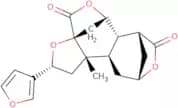
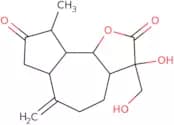
CAS:Diosbulbin B is a naturally occurring sesquiterpene lactone, which is derived primarily from the plant Dioscorea bulbifera, commonly known as "air potato" or "bitter yam." As a bioactive compound, Diosbulbin B demonstrates a mode of action that involves the induction of cytotoxicity in malignant cells, primarily through the disruption of microtubule dynamics, leading to cell cycle arrest and apoptosis.Fórmula:C19H20O6Pureza:Min. 98 Area-%Cor e Forma:PowderPeso molecular:344.36 g/molSteviolbioside
CAS:<p>Steviolbioside is a high-intensity sweetening compound, classified as a steviol glycoside. It is derived from the plant Stevia rebaudiana, a member of the Asteraceae family, which is native to South America. The mode of action of Steviolbioside involves interacting with sweet taste receptors on the human tongue, specifically the TAS1R2 and TAS1R3 receptor heterodimer, mimicking the sweetness perceived from traditional sugars but without eliciting a caloric response.</p>Fórmula:C32H50O13Pureza:Min. 95%Cor e Forma:PowderPeso molecular:642.73 g/molGibberellic acid
CAS:<p>Gibberellic acid is a plant growth regulator, which is derived from fungal species, particularly Gibberella fujikuroi. It functions by stimulating and regulating various growth and developmental processes within plants. Gibberellic acid works through promoting cell elongation, breaking seed dormancy, and influencing enzyme production that leads to plant growth and development.Gibberellic acid is extensively utilized in agricultural and horticultural applications to enhance plant growth, improve fruit size, and increase yields. It is also employed in seed treatment to facilitate more uniform and quicker germination. Additionally, gibberellic acid is used to regulate flowering and to promote the development of certain plant species under controlled environmental conditions. This compound plays a critical role in research, providing insights into plant physiology and the hormonal interactions that govern plant development.</p>Fórmula:C19H22O6Peso molecular:346.38 g/mol11,13-Dihydroxy-3-oxo-10(14)guaien-12,6-olide - Cynara cardunculus (artichoke)
CAS:11,13-Dihydroxy-3-oxo-10(14)guaien-12,6-olide is a bioactive compound, which is a phytochemical derived from Cynara cardunculus, commonly known as the artichoke. This compound belongs to a class of organic compounds known as sesquiterpene lactones. It is primarily sourced from the leaves and flower buds of the artichoke plant, which are rich in various polyphenolic and terpenoid components.Fórmula:C15H20O5Pureza:Min. 95%Cor e Forma:PowderPeso molecular:280.32 g/molCurcumol
CAS:<p>Curcumol is a bioactive compound, which is a sesquiterpenoid alcohol primarily extracted from the rhizome of the plant Curcuma wenyujin, a member of the Zingiberaceae family. The source plant is native to parts of Asia and has been traditionally used in herbal medicine. The mode of action of Curcumol involves modulation of multiple biochemical pathways, including anti-inflammatory and antioxidant pathways. It has been observed to influence cellular signaling cascades that regulate apoptosis, cell proliferation, and angiogenesis, making it a compound of interest in oncology research.</p>Fórmula:C15H24O2Pureza:Min. 95%Cor e Forma:PowderPeso molecular:236.35 g/molS-Petasin - Petasites japonicus (sweet coltsfoot)
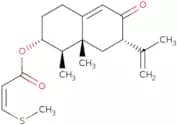
CAS:<p>S-Petasin is a standard botanical extract derived from Petasites japonicus, commonly known as sweet coltsfoot. This product is characterized by its anti-inflammatory properties, primarily sourced from bioactive sesquiterpenes naturally occurring in the plant. The mode of action of S-Petasin involves the inhibition of leukotriene synthesis and the modulation of inflammatory pathways, which can reduce allergic reactions and inflammatory processes.</p>Fórmula:C19H26O3SPureza:Min. 95%Cor e Forma:PowderPeso molecular:334.47 g/molParthenolide
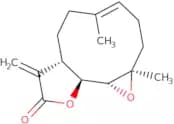
CAS:Parthenolide is a sesquiterpene lactone, which is a bioactive compound derived from the plant species Tanacetum parthenium, commonly known as feverfew. This compound is primarily isolated from the aerial parts of the plant, where it is found in highest concentrations within the flowers and leaves. Parthenolide exerts its effects through several biochemical pathways, including the inhibition of nuclear factor-kappa B (NF-κB) signaling, which plays a critical role in inflammatory and immune responses. Additionally, it disrupts the activity of certain kinases and modulates the expression of genes involved in cell cycle regulation and apoptosis.Fórmula:C15H20O3Pureza:Min. 98 Area-%Cor e Forma:White Off-White PowderPeso molecular:248.32 g/molGinsenoside Rh3
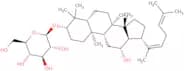
CAS:<p>Ginsenoside Rh3 is a bioactive saponin compound, which is a principle component isolated from Panax ginseng, a perennial plant widely known for its medicinal properties. This compound represents a specific form of ginsenoside with distinct pharmacological characteristics derived through the deglycosylation process of other ginsenosides during processing or digestion.</p>Fórmula:C36H60O7Pureza:Min. 95%Cor e Forma:White Off-White PowderPeso molecular:604.86 g/molSaikosaponin D
CAS:<p>Saikosaponin D is a bioactive compound, specifically a triterpenoid saponin, which is derived from the roots of Bupleurum species, plants commonly used in traditional Chinese medicine. Its mode of action involves modulating key pathways in inflammation and apoptosis. This compound targets cellular mechanisms by interacting with inflammatory mediators and apoptotic proteins, thereby influencing immune responses and cellular survival.</p>Fórmula:C42H68O13Pureza:Min. 98 Area-%Cor e Forma:White PowderPeso molecular:780.98 g/mol