Terpenóides
Os terpenoides, também conhecidos como isoprenoides, são a maior classe de compostos orgânicos naturais, derivados de unidades de isopreno de cinco carbonos. Eles são encontrados em diversas plantas e são conhecidos por suas propriedades aromáticas, bem como por seu papel na defesa e sinalização das plantas. Os terpenoides têm sido amplamente estudados por seus efeitos terapêuticos, incluindo propriedades anti-inflamatórias, antimicrobianas e anticancerígenas. Eles são usados nas indústrias farmacêutica, cosmética e alimentícia devido aos seus benefícios para a saúde e qualidades aromáticas. Na CymitQuimica, você encontrará uma ampla seleção de terpenoides, essenciais para a pesquisa em biologia vegetal, farmacologia e síntese de produtos naturais.
Subcategorias de "Terpenóides"
- Diterpenos (C₂₀)(671 produtos)
- Hemiterpenos (C₅)(21 produtos)
- Monoterpenos (C₁₀)(709 produtos)
- Sesquiterpenos (C₂₅)(452 produtos)
- Tetraterpenos (C₄₀)(63 produtos)
- Triterpenos (C₃₀)(1.130 produtos)
Foram encontrados 1423 produtos de "Terpenóides"
Ordenar por
Pureza (%)
0
100
|
0
|
50
|
90
|
95
|
100
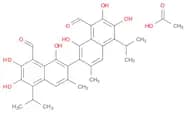
Gossypol Acetic Acid
CAS:Fórmula:C32H34O10Pureza:95%Cor e Forma:SolidPeso molecular:578.6063599999999b-D-Glucopyranoside,(1aR,2S,3aR,5R,5aR,5bS)-5b-[(benzoyloxy)methyl]tetrahydro-5-hydroxy-2-methyl-2,5-methano-1H-3,4-dioxacyclobuta[cd]pentalen-1a(2H)-yl
CAS:Fórmula:C23H28O11Pureza:95%Cor e Forma:SolidPeso molecular:480.46181H-4,6:16,19-Dietheno-21,25-metheno-12H-[1,3]dioxolo[4,5-g]pyrido[2',3':17,18][1,10]dioxacycloeicosino[2,3,4-ij]isoquinoline,2,3,13,14,14a,15,26,26a-octahydro-22,30-dimethoxy-1,14-dimethyl-,(14aS,26aR)-
CAS:Fórmula:C37H38N2O6Pureza:97%Cor e Forma:SolidPeso molecular:606.7074Ref: IN-DA00I8RC
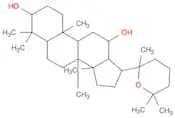
Produto descontinuadoDammarane-3,12-diol, 20,25-epoxy-, (3b,12b,20R)-
CAS:Fórmula:C30H52O3Cor e Forma:SolidPeso molecular:460.7321Ref: IN-DA003AAQ
Produto descontinuadoFarnesol (mixture of isomers)
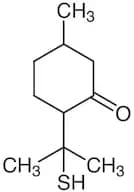
CAS:Produto ControladoFórmula:C15H26OCor e Forma:NeatPeso molecular:222.378-Mercaptomenthone
CAS:Fórmula:C10H18OSPureza:>97.0%(GC)(T)Cor e Forma:Colorless to Light yellow to Light orange clear liquidPeso molecular:186.31(-)-Borneol 100 µg/mL in Acetonitrile
CAS:Fórmula:C10H18OCor e Forma:Single SolutionPeso molecular:154.25α-Terpinene 2000 µg/mL in Acetonitrile
CAS:Fórmula:C10H16Cor e Forma:Single SolutionPeso molecular:136.23Geranyl acetate 100 µg/mL in Acetonitrile
CAS:Fórmula:C12H20O2Cor e Forma:Single SolutionPeso molecular:196.29(1S)-β-Pinene 2000 µg/mL in Acetonitrile
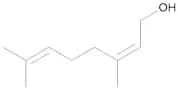
CAS:Fórmula:C10H16Cor e Forma:Single SolutionPeso molecular:136.23Nerol 1000 µg/mL in Isopropanol
CAS:Produto ControladoFórmula:C10H18OCor e Forma:Single SolutionPeso molecular:154.25Peduncloside II
CAS:<p>Peduncloside II is a rare glucoside, a type of chemical compound, that is naturally derived from specific plant sources. The source of Peduncloside II is primarily the traditional medicinal plant, which has been utilized in various indigenous pharmacopeias, particularly in certain regions of Asia. It is isolated from plant tissues where it functions as a secondary metabolite.</p>Fórmula:C36H58O10Pureza:Min. 95%Cor e Forma:PowderPeso molecular:650.84 g/molRef: 3D-FP65835
Produto descontinuadoStrigolactone GR24
CAS:<p>Strigolactone GR24 is a synthetic analog of strigolactones, which are a class of plant hormones derived from the carotenoid biosynthetic pathway. These compounds play a critical role in plant development and interaction with the environment. Strigolactone GR24 functions by mimicking the action of natural strigolactones, influencing plant architecture and facilitating communication with symbiotic organisms.</p>Fórmula:C17H14O5Pureza:Min. 98 Area-%Cor e Forma:White PowderPeso molecular:298.29 g/molRef: 3D-FG167307
Produto descontinuado8(17)14-Labdadiene-13,18-diol, picea sitchensis (sitka spruce)
CAS:<p>8(17)14-Labdadiene-13,18-diol is a diterpene, a class of chemical compounds known for their diverse structural traits and biological activities. This compound is derived from Picea sitchensis, commonly known as Sitka spruce, which is native to the western regions of North America. The diterpene structure of 8(17)14-Labdadiene-13,18-diol is significant due to its potential biological interactions.</p>Fórmula:C20H34O2Pureza:Min. 95%Peso molecular:306.48 g/molRef: 3D-XA170622
Produto descontinuado(+)-Menthol
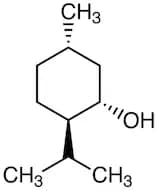
CAS:Fórmula:C10H20OPureza:>99.0%(GC)Cor e Forma:White or Colorless powder to lump to clear liquidPeso molecular:156.27Linalyl Butyrate
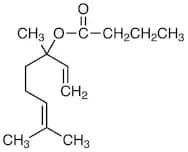
CAS:Fórmula:C14H24O2Pureza:>97.0%(GC)Cor e Forma:Colorless to Almost colorless clear liquidPeso molecular:224.3420(R)Ginsenoside Rh1
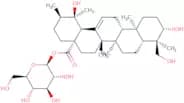
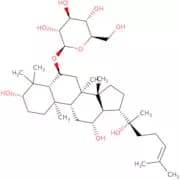
CAS:<p>20(R)-Ginsenoside Rh1 is a bioactive compound, which is a secondary metabolite extracted from Panax ginseng, a medicinal plant widely utilized in traditional medicine. This ginsenoside functions by modulating various cellular pathways, interacting with nuclear receptors and signal transduction molecules, thus influencing immune responses, anti-inflammatory activities, and neuroprotective mechanisms.</p>Pureza:Min. 95%Ref: 3D-FG73799
Produto descontinuado(+)-Cembrene
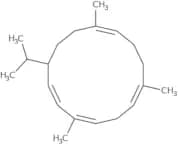
CAS:<p>(+)-Cembrene is a diterpene hydrocarbon, which is a naturally occurring compound primarily found in marine organisms such as soft corals. This compound is characterized by its complex cyclic structure, which is a hallmark of many terpenoids known for diverse biological activities. The source of (+)-Cembrene is often the soft coral species, where it functions as a part of the organism's chemical defense system, deterring predators and inhibiting microbial growth.</p>Fórmula:C20H32Pureza:Min. 95%Cor e Forma:White PowderPeso molecular:272.47 g/mol

![b-D-Glucopyranoside,(1aR,2S,3aR,5R,5aR,5bS)-5b-[(benzoyloxy)methyl]tetrahydro-5-hydroxy-2-methyl-2…](/_next/image/?url=https%3A%2Fstatic.cymitquimica.com%2Fproducts%2FIN%2Fthumb-webp%2FDA00I4J3.webp&w=3840&q=75)
![1H-4,6:16,19-Dietheno-21,25-metheno-12H-[1,3]dioxolo[4,5-g]pyrido[2',3':17,18][1,10]dioxacycloeico…](/_next/image/?url=https%3A%2Fstatic.cymitquimica.com%2Fproducts%2FIN%2Fthumb-webp%2FDA00I8RC.webp&w=3840&q=75)