Flavonóides
Os flavonoides são um grupo de metabólitos vegetais com propriedades antioxidantes que contribuem para a cor de frutas e flores. Eles desempenham um papel importante na proteção das plantas contra radiação UV e patógenos. Os flavonoides são estudados por seus potenciais benefícios à saúde, incluindo propriedades anti-inflamatórias, antivirais e anticancerígenas. Eles são amplamente pesquisados nos campos da farmacologia, nutrição e biologia molecular.
Subcategorias de "Flavonóides"
- Antocianidinas(46 produtos)
- Antocianinas(46 produtos)
- Catequinas(88 produtos)
- Chalconas(237 produtos)
- Pterocarpanos(28 produtos)
Foram encontrados 2408 produtos de "Flavonóides"
Ordenar por
Pureza (%)
0
100
|
0
|
50
|
90
|
95
|
100
3'-Methoxy-5,7,4'-trihydroxyflavanone
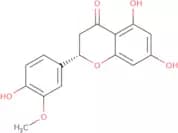
CAS:<p>3'-Methoxy-5,7,4'-trihydroxyflavanone is a flavanone compound, which is a type of flavonoid commonly found in various plants. Flavanones are known for their diverse biological activities and are part of the polyphenol family. This particular compound is often sourced from natural plant extracts, such as those of fruits and herbs, which are rich in flavonoids.</p>Fórmula:C16H14O6Pureza:Min. 97 Area-%Cor e Forma:PowderPeso molecular:302.28 g/mol3,7,8,2',4'-Pentahydroxyflavone
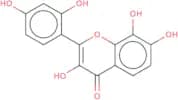
3,7,8,2',4'-Pentahydroxyflavone is a flavonoid compound, which is a type of polyphenolic secondary metabolite found in various plants. This compound is typically isolated from natural sources, including vegetables, fruits, and certain herbs. Its chemical structure, characterized by multiple hydroxyl groups, contributes to its potent antioxidant activity, allowing it to scavenge free radicals effectively.Fórmula:C15H10O7Pureza:90%Cor e Forma:PowderPeso molecular:302.24 g/mol4'-Hydroxy-3'-methoxyflavanone
CAS:<p>4'-Hydroxy-3'-Methoxyflavanone is a flavanone, which is a type of polyphenolic compound. It is extracted from various plant sources, particularly those belonging to the citrus family. The compound displays a characteristic structural arrangement that includes an aromatic ring with hydroxy and methoxy substituents, imparting unique bioactive properties.</p>Fórmula:C16H14O4Pureza:Min. 95%Peso molecular:270.28 g/molCochliophilin A
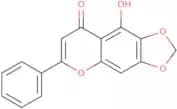
CAS:Cochliophilin A is a specialized secondary metabolite, which is isolated from certain fungal species, notably of the genus *Cochliobolus*. This compound is known for its role as a self-germination and tropic factor, meaning it can influence both the germination and directional growth of fungal spores. The mechanism of action involves its binding to specific receptors on the spore surface, triggering intracellular pathways that promote germination under suitable environmental conditions. Furthermore, it can induce directed growth responses, facilitating interactions between fungi and host organisms in nature.Fórmula:C16H10O5Pureza:Min. 95%Cor e Forma:PowderPeso molecular:282.25 g/molBiochanin A-7-methyl ether
CAS:<p>Biochanin A-7-methyl ether is a naturally occurring isoflavone, which is derived from plant sources such as the Fabaceae family. It is a methylated derivative of the isoflavone biochanin A. The compound is predominantly obtained through extraction and purification processes from specific plant materials known to contain isoflavones.</p>Fórmula:C17H14O5Pureza:Min. 98 Area-%Cor e Forma:PowderPeso molecular:298.29 g/molAmpelopsin-3'-O-glucoside
CAS:<p>Ampelopsin-3'-O-glucoside is a flavonoid glycoside, which is a compound derived from various plant sources, including members of the Vitaceae family. This compound is characterized by the attachment of a glucose molecule to the flavonoid ampelopsin, altering its solubility and bioavailability properties. Its mode of action is primarily through its antioxidant activity, involving the scavenging of free radicals and inhibition of oxidative stress pathways. These properties are of significant interest due to their potential in modulating the oxidative status in biological systems.</p>Fórmula:C21H22O13Pureza:Min. 95%Cor e Forma:PowderPeso molecular:482.39 g/molDaidzein
CAS:Daidzein is an isoflavone compound, which is a type of phytoestrogen primarily sourced from soybeans and other legumes. It exhibits estrogenic activity through its ability to bind to estrogen receptors, albeit with less potency than endogenous estrogens. This selective estrogen receptor modulator (SERM) can mimic or modulate natural estrogen effects in the body, depending on the physiological context.Fórmula:C15H12O4Pureza:Min. 95%Cor e Forma:White PowderPeso molecular:256.25 g/mol5,6,7,2'-Tetramethoxyflavone
CAS:5,6,7,2'-Tetramethoxyflavone is a naturally occurring flavonoid, which is a type of polyphenolic compound. It is predominantly sourced from various plant species known for their medicinal properties. Flavonoids are typically derived from the intricate biochemical pathways in plants, where they contribute to the plant's defense mechanisms against environmental stressors.Fórmula:C19H18O6Pureza:Min. 95%Peso molecular:342.34 g/molKaempferol-3-glucoside(6”-O-acetate)-7-glucoside
CAS:<p>Kaempferol-3-glucoside(6”-O-acetate)-7-glucoside is a flavonoid glycoside, which is a naturally occurring compound found in various plants and foods. This compound originates from plant sources, notably in fruits, vegetables, and certain traditional medicines, where it is biosynthesized as a secondary metabolite.</p>Fórmula:C29H32O17Pureza:Min. 95%Peso molecular:652.55 g/mol2'-Hydroxyflavone
CAS:2'-Hydroxyflavone is a flavonoid compound that is naturally derived from various plant sources and is commonly found in certain fruits, vegetables, and herbs. Its structure is characterized by the presence of a hydroxyl group at the 2' position, which significantly influences its biological activity.Fórmula:C15H10O3Cor e Forma:PowderPeso molecular:238.24 g/molKaempferol-3-rutinoside
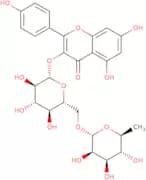
CAS:Kaempferol-3-rutinoside is a naturally occurring flavonoid glycoside, which is derived from various plant sources such as tea, fruits, and vegetables. It is a complex compound where the flavonoid kaempferol is conjugated to a disaccharide, rutinoside. The mode of action involves its ability to scavenge free radicals due to its antioxidant properties, as well as inhibit specific enzymes and pathways associated with inflammation, thus providing both antioxidant and anti-inflammatory benefits.Fórmula:C27H30O15Pureza:Min. 95%Cor e Forma:PowderPeso molecular:594.52 g/molAzoxystrobin
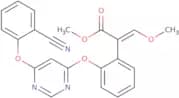
CAS:Azoxystrobin is a fungicide, which is a synthesized chemical compound, derived from natural strobilurin compounds produced by fungi. Its mode of action involves inhibiting mitochondrial respiration in fungi by blocking the cytochrome bc1 complex, disrupting energy production essential for fungal growth and survival.Fórmula:C22H17N3O5Pureza:Min. 95%Cor e Forma:PowderPeso molecular:403.39 g/molCalycosin-7-O-β-D-glucoside
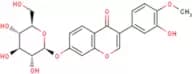
CAS:Calycosin-7-O-β-D-glucoside (calycosin-7-O-beta-D-glucopyranoside) possesses a protective effect on rat hepatocytes, an inhibitory effect on COX-2 activity.Fórmula:C22H22O10Pureza:98% - 99.981%Cor e Forma:SolidPeso molecular:446.40Ref: TM-T3388
2mg42,00€5mg62,00€10mg87,00€25mg170,00€50mg274,00€100mg406,00€200mg592,00€1mL*10mM (DMSO)67,00€5-Hydroxyflavanone
CAS:5-Hydroxyflavanone is a naturally occurring flavonoid compound, which is predominantly sourced from various plant species, including fruits, vegetables, and certain herbs. These plants synthesize flavonoids as part of their secondary metabolism, aiding in defense mechanisms against pathogens and contributing to their pigmentation.Fórmula:C15H12O3Pureza:Min. 95%Cor e Forma:Off-White PowderPeso molecular:240.25 g/molIzalpinin
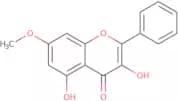
CAS:Izalpinin is a specialized phytochemical compound, specifically a flavonoid, which is derived from various plant sources. It exhibits a range of bioactive properties due to its complex chemical structure. The primary mode of action of Izalpinin involves modulation of cellular signaling pathways and inhibition of specific enzymatic activities, which underpins its diverse pharmacological effects.Fórmula:C16H12O5Pureza:Min. 95%Peso molecular:284.26 g/molGlycitin
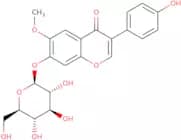
CAS:Glycitin is an isoflavone glycoside, which is a bioactive compound primarily derived from soybeans. This natural compound is sourced from the soy plant, Glycine max, where it serves as one of the predominant isoflavones. Isoflavones like glycitin function as phytoestrogens, plant-derived compounds that can mimic or modulate the action of estrogen in the body. Glycitin undergoes hydrolysis in the digestive system to produce its aglycone form, glycitein, which can interact with estrogen receptors and exert estrogenic effects.Fórmula:C22H22O10Pureza:Min. 98 Area-%Cor e Forma:White PowderPeso molecular:446.4 g/mol5-Hydroxy-7-methoxyisoflavone
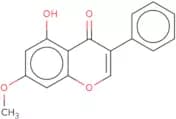
CAS:5-Hydroxy-7-methoxyisoflavone is an isoflavone compound, a type of naturally occurring organic substance usually derived from plant sources such as soybeans and other legumes. These compounds are known for their significant role in the plant kingdom, often contributing to the plant's resistance against pathogens and environmental stresses. The mode of action of 5-Hydroxy-7-methoxyisoflavone involves its potential antioxidant properties, where it may neutralize free radicals, thereby reducing oxidative stress and cellular damage. This activity arises primarily from its chemical structure, enabling it to donate electrons to unstable molecules.Fórmula:C16H12O4Pureza:Min. 95%Peso molecular:268.26 g/molNeoisoastilbin
CAS:<p>Neoisoastilbin is a chemical compound, specifically a flavonoid derivative, derived primarily from natural botanical sources such as certain species of plants. It is characterized by its unique structural configuration which distinguishes it from its closely related isomers. As a flavonoid, Neoisoastilbin acts through multiple biochemical pathways, notably by scavenging free radicals and modulating oxidative stress responses, which can have significant implications in biological systems.Neoisoastilbin's notable applications lie in its potential antioxidant properties, which are of particular interest in the fields of pharmacology and biochemistry. Researchers study its effects on cellular models to understand its role in protecting cells from oxidative damage. It also has potential applications in the development of therapeutic agents aiming to mitigate conditions associated with oxidative stress, such as neurodegenerative diseases or cardiovascular disorders. Investigations into its pharmacodynamics and pharmacokinetics are essential to elucidate its full potential and mechanisms within complex biological systems.</p>Fórmula:C21H22O11Pureza:Min. 95%Peso molecular:450.39 g/molScutellarein 7-methyl ether
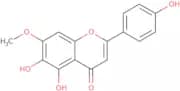
CAS:Scutellarein 7-methyl ether is a naturally occurring flavone derivative, which is primarily sourced from various plant species within the genus Scutellaria. These plants are rich in flavonoids and have been studied extensively for their diverse biochemical properties. The mode of action of Scutellarein 7-methyl ether involves its ability to act as an antioxidant, neutralizing free radicals and reducing oxidative stress at the cellular level. This compound has been observed to interfere with various enzymatic pathways, contributing to its potential therapeutic effects.Fórmula:C16H12O6Pureza:Min. 95%Cor e Forma:PowderPeso molecular:300.26 g/molIsoastilbin
CAS:Isoastilbin is a bioactive flavonoid, which is a naturally occurring compound found primarily in certain plant species, such as the Chinese herb Smilax glabra and Engelhardtia roxburghiana Wall leaf. As a derivative of astilbin, it possesses a unique mechanism that involves the modulation of cellular redox states. Isoastilbin's mode of action is primarily through its antioxidant properties, where it scavenges free radicals and thus, mitigates oxidative stress at a cellular level. Additionally, it exhibits anti-inflammatory effects by inhibiting the production of pro-inflammatory cytokines.The applications of Isoastilbin are diverse and promising in scientific research. It is extensively studied for its potential therapeutic benefits in combating diseases associated with oxidative stress and inflammation, such as cardiovascular diseases, neurodegenerative disorders, and certain metabolic syndromes. Furthermore, its role in cell signaling and apoptosis makes it a candidate for cancer research, offering insights into the molecular pathways that can be targeted for therapeutic intervention. Isoastilbin’s multifunctional properties make it a compelling subject for ongoing pharmacological and biomedical research.Fórmula:C21H22O11Pureza:Min. 95%Cor e Forma:PowderPeso molecular:450.39 g/mol