Flavonóides
Os flavonoides são um grupo de metabólitos vegetais com propriedades antioxidantes que contribuem para a cor de frutas e flores. Eles desempenham um papel importante na proteção das plantas contra radiação UV e patógenos. Os flavonoides são estudados por seus potenciais benefícios à saúde, incluindo propriedades anti-inflamatórias, antivirais e anticancerígenas. Eles são amplamente pesquisados nos campos da farmacologia, nutrição e biologia molecular.
Subcategorias de "Flavonóides"
- Antocianidinas(46 produtos)
- Antocianinas(46 produtos)
- Catequinas(88 produtos)
- Chalconas(237 produtos)
- Pterocarpanos(28 produtos)
Foram encontrados 2408 produtos de "Flavonóides"
Ordenar por
Pureza (%)
0
100
|
0
|
50
|
90
|
95
|
100
Tectorigenin
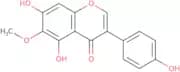
CAS:<p>Tectorigenin is a naturally occurring isoflavone, which is derived from plants such as Belamcanda chinensis and the Pueraria genus. It functions primarily as an antioxidant and has demonstrated various biological activities. Tectorigenin acts by inhibiting certain enzymes and signaling pathways, which contributes to its anti-inflammatory, anti-cancer, and neuroprotective effects.</p>Fórmula:C16H12O6Pureza:Min. 95%Cor e Forma:White PowderPeso molecular:300.26 g/mol2',6-Dihydroxyflavone
CAS:<p>2',6-Dihydroxyflavone is a natural flavonoid compound, which is derived from various plant sources. This compound is known for its interaction with cellular pathways and has been studied extensively for its potential neuroprotective effects. 2',6-Dihydroxyflavone acts as an agonist for the TrkB receptor, which is the high-affinity catalytic receptor for the brain-derived neurotrophic factor (BDNF). By activating this receptor, it plays a crucial role in neuronal survival, development, and plasticity.</p>Fórmula:C15H10O4Pureza:Min. 95%Peso molecular:254.24 g/mol5,8-Dihydroxy-3,3',4',7-tetramethoxyflavone
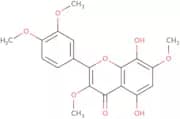
CAS:<p>5,8-Dihydroxy-3,3',4',7-tetramethoxyflavone is a secondary metabolite of plants that belongs to the group of phytochemicals. It is one of the most potent natural antioxidants and has been shown to have antioxidant activity in a number of different assays. 5,8-Dihydroxy-3,3',4',7-tetramethoxyflavone can be used for analytical purposes as an HPLC standard or reference material. This compound has also been shown to inhibit tumor cell proliferation in vitro and may be useful for research and development purposes.</p>Fórmula:C19H18O8Pureza:Min. 95%Peso molecular:374.34 g/mol5-Hydroxy-7,4'-dimethoxy-6,8-dimethylflavone
CAS:5-Hydroxy-7,4'-dimethoxy-6,8-dimethylflavone is a bioactive flavonoid compound, which is naturally derived from certain plant sources. As a type of flavone, this compound is notable for its polyphenolic skeleton that contributes to notable biological properties. Its mode of action primarily involves modulating various enzymatic pathways and cellular signaling processes due to its structural ability to interact with biomolecules like enzymes and receptors. This interaction can lead to a range of biological effects, including antioxidant and anti-inflammatory activities.Fórmula:C19H18O5Pureza:Min. 95%Peso molecular:326.34 g/molMorin hydrate
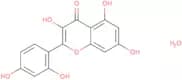
CAS:<p>Morin hydrate is a flavonoid compound, which is a naturally occurring substance found primarily in the members of the Moraceae family, such as morus or mulberry and other fruits. It possesses significant antioxidant activity, which is achieved through its ability to scavenge free radicals and inhibit oxidative stress pathways. This mechanism of action is primarily due to its capacity to donate hydrogen atoms, thereby neutralizing unstable and reactive oxidative species.</p>Fórmula:C15H10O7·xH2OPureza:Min. 95%Cor e Forma:PowderPeso molecular:302.24 g/molScutellarein-7-O-glucoside
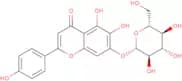
CAS:Scutellarein-7-O-glucoside is a flavonoid glucoside, which is a type of phenolic compound commonly found in plants. This compound is primarily sourced from the Scutellaria species, among other botanical sources, where it occurs as a glycoside derivative of scutellarein. It serves a vital role in plant defense mechanisms, contributing to resistance against pathogens and ultraviolet radiation.Fórmula:C21H20O11Pureza:Min. 95%Cor e Forma:White PowderPeso molecular:448.38 g/molOrobol 7,3'-dimethyl ether
CAS:<p>Orobol 7,3'-dimethyl ether is a flavonoid compound, which is derived from natural plant sources. This compound is synthesized as a methylated ether of Orobol, a type of isoflavone. The mode of action of Orobol 7,3'-dimethyl ether involves interacting with biological pathways that may influence cellular processes, including antioxidant and anti-inflammatory activities. By modulating these pathways, it potentially impacts various physiological functions.</p>Fórmula:C17H14O6Pureza:Min. 95%Peso molecular:314.29 g/molPuerarin
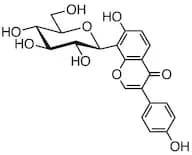
CAS:Fórmula:C21H20O9Pureza:>98.0%(T)(HPLC)Cor e Forma:White to Almost white powder to crystalPeso molecular:416.382',7-Dihydroxyflavone
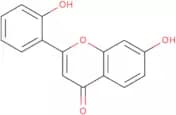
CAS:<p>2',7-Dihydroxyflavone is a natural flavonoid compound, which is derived from plant sources, particularly within the broader family of flavonoids known for their diverse biological activities. This compound exhibits its mode of action primarily through interactions with cellular signaling pathways, notably acting as a potent agonist for the TrkB receptor, a critical component in neurotrophic signaling. The activation of TrkB is pivotal in promoting neuronal survival, differentiation, and synaptic plasticity, making this compound of significant interest in the field of neuroscience.</p>Fórmula:C15H10O4Pureza:Min. 95%Cor e Forma:PowderPeso molecular:254.24 g/molFlavanone rhamnoglucoside
<p>Flavanone rhamnoglucoside is a specialized flavonoid compound, which is derived from various natural sources such as fruits, vegetables, and certain medicinal plants. It functions primarily as an antioxidant by scavenging free radicals, thereby protecting cells from oxidative stress. Additionally, it exhibits anti-inflammatory properties by modulating pathways involved in inflammation, such as NF-kB and COX-2.</p>Pureza:Min. 95%Apigenin - 94%
CAS:<p>Apigenin - 94% is a purified form of apigenin, which is a naturally occurring flavonoid. It is primarily sourced from various plant species, including parsley, celery, and chamomile, where it is a prominent active component. The mode of action of apigenin involves multiple biochemical pathways: it acts as an anti-inflammatory agent, modulates enzyme activities, and exhibits antioxidant properties by scavenging free radicals. Additionally, apigenin interacts with cellular signaling pathways, such as the MAPK and PI3K/Akt, which contribute to its protective effects against oxidative stress and its potential in promoting apoptosis in cancerous cells.</p>Fórmula:C15H10O5Pureza:Min. 95%Cor e Forma:PowderPeso molecular:270.24 g/molIsoaloeresin D (contains up to 20% Aloeresin D)
CAS:<p>Isoaloeresin D is a natural compound product, which is derived from the Aloe plant, specifically containing up to 20% Aloeresin D. It is a phytochemical extracted from the leaves of Aloe species, renowned for its inclusion of various bioactive compounds. The primary mode of action of Isoaloeresin D involves its potential antioxidant properties, which may contribute to the neutralization of free radicals and reduction of oxidative stress within biological systems.</p>Fórmula:C29H32O11Pureza:Min. 95%Cor e Forma:PowderPeso molecular:556.56 g/molQuercetin-3-O-β-D-glucopyranosyl-6-acetate
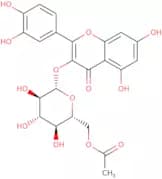
CAS:Quercetin-3-O-beta-D-glucopyranosyl-6-acetate is a glycosylated flavonoid compound, which is a naturally occurring plant metabolite. This compound is predominantly sourced from various plant species, where it acts as a secondary metabolite contributing to plant defense mechanisms. The mode of action of Quercetin-3-O-beta-D-glucopyranosyl-6-acetate involves its ability to function as an antioxidant, scavenging free radicals and reducing oxidative stress in biological systems. Additionally, its glycosylated structure may enhance its solubility and stability, facilitating better bioavailability compared to non-glycosylated counterparts.Fórmula:C23H22O13Pureza:Min. 95%Cor e Forma:PowderPeso molecular:506.41 g/mol7-Hydroxyflavone-beta-D-glucoside
CAS:<p>7-Hydroxyflavone-beta-D-glucoside is a glucoside compound, which is a type of natural flavonoid derivative. This compound is derived from plant sources, particularly those rich in flavonoids, where it is a metabolite formed through the glycosylation of 7-hydroxyflavone. The mode of action of 7-Hydroxyflavone-beta-D-glucoside involves interacting with cellular antioxidative pathways. It potentially offers protection against oxidative stress by scavenging free radicals and modulating enzyme activities related to oxidative metabolism.</p>Fórmula:C21H20O8Pureza:Min. 95%Cor e Forma:PowderPeso molecular:400.38 g/molPomiferin-3',4'-dimethylether
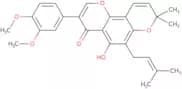
CAS:<p>Pomiferin-3',4'-dimethylether is a natural flavonoid compound, which is isolated from plants such as the Osage orange (Maclura pomifera). This compound is derived through meticulous extraction techniques that preserve its bioactive properties.</p>Fórmula:C27H28O6Pureza:Min. 95%Peso molecular:448.51 g/molDihydrogenistein 4'-methyl ether
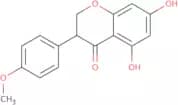
CAS:<p>Dihydrogenistein 4'-methyl ether is a phytoestrogen compound, which is derived from botanical sources such as Leguminosae plants. Its molecular structure consists of a flavonoid backbone, specifically modified with a methyl ether group at the 4' position. This structural modification imparts unique biological properties to the compound.</p>Fórmula:C16H14O5Pureza:Min. 95%Cor e Forma:PowderPeso molecular:286.28 g/mol7-Hydroxy-4'-methoxyisoflavan
CAS:7-Hydroxy-4'-methoxyisoflavan is a naturally occurring isoflavan, which is a type of flavonoid compound predominantly derived from leguminous plants. Isoflavans are a subclass of isoflavonoids that are known for their diverse biological activities. This particular compound is often extracted from plants in the Fabaceae family and exhibits a rich chemical framework that supports multiple pharmacological functions.Fórmula:C16H16O3Pureza:Min. 95%Peso molecular:256.3 g/molDihydrogenistein - decarboxy-dihydroxygenistein mixture
Dihydrogenistein - decarboxy-dihydroxygenistein mixture is a synthetic biochemical compound, which is derived from the modification of isoflavonoid structures primarily sourced from plants. This mixture represents a complex amalgamation of two chemically altered forms of natural phytoestrogens. It functions by interacting with various cellular pathways, potentially influencing gene expression and signaling mechanisms through selective modulation of estrogen receptors and related enzymatic activities.Pureza:Min. 95%Hesperetin 7-O-β-D-glucuronide
CAS:<p>Hesperetin 7-O-beta-D-glucuronide is a flavonoid metabolite, which is a derivative of hesperetin commonly found in citrus fruits. This compound is produced through the biotransformation of hesperetin, involving conjugation with glucuronic acid in the liver, and is integral to the metabolism of flavonoids in humans. Hesperetin 7-O-beta-D-glucuronide exhibits potential antioxidant properties, making it of interest in scientific research aimed at exploring its bioactivity and potential therapeutic benefits.</p>Fórmula:C22H22O12Pureza:Min. 95%Peso molecular:478.4 g/mol8-Prenylnaringenin
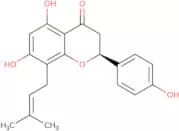
CAS:<p>8-Prenylnaringenin is a flavonoid compound, which is a naturally occurring phytoestrogen. It is primarily found in hops (Humulus lupulus), a plant commonly used in brewing beer. The compound is known for its high estrogenic activity, which is attributed to its ability to bind to estrogen receptors, particularly the estrogen receptor alpha.</p>Fórmula:C20H20O5Pureza:Min. 98 Area-%Cor e Forma:PowderPeso molecular:340.37 g/mol