Flavonóides
Os flavonoides são um grupo de metabólitos vegetais com propriedades antioxidantes que contribuem para a cor de frutas e flores. Eles desempenham um papel importante na proteção das plantas contra radiação UV e patógenos. Os flavonoides são estudados por seus potenciais benefícios à saúde, incluindo propriedades anti-inflamatórias, antivirais e anticancerígenas. Eles são amplamente pesquisados nos campos da farmacologia, nutrição e biologia molecular.
Subcategorias de "Flavonóides"
- Antocianidinas(46 produtos)
- Antocianinas(46 produtos)
- Catequinas(88 produtos)
- Chalconas(237 produtos)
- Pterocarpanos(28 produtos)
Foram encontrados 2408 produtos de "Flavonóides"
Ordenar por
Pureza (%)
0
100
|
0
|
50
|
90
|
95
|
100
Kaempferol -3,7-di-O-glucoside
CAS:<p>Kaempferol-3,7-di-O-glucoside is a naturally occurring flavonoid, which is commonly derived from various plant sources, including fruits, vegetables, and medicinal herbs. As a flavonoid, it appears predominantly in the form of glycosides, where kaempferol is conjugated with sugar moieties, enhancing its solubility and bioavailability.</p>Fórmula:C27H30O16Pureza:Min. 95%Peso molecular:610.52 g/molGrosvenorine
CAS:<p>Grosvenorine is a biochemical compound, which is a natural glycoside extracted from the fruit of Siraitia grosvenorii, commonly known as monk fruit. This compound is primarily sourced from the cucurbitaceae family of plants, renowned for their sweet-tasting fruits. The mode of action of grosvenorine involves its interaction with various metabolic pathways, exhibiting antioxidant and anti-inflammatory properties.</p>Pureza:Min. 95%(2R)-5,7-Dimethoxyflavanone
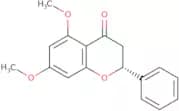
CAS:<p>(2R)-5,7-Dimethoxyflavanone is a natural flavonoid, which is a type of polyphenolic compound. It is derived from various plant sources, commonly found in fruits, vegetables, and certain medicinal herbs. Its structure includes a flavanone backbone with methoxy groups at specific positions, which modulate its biological activity.</p>Fórmula:C17H16O4Pureza:Min. 95%Peso molecular:284.31 g/molLimocitrin
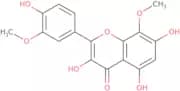
CAS:<p>Limocitrin is a flavonoid compound, which is a naturally occurring plant secondary metabolite. Flavonoids are widely distributed in the plant kingdom and are known for their diverse biological activities. Limocitrin, specifically, has been isolated from various plant sources, including certain fruits and flowers. Its mode of action involves interacting with cellular signaling pathways, affecting processes such as oxidative stress response and gene expression regulation.</p>Pureza:Min. 95%3',5,5',7-Tetrahydroxyflavanone
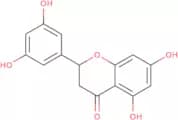
CAS:<p>3',5,5',7-Tetrahydroxyflavanone is a flavonoid compound, which is a type of naturally occurring polyphenolic. It is primarily derived from certain plants, often found in those with known medicinal properties. Flavonoids are secondary metabolites in plants and play crucial roles in various biological activities.</p>Fórmula:C15H12O6Pureza:Min. 95%Peso molecular:288.25 g/mol2',7-Dihydroxy-5,8-dimethoxyflavanone
CAS:2',7-Dihydroxy-5,8-dimethoxyflavanone is a natural flavanone, which is a type of polyphenolic compound. It is derived from various plant sources where flavonoids are commonly found, such as fruits, vegetables, and certain herbs. This particular flavanone exhibits a unique chemical structure characterized by dihydroxy and dimethoxy functional groups, which contribute to its biological activity.Fórmula:C17H16O6Pureza:Min. 95%Peso molecular:316.30 g/molGenistein 7,4'-di-O-glucoside
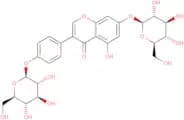
CAS:<p>Genistein 7,4'-di-O-glucoside is a naturally occurring isoflavone glucoside, which is derived from plant sources such as soybeans and other legumes. As an isoflavone, it belongs to a class of phytoestrogens, compounds that are structurally similar to estrogens but are derived from plants. The mode of action of Genistein 7,4'-di-O-glucoside primarily involves its ability to interact with estrogen receptors in the body, exhibiting both estrogenic and anti-estrogenic effects depending on the physiological context. This interaction can modulate various signaling pathways, potentially impacting cellular growth, apoptosis, and differentiation.</p>Fórmula:C27H30O15Pureza:Min. 95%Peso molecular:594.52 g/molAromadendrin 7-O-methyl ether
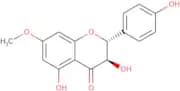
CAS:<p>Aromadendrin 7-O-methyl ether is a flavonoid compound, which is a type of bioactive molecule. It is sourced primarily from plant materials, where it occurs naturally as a secondary metabolite. The mode of action of Aromadendrin 7-O-methyl ether involves interaction with various biological pathways, potentially affecting enzyme activity and cell signaling mechanisms. Such interactions may contribute to its reported antioxidant and anti-inflammatory properties.</p>Fórmula:C16H14O6Pureza:Min. 95%Cor e Forma:PowderPeso molecular:302.28 g/mol5,7,3'-Trihydroxy-6,4',5'-trimethoxyflavone
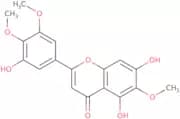
CAS:<p>5,7,3'-Trihydroxy-6,4',5'-trimethoxyflavone is a methoxylated flavonoid, which is a type of polyphenolic compound. This compound is typically sourced from certain plant species known for their high antioxidant content. Flavonoids are widely studied for their diverse biological activities and are often isolated from traditional medicinal plants.</p>Pureza:Min. 95%Sophoraflavanone C
CAS:<p>Sophoraflavanone C is a flavonoid compound, which is derived from the root of the Sophora flavescens plant. This natural product is categorized as a prenylated flavonoid, a group known for diverse biological activities. Sophoraflavanone C exerts its effects through multiple modes of action, including the inhibition of microbial growth and anti-inflammatory pathways. Its antimicrobial properties are attributed to the disruption of bacterial cell walls and inhibition of critical microbial enzymes. Additionally, its anti-inflammatory effects are mediated by the suppression of pro-inflammatory cytokines and inhibition of key signaling pathways such as NF-kB.</p>Fórmula:C25H28O6Pureza:Min. 95%Peso molecular:424.50 g/molIsowighteone
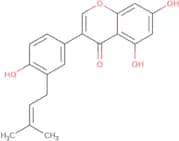
CAS:<p>Isowighteone is a naturally occurring flavonoid, which is derived from various plant sources, particularly in traditional medicinal herbs. Its biological activity stems from its structure, characterized by phenolic hydroxyl groups that enable it to participate in redox reactions, highlighting its antioxidant properties.</p>Fórmula:C20H18O5Pureza:Min. 95%Peso molecular:338.35 g/molSophoraflavanone I
CAS:Sophoraflavanone I is a naturally occurring flavonoid compound, which is derived from the roots of the Sophora species, a genus of flowering plants in the family Fabaceae. This compound is predominantly extracted from the roots of Sophora flavescens, also known as Chinese Sophora.Fórmula:C39H38O9Pureza:Min. 95%Peso molecular:650.7 g/mol3,7,4'-Trihydroxy-5-methoxy-8-prenylflavanone, (2R,3R)-
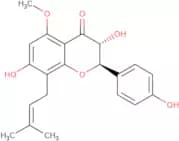
CAS:3,7,4'-Trihydroxy-5-methoxy-8-prenylflavanone, (2R,3R)- is a prenylated flavonoid compound, which is a type of naturally occurring polyphenol. These compounds are known for their complex structures and biological activities, frequently contributing to the therapeutic properties of various plants. The source of this flavanone is often plants belonging to the Fabaceae family, including the roots and other parts of certain legumes, where it accumulates as part of the plant’s secondary metabolism.Pureza:Min. 95%Vitexin 4'-glucoside
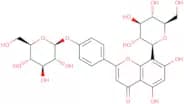
CAS:<p>Vitexin 4'-glucoside is a natural flavonoid glycoside, which is a type of secondary metabolite found in plants. It is derived from various plant sources, particularly in the leaves, stems, and seeds of certain medicinal plants, where it plays roles in plant defense mechanisms and stress responses. As a flavonoid, its mode of action primarily involves antioxidant activity, scavenging free radicals, and modulating oxidative stress. This is significant in the interaction with cellular signaling pathways and enzyme inhibition.</p>Pureza:Min. 95%7,4'-Dihydroxyhomoisoflavanone
CAS:Produto Controlado<p>7,4'-Dihydroxyhomoisoflavanone is a naturally occurring compound, classified as a homoisoflavanone, which is a type of polyphenolic compound. It is primarily sourced from plants, specifically found in certain species of the Fabaceae family. The compound is characterized by its unique structural configuration, which contributes to its bioactivity.</p>Fórmula:C16H14O4Pureza:Min. 95%Peso molecular:270.28 g/molLicoflavone C
CAS:<p>Licoflavone C is a bioactive flavonoid compound, which is derived from the roots of Glycyrrhiza species. This particular flavonoid is notable for its complex chemical structure that contributes to its biological activity. The primary mode of action of Licoflavone C involves modulation of various cellular pathways, including antioxidant and anti-inflammatory mechanisms. It also influences cell cycle regulation and apoptosis, which are critical in cancer research. The compound's ability to act as a natural antioxidant makes it a valuable candidate in the formulation of skincare products aimed at protecting against oxidative stress. In scientific studies, Licoflavone C has been investigated for its potential anticancer properties, particularly focusing on its effects in inhibiting the proliferation of cancer cells. Furthermore, its role in skin health is under exploration, where its antioxidant capacity and potential to stimulate collagen production may offer benefits in anti-aging products. Such applications make Licoflavone C an intriguing subject for research in natural product chemistry and therapeutic development.</p>Fórmula:C20H18O5Pureza:Min. 95%Peso molecular:338.35 g/molIsomucronulatol 7-O-glucoside
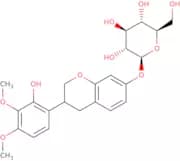
CAS:<p>Isomucronulatol 7-O-glucoside is a flavonoid glucoside compound, which is isolated predominantly from various plant species. This compound is known for its comprehensive role as a secondary metabolite that participates in the plant's defense mechanism. The primary mode of action involves its ability to interact with biological targets at the molecular level, potentially exhibiting antioxidant, anti-inflammatory, or other bioactive properties. Isomucronulatol 7-O-glucoside may influence signaling pathways, which can alter physiological responses within organisms.</p>Pureza:Min. 95%Tricetin 7-O-glucoside
CAS:<p>Tricetin 7-O-glucoside is a flavonoid glycoside compound, which is a derivative of the naturally occurring flavonoid tricetin. This compound is sourced primarily from certain plant species, including various herbs and foods, where it is present as a minor constituent. The mode of action of Tricetin 7-O-glucoside involves its ability to scavenge free radicals and modulate inflammatory pathways, showcasing both antioxidant and anti-inflammatory properties.</p>Fórmula:C21H20O12Pureza:Min. 95%Peso molecular:464.38 g/mol6,3'-Diprenylgenistein
CAS:6,3'-Diprenylgenistein is a prenylated isoflavonoid compound, which is derived from certain plants, notably those within the legume family. This phytochemical is characterized as an isoflavone, a class of naturally occurring organic compounds related to flavonoids, distinguished by the inclusion of prenyl groups that potentially enhance its biological activity and bioavailability.Fórmula:C25H26O5Pureza:Min. 95%Peso molecular:406.47 g/mol8-Prenylpinocembrin
CAS:<p>8-Prenylpinocembrin is a specialized flavonoid compound, which is a part of the prenylflavonoid class. It is derived from natural sources, primarily plants within the Fabaceae family and propolis from honeybees. The compound is characterized by its prenyl group attached to the flavonoid pinocembrin, enhancing its biological activity through increased lipophilicity and membrane permeability.</p>Fórmula:C20H20O4Pureza:Min. 95%Peso molecular:324.37 g/mol