Canabinóides
Os canabinoides são uma classe de compostos químicos diversos derivados de ácidos graxos ou poliquetídeos que atuam sobre os receptores canabinoides nas células, alterando a liberação de neurotransmissores no cérebro. Encontrados principalmente em plantas de cannabis, canabinoides como THC e CBD são amplamente estudados por seus efeitos terapêuticos, incluindo alívio da dor, propriedades anti-inflamatórias e uso potencial em doenças neurodegenerativas. Na CymitQuimica, você encontrará uma ampla variedade de canabinoides para pesquisa em farmacologia, neurobiologia e química medicinal.
Foram encontrados 299 produtos de "Canabinóides"
Ordenar por
Pureza (%)
0
100
|
0
|
50
|
90
|
95
|
100
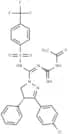
GSK494581A
CAS:<p>GSK494581A is a GPR55 agonist and glycine transporter subtype 1 inhibitor.</p>Fórmula:C27H28F2N2O4SPureza:98%Cor e Forma:SolidPeso molecular:514.58URB447
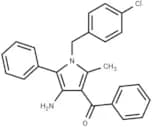
CAS:<p>URB447, a peripherally restricted CB1 cannabinoid antagonist with IC50 values of 313 nM for rat CB1 receptor and 41 nM for human CB2 receptor, effectively reduces food intake and body weight gain in mice. It achieves these effects without penetrating the brain or antagonizing central CB1-dependent responses, making it a potential research tool for obesity studies [1].</p>Fórmula:C25H21ClN2OCor e Forma:SolidPeso molecular:400.9CB-52
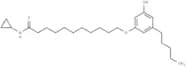
CAS:<p>CB-52 acts as a neutral antagonist and ligand for the CB2 cannabinoid receptor [1].</p>Fórmula:C26H43NO3Cor e Forma:SolidPeso molecular:417.62Isopropyl dodec-11-enylfluorophosphonate
CAS:<p>Isopropyl dodec-11-enylfluorophosphonate (IDEFP) is an organophosphorus ester functioning as a central cannabinoid receptor (CB1) antagonist and exhibits</p>Fórmula:C15H30FO2PPureza:98%Cor e Forma:SolidPeso molecular:292.37O-Arachidonoyl glycidol
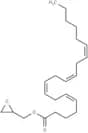
CAS:<p>O-Arachidonoyl glycidol (compound 1), a 2-arachidonoylglycerol (2-AG) analog, effectively inhibits the hydrolysis of cytosolic 2-oleoylglycerol (2-OG) with an IC50 value of 4.5 µM, and also blocks 2-OG and anandamide hydrolysis in membrane fractions with IC50 values of 19 µM and 12 µM, respectively [1].</p>Fórmula:C23H36O3Cor e Forma:SolidPeso molecular:360.53OMDM-5
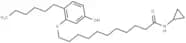
CAS:<p>OMDM-5 is a potent vanilloid receptor type 1 (TRPV1, EC50 = 75 nM) agonist, showing weak ligand activity at cannabinoid type 1 receptor (CB1, Ki=4.9 μM).</p>Fórmula:C26H44N2O3Pureza:99.73%Cor e Forma:SolidPeso molecular:432.64AM841
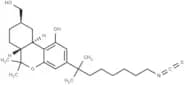
CAS:<p>AM841, a high-affinity electrophilic ligand, covalently interacts with a cysteine residue in helix six, thus activating the CB1 cannabinoid receptor.</p>Fórmula:C26H39NO3SPureza:98%Cor e Forma:SolidPeso molecular:445.66CB-25
CAS:<p>CB-25 is a partial agonist ligand of CB1 cannabinoid receptors, augmenting Forskolin-induced cAMP formation in cancer cells, though not affecting hCB1-CHO cells</p>Fórmula:C25H41NO3Pureza:98%Cor e Forma:SolidPeso molecular:403.6CAY10508
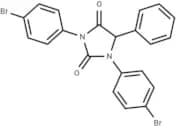
CAS:<p>CAY10508 is a potent and selective inverse agonist for the central cannabinoid (CB1) receptor with therapeutic potential for treating obesity and drug dependence, lacking psychotropic effects. It exhibits a Ki value of 243 nM and an EC50 of 195 nM. At a concentration of 10 µM, CAY10508 displaces [3H]-CP-55,940 with 100% efficacy at the CB1 receptor and 35% at the peripheral cannabinoid (CB2) receptor. Its inverse agonist activity at the CB1 receptor was confirmed through a [35S]-GTPγS binding assay.</p>Fórmula:C21H14Br2N2O2Cor e Forma:SolidPeso molecular:486.2O-2050
CAS:<p>O-2050: strong CB1 antagonist (Ki 2.5 nM), CB2 inhibitor (Ki 0.2 nM); reduces mouse food intake, increases activity.</p>Fórmula:C23H31NO4SPureza:98%Cor e Forma:SolidPeso molecular:417.56GW405833 hydrochloride
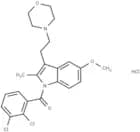
CAS:<p>GW405833 hydrochloride, a potent and selective agonist of the cannabinoid-2 (CB2) receptor (EC 50 = 0.65 nM; maximum inhibition = 44.6%), exhibits significant antihyperalgesic effects in various rodent pain models [1] [2] [3].</p>Fórmula:C23H25Cl3N2O3Cor e Forma:SolidPeso molecular:483.82Tedalinab
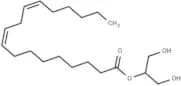
CAS:<p>Tedalinab is an effective and selective cannabinoid receptor 2 agonist.</p>Fórmula:C19H21F2N3OPureza:98%Cor e Forma:SolidPeso molecular:345.392-Linoleoyl Glycerol
CAS:<p>2-Arachidonoyl glycerol (2-AG), a natural endocannabinoid ligand for the CB1 receptor, was isolated from porcine brain and characterized. Its congener, 2-linoleoyl glycerol (2-LG), which has a linoleoyl group instead of an arachidonoyl group, also exists alongside 2-AG in vivo. While 2-LG exhibits low intrinsic activity, it enhances the activity of 2-AG and other endocannabinoids through an "entourage" effect, attributed to the inhibition of breakdown and reuptake pathways that typically decrease endocannabinoid levels post-release.</p>Fórmula:C21H38O4Cor e Forma:SolidPeso molecular:354.531CB1 antagonist 1
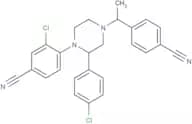
CAS:<p>CB1 antagonist 1 is a CB1 receptor antagonist, used in the research of obesity and metabolic syndrome, neuroinflammatory disorders, cognitive disorders, and</p>Fórmula:C26H22Cl2N4Pureza:98%Cor e Forma:SolidPeso molecular:461.39CB1 inverse agonist 1
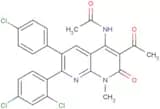
CAS:<p>MRL-650 is an oral, selective CB1 agonist; IC50: CB1=7.5 nM, CB2=4100 nM; anorexigenic effects noted.</p>Fórmula:C25H18Cl3N3O3Pureza:99.92%Cor e Forma:SolidPeso molecular:514.79(R)-Monlunabant
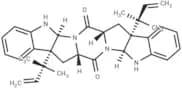
CAS:<p>(R)-Monlunabant ((R)-MRI-1891) serves as a CB1 receptor antagonist utilized in obesity and metabolic disease research [1].</p>Fórmula:C26H22ClF3N6O3SPureza:98%Cor e Forma:SolidPeso molecular:591Amauromine
CAS:<p>Amauromine is a peripherally selective and potent cannabinoid receptor type 1 (CB1) receptor antagonist, a novel alkaloid with vasodilatory activity.</p>Fórmula:C32H36N4O2Cor e Forma:SolidPeso molecular:508.65CB 65
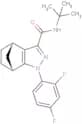
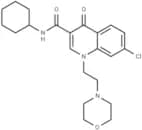
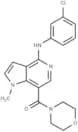
CAS:<p>CB 65 is a high affinity and selective CB2 receptor agonist with Ki values of 3.3 and > 1000 nM for CB2 and CB1 receptors respectively.</p>Fórmula:C22H28ClN3O3Pureza:98.73%Cor e Forma:SolidPeso molecular:417.93GSK-554418A
CAS:<p>GSK-554418A, a novel azaindole CB(2) agonists, is used for the treatment of chronic pain. It is efficacious in the acute model and the chronic joint pain model.</p>Fórmula:C19H19ClN4O2Cor e Forma:SolidPeso molecular:370.83Hemopressin(rat) TFA
CAS:<p>Hemopressin(rat) TFA, a nonapeptide from hemoglobin α1-chain, selectively inhibits CB1 receptors and reduces inflammatory pain.</p>Fórmula:C55H78F3N13O14Cor e Forma:SolidPeso molecular:1202.28