Canabinóides
Os canabinoides são uma classe de compostos químicos diversos derivados de ácidos graxos ou poliquetídeos que atuam sobre os receptores canabinoides nas células, alterando a liberação de neurotransmissores no cérebro. Encontrados principalmente em plantas de cannabis, canabinoides como THC e CBD são amplamente estudados por seus efeitos terapêuticos, incluindo alívio da dor, propriedades anti-inflamatórias e uso potencial em doenças neurodegenerativas. Na CymitQuimica, você encontrará uma ampla variedade de canabinoides para pesquisa em farmacologia, neurobiologia e química medicinal.
Foram encontrados 298 produtos de "Canabinóides"
Ordenar por
Pureza (%)
0
100
|
0
|
50
|
90
|
95
|
100
GP 1a
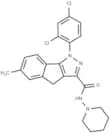
CAS:<p>GP 1a: potent CB2 receptor agonist (EC50=7.1), 30x CB2 over CB1 preference, boosts P-ERK1/2, aids skin healing, anti-inflammatory.</p>Fórmula:C23H22Cl2N4OPureza:99.79%Cor e Forma:SolidPeso molecular:441.35GW 833972A
CAS:<p>GW 833972A: selective CB2 agonist; reduces neural depolarization and citric acid cough in animals.</p>Fórmula:C18H14Cl2F3N5OPureza:99.93%Cor e Forma:SoildPeso molecular:444.24Cannabichromevarin
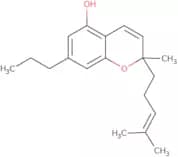
CAS:Produto Controlado<p>Cannabichromevarin is a phytocannabinoid naturally found in very low levels compared to other cannabinoids from which it differs in having a propyl chain in place of a pentyl chain1. Based on its structure, it is believed to act as a potent anandamine inhibitor similarly to cannabichromene, however, the majority of its pharmacological and toxicological properties are currently unknown. In vitro assays have shown cannabichromevarin protect against oxidative stress in vitro in macrophages2. It was recently shown to be effective for treatment-resistant epilepsy in a patented combination with cannabidiol in a recent open-ended clinical trial3.</p>Fórmula:C19H26O2Pureza:Min. 95%Peso molecular:286.41 g/molO-1269
CAS:<p>O-1269 acts as a partial agonist for the cannabinoid receptor 1 (CB1R), with a binding affinity (Ki) of 32 nM. Additionally, it exhibits analgesic properties.</p>Fórmula:C22H22Cl3N3OCor e Forma:SolidPeso molecular:450.79MDA77
CAS:<p>MDA77 is a CB2 agonist with an EC50 value of 5.82 nM and exhibits no activity towards CB1.</p>Fórmula:C21H23N3O3Cor e Forma:SolidPeso molecular:365.43FDU-PB-22
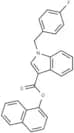
CAS:<p>FDU-PB-22, a novel synthetic cannabinoid, undergoes rapid metabolism in human liver microsomes (HLM) with a half-life of 12.4 minutes.</p>Fórmula:C26H18FNO2Cor e Forma:SolidPeso molecular:395.431'-Naphthoyl-2-methylindole
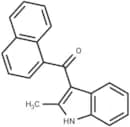
CAS:<p>1'-Naphthoyl-2-methylindole (Compound 88) acts as a cannabinoid mimic and an inhibitor of Win 55212-2, displaying a 34% inhibition of [3H]Win 55212-2 binding to cannabinoid receptors at a concentration of 3 μM.</p>Fórmula:C20H15NOCor e Forma:SolidPeso molecular:285.34MDA7
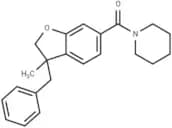
CAS:<p>MDA7 is a selective agonist of the cannabinoid receptor 2 (CB2), demonstrating an EC50 of 128 nM in human CB2 receptors and 67.4 nM in rat CB2 receptors. The compound exhibits good affinity for CB2 receptors, with Ki values of 422 nM for humans and 238 nM for rats. In rat models, MDA7 shows analgesic activity.</p>Fórmula:C22H25NO2Cor e Forma:SolidPeso molecular:335.439CBR Agonist-2
<p>CBR Agonist-2: CB1 receptor agonist, EC50 - 960 nM, Ki - 970 nM, useful for hCB1R-related disease research.</p>Fórmula:C27H27FN4OCor e Forma:SolidPeso molecular:442.53CBR Agonist-1
<p>CBR Agonist-1 targets CB1R and CB2R with Ki of 0.18 μM and 1.22 μM, useful for studying cannabinoid-related diseases.</p>Fórmula:C27H27FN4OCor e Forma:SolidPeso molecular:442.53BAY 38-7271
CAS:<p>BAY 38-7271: potent neuroprotective, selective CB1/CB2 agonist, Ki of 1.85 nM (CB1) & 5.96 nM (CB2).</p>Fórmula:C20H21F3O5SPureza:98%Cor e Forma:SolidPeso molecular:430.44AB-FUBINACA 3-fluorobenzyl isomer
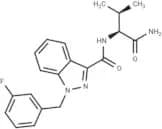
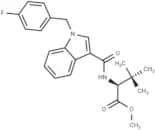
CAS:<p>AB-FUBINACA 3-fluorobenzyl isomer is a synthetic cannabinoid and an indazole derivative, exhibiting high affinity for central CB1 receptors (Ki= 0.9 nM) and possessing anticonvulsant activity.</p>Fórmula:C20H21FN4O2Cor e Forma:SolidPeso molecular:368.41Taranabant
CAS:<p>Taranabant: potent CB1 receptor inverse agonist; inhibits agonists with 0.13 nM Ki in vitro.</p>Fórmula:C27H25ClF3N3O2Pureza:99.06% - 99.06%Cor e Forma:SolidPeso molecular:515.96Bzo-poxizid
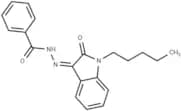
CAS:<p>Bzo-poxizid is a synthetic cannabinoid and a psychoactive substance.</p>Fórmula:C20H21N3O2Cor e Forma:SolidPeso molecular:335.40CB1/2 receptor-1
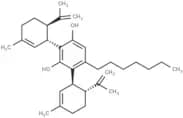
CAS:<p>CB1/2 receptor-1 (compound 5.3) serves as an agonist for CB1/2 receptors and is utilized in angiogenesis research.</p>Fórmula:C33H48O2Cor e Forma:SolidPeso molecular:476.73CB2 receptor antagonist 1
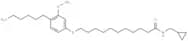
CAS:<p>Compound 29 is a potent, CB2-selective antagonist/reverse agonist. Derivatives 23 & 24 offer antinociception; 24 activates cannabinoid/TRPV1 receptors.</p>Fórmula:C28H47NO3Cor e Forma:SolidPeso molecular:445.68MDMB-FUBICA
CAS:<p>MDMB-FUBICA is a potent agonist of the cannabinoid receptors and exhibits psychoactive properties. It can be utilized in e-cigarettes.</p>Fórmula:C23H25FN2O3Cor e Forma:SolidPeso molecular:396.455CB1/2 agonist 1
<p>Potent CB1/2 agonist 1; crosses blood-brain barrier; anti-inflammatory, analgesic; for multiple sclerosis research.</p>Fórmula:C21H24BrFN2O2Cor e Forma:SolidPeso molecular:435.33HU-308
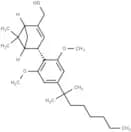
CAS:<p>HU-308, a synthetic cannabinoid analogue, is a highly selective agonist of the CB2 receptor. It demonstrates an affinity for the CB2 receptor that is over 440 times greater than its affinity for the CB1 receptor, which are predominantly found in immune cells. This compound plays a crucial role in modulating the immunosuppressive effects of the endocannabinoid system (ECS). Additionally, HU-308 possesses anti-inflammatory and neuroprotective properties, and it regulates the function of microglia. Its potential applications include research into neuroinflammation and retinal diseases.</p>Fórmula:C27H42O3Cor e Forma:SolidPeso molecular:414.62BNS808
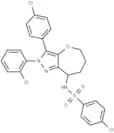
CAS:<p>BNS808 is an orally active, selective CB1R antagonist with an IC50 of 0.8 nM, demonstrating significant selectivity for CB2R and minimal brain penetration. It is being studied for the treatment of obesity and related metabolic complications, such as metabolic dysfunction-associated steatotic liver disease (MASLD). BNS808 reduces drug exposure to the central nervous system, enhancing safety, and minimizes drug interactions through high plasma protein binding.</p>Fórmula:C25H20Cl3N3O3SCor e Forma:SolidPeso molecular:548.869