Anticorpos primários
Os anticorpos primários são imunoglobulinas que se ligam especificamente a um antígeno de interesse, permitindo a detecção e quantificação de proteínas, peptídeos ou outras biomoléculas. Estes anticorpos são ferramentas essenciais em uma ampla gama de aplicações, incluindo Western blot, imunohistoquímica e ELISA. Na CymitQuimica, oferecemos uma vasta seleção de anticorpos primários de alta qualidade, proporcionando especificidade e sensibilidade para diversas necessidades de pesquisa, incluindo estudos sobre câncer, imunologia e biologia celular.
Subcategorias de "Anticorpos primários"
- Investigação de anticorpos do cancro(3.620 produtos)
- Anticorpos Cardiovasculares(2 produtos)
- Biologia do Desenvolvimento(751 produtos)
- Anticorpos Epigenética(162 produtos)
- Anticorpos imunológicos(2.776 produtos)
- Anticorpos metabólicos(279 produtos)
- Anticorpos de Microbiologia(736 produtos)
- Transdução de sinal(2.717 produtos)
- Etiquetas e Marcadores Celulares(33 produtos)
Exibir 1 mais subcategorias
Foram encontrados 75326 produtos de "Anticorpos primários"
Ordenar por
Pureza (%)
0
100
|
0
|
50
|
90
|
95
|
100
Cdc42EP2 rabbit pAb
CDC42, a small Rho GTPase, regulates the formation of F-actin-containing structures through its interaction with the downstream effector proteins. The protein encoded by this gene is a member of the Borg family of CDC42 effector proteins. Borg family proteins contain a CRIB (Cdc42/Rac interactive-binding) domain. They bind to, and negatively regulate the function of CDC42. Coexpression of this protein with CDC42 suggested a role of this protein in actin filament assembly and cell shape control. [provided by RefSeq, Aug 2011],Cleaved-MMP-12 (G106) rabbit pAb
This gene encodes a member of the peptidase M10 family of matrix metalloproteinases (MMPs). Proteins in this family are involved in the breakdown of extracellular matrix in normal physiological processes, such as embryonic development, reproduction, and tissue remodeling, as well as in disease processes, such as arthritis and metastasis. The encoded preproprotein is proteolytically processed to generate the mature protease. This protease degrades soluble and insoluble elastin. This gene may play a role in aneurysm formation and mutations in this gene are associated with lung function and chronic obstructive pulmonary disease (COPD). This gene is part of a cluster of MMP genes on chromosome 11. [provided by RefSeq, Jan 2016],RB40L rabbit pAb
This gene encodes a member of the Rab40 subfamily of Rab small GTP-binding proteins that contains a C-terminal suppressors of cytokine signaling box. Disruptions in this gene are associated with Duchenne muscular dystrophy. [provided by RefSeq, Apr 2010],ZFY26 rabbit pAb
This gene encodes a protein which contains a FYVE zinc finger binding domain. The presence of this domain is thought to target these proteins to membrane lipids through interaction with phospholipids in the membrane. Mutations in this gene are associated with autosomal recessive spastic paraplegia-15. [provided by RefSeq, Oct 2008],NDUB8 rabbit pAb
function:Accessory subunit of the mitochondrial membrane respiratory chain NADH dehydrogenase (Complex I), that is believed to be not involved in catalysis. Complex I functions in the transfer of electrons from NADH to the respiratory chain. The immediate electron acceptor for the enzyme is believed to be ubiquinone.,similarity:Belongs to the complex I NDUFB8 subunit family.,subunit:Complex I is composed of 45 different subunits.,Nek9 rabbit pAb
This gene encodes a member of the NimA (never in mitosis A) family of serine/threonine protein kinases. The encoded protein is activated in mitosis and, in turn, activates other family members during mitosis. This protein also mediates cellular processes that are essential for interphase progression. [provided by RefSeq, Jul 2016],B23 (phospho Thr234) rabbit pAb
This gene encodes a phosphoprotein which moves between the nucleus and the cytoplasm. The gene product is thought to be involved in several processes including regulation of the ARF/p53 pathway. A number of genes are fusion partners have been characterized, in particular the anaplastic lymphoma kinase gene on chromosome 2. Mutations in this gene are associated with acute myeloid leukemia. More than a dozen pseudogenes of this gene have been identified. Alternative splicing results in multiple transcript variants.[provided by RefSeq, Nov 2009],Syntenin-2 rabbit pAb
syndecan binding protein(SDCBP) Homo sapiens The protein encoded by this gene was initially identified as a molecule linking syndecan-mediated signaling to the cytoskeleton. The syntenin protein contains tandemly repeated PDZ domains that bind the cytoplasmic, C-terminal domains of a variety of transmembrane proteins. This protein may also affect cytoskeletal-membrane organization, cell adhesion, protein trafficking, and the activation of transcription factors. The protein is primarily localized to membrane-associated adherens junctions and focal adhesions but is also found at the endoplasmic reticulum and nucleus. Alternative splicing results in multiple transcript variants encoding different isoforms. [provided by RefSeq, Jul 2008],Neuromedin-U rabbit pAb
This gene encodes a member of the neuromedin family of neuropeptides. The encoded protein is a precursor that is proteolytically processed to generate a biologically active neuropeptide that plays a role in pain, stress, immune-mediated inflammatory diseases and feeding regulation. Increased expression of this gene was observed in renal, pancreatic and lung cancers. Alternative splicing results in multiple transcript variants encoding different isoforms. Some of these isoforms may undergo similar processing to generate the mature peptide. [provided by RefSeq, Jul 2015],S39A5 rabbit pAb
The protein encoded by this gene belongs to the ZIP family of zinc transporters that transport zinc into cells from outside, and play a crucial role in controlling intracellular zinc levels. Zinc is an essential cofactor for many enzymes and proteins involved in gene transcription, growth, development and differentiation. Mutations in this gene have been associated with autosomal dominant high myopia (MYP24). Alternatively spliced transcript variants have been found for this gene. [provided by RefSeq, Sep 2014],Acyclovir
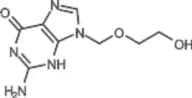
CAS:Acyclovir (Aciclovir) is a synthetic analog of the purine nucleoside, guanosine, with potent antiviral activity against herpes simplex viruses type 1 and 2,Fórmula:C8H11N5O3Pureza:99.77% - >99.99%Cor e Forma:Crystals From Methanol SolidPeso molecular:225.2LFTY1 rabbit pAb
This gene encodes a secreted ligand of the TGF-beta (transforming growth factor-beta) superfamily of proteins. Ligands of this family bind various TGF-beta receptors leading to recruitment and activation of SMAD family transcription factors that regulate gene expression. The encoded preproprotein is proteolytically processed to generate the mature protein, which plays a role in left-right asymmetry determination of organ systems during development. This gene is closely linked to both a related family member and a related pseudogene. [provided by RefSeq, Aug 2016],N-(5-CHLORO-2,4-DIMETHOXYPHENYL)-N'-(5-METHYL-3-ISOXAZOLYL)-UREA
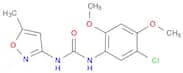
CAS:Fórmula:C13H14ClN3O4Pureza:98%Cor e Forma:SolidPeso molecular:311.7210PKC θ (phospho Thr538) rabbit pAb
Protein kinase C (PKC) is a family of serine- and threonine-specific protein kinases that can be activated by calcium and the second messenger diacylglycerol. PKC family members phosphorylate a wide variety of protein targets and are known to be involved in diverse cellular signaling pathways. PKC family members also serve as major receptors for phorbol esters, a class of tumor promoters. Each member of the PKC family has a specific expression profile and is believed to play a distinct role. The protein encoded by this gene is one of the PKC family members. It is a calcium-independent and phospholipid-dependent protein kinase. This kinase is important for T-cell activation. It is required for the activation of the transcription factors NF-kappaB and AP-1, and may link the T cell receptor (TCR) signaling complex to the activation of the transcription factors. [provided by RefSeq, Jul 2008],Pim-1 rabbit pAb
The protein encoded by this gene belongs to the Ser/Thr protein kinase family, and PIM subfamily. This gene is expressed primarily in B-lymphoid and myeloid cell lines, and is overexpressed in hematopoietic malignancies and in prostate cancer. It plays a role in signal transduction in blood cells, contributing to both cell proliferation and survival, and thus provides a selective advantage in tumorigenesis. Both the human and orthologous mouse genes have been reported to encode two isoforms (with preferential cellular localization) resulting from the use of alternative in-frame translation initiation codons, the upstream non-AUG (CUG) and downstream AUG codons (PMIDs:16186805, 1825810).[provided by RefSeq, Aug 2011],TPPC4 rabbit pAb
function:May play a role in vesicular transport from endoplasmic reticulum to Golgi.,similarity:Belongs to the TRAPP small subunits family. TRAPPC4 subfamily.,subunit:Part of the multisubunit TRAPP (transport protein particle) complex. Interacts with SDC2.,3,4-DICHLORO-1-BENZOTHIOPHENE-2-CARBOHYDRAZIDE
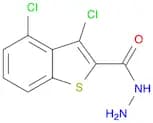
CAS:Fórmula:C9H6Cl2N2OSPureza:98%Cor e Forma:SolidPeso molecular:261.1277