Nucleotídeos
Subcategorias de "Nucleotídeos"
Foram encontrados 2638 produtos de "Nucleotídeos"
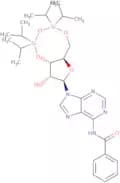
N6-Benzoyl-3',5'-O-(1,1,3,3- tetraisopropyl-1,3-disiloxanediyl)adenosine
CAS:N6-Benzoyl-3',5'-O-(1,1,3,3-tetraisopropyl-1,3-disiloxanediyl)adenosine is a novel antiviral agent that belongs to the class of nucleoside analogues. It has high antiviral activity against human cytomegalovirus and herpes simplex virus type 1. N6-Benzoyl-3',5'-O-(1,1,3,3-tetraisopropyl-1,3-disiloxanediyl)adenosine also has anticancer effects and is used in the treatment of leukemia. This drug inhibits DNA synthesis by acting as a competitive inhibitor for deoxyribonucleotide triphosphates and binds to ribonucleosides in order to inhibit DNA replication.Fórmula:C29H43N5O6Si2Pureza:Min. 95%Cor e Forma:White PowderPeso molecular:613.87 g/molRef: 3D-NB09330
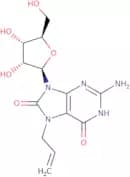
Produto descontinuado7-Allyl-7,8-dihydro-8-oxoguanosine
CAS:Agonist of toll-like receptors TLR7
Fórmula:C13H17N5O6Pureza:Min. 95%Cor e Forma:White PowderPeso molecular:339.3 g/mol2'-Deoxy-L-adenosine
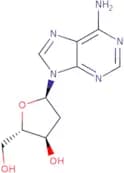
CAS:2'-Deoxy-L-adenosine is an adenosine analogue that has been shown to inhibit the growth of tumor cells in mice. The mechanism of this inhibition is not well understood, but it is thought that 2'-deoxy-L-adenosine inhibits the adenosine A3 receptor and blocks the activation of toll-like receptors. This drug also has been shown to have anti-inflammatory properties, which may be due to its ability to inhibit prostaglandin synthesis. It has been used as a model system for studying cellular responses to DNA damage caused by ultraviolet radiation. 2'-Deoxy-L-adenosine also has been shown to have a cytotoxic effect on human HL60 cells, which is mediated by nuclear DNA fragmentation.
Fórmula:C10H13N5O3Pureza:Min. 98 Area-%Cor e Forma:Off-White PowderPeso molecular:251.25 g/molRef: 3D-ND04246
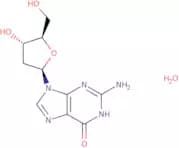
Produto descontinuado2'-Deoxyguanosine monohydrate
CAS:2'-Deoxyguanosine monohydrate is a nucleoside that has been shown to inhibit the synthesis of DNA in human cells. It has also been shown to have a role in the regulation of energy metabolism and mitochondrial functions. 2'-Deoxyguanosine monohydrate binds to the enzyme polymerase chain reaction, which prevents the reverse transcription process from occurring. This nucleoside is involved in the biological studies of cytokine production, such as IL-2 receptor binding and calcium pantothenate-dependent activation of nuclear DNA replication.
Fórmula:C10H13N5O4·H2OPureza:Min. 98 Area-%Cor e Forma:White PowderPeso molecular:285.26 g/molAdenosine 5'-triphosphate magnesium salt
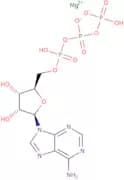
CAS:Adenosine-5'-triphosphate (ATP) is a nucleotide found in all living cells. It is used as a coenzyme for adenosine kinase, adenosine phosphokinase, and adenosine deaminase. ATP also acts as an important signaling molecule and has been shown to be involved in the regulation of cell metabolism, muscle contraction, and other cellular processes. The human body normally produces enough ATP to meet its needs through aerobic metabolism of glucose or fatty acids, but under certain conditions such as intense muscular activity or insufficient oxygen, more ATP must be produced by anaerobic metabolism. In these situations the mitochondria use glycolysis to produce lactic acid which is then converted into pyruvic acid by the enzyme lactate dehydrogenase. Pyruvic acid is then oxidized by the enzyme pyruvate dehydrogenase complex to produce acetyl-CoA which is further oxidized by the enzyme complex called Krebs
Fórmula:C10H18N5O13P3•xMgPureza:Min. 95 Area-%Cor e Forma:White Off-White PowderPeso molecular:509.20 g/mol2'-Deoxyinosine
CAS:2'-Deoxyinosine is an antimicrobial peptide that has been shown to have potent activity against Gram-positive bacteria, including Staphylococcus aureus. 2'-Deoxyinosine binds to the 3′-hydroxyl group of nucleic acid, preventing DNA replication and transcription. This binding also prevents ribosomal RNA from binding to the ribosome, inhibiting protein synthesis. 2'-Deoxyinosine has been detected using a highly sensitive optical sensor and can be used as a model system for studying the interaction between dsDNA duplexes and other biomolecules. The pharmacokinetic properties of this molecule have been determined in rats by measuring its concentration in serum over time after injection. These data were then used to determine the amount of 2'-deoxyinosine that was needed to inhibit bacterial growth in water samples.
Fórmula:C10H12N4O4Pureza:Min. 98 Area-%Cor e Forma:White PowderPeso molecular:252.23 g/molRef: 3D-ND05750
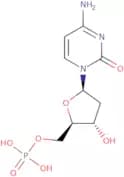
Produto descontinuado2'-Deoxycytidine-5'-monophosphate
CAS:2'-Deoxycytidine-5'-monophosphate (dCMP) is a nucleotide that is synthesized by the enzyme cytidine monophosphate synthetase. It has been shown to inhibit the activity of many enzymes, including those involved in DNA synthesis and repair. The incorporation of dCMP into DNA can be used as a probe for studying various biological processes, such as radiation damage and cellular physiology. In addition, it has been shown that dCMP inhibits the growth of human osteosarcoma cells. This drug is also used in combination preparations with other drugs, such as with 5-fluorouracil and doxorubicin, to treat cancer tumors.Fórmula:C9H14N3O7PPureza:Min. 99 Area-%Cor e Forma:White PowderPeso molecular:307.2 g/molRef: 3D-ND02993
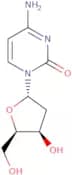
Produto descontinuado2'-Deoxy-a-cytidine
CAS:2'-Deoxy-a-cytidine is a nucleoside analog that inhibits the growth of bacteria by competitively binding to the 5' position of the ribose sugar in RNA. This prevents the enzyme from adding a new linkage to the ribose, which results in an irreversible blockage of RNA synthesis. 2'-Deoxy-a-cytidine has been shown to be bacteriostatic against Escherichia coli and other bacterial species. It is also able to inhibit adenosine production, although it does not show any activity against DNA synthesis.
2'-Deoxy-a-cytidine has been shown to be effective against E. coli and other bacterial species, but does not show any activity against DNA synthesisFórmula:C9H13N3O4Pureza:Min. 95 Area-%Cor e Forma:PowderPeso molecular:227.22 g/mol5-Fluorouridine-5'-triphosphate triethylammonium salt - aqueous solution
5-Fluorouridine-5'-triphosphate triethylammonium salt - aqueous solution is an activated nucleoside that is synthesized from the triethylamine salt of 5-fluorouridine. This product has antiviral and anticancer activities, and can be used as a DNA-synthesizing agent in the synthesis of deoxyribonucleosides. It has been shown to inhibit replication of human immunodeficiency virus (HIV) by inhibiting viral reverse transcriptase, as well as cytomegalovirus (CMV) by inhibiting viral DNA polymerase.
Fórmula:C33H74N6O15P3FPureza:Min. 95%Cor e Forma:Colorless PowderPeso molecular:906.89 g/molRef: 3D-NF157285
Produto descontinuado4-[(1Z)-2-(4-Chlorophenyl)vinyl]pyridine
CAS:4-[(1Z)-2-(4-Chlorophenyl)vinyl]pyridine is a modified nucleoside that is used in anticancer drugs. It has shown antiviral and antitumor effects. 4-[(1Z)-2-(4-Chlorophenyl)vinyl]pyridine is synthesized by condensing 4-chlorobenzaldehyde and 2,3-dichloropyridine. The nucleoside has been modified to be phosphorylated at the 5′ position and contains a ribonucleotide moiety and a deoxyribonucleotide moiety. This product is of high purity and quality, with an activator group at the 5′ position.
Fórmula:C13H10ClNPureza:Min. 95%Peso molecular:215.68 g/molRef: 3D-NC65881
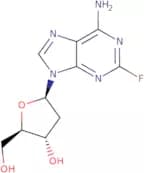
Produto descontinuado2'-Deoxy-2-fluoroadenosine
CAS:2'-Deoxy-2-fluoroadenosine is an adenosine member and an organofluorine compound
Fórmula:C10H12FN5O3Pureza:Min. 98 Area-%Cor e Forma:White PowderPeso molecular:269.23 g/mol7-Methyl-6-thioguanosine inner salt
CAS:7-Methyl-6-thioguanosine inner salt is a compound that inhibits the activity of creatine kinase and phosphatase, which are enzymes involved in energy metabolism. It also binds to actin filaments and prevents their depolymerization. The binding mechanism of 7-methyl-6-thioguanosine inner salt is believed to be due to its ability to form disulfide bonds with cysteine residues on the surface of the enzyme. This inhibition has been shown to reduce the ATP production in mammalian cells and has been used as a model system for studying cellular processes.
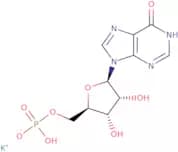
Fórmula:C11H15N5O4SPureza:Min. 95 Area-%Cor e Forma:White PowderPeso molecular:313.33 g/molPolyinosinic acid tripotassium salt
CAS:Polyinosinic acid is a single stranded RNA analog which is combined with polycytidylic acid (poly C) to form a stable duplex structure known as Polyinosinic acid-polycytidylic acid (Poly I:C). PolyI:C stimulates the secretion of pro-inflammatory cytokines and type I interferon through its interaction with endosomal Toll-like receptor 3 (TLR-3) and the cytoplasmic receptors melanoma differentiation-associated gene 5 (MDA-5) and retinoic acid-inducible gene I (RIG-I). This immunostimulant activity makes Poly I:C a useful vaccine adjuvant and is used in vaccine formulations. Poly I:C and its stabilized analogs (e.g., poly-ICLC) are also being actively researched for their dual role in oncology: directly targeting tumors and acting as immune potentiators. For example Poly I:C can induce apoptosis in tumor cells and stimulate immunogenic cell death and is therefore being explored alongside chemotherapy, radiotherapy, and checkpoint inhibitors, helping to overcome resistance mechanisms and strengthen treatment outcomes. We can supply PolyI:C to all stages of your project - from R&D and preclinical phases right up to GMP commercial manufacture. Contact our team for custom Poly I:C products.
For more on poly I:C read out blog 'Poly I:C: A Vaccine Adjuvant With Oncological Potential.'Pureza:Min. 95%Ref: 3D-TP65775
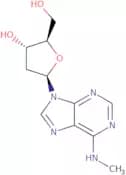
Produto descontinuado2'-Deoxy-N6-methyladenosine
CAS:2'-Deoxy-N6-methyladenosine (2DMA) is a nucleoside that has been found to inhibit the phosphorylation of p2y receptors in rat kidney cells. 2DMA inhibits the production of collagen, which may have a matrix effect on cells. Studies have shown that 2DMA can be used as a sample preparation reagent for nuclear DNA. It has also been shown to be effective at inhibiting transcription and replication of human mitochondrial DNA.
Fórmula:C11H15N5O3Pureza:Min. 95%Cor e Forma:White PowderPeso molecular:265.27 g/mol3'-Azido-3'-deoxythymidine-b-D-glucuronide sodium salt
CAS:3'-Azido-3'-deoxythymidine-b-D-glucuronide sodium salt is an antiviral and anticancer agent that inhibits the synthesis of DNA, RNA, and protein. It has shown to be effective against a variety of viruses including HIV-1, herpes simplex virus type 1, influenza A virus, vaccinia virus, and vesicular stomatitis virus. 3'-Azido-3'-deoxythymidine-b-D-glucuronide sodium salt also inhibits the growth of cancer cells in vitro. This drug is a modified nucleoside with a phosphoramidite backbone and a 3'-azido group at one end. The other end contains a beta D glucuronic acid moiety. The modifications allow for the inhibition of DNA synthesis by blocking the incorporation of deoxyribonucleotides into DNA chains.
Fórmula:C16H20N5NaO10Pureza:Min. 95%Cor e Forma:PowderPeso molecular:465.35 g/molRef: 3D-NA06316
Produto descontinuadoCyclic inosine diphosphate ribose
CAS:Cyclic inosine diphosphate ribose is a synthetic, fluorescent compound that can be used as a probe for assays. It has been synthesized by the solid-phase synthesis of a specific antibody and is bioconjugated with an oligo(ethylene glycol) moiety. Cyclic inosine diphosphate ribose can be used to measure lymphocyte activation, which is important for the study of autoimmune diseases and cancer. Cyclic inosine diphosphate ribose has also been shown to bind to the ryanodine receptor, which causes an increase in intracellular calcium concentration.
Fórmula:C15H20N4O14P2Pureza:Min. 95%Peso molecular:542.29 g/mol2′-O-Succinyladenosine 3′,5′-monophosphate
CAS:Please enquire for more information about 2′-O-Succinyladenosine 3′,5′-monophosphate including the price, delivery time and more detailed product information at the technical inquiry form on this page
Fórmula:C14H16N5O9PPureza:Min. 95%Peso molecular:429.28 g/molRef: 3D-NS184178
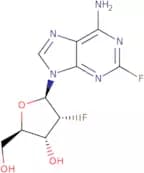
Produto descontinuado9-(2'-Deoxy-2'-fluoro-b-D-ribofuranosyl)-2-fluoroadenine
CAS:9-(2'-Deoxy-2'-fluoro-b-D-ribofuranosyl)-2-fluoroadenine is a modified nucleoside that is used as an antiviral and anticancer agent. It acts as an activator for the synthesis of DNA, RNA, and protein. 9-(2'-Deoxy-2'-fluoro-b-D-ribofuranosyl)-2-fluoroadenine also inhibits the growth of cancer cells by interfering with the division process. This drug is synthesized from 9-(5'-deoxy-5'-iodo-b-D-ribofuranosyl) -2,6 difluoro adenine (diFdA). The Ribonucleosides are then prepared in a similar manner to other nucleosides by using phosphoramidites. The product is then purified using HPLC.
Fórmula:C10H11F2N5O3Pureza:Min. 95%Cor e Forma:White PowderPeso molecular:287.23 g/molNicotinic acid-13C6 riboside
CAS:Please enquire for more information about Nicotinic acid-13C6 riboside including the price, delivery time and more detailed product information at the technical inquiry form on this page
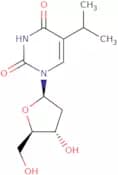
Fórmula:C6C5H13NO6Pureza:Min. 95%Peso molecular:260.17 g/mol5-Isopropyl-2'-deoxyuridine
CAS:5-Isopropyl-2'-deoxyuridine is a nucleoside analog that is used in the treatment of inflammatory bowel disease. It has been shown to be effective in the treatment of Crohn's disease, ulcerative colitis, and indeterminate colitis. 5-Isopropyl-2'-deoxyuridine inhibits bacterial growth by inhibiting RNA synthesis, which leads to cell death. This drug also inhibits the production of inflammatory mediators such as prostaglandins and leukotrienes that are released from cells infected with bacteria. 5-Isopropyl-2'-deoxyuridine is converted into an active form by hydrolysis or oxidation followed by phosphorylation. This drug binds to the 5' end of bacterial DNA and prevents the formation of hydrogen bonds between adjacent bases, causing strand breakage.
Fórmula:C12H18N2O5Pureza:Min. 95%Peso molecular:270.28 g/molRef: 3D-NI16765
Produto descontinuado



![4-[(1Z)-2-(4-Chlorophenyl)vinyl]pyridine](/_next/image/?url=https%3A%2Fstatic.cymitquimica.com%2Fproducts%2F3D%2Fthumb-webp%2FNC65881.webp&w=3840&q=75)