Nucleotídeos
Subcategorias de "Nucleotídeos"
Foram encontrados 2638 produtos de "Nucleotídeos"
2'-Azido-2'-deoxyuridine
CAS:Fórmula:C9H11N5O5Pureza:>98.0%(HPLC)Cor e Forma:White to Almost white powder to crystalPeso molecular:269.228-Amino[1''-(N''-dansyl)-4''-aminobutyl]-5'-(1-aziridinyl)-5'-deoxy adenosine
CAS:8-Amino-[1''-(N''-dansyl)-4''-aminobutyl]-5'-(1-aziridinyl)-5'-deoxyadenosine is a novel nucleoside phosphoramidite that has antiviral and anticancer activity. It is currently under development as a potential treatment for Hepatitis C, HIV and cancer. 8-Amino-[1''-(N''-dansyl)-4''-aminobutyl]-5'-(1-aziridinyl)-5'-deoxyadenosine is an activator of the enzyme ribonucleotide reductase, which converts ribonucleotides to deoxyribonucleotides. It also inhibits the synthesis of DNA and RNA by inhibiting the enzyme DNA gyrase and topoisomerase IV. 8-Amino-[1''-(N''-dansyl)-4''-aminobutylFórmula:C28H37N9O5SPureza:Min. 95%Cor e Forma:PowderPeso molecular:611.72 g/mol2'-Deoxyinosine-5'-monophosphate disodium salt
CAS:2'-Deoxyinosine-5'-monophosphate disodium salt is a synthetic nucleoside, phosphoramidite, and diphosphate that is used in the synthesis of DNA. It has been shown to have antiviral effects against HIV and herpes simplex virus type 2 (HSV-2). This drug also has anticancer activity and is an activator of novel nucleosides.Fórmula:C10H11N4Na2O7PPureza:Min. 98 Area-%Cor e Forma:White PowderPeso molecular:376.17 g/molAdenosine 5'-diphosphate bis(cyclohexylammonium) salt
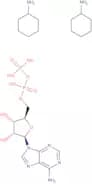
CAS:Adenosine 5'-diphosphate bis(cyclohexylammonium) salt is a novel antiviral agent that has been shown to be an activator of the adenylate cyclase enzyme. It also inhibits DNA and RNA synthesis in viruses, which prevents viral replication. Adenosine 5'-diphosphate bis(cyclohexylammonium) salt is active against cancer cells and has been shown to inhibit tumor growth and prolong survival in animal models. This compound can be synthesized by reacting the monophosphate with phosphoramidites or deoxyribonucleosides.Fórmula:C10H15N5O10P2·2C6H13NPureza:Min. 98 Area-%Cor e Forma:PowderPeso molecular:625.55 g/mol2'-O-(2-Methoxyethyl)cytidine
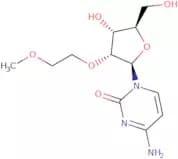
CAS:2'-O-(2-Methoxyethyl)cytidine is a nutrient that is used to maintain the dry weight of Lactobacillus acidophilus cultures. It is also used as a texturizing agent in food products. 2'-O-(2-Methoxyethyl)cytidine has been shown to increase the rate of lactose hydrolysis and reduce the viscosity of yogurt by activating L. acidophilus. 2'-O-(2-Methoxyethyl)cytidine is also used as a dietary supplement for people with intestinal disorders, such as irritable bowel syndrome. It can be found in sodium salts and n-methyl-d-glucamine.Fórmula:C12H19N3O6Pureza:Min. 95%Cor e Forma:PowderPeso molecular:301.3 g/mol2',3'-O-Isopropylidenecytidine
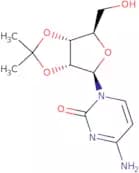
CAS:2',3'-O-Isopropylidenecytidine is a nucleoside for use in research applications
Fórmula:C12H17N3O5Pureza:Min. 95%Cor e Forma:PowderPeso molecular:283.28 g/mol5-Carboxymethylaminomethyluridine
CAS:5-Carboxymethylaminomethyluridine is a nucleoside analogue that is used in molecular modeling studies to investigate the role and interactions of uridine in the mitochondrial ribosome. It has been shown to bind to the mitochondrial ribosome, which may be due to hydrogen bonding interactions with adenine. 5-Carboxymethylaminomethyluridine also inhibits protein synthesis at the level of translation by inhibiting group P2 of eukaryotic cytosolic ribosomes. This inhibition results in decreased production of proteins necessary for mitochondrial biogenesis.Fórmula:C12H17N3O8Pureza:Min. 95 Area-%Cor e Forma:White Off-White PowderPeso molecular:331.28 g/molN6-Cyclopentyladenosine
CAS:N6-Cyclopentyladenosine is a nucleoside analog that binds to the kappa-opioid receptor. The physiological effects of this drug are mediated through its interaction with the kappa-opioid receptor, which is found in the central nervous system and mediates many of the effects of morphine. N6-Cyclopentyladenosine has been shown to increase blood flow and heart rate in humans. This drug also inhibits tetrazolium dye uptake by papillary muscle cells, suggesting that it may have cardiotonic effects. N6-Cyclopentyladenosine has been used as an analytical probe for adenosine, which is metabolized by cyclic AMP and cyclic GMP phosphodiesterases into adenosine 3',5'-cyclic monophosphate (cAMP).Fórmula:C15H21N5O4Pureza:Min. 95%Cor e Forma:PowderPeso molecular:335.36 g/mol8-Chloro-2'-deoxyadenosine
CAS:8-Chloro-2'-deoxyadenosine is a nucleoside analogue and a disinfectant that inhibits the synthesis of DNA. It has been used to control active viruses and to induce apoptotic cell death in cancer cells. 8-Chloro-2'-deoxyadenosine binds to viral RNA and DNA, preventing viral replication by inhibiting the activity of reverse transcriptase, which is an enzyme that copies the virus's genetic information from RNA into DNA. This drug has also been shown to be effective for the treatment of HIV infection. 8-Chloro-2'-deoxyadenosine disrupts DNA synthesis and cellular metabolism by blocking transcription and protein synthesis.Fórmula:C10H12ClN5O3Pureza:Min. 95%Cor e Forma:PowderPeso molecular:285.69 g/molN4-Etheno 2'-deoxycytidine
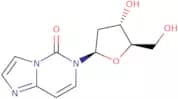
CAS:N4-Etheno 2'-deoxycytidine is an aromatic hydrocarbon that has been shown to be a potent inhibitor of DNA synthesis. It binds covalently with the N4 position of deoxycytidine in DNA, thereby inhibiting transcription and replication. This drug has been shown to be a potent inhibitor of DNA synthesis in human cells when it is added to the culture medium, but it does not inhibit protein synthesis. N4-Etheno 2'-deoxycytidine can also react with hydrogen bonds in cellular proteins and nucleosides that are involved in DNA repair mechanisms. This drug is reactive and may cause oxidative damage to cellular components, which may lead to carcinogenesis.Fórmula:C11H13N3O4Pureza:Min. 95%Cor e Forma:White PowderPeso molecular:251.24 g/molN6-Hydroxymethyladenosine
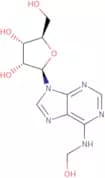
CAS:Please enquire for more information about N6-Hydroxymethyladenosine including the price, delivery time and more detailed product information at the technical inquiry form on this pageFórmula:C11H15N5O5Pureza:Min. 95%Cor e Forma:PowderPeso molecular:297.27 g/mol(E)-2'-Deoxy-2'-(fluoromethylene)cytidine
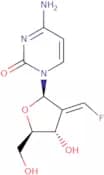
CAS:(E)-2'-Deoxy-2'-(fluoromethylene)cytidine is a cytostatic compound that inhibits DNA synthesis in tumor cells. It has been shown to be more potent than tezacitabine and hl-60 cells, as well as being less toxic than benzimidazole compounds. This analog of cytosine has been shown to have potent antitumor activity against carcinoma cell lines and myeloid leukemia cell lines. The oral prodrug form of this drug has been shown to be an effective treatment for myeloid leukemia in mice.Fórmula:C10H12FN3O4Pureza:Min. 95%Peso molecular:257.22 g/molPolyguanylic acid potassium
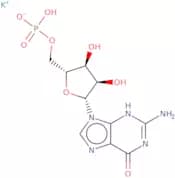
CAS:Polyguanylic acid potassium salt is a guanosine analog that is used as a probe for studying the interaction of cellular and target tissue. It has been found to be taken up by cells, with high affinity constants, and to be immobilized on cell surfaces. Polyguanylic acid potassium salt can also be used as an anticancer agent against epidermoid carcinoma cells with high affinity constants. The compound interacts with DNA and inhibits the growth of the tumor cells by interfering with the uptake of nucleic acids.Fórmula:(C10H14N5O8P)x•KxPureza:Min. 95%Cor e Forma:PowderNicotinic acid adenine dinucleotide sodium
CAS:Nicotinic acid adenine dinucleotide sodium (NAAD) is a novel anticancer and antiviral agent. NAAD is an analog of nicotinamide adenine dinucleotide (NAD) that has been modified to include a sodium ion. This modification inhibits the synthesis of DNA and RNA, which are required for cell division and replication. It has been shown to inhibit the growth of cancer cells in vitro and in vivo. In addition, NAAD suppresses viral replication by inhibiting protein synthesis in cells infected with HIV-1 or influenza virus. NAAD has also been shown to be a potent inhibitor of ribonucleoside reductase, which converts ribonucleosides into deoxyribonucleosides. This inhibition prevents the conversion of diphosphate nucleotides into monophosphate nucleotides, which are necessary for DNA synthesis.Fórmula:C21H26N6O15P2•NaPureza:Min. 95%Peso molecular:687.4 g/mol2'-Phosphoadenosine 5'-phosphosulfate tetralithium salt (mixture with 3'-isomer)
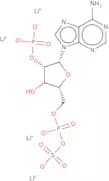
CAS:2'-Phosphoadenosine 5'-phosphosulfate tetralithium salt (mixture with 3'-isomer) is a novel, modified nucleoside. It has antiviral properties and can be used for the treatment of cancer. 2'-Phosphoadenosine 5'-phosphosulfate tetralithium salt (mixture with 3'-isomer) inhibits viral replication by inhibiting the synthesis of viral DNA and RNA. This compound also inhibits cancer cell proliferation by inhibiting deoxyribonucleic acid (DNA) and ribonucleic acid (RNA) synthesis.
Fórmula:C10H11N5O13P2S·4LiPureza:Min. 95%Cor e Forma:SolidPeso molecular:531 g/mol5-Carboxymethylaminomethyl- 2'-O-methyluridine
CAS:5-Carboxymethylaminomethyl- 2'-O-methyluridine (5CmAMU) is a modified nucleobase that is categorized as a modified base. It is an analog of uridine, which has been shown to be effective against tuberculosis in mice. 5CmAMU inhibits the methylation of rRNA and DNA by binding to the enzyme RNA methyltransferase, thereby inhibiting transcription and replication. This modification has also been shown to inhibit cellular proliferation and promote apoptosis. 5CmAMU binds to guanine with a stoichiometry of 1:1, which provides evidence for its role in DNA synthesis and repair. The structural modifications on this molecule may lead to diagnostic applications or treatments for diseases such as tuberculosis.Fórmula:C13H19N3O8Pureza:Min. 95%Cor e Forma:PowderPeso molecular:345.31 g/molCytidine 2′,5′-diphosphate
CAS:Please enquire for more information about Cytidine 2′,5′-diphosphate including the price, delivery time and more detailed product information at the technical inquiry form on this pageFórmula:C9H15N3O11P2Pureza:Min. 95%Peso molecular:403.18 g/molFialuridine 5'-monophosphate
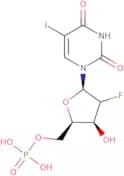
CAS:Fialuridine 5'-monophosphate is an analog of fialuridine, a drug used to treat HIV. Fialuridine 5'-monophosphate inhibits mitochondrial DNA synthesis by inhibiting hepg2 in the mitochondria and blocks the conversion of uracil to thymine in nuclear DNA. The inhibition of these two processes prevents viral replication and cell division. Fialuridine 5'-monophosphate also has antioxidant properties that protect cells from oxidative damage induced by reactive oxygen species. This drug may be beneficial for cancer treatment as well as hepatitis C or herpes simplex virus infection.Fórmula:C9H11FIN2O8PPureza:Min. 95%Peso molecular:452.07 g/mol5-Methylcytidine
CAS:5-Methylcytidine is a methyltransferase enzyme that catalyzes the transfer of a methyl group from S-adenosylmethionine to 5-methylcytosine. This reaction is essential for DNA replication and repair. 5-Methylcytidine has been shown to be an important factor in the regulation of mitochondrial functions, as well as other cellular processes such as protein synthesis, nuclear DNA replication, and tumor suppression. It also has been shown to inhibit the replication of murine sarcoma virus and Toll-like receptor. 5-Methylcytidine can be used in chemotherapy treatment against mouse tumors and murine sarcoma virus by preventing viral RNA synthesis with monoclonal antibodies.Fórmula:C10H15N3O5Peso molecular:257.24 g/molRef: 3D-W-201877
-Unit-ggA consultar25gA consultar50gA consultar100gA consultar250gA consultar500gA consultar2-Deoxycytidine 3',5'-diphosphate
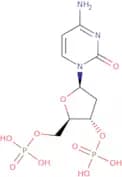
CAS:2-Deoxycytidine 3',5'-diphosphate is an additive that is used in the production of DNA. It is a single-stranded nucleotide with a guanine base. 2-Deoxycytidine 3',5'-diphosphate has been shown to inhibit bacterial growth by reacting with hydrogen peroxide, which is produced during the process of oxidative phosphorylation. This reaction leads to the formation of reactive oxygen species, which damage DNA and cause cell death. The compound also binds to metal ions and prevents them from interacting with cellular components. 2-Deoxycytidine 3',5'-diphosphate can be used as a chromatographic agent for separating DNA fragments according to their size.
Fórmula:C9H15N3O10P2Pureza:Min. 95%Peso molecular:387.18 g/mol2'-Deoxy-2'-fluoro-2'-C-methylcytidine
CAS:2'-Deoxy-2'-fluoro-2'-C-methylcytidine is a nucleoside analog with modifications on both the sugar and the nucleobase. It is a derivative of cytidine, with fluorine attached to the 2' carbon of the sugar (deoxyribose) and a methyl group at the 2' carbon of the sugar as well. These modifications provide the compound with unique properties, such as potnetial increased resistance to enzymatic degradation, which can make it useful in antiviral and anticancer applications.Fórmula:C10H14FN3O4Pureza:Min. 95%Cor e Forma:PowderPeso molecular:259.23 g/mol2',3'-Dideoxycytidine-5'-triphosphate N,N-diethylethanamine
CAS:Please enquire for more information about 2',3'-Dideoxycytidine-5'-triphosphate N,N-diethylethanamine including the price, delivery time and more detailed product information at the technical inquiry form on this pageFórmula:C9H16N3O12P3•(C6H15N)xPureza:Min. 95%5,6-Dihydrothymidine
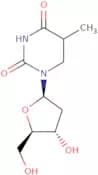
CAS:5,6-Dihydrothymidine is a hydroxylated thymidine analogue. It binds to the leukocyte antigen, which is found on many different types of cells. 5,6-Dihydrothymidine inhibits the replication of herpes simplex virus and can be used for diagnostic purposes. 5,6-Dihydrothymidine has been shown to have conformational properties that are similar to those of thymine, which allows it to bind to the template strand in DNA. This binding prevents the synthesis of messenger RNA from DNA. 5,6-Dihydrothymidine is also able to inhibit cell growth in culture and can be used as a cell culture medium supplement.Fórmula:C10H16N2O5Pureza:Min. 95%Cor e Forma:PowderPeso molecular:244.24 g/mol2',3'-Dideoxyadenosine-5'-triphosphate lithium
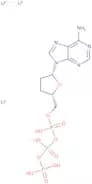
CAS:2',3'-Dideoxyadenosine-5'-triphosphate lithium salt is a nucleoside for use in research applicationsFórmula:C10H16N5O11P3•Li3Pureza:Min. 95%Cor e Forma:Clear liquid.Peso molecular:496 g/molγ-(2-Azidoethyl)-ATP sodium, 10 mM aqueous solution
Please enquire for more information about γ-(2-Azidoethyl)-ATP sodium, 10 mM aqueous solution including the price, delivery time and more detailed product information at the technical inquiry form on this page
Fórmula:C12H19N8O13P3•NaxPureza:Min. 95%8-Aminoguanosine
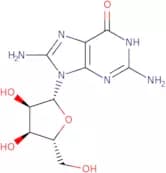
CAS:8-Aminoguanosine is a synthetic purine nucleoside that inhibits DNA synthesis. It has been shown to inhibit the proliferation of HL-60 cells, which are a model for human monocytes and neutrophils. 8-Aminoguanosine has been shown to bind to the template strand of DNA and inhibit the incorporation of deoxyribonucleotide triphosphates into the newly synthesized strand. This binding prevents DNA replication by preventing access to the template strand of DNA. 8-Aminoguanosine inhibits cyclin D2, an enzyme required for cell division, at concentrations as low as 0.1 mM, and it also inhibits microtubule assembly. 8-Aminoguanosine has shown in vitro activity against various tumor cell lines including Molt-4 and MCF7 cells, and in vivo activity in a mouse model against C3H/HeJ mice transplanted with Lewis lung carcinoma cells.
Fórmula:C10H14N6O5Pureza:Min. 95%Cor e Forma:PowderPeso molecular:298.26 g/mol6-Chloro-2-iodo-9-(2',3',5'-tri-O-acetyl-b-D-ribofuranosyl)purine
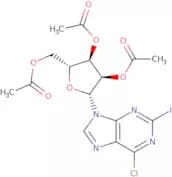
CAS:6-Chloro-2-iodo-9-(2',3',5'-tri-O-acetyl-b-D-ribofuranosyl)purine is a protected purine nucleosideFórmula:C16H16ClIN4O7Pureza:Min. 95%Peso molecular:538.68 g/molAdenosine 5′-diphosphoribose monosodium
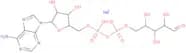
CAS:Adenosine 5′-diphosphoribose monosodium is a novel nucleotide that can be used in the synthesis of antiviral, anticancer, and anti-inflammatory drugs. Adenosine 5′-diphosphoribose monosodium is a modified form of adenosine 5′-triphosphate (ATP) with an added phosphate group at the 5′ position on the ribose sugar. It is synthesized from ATP by phosphoramidite chemistry. The CAS number for this product is 68414-18-6. Adenosine 5′-diphosphoribose monosodium has been shown to inhibit replication of human immunodeficiency virus type 1 (HIV-1) and herpes simplex virus type 1 (HSV-1).Fórmula:C15H23N5O14P2•NaPureza:Min. 95%Peso molecular:582.31 g/molS-Adenosyl-L-methionine
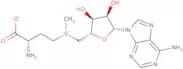
CAS:S-Adenosyl-L-methionine (SAM-e) is a co-substrate involved in methyl group transfer to nucleic acids, proteins and lipids. SAM-e is produced in the liver from adenosine triphosphate (ATP) and methionine by action of the enzyme methionine adenosyltransferase. Therapeutic use of S-adenosyl-L-methionine includes osteoarthritis, liver disease and major depressive disorder. S-Adenosyl-L-methionine is available as a dietary supplement.Fórmula:C15H22N6O5SPureza:Min. 95%Cor e Forma:White PowderPeso molecular:398.44 g/molAracytidylyl-(5′→5′)-cytidine
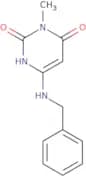
CAS:Please enquire for more information about Aracytidylyl-(5′→5′)-cytidine including the price, delivery time and more detailed product information at the technical inquiry form on this pageFórmula:C18H25N6O12PPureza:Min. 95%Peso molecular:548.4 g/mol6-(Benzylamino)-3-methyl-1,2,3,4-tetrahydropyrimidine-2,4-dione
CAS:6-(Benzylamino)-3-methyl-1,2,3,4-tetrahydropyrimidine-2,4-dione (BMPT) is a synthetic cytokinin that belongs to the group of 6-benzylaminopurines. BMPT is an inhibitor of cytokinin receptor kinases, as it is a benzyl uracil derivative. BMPT can be used as a building block for the synthesis of other compounds and has been used as an inhibitor of cell growth in various organisms.
Fórmula:C12H13N3O2Pureza:Min. 95%Peso molecular:231.25 g/mol2',3',5'-Triacetyl -azacytidine
CAS:2',3',5'-Triacetyl-azacytidine is a transcription factor that has dose-dependent effects on the production of melanin. It inhibits the synthesis of melanin by binding to two specific transcription factors, the microphthalmia-associated transcription factor and the histone methyltransferases. This drug also inhibits tyrosinase, which is an enzyme involved in the production of melanin. 2',3',5'-Triacetyl-azacytidine has been shown to inhibit the growth of murine melanoma cells and may be useful for treating skin cancer.Fórmula:C14H18N4O8Pureza:Min. 95%Peso molecular:370.31 g/mol2'-O-Methylguanosine 5'-triphosphate lithium salt - 100mM aqueous solution
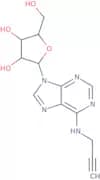
CAS:2'-O-Methylguanosine 5'-triphosphate lithium salt is a synthetic nucleotideFórmula:C11H18N5O14P3·xLiPureza:Min. 95%Cor e Forma:Clear LiquidPeso molecular:537.21 g/molN6-Propargyladenosine
CAS:N6-Propargyladenosine is an alkyne functionalised nucleoside.Fórmula:C13H15N5O4Pureza:Min. 95%Cor e Forma:PowderPeso molecular:305.29 g/mol5-Methoxyuridine 5′-triphosphate sodium, 85mM/L aqueous solution
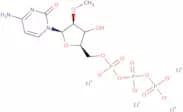
CAS:Please enquire for more information about 5-Methoxyuridine 5′-triphosphate sodium, 85mM/L aqueous solution including the price, delivery time and more detailed product information at the technical inquiry form on this pageFórmula:C10H17N2O16P3•NaxPureza:Min. 95%2'-O-Methylcytidine 5'-triphosphate lithium - 100mM aqueous solution
CAS:2'-O-Methylcytidine 5'-triphosphate lithium is a synthetic nucleotideFórmula:C10H18N3O14P3•LixPureza:Min. 95%Cor e Forma:Clear LiquidPeso molecular:497.18 g/mol7-TFA-ap-7-Deaza-2',3'-dideoxyadenosine
CAS:7-TFA-ap-7-Deaza-2',3'-dideoxyadenosine is a diphosphate nucleoside analogue that can be activated by phosphoramidites. It is a novel, synthetic, and high quality nucleotide with antiviral and anticancer properties. This drug has been shown to inhibit the synthesis of DNA and RNA at the transcriptional level. 7-TFA-ap-7-Deaza-2',3'-dideoxyadenosine is a monophosphate nucleoside analogue that can be used in ribonucleotide synthesis for the treatment of cancer.Fórmula:C16H16F3N5O3Peso molecular:383.33 g/molRef: 3D-J-700297
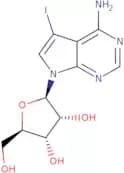
-Unit-ggA consultar1gA consultar50mgA consultar100mgA consultar250mgA consultar500mgA consultar7-Deaza-7-iodoadenosine
CAS:7-Deaza-7-iodoadenosine is a nucleotide that has been used in experiments to assess the levels of adenosine, a dinucleotide phosphate that is involved in many cellular functions. 7-deaza-7-iodoadenosine has been shown to inhibit locomotor activity in rats and cyclase activity in 3T3-L1 preadipocytes. It also inhibits the release of inflammatory proteins from polymorphonuclear leucocytes and angiogenesis (formation of new blood vessels) in liver cells. Although this nucleotide has not been extensively studied, it has been proposed as an antiinflammatory agent because it inhibits protein synthesis and downregulates proinflammatory proteins.
Fórmula:C11H13IN4O4Pureza:Min. 95%Peso molecular:392.15 g/molCytidine 5’-phosphoromorpholidate N,N’-dicyclohexyl-4-morpholinecarboximidamide
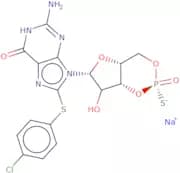
CAS:Cytidine 5’-phosphoromorpholidate N,N’-dicyclohexyl-4-morpholinecarboximidamide is a novel cytidine phosphoramidate monophosphate that has been shown to have anticancer and antiviral properties. It can be used as a DNA nucleoside phosphoramidite in the synthesis of oligonucleotides or as an antiviral agent by inhibiting viral RNA replication. Cytidine 5’-phosphoromorpholidate N,N’-dicyclohexyl-4-morpholinecarboximidamide is chemically synthesized in high purity and quality for use in research in the field of DNA, nucleosides, and antiviral agents.Fórmula:C30H52N7O9PPureza:Min. 95%Peso molecular:685.75 g/mol8-(4-Chlorophenylthio)guanosine 3',5'-cyclic monophosphothioate Sp-isomer sodium
CAS:8-(4-Chlorophenylthio)guanosine 3',5'-cyclic monophosphothioate Sp-isomer sodium salt (8-chloro-GTP) is a modified nucleoside that inhibits the synthesis of DNA by preventing the addition of nucleotides to the 3' end of DNA. It is an antiviral and anticancer agent, and can be used as a phosphoramidite in the synthesis of DNA. 8-chloro-GTP has shown high purity and high quality in synthesized DNA. Research on this compound is still ongoing, but it has been shown to be novel and modified compared to other nucleosides.Fórmula:C16H14ClN5O6PS2•NaPureza:Min. 95%Peso molecular:525.86 g/mol5'-O-DMT-thymidine-3'-lcaa-CPG
5'-O-DMT-thymidine-3'-lcaa-CPG is a nucleoside, ribonucleoside, and diphosphate that inhibits viral DNA synthesis. It is a novel compound with antiviral properties that has been shown to inhibit the replication of human cytomegalovirus (HCMV) and herpes simplex type 1 virus. 5'-O-DMT-thymidine-3'-lcaa-CPG also functions as an anticancer agent by inhibiting DNA synthesis in tumor cells. This nucleoside analog is phosphoramidite, which can be used for the preparation of modified oligonucleotides. 5'-O-DMT-thymidine-3'-lcaa-CPG has high purity and high quality.Pureza:Min. 95%Cor e Forma:PowderDiquafosol Impurity 2
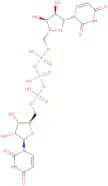
CAS:Diquafosol Impurity 2 is a high-purity phosphoramidite that can be used for the synthesis of DNA, RNA, and deoxyribonucleosides. This product is also a novel activator for phosphoramidites. Diquafosol Impurity 2 has CAS No. 63785-59-1 and a molecular weight of 228.24 g/mol. It is insoluble in water, but soluble in most organic solvents.
Fórmula:C18H25N4O20P3Pureza:Min. 95%Peso molecular:710.33 g/molγ-[(6-Azidohexyl)-imido]-ATP sodium
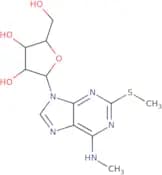
Please enquire for more information about γ-[(6-Azidohexyl)-imido]-ATP sodium including the price, delivery time and more detailed product information at the technical inquiry form on this pageFórmula:C16H28N9O12P3•NaxPureza:Min. 95%2-Methylthio-N6-methyladenosine
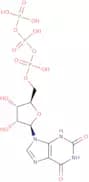
CAS:2-Methylthio-N6-methyladenosine is an adenosine nucleoside that is found in the DNA of eukaryotes. It is similar to 2-methylthio-n6-isopentenyladenosine, which is a modified form of n6-methyladenosine. The chemical structures of both molecules are related to the thermodynamic properties of the molecule and their ability to be postsynthetically modified. These modifications can lead to changes in their translation, which can have implications for the development and progression of disease. 2-Methylthio-N6-methyladenosine has a role in epigenetics, which is defined as changes in gene expression without any alterations in DNA sequence. In this case, it may modify the chloride ion concentration by changing its chemical structure, leading to epigenetic changes that can affect how genes are expressed or translated into proteins.Fórmula:C12H17N5O4SPureza:Min. 95%Cor e Forma:White PowderPeso molecular:327.36 g/molXanthosine-5'-triphosphate triethylammonium salt - 100 mM aqueous solution
CAS:Inhibitor of adenylyl and guanylyl cyclaseFórmula:C10H15N4O15P3·xC6H15NPureza:Min. 95%Cor e Forma:Colorless PowderPeso molecular:524.17 g/mol5-Bromo-2'-deoxycytidine
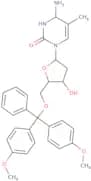
CAS:5-Bromo-2'-deoxycytidine is a synthetic nucleoside analogue that is used to treat diabetic neuropathy. It is structurally similar to cytidine, and inhibits the enzyme DNA polymerase by intramolecular catalysis. This causes deamination of the 5-bromo group, which prevents further synthesis of DNA. 5-Bromo-2'-deoxycytidine has been shown to be effective in vivo in a mouse model for inflammatory bowel diseases, including colitis and eosinophilic enteritis. The drug was also found to inhibit the production of Eosinophil peroxidase from HL-60 cells in vitro.Fórmula:C9H12BrN3O4Pureza:Min. 95%Cor e Forma:Off-White PowderPeso molecular:306.11 g/mol5′-O-DMT-LNA N-Bz 5-Me cytidine
CAS:5′-O-DMT-LNA N-Bz 5-Me cytidine is a protected LNA cytidine nucleoside.Fórmula:C39H37N3O8Pureza:Min. 95%Peso molecular:675.73 g/molStearoyl coenzyme A free acid hydrate
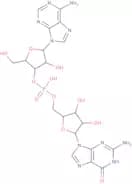
CAS:Stearoyl coenzyme A free acid hydrate is a natural, non-synthetic lipid molecule that belongs to the group of fatty acids. It is found in the form of a white crystalline powder and has a melting point at approximately 56°C. Stearoyl CoA free acid hydrate is an essential component of cellular metabolism, carrying out reactions such as desaturase, dextran sulfate, and other enzyme activities. Stearoyl CoA free acid hydrate may have therapeutic applications for metabolic disorders and obesity. The enzyme complex that catalyzes the synthesis of stearoyl CoA free acid hydrate in adipocytes is ATP-binding cassette transporter (ABC) A1 and ABCG1, which are members of the superfamily of ATP-binding cassette (ABC) transporters. It also plays a role in regulating immune responses via Toll-like receptor 4 (TLR4).Fórmula:C39H70N7O17P3S•H2OPureza:Min. 92 Area-%Cor e Forma:White PowderPeso molecular:1,052.01 g/molAdenylyl-3'-5'-guanosine sodium salt
CAS:3'-Adenylyl-5'-guanosine ammonium salt is a dinucleoside that competes with guanosine for binding to the enzyme adenylate cyclase. This reaction leads to increased levels of cyclic AMP, which causes an increase in the rate of viral replication. 3'-Adenylyl-5'-guanosine ammonium salt has been shown to inhibit the growth of pyogenic bacteria such as Streptococcus pyogenes and has also been used to treat influenza infections. 3'-Adenylyl-5'-guanosine ammonium salt is an inorganic compound that is found in tobacco. It can be synthesized from uridine and p-nitrophenyl phosphate by the reaction: 3'--O--(CH2)4--COOH + H2N--PO4--> 3'--O--(CH2)4--CONH2 + H3PO4
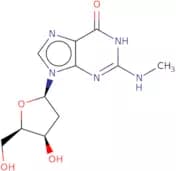
Fórmula:C20H24N10O11P·NaPureza:Min. 95%Peso molecular:634.43 g/mol2'-Deoxy-N2-methylguanosine
CAS:2'-Deoxy-N2-methylguanosine is a nucleoside with anticancer properties. It is a phosphoramidite, which is an analog of the natural nucleotide guanosine, where the 2'-hydroxyl group has been replaced by a methylene group. This compound is used in DNA synthesis and RNA synthesis. It can be used as a monophosphate or diphosphate. It also has antiviral and anti-inflammatory activities, as well as N2-methylamino moiety that can be used for the treatment of cancer and inflammatory diseases such as arthritis.
Fórmula:C11H15N5O4Pureza:Min. 95%Cor e Forma:White PowderPeso molecular:281.27 g/mol


![8-Amino[1''-(N''-dansyl)-4''-aminobutyl]-5'-(1-aziridinyl)-5'-deoxy adenosine](/_next/image/?url=https%3A%2Fstatic.cymitquimica.com%2Fproducts%2F3D%2Fthumb-webp%2FNA16503.webp&w=3840&q=75)

















![γ-[(6-Azidohexyl)-imido]-ATP sodium](/_next/image/?url=https%3A%2Fstatic.cymitquimica.com%2Fproducts%2F3D%2Fthumb-webp%2FNA183120.webp&w=3840&q=75)