Nucleosídeos
Foram encontrados 3569 produtos de "Nucleosídeos"
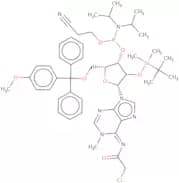
2'-O-tert-Butyldimethylsilyl-N6-chloroacetyl-N1-methyl-5'-O-MMT-adenosine 3'-CE phosphoramidite
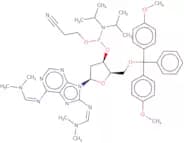
2'-O-tert-Butyldimethylsilyl-N6-chloroacetyl-N1-methyl-5'-O-MMT-adenosine 3'-CE phosphoramidite is an activated monophosphate chemical compound. It is a modified nucleoside that has been used for the synthesis of oligonucleotides and DNA. It also has anticancer, antiviral, and other pharmacological activities.Fórmula:C48H63ClN7O7PSiPureza:Min. 95%Peso molecular:944.57 g/mol8-Amino-2'-deoxy-N6,N8-di-DMF-5'-O-DMT-adenosine 3'-CE phosphoramidite
CAS:8-Amino-2'-deoxy-N6,N8-di-DMF-5'-O-DMT-adenosine 3'-CE phosphoramidite is a novel nucleoside analog with antiviral and anticancer properties. It is synthesized by reacting 8-aminoimidazo[2,1-b]thiazole 1,3(2H)-dione (AITD) with N6,N8-diisopropyl dATP to form the aminothiazole phosphate intermediate. This intermediate is then reacted with 5'-O-(4,4'-dimethoxytrityl)-2',3',5' triphosphate (DMTrP) to produce the desired product. The synthesis of 8AAODMTAP has been shown to be more efficient than other synthesized nucleosides due to its high purity and lack of impurities.Fórmula:C46H59N10O6PPureza:Min. 95%Peso molecular:879 g/mol2',3'-Dideoxyguanosine-5'-O-(1-thiotriphosphate)
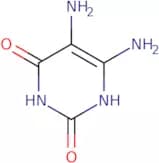
CAS:2',3'-Dideoxyguanosine-5'-O-(1-thiotriphosphate) (2,3'-ddGTP) is a nucleoside that is synthesized using phosphoramidite chemistry. It has antiviral and anticancer activity, as well as the ability to activate cellular transcription. 2,3'-Dideoxyguanosine-5'-O-(1-thiotriphosphate) can be used in the synthesis of modified nucleosides or in the synthesis of novel nucleosides. The compound was found to inhibit DNA replication by binding to the enzyme ribonucleotide reductase. 2,3'-Dideoxyguanosine-5'-O-(1-thiotriphosphate) can also be used for DNA sequencing and as a cytotoxic agent in cancer chemotherapy.Fórmula:C10H16N5O11P3SPureza:Min. 95%Peso molecular:507.25 g/mol5,6-Diaminouracil
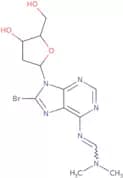
CAS:5,6-Diaminouracil is a nitrogen-containing heterocyclic compound that inhibits bacterial enzymes. 5,6-Diaminouracil is used as a pharmaceutical preparation for the treatment of cancer, and has been shown to be effective against various cancers, including colon cancer and breast cancer. 5,6-Diaminouracil can inhibit the growth of cells by binding to DNA and inhibiting DNA synthesis. This drug also has potent antitumor activity. 5,6-Diaminouracil has been used in analytical chemistry as an analytical method for determining the purity of products such as pharmaceuticals or dyes. The potency of this drug was determined electrochemically using cyclic voltammetry and it was found to have a constant inhibitory effect on tumor cell growth at low concentrations.Fórmula:C4H7ClN4O2Pureza:Min. 95%Peso molecular:178.58 g/mol8-Bromo-N6-(dimethylaminomethylidene)-2'-deoxyadenosine
CAS:8-Bromo-N6-(dimethylaminomethylidene)-2'-deoxyadenosine is a phosphoramidite that is used in the preparation of antiviral nucleosides and monophosphate. It has been shown to have anticancer activity. 8-Bromo-N6-(dimethylaminomethylidene)-2'-deoxyadenosine is synthesized by reacting an acid halide with a 2'-deoxyribonucleotide. This reaction produces a 2'-bromo adenosine derivative, which is then reacted with dimethylamine to produce the desired product. The synthesis of 8-bromo-N6-(dimethylaminomethylidene)-2'-deoxyadenosine can be performed on a large scale using an automated process.Fórmula:C13H17BrN6O3Pureza:Min. 95%Peso molecular:385.22 g/mol1-(β-D-2-Deoxyribofuranosyl)-3-nitropyrrole
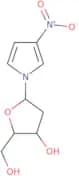
CAS:1-(β-D-2-Deoxyribofuranosyl)-3-nitropyrrole is a nitrofuranose analog that is used in the synthesis of nucleic acids. It has been shown to be effective as a template for DNA sequencing and as a probe for magnetic resonance spectroscopy. 1-(β-D-2-Deoxyribofuranosyl)-3-nitropyrrole inhibits the polymerase chain reaction by binding to the primer and causing misincorporation at mismatched sites, leading to reduced amplification of the target sequence. This compound also has antiviral properties and can prevent the replication of HIV and other viruses by destabilizing their dna duplexes.Fórmula:C9H12N2O5Pureza:Min. 95%Peso molecular:228.2 g/molN-Succinyl-5-aminoimidazole-4-carboxamide ribose 5'-phosphate
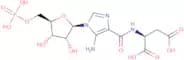
CAS:N-Succinyl-5-aminoimidazole-4-carboxamide ribose 5'-phosphate is a synthetase that is involved in the biosynthesis of purines and pyrimidines. It catalyzes the ATP-dependent formation of N-succinyl5'-aminoimidazole-4-carboxamide ribose 5'-phosphate from succinyl CoA and aspartic acid. This enzyme has been studied in wild type strains of bacteria, such as Escherichia coli, but not in humans or other organisms. N-Succinyl5'-aminoimidazole-4-carboxamide ribose 5'-phosphate has been shown to be an inhibitor of antimicrobial agents such as penicillin G, erythromycin, and tetracycline. The mechanism for this inhibition is unclear, but it may involve hydrogen bonding interactions or structural changes that prevent bindingFórmula:C13H19N4O12PPureza:Min. 95 Area-%Cor e Forma:White Off-White PowderPeso molecular:454.28 g/molO6-Phenyl-2'-deoxyinosine
CAS:O6-Phenyl-2'-deoxyinosine is a high purity, modified nucleoside that is a novel anticancer agent. It is used as a phosphoramidite in the synthesis of DNA and RNA. It has been shown to have cytotoxic effects against tumor cells and enhances the efficacy of chemotherapy. O6-Phenyl-2'-deoxyinosine has also been shown to be an activator of transcription factors, including NF-κB, AP-1, and STAT3.Fórmula:C16H16N4O4Pureza:Min. 95%Peso molecular:328.32 g/mol2'-Deoxy-5-(trifluoromethyl)cytidine
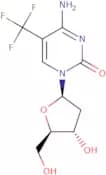
CAS:2'-Deoxy-5-(trifluoromethyl)cytidine is a synthetic nucleoside analogue that inhibits the cytidine deaminase enzyme. It is used in the treatment of some types of leukemia and other cancers. The compound, which has a trifluoromethyl group on the 2' position, binds to the active site of cytidine deaminase and prevents it from functioning. This leads to an accumulation of thymidylate, which is required for DNA synthesis. The tumor tissue also contains high concentrations of this drug and its metabolites, making it more effective against cancer cells than normal cells. 2'-Deoxy-5-(trifluoromethyl)cytidine has been shown to inhibit anabolism in tumor tissue in the presence of high concentrations of phosphorylases, which are enzymes that catalyze reactions that break down carbohydrates and proteins into smaller molecules such as glucose or amino acids.Fórmula:C10H12F3N3O4Pureza:Min. 95%Peso molecular:295.22 g/molN6-Benzoyl-2',3'-dideoxyadenosine
CAS:N6-Benzoyl-2',3'-dideoxyadenosine is a nucleoside analog that inhibits the growth of Mycobacterium tuberculosis by preventing DNA replication. It is also a potent inhibitor of DNA synthesis, and binds to the beta-subunit of bacterial RNA polymerase, leading to inhibition of transcription. N6-Benzoyl-2',3'-dideoxyadenosine has shown in vitro activity against Mycobacterium tuberculosis and other bacteria that have been found to be resistant to conventional antibiotics.Fórmula:C17H17N5O3Pureza:Min. 95%Cor e Forma:White/Off-White SolidPeso molecular:339.36 g/mol2'-Deoxy-5-fluoroadenosine
2'-Deoxy-5-fluoroadenosine is a nucleoside that is used in the synthesis of DNA and RNA. It has antiviral activity and can be used as an anticancer agent. This nucleoside is synthesized by reacting 2'-deoxyadenosine with 5-fluorouracil in a high-quality, high purity environment under stringent conditions. 2'-Deoxy-5-fluoroadenosine has also been shown to have antiretroviral activity against HIV and hepatitis B virus.
Pureza:Min. 95%Chemical phosphorylating reagent (cpr)
CAS:Chemical phosphorylating reagent (CPR) is a powerful tool for the study of kinases, which are enzymes that regulate cellular processes such as cell division and apoptosis. CPR has been shown to be effective in inhibiting the activity of certain kinases that are involved in tumor growth and progression. It has also been used as an anticancer agent, inducing apoptosis in cancer cells. CPR is an analog of toxaphene and labetalol, two compounds with known kinase inhibitor activity. This reagent has been tested on human urine samples and Chinese hamster ovary cells, demonstrating its potential as a valuable research tool for studying kinase signaling pathways and developing new cancer therapies.Fórmula:C5H10O5Pureza:Min. 95%Peso molecular:150.13 g/mol5'-o-(Dimethoxytrityl)-5-methyl-2'-o-methyluridine
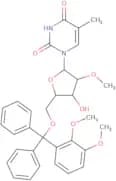
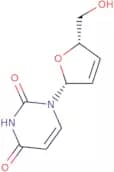
CAS:5'-O-(Dimethoxytrityl)-5-methyl-2'-O-methyluridine is a DNA building block that is used as a monophosphate and can be converted to diphosphate or modified with various protecting groups. This compound has been shown to have antiviral and anticancer properties, as well as being a novel nucleoside analog. 5'-O-(Dimethoxytrityl)-5-methyl-2'-O-methyluridine has the CAS number of 115173-73-4.Fórmula:C32H34N2O8Pureza:Min. 95%Peso molecular:574.6 g/mol2',3'-Didehydro-2',3'-dideoxyuridine
CAS:2',3'-Didehydro-2',3'-dideoxyuridine (DDDU) is a nucleoside analog that inhibits the formation of HIV. It is a potent inhibitor of human immunodeficiency virus type 1 (HIV-1) replication in cell culture, and has been shown to inhibit the production of HIV-1 virions in vitro. 2',3'-Didehydro-2',3'-dideoxyuridine has been shown to bind to the enzyme glycosyltransferase, which is required for HIV-1 replication. DDU also binds to human CD4+ T cells, deflecting them from the HIV-infected target cell. This compound may be useful as an antiviral agent against HIV-1 infection by inhibiting viral replication and infectivity.
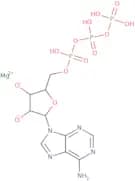
Fórmula:C9H10N2O4Pureza:Min. 95%Peso molecular:210.19 g/molAdenosine 5'-(tetrahydrogen triphosphate)
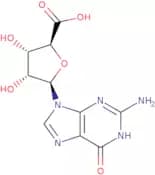
CAS:Adenosine is a nucleoside consisting of adenine and ribose. It is used in biochemical analysis to quantify the cytosolic Ca2+ concentration, which is an important cellular signal that regulates many cellular processes. Adenosine stimulates the uptake of Ca2+ by binding to the monophosphate-activated protein (AMPAR), which results in the opening of voltage-gated calcium channels. These channels allow Ca2+ to enter the cell, increasing its intracellular concentration. Adenosine also has been shown to stimulate muscle contraction through increased release of Ca2+. This drug also possesses inhibitory effects on synaptic transmission and may have anti-inflammatory properties due to its ability to inhibit proteolytic enzymes in muscle cells.Fórmula:C10H14MgN5O13P3Pureza:Min. 95%Peso molecular:529.47 g/molGuanosine-5'-carboxylic acid
CAS:Guanosine-5'-carboxylic acid (GCA) is a nucleotide that interacts with mammalian cells. It reacts in a vessel to form the antigen, which can then be detected using an antibody. The conformational properties of this molecule are important for its function, and it has been shown to be effective against cancer cells in vivo. GCA has also been shown to interact with toll-like receptor 2 and induce an antibody response.Fórmula:C10H11N5O6Pureza:Min. 95%Peso molecular:297.22 g/molN2-DMF-9-(2'-deoxy-5'-O-DMT-b-D-ribofuranosyl)purine 3'-CE phosphoramidite
CAS:N2-DMF-9-(2'-deoxy-5'-O-DMT-b-D-ribofuranosyl)purine 3'-CE phosphoramidite is a novel, modified nucleoside analog with antiviral and anticancer properties. It is synthesized by the reaction of 2′,5′-O-(4,4′-dimethoxytrityl)-9-(2′deoxy-5′-O-DMT b D ribofuranosyl)purine 3′ with a phosphoramidite reagent in DMF at elevated temperature. The compound has been shown to inhibit viral replication in vitro and in vivo. In addition to its antiviral activity, N2DMFP3'-CE also inhibits tumor cell growth.Fórmula:C43H53N8O6PPureza:Min. 95%Cor e Forma:Off white solid.Peso molecular:808.93 g/mol2'-Deoxy-8-oxo-6-thioguanosine 5'-triphosphate
2'-Deoxy-8-oxo-6-thioguanosine 5'-triphosphate is a synthetic nucleotide that has antiviral properties. It activates the transcription of genes by preventing the synthesis of viral DNA and RNA. 2'-Deoxy-8-oxo-6-thioguanosine 5'-triphosphate is also an anticancer agent, as it prevents cell proliferation by inhibiting the synthesis of DNA, RNA, and protein. This drug can be used for treatment of HIV infection or cancer. 2'-Deoxy-8-oxo-6-thioguanosine 5'-triphosphate is a novel nucleotide with high purity.
Pureza:Min. 95%3'-Deoxy-3'-fluorocytidine
CAS:3'-Deoxy-3'-fluorocytidine is an activating agent that has been shown to inhibit coxsackie virus and other single-stranded RNA viruses. It is a nucleoside analogue that binds to the enzyme ribofuranoside, preventing the formation of the active site. 3'-Deoxy-3'-fluorocytidine has also been shown to inhibit the biochemical reactions involving S-adenosylhomocysteine hydrolase, which catalyzes the conversion of S-adenosylhomocysteine into adenosine, a precursor for DNA synthesis. Mechanistic studies have indicated that 3'-deoxy-3'-fluorocytidine inhibits enzymatic activity through stereochemical interactions with S-adenosylhomocysteine hydrolase.
Fórmula:C9H12FN3O4Pureza:Min. 95%Peso molecular:245.21 g/mol2’-Deoxy-N2-dimethylguanosine
CAS:2’-Deoxy-N2-dimethylguanosine is a novel antiviral agent that inhibits the replication of human DNA viruses by binding to their diphosphate or monophosphate regions and inhibiting ribonucleotide reductase. It has also been shown to have anticancer properties in vitro.Pureza:Min. 95%