Nucleosídeos
Foram encontrados 3569 produtos de "Nucleosídeos"
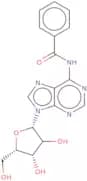
N6-Benzoyl-L-adenosine
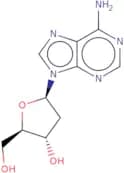
CAS:N6-Benzoyl-L-adenosine is a novel nucleoside that has been shown to have antiviral and anticancer activity. It is synthesized by the reaction of L-adenosine with benzoyl chloride in the presence of a base. The drug inhibits the growth of cancer cells by interfering with DNA synthesis. N6-Benzoyl-L-adenosine also inhibits viral replication, especially HIV, herpes simplex virus type 1, and human cytomegalovirus (HCMV). It can be used as an antiviral agent in combination with other drugs or as an anticancer agent alone. N6 Benzoyl L adenosine is a nucleoside that has been shown to have antiviral and anticancer activity. It is synthesized by the reaction of L adenosine with benzoyl chloride in the presence of a base. The drug inhibits the growth of cancer cells by interfering with DNA synthesis. N6Fórmula:C17H17N5O5Pureza:Min. 95%Cor e Forma:White to off-white solid.Peso molecular:371.35 g/mol2'-Deoxyadenosine
CAS:2'-Deoxyadenosine is a nucleoside that is found in DNA. It has been shown to have potent anticancer activity against carcinoma cell lines and to bind to the adenosine receptor A3. 2'-Deoxyadenosine has also been shown to inhibit the production of inflammatory cytokines, such as tumor necrosis factor-α and interleukin-6, from nuclear extracts of mouse tumor cells. This nucleoside may be a potential drug target for the treatment of cancer and inflammation.Fórmula:C10H13N5O3Pureza:Min. 98 Area-%Cor e Forma:PowderPeso molecular:251.24 g/molCiticoline sodium
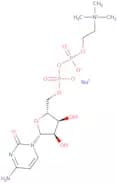
CAS:Citicoline is a complex organic molecule, a form of B-vitamin choline that acts as an intermediate in many biosynthetic pathways, for example, in the biosynthesis of cell membrane phospholipids. As a dietary supplement, citicoline is a source of choline and cytidine, two components that are quickly absorbed in the intestine and across the blood-brain barrier. The neuroprotective properties of citicoline improves mental performance increasing the levels of other brain-related chemicals like dopamine and norepinephrine, helping with recovery in stroke patients, reducing memory loss due to aging and improving vision in patients with glaucoma.Fórmula:C14H26N4O11P2•NaPureza:Min. 98.0 Area-%Cor e Forma:White To Off-White SolidPeso molecular:511.31 g/molAdenosine 5'-monophosphate sodium
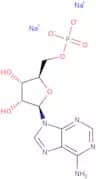
CAS:Adenosine 5'-monophosphate sodium is a nucleotide that is involved in the energy metabolism of cells. It has been shown to inhibit oxidative injury and to activate signal pathways in response to external stimuli, such as glucose deprivation. Adenosine 5'-monophosphate sodium can be synthesized from ATP by the enzyme adenosine kinase.
Fórmula:C10H13N5O7P·NaPureza:Min. 98 Area-%Cor e Forma:White PowderPeso molecular:369.2 g/mol2'-Amino-2'-deoxycytidine
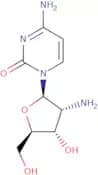
CAS:2'-Amino-2'-deoxycytidine is a modified nucleoside, based on cytidine. In this compound 2'-hydroxyl group has been replaced by an amino group, which can change hydrogen bonding patterns potentially affecting how it interacts with biomolecules.Fórmula:C9H14N4O4Pureza:Min. 95%Cor e Forma:PowderPeso molecular:242.24 g/molALS-8176
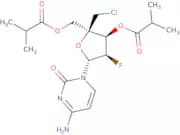
CAS:ALS-8176 is a benzimidazole compound that has been shown to be effective against both wild-type and syncytial viruses. It is also active against the hepatitis B virus, which causes fulminant hepatitis in humans and death in 30% of cases. The antiviral activity of ALS-8176 was demonstrated by its ability to inhibit viral DNA synthesis and to prevent the release of new viral particles. ALS-8176 has also been shown to have a broad spectrum of activity against paramyxoviruses, including mumps, measles, and respiratory syncytial virus (RSV). This drug can be used for the treatment of influenza A and B when administered during the early stages of infection. ALS-8176 blocks the antibody response to influenza virus infection as well as monoclonal antibody binding sites on the hemagglutinin protein, preventing fusion between infected cells.Fórmula:C18H25ClFN3O6Pureza:Min. 95%Cor e Forma:PowderPeso molecular:433.86 g/mol2'-Deoxyuridine-5'-monophosphate disodium salt
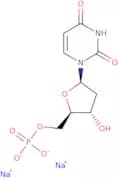
CAS:2'-Deoxyuridine-5'-monophosphate disodium salt (2DUMP) is a nucleoside analog that inhibits the synthesis of DNA and RNA by inhibiting the enzyme thymidylate synthase. 2DUMP is a covalent inhibitor of thymidylate synthase, which prevents the formation of dTMP from deoxyuridine 5'-triphosphate. This compound has been shown to be effective in treating squamous cell cancer and hyperproliferative diseases such as chronic myelogenous leukemia. 2DUMP is also used as an antiviral agent against HIV, herpes simplex virus, and varicella zoster virus. It has been shown to bind to benzalkonium chloride (BAK) in biological samples such as serum or plasma. 2DUMP binds to BAK through a covalent linkage between the 3' hydroxyl group on BAK and the phosphate group on 2DUMPFórmula:C9H11N2O8PNa2Pureza:Min. 95%Cor e Forma:PowderPeso molecular:352.15 g/molN2-Ethyl-2′-deoxyguanosine - 98 % HPLC
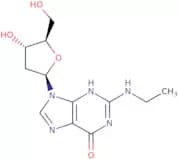
CAS:N2-Ethyl-2′-deoxyguanosine is an important metabolite of N2-ethyl-3′,5′-dideoxyadenosine (NEDA) and has been detected in urine samples from Sprague-Dawley rats. The biological properties of this metabolite are not well understood, but it has been shown to have genotoxic effects in mammalian cells and to be carcinogenic in a rat model. N2-Ethyl-2′-deoxyguanosine is also able to enhance the repair of damaged DNA and has functional groups that are similar to those found in cancer cells.
Fórmula:C12H17N5O4Pureza:Min. 98 Area-%Cor e Forma:White PowderPeso molecular:295.29 g/mol8-Nitroguanosine
CAS:8-Nitroguanosine is a nucleotide analogue that inhibits the activity of cyclic GMP in cells. It has been found to inhibit the growth of bacteria and cancer cells, as well as to stimulate the production of reactive oxygen species in brain cells. 8-Nitroguanosine has also been shown to inhibit the activity of cyclase enzymes in liver cells, which may be useful for treating liver disease. 8-Nitroguanosine is used as a chemical base for monoclonal antibodies that are used to study brain functions and pathogenic mechanisms.Fórmula:C10H12N6O7Pureza:Min. 95%Peso molecular:328.24 g/molUridine-3',5'-cyclic monophosphate sodium salt
CAS:Uridine-3',5'-cyclic monophosphate sodium salt is a phosphotriester that is an intermediate in the biosynthesis of nucleosides. It is also a phosphodiesterase inhibitor, which means it inhibits the breakdown of cyclic nucleotides and allows them to accumulate. This drug has been shown to increase platelet production and has anti-inflammatory effects. Uridine-3',5'-cyclic monophosphate sodium salt is a human metabolite that can be synthesized from uridine, which is present in DNA, RNA, and food sources such as meat, eggs, and milk. The synthesis of uridine-3',5'-cyclic monophosphate sodium salt requires phosphoramidite as a precursor.
Fórmula:C9H10N2O8P·NaPureza:Min. 98 Area-%Cor e Forma:White PowderPeso molecular:328.2 g/molOleoyl coenzyme A lithium salt
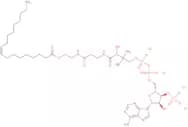
CAS:Oleoyl coenzyme A lithium salt is a fatty acid that belongs to the class of organic compounds known as aliphatic acyl-coenzyme A. It is synthesized by the enzyme synthetase and can be used to diagnose cascading, linear response, and aldehyde synthesis in carbon nanotubes. Oleoyl coenzyme A lithium salt has been shown to bind to sephadex G-100 and immobilize it on a surface. This immobilization process aids in the diagnosis of various diseases such as diabetes mellitus, cancer, and cardiovascular problems. The chloride anion present in oleoyl coenzyme A lithium salt buffers and stabilizes the pH levels during this process. Oleoyl coenzyme A lithium salt also binds to multi-walled carbon nanotubes (MWNTs) due to its hydrophobic nature, which aids in the detection of markers such as lipids or proteins using immunological techniques.Fórmula:C39H68N7O17P3S·xLiPureza:Min. 95%Peso molecular:1,031.98 g/molFludarabine phosphate
CAS:Fludarabine phosphate is an antileukemic drug that inhibits DNA polymerase α and β, as well as other enzymes in the nucleotide synthesis pathway. It is used to treat patients with chronic myelogenous leukemia (CML) who have developed resistance to other treatments. Fludarabine phosphate has been shown to induce a cytotoxic effect against tumor cells by binding to ATP-binding cassette transporter proteins on the cell membrane and inhibiting intracellular targets such as DNA, RNA, and protein synthesis. Fludarabine phosphate has also been shown to inhibit the growth of tumor cells through synergistic interactions with other anticancer drugs such as hydroxyurea or busulfan, which may be due to its ability to inhibit enzyme activities such as erythrocyte alkaline phosphatase.
Fórmula:C10H13FN5O7PPureza:Min. 98 Area-%Cor e Forma:PowderPeso molecular:365.21 g/mol7-Deaza-2',3'-dideoxy-7-iodoadenosine
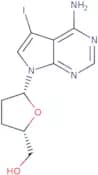
CAS:7-Deaza-2',3'-dideoxy-7-iodoadenosine is a nucleoside analogue that is used as an antiviral, anticancer, and antifungal agent. It is a modified form of adenosine which inhibits viral replication by inhibiting the activity of reverse transcriptase. 7-Deaza-2',3'-dideoxy-7-iodoadenosine has also been shown to inhibit DNA synthesis in cells by blocking the incorporation of dCTP into DNA. This nucleoside analogue has shown potential for use as an activator in phosphoramidite chemistry and as a deoxyribonucleoside in oligonucleotide synthesis.Fórmula:C11H13IN4O2Pureza:Min. 95%Cor e Forma:PowderPeso molecular:360.15 g/molKinetin riboside-5'-monophosphate sodium salt
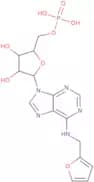
CAS:Kinetin riboside-5'-monophosphate sodium salt is a synthetic nucleotide that has been modified to include a phosphate group at the 5' position. Kinetin riboside-5'-monophosphate sodium salt is an activator of DNA synthesis and can be used for the treatment of viral infections. It also shows anticancer activity and is effective against cancer cells that are resistant to other cancer drugs.Fórmula:C15H16N5Na2O8P·H2OPureza:Min. 95%Cor e Forma:PowderPeso molecular:489.29 g/molThymidine-3',5'-diphosphate disodium salt
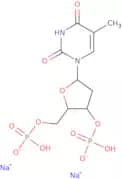
CAS:Thymidine-3',5'-diphosphate disodium salt is an antiviral and anticancer drug. It is a modified nucleoside which is synthesized from thymidine-3',5'-diphosphate and sodium bicarbonate (NaHCO3). This drug inhibits the synthesis of DNA and RNA, thereby inhibiting viral replication. Thymidine-3',5'-diphosphate disodium salt also has an antitumor effect by preventing the production of DNA in tumor cells.Fórmula:C10H14N2Na2O11P2Pureza:Min. 95%Cor e Forma:PowderPeso molecular:446.15 g/mol5′-O-DMT-LNA N-Bz adenosine
CAS:5′-O-DMT-LNA N-Bz adenosine is a novel nucleoside that has been modified with an aminooxy group. The compound is synthesized by the phosphoramidite method and it is designed for use in antiviral and anticancer research. 5′-O-DMT-LNA N-Bz adenosine can be used as a substrate for DNA polymerases and other enzymes to produce nucleic acid strands. This product is CAS No. 206055-74-5, monophosphate, Phosphoramidites, Synthetic, Deoxyribonucleosides, Anticancer, Ribonuclesides, High purity.
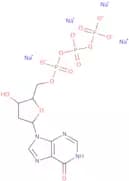
Fórmula:C39H35N5O7Pureza:Min. 95%Peso molecular:685.73 g/mol2'-Deoxyinosine-5'-triphosphate sodium,100mM aqueous solution
CAS:2'-Deoxyinosine-5'-triphosphate sodium (2'-dITP) is a modified nucleotide that has antiviral and anticancer properties. It has been shown to be an activator for ribonucleosides, deoxyribonucleosides, and DNA. 2'-DITP has also been shown to inhibit the growth of human breast cancer cells in vitro.
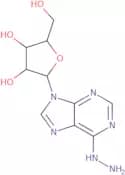
Fórmula:C10H11N4Na4O13P3Pureza:Min. 95%Cor e Forma:Clear LiquidPeso molecular:580.09 g/molN6-Aminoadenosine
CAS:N6-Aminoadenosine is a purine nucleoside that is involved in the synthesis of adenosine. It can be found in a number of tissues and has been shown to have an agonist potency similar to 2-phenylaminoadenosine, but with a longer duration of action. N6-Aminoadenosine is also present as one of two stereoisomers, the other being N2-aminoadenosine. These two aminosides are hydrolyzed by triazol and sinoatrial enzymes. The affinity of N6-aminoadenosine for cellular receptors has been shown using high affinity assays on rat heart cells.Pureza:Min. 95%Lamivudine-5'-triphosphate tetratriethylammonium salt - ca.15 mM Aqueous solution
Lamivudine-5'-triphosphate tetratriethylammonium salt - ca.15 mM Aqueous solution is an antiviral drug used to treat HIV/AIDS and hepatitis B infections. It is a potent inhibitor of human immunodeficiency virus type 1 (HIV-1) replication, acting by blocking the viral enzyme reverse transcriptase. Lamivudine-5'-triphosphate tetratriethylammonium salt - ca.15 mM Aqueous solution also inhibits cellular viral DNA synthesis and has been shown to exhibit anticancer activity in vitro and in vivo. This product is synthesized from raw materials through a novel process that involves modification of the phosphoramidite monophosphate with tetratriethylammonium salts.Fórmula:C32H74N7O12P3SPureza:Min. 95%Peso molecular:873.96 g/mol2'-O-(2-Methoxyethyl)adenosine 5'-α-thiotriphosphate sodium
2'-O-(2-Methoxyethyl)adenosine 5'-a-thiotriphosphate sodium salt is a synthetic nucleoside with antiviral and anticancer properties. It is an analog of adenosine 5'-triphosphate (ATP) in which the ribose sugar has been replaced by a 2'-O-(methoxyethyl) moiety. It has shown to be cytotoxic against cancer cells, and it is a potent activator of human telomerase, the enzyme that synthesizes telomeres at the end of chromosomes. This compound has been shown to have high purity and quality and does not have any CAS numbers assigned to it.Fórmula:C13H18N5Na4O13P3SPureza:Min. 95%Peso molecular:669.25 g/mol