Nucleosídeos
Os nucleosídeos são building blocks fundamentais dos ácidos nucleicos, compostos por uma base nitrogenada ligada a uma molécula de açúcar. Nesta seção, você encontrará uma ampla variedade de nucleosídeos essenciais para pesquisas em biologia molecular, bioquímica e farmacologia. Esses compostos desempenham papéis cruciais na síntese de DNA e RNA, e também são vitais em vários processos metabólicos. Os nucleosídeos são usados para estudar material genético, desenvolver terapias antivirais e anticancerígenas, e entender os mecanismos celulares. Na CymitQuimica, fornecemos nucleosídeos de alta qualidade para apoiar suas necessidades de pesquisa e desenvolvimento, garantindo pureza e confiabilidade para suas aplicações experimentais.
Foram encontrados 3569 produtos de "Nucleosídeos"
Ordenar por
Pureza (%)
0
100
|
0
|
50
|
90
|
95
|
100
N6-Benzyladenosine 5'-triphosphate sodium salt - 10 mM aqueous solution
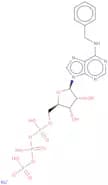
CAS:N6-Benzyladenosine 5'-triphosphate sodium salt - 10 mM aqueous solution is an analog of adenosine triphosphate (ATP). It is used in the study of protein kinase C. ATP and its analogs are able to phosphorylate proteins and regulate their activity. This study has shown that N6-benzyladenosine 5'-triphosphate sodium salt - 10 mM aqueous solution is an atp analog that activates protein kinase C, leading to the phosphorylation of proteins. This analog also inhibits tyrosine kinases, which may be due to its ability to inhibit the reuptake of serotonin and other transmitters.Fórmula:C17H22N5O13P3·xNaPureza:Min. 95%Cor e Forma:Colorless PowderPeso molecular:597.3 g/mol1-(β-D-Arabinofuranosyl)-5-hydroxymethyluracil
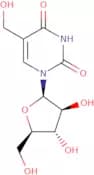
CAS:<p>A hetero-base functionalised ara-nucleoside</p>Fórmula:C10H14N2O7Pureza:Min. 95%Peso molecular:274.23 g/molAdenosine 2',3'-cyclic monophosphate
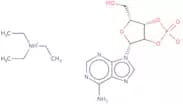
CAS:Adenosine 2',3'-cyclic monophosphate triethylammonium salt (AMP-TEA) is a structural analogue of adenosine. It is a potent inhibitor of protein synthesis by preventing the phosphodiesterase activity of cyclic nucleotide phosphodiesterases and cyclic nucleotide phosphodiesterase. AMP-TEA can be used as a tool to study translation in tissue culture, as well as to examine the effects on protein synthesis and other biochemical reactions that are regulated by cyclic nucleotides. It is also used for the preparation of tissue samples for enzymatic analysis or for radiolabeling experiments. AMP-TEA has an optimum pH of 4.5, but can be used at lower or higher pH values. The optimal temperature range for use is between 0°C and 50°C, with the maximum stability occurring at 37°C.Fórmula:C10H12N5O6PPureza:Min. 95%Cor e Forma:PowderPeso molecular:329.21 g/mol4-Chloro-5-iodo-pyrrolo[2,3-d]pyriMidine-7-carboxylic acid tert-butyl ester
CAS:Focuses is a chemical compound that does not have any known commercial or industrial uses.Pureza:Min. 95%2'-Deoxy-3'-O-DMT-N2-isobutyrylguanosine 5'-CE phosphoramidite
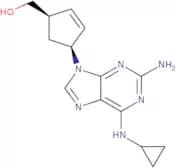
2'-Deoxy-3'-O-DMT-N2-isobutyrylguanosine 5'-CE phosphoramidite is a 5'-3’ “reverse” (or “inverse”) amidite.Fórmula:C44H54N7O8PPureza:Min. 95%Peso molecular:839.94 g/molent-abacavir
CAS:Ent-abacavir is a drug that belongs to the group of antiretroviral drugs. It has minimal toxicity and has been shown to be effective in long-term treatment of HIV/AIDS. Ent-abacavir is also used as part of active antiretroviral therapy, which includes at least three or four different drugs. It inhibits the activity of reverse transcriptase, an enzyme involved in the replication process of HIV and other retroviruses. This drug has been shown to have few drug interactions with other medications, although caution should be taken when using ent-abacavir with drugs that are metabolized by cytochrome P450 enzymes. Ent-abacavir is not recommended for use in patients who have chronic viral hepatitis or who have a body mass index greater than 30 kg/m2 because its pharmacokinetic properties may be altered in these individuals.Fórmula:C14H18N6OPureza:Min. 95%Peso molecular:286.33 g/molPropionyl coenzyme A lithium salt
CAS:<p>Propionyl coenzyme A lithium salt is a phosphoramidite that can be used in the synthesis of DNA and RNA. It is a novel chemical compound that has been modified to include ribonucleosides in addition to deoxyribonucleosides. This product is of high purity and quality, with a CAS number of 108321-21-7.</p>Fórmula:C24H40N7O17P3S·xLiPureza:85%Cor e Forma:White PowderPeso molecular:823.6 g/mol8-Aza-7-deaza-2'-deoxyguanosine
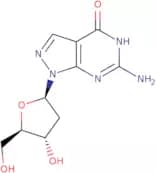
CAS:<p>8-Aza-7-deaza-2'-deoxyguanosine is an alkynylated, cross-linked, single stranded nucleic acid. It has been shown to be effective at cross-linking and cross-linking nucleic acids. 8-Aza-7-deaza-2'-deoxyguanosine binds to the 7 deazapurine residues in DNA, forming a covalent bond between the two strands of the helix. This binding prevents the strand from unwinding and prevents the replication of DNA. The thermodynamic data for this compound shows that it is stable in both hot and cold water, which makes it a good candidate for use in research as well as in clinical settings.</p>Fórmula:C10H13N5O4Pureza:Min. 95%Cor e Forma:PowderPeso molecular:267.24 g/mol3'-Phosphoadenosine-5'-phosphosulfate lithium salt hydrate
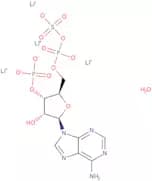
CAS:Universal sulfonate donor for in vivo sulfonation by sulfotransferasesFórmula:C10H15N5O13P2S·xLi·yH2OPureza:Min. 60 Area-%Cor e Forma:White PowderPeso molecular:507.27 g/mol2',3'-Dideoxy-2',3'-didehydro-2'-fluorocytidine
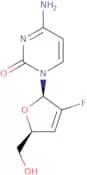
CAS:<p>2',3'-Dideoxy-2',3'-didehydro-2'-fluorocytidine (ddC) is a nucleoside with antiviral activity. The mechanism of action is not well understood, but ddC has been shown to inhibit the proliferation of human immunodeficiency virus (HIV). It is also active against isolates of herpes simplex virus and vesicular stomatitis virus. The elimination half-life of ddC in humans is about 8 hours. In humans, this drug is eliminated by methylation and glucuronidation reactions. The pharmacokinetics of ddC have been studied in animals, including rats and rabbits, with preliminary indications that the elimination half-life may be longer than in humans.</p>Fórmula:C9H10FN3O3Pureza:Min. 95%Peso molecular:227.19 g/molN6-Benzoyl-3'-deoxy-3'-fluoroadenosine
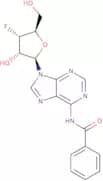
CAS:N6-Benzoyl-3'-deoxy-3'-fluoroadenosine is a nucleoside analog that is structurally similar to adenosine. It has antiviral and anticancer properties and can be used in the treatment of HIV and other viral infections. N6-Benzoyl-3'-deoxy-3'-fluoroadenosine inhibits the synthesis of DNA by inhibiting the enzyme DNA polymerase, which is required for DNA replication. This drug also binds to RNA polymerase, which is an enzyme required for RNA synthesis. N6-Benzoyl-3'-deoxy-3'-fluoroadenosine has been shown to have a high level of efficacy against leukemia cells in vitro as well as in vivo mouse models.Pureza:Min. 95%N2-Isobutyryl-O6-(4-pivaloyloxybenzyl)-7’-OH-N-trityl-morpholino guanine
CAS:N2-Isobutyryl-O6-(4-pivaloyloxybenzyl)-7’-OH-N-trityl-morpholino guanine is a phosphoramidite nucleoside that is used as a building block in the synthesis of oligonucleotides. N2-Isobutyrylguanosine is available as a high purity, high quality, and novel nucleoside that can be used in anticancer therapy. It has been shown to inhibit the growth of human cancer cells without affecting normal cells. This drug also inhibits DNA and RNA synthesis by inhibiting the enzyme ribonucleotide reductase.Pureza:Min. 95%Guanylyl-3',5'-guanosine ammonium salt
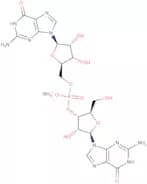
CAS:<p>Guanylyl-3',5'-guanosine ammonium salt is a novel antiviral agent that has high antiviral activity against influenza A virus. It is a guanine derivative which has been modified to include an aminopropyl group and an ammonium cation. This compound also acts as an activator for deoxyribonucleosides, nucleotides, and ribonucleosides. Guanylyl-3',5'-guanosine ammonium salt may be used in the manufacture of DNA, RNA, and phosphoramidites. This compound also has anticancer effects by inhibiting the proliferation of tumor cells and inducing apoptosis.</p>Fórmula:C20H25N10O12P·H3NPureza:Min. 95%Peso molecular:645.48 g/mol2-Methylamino-N6-methyladenosine
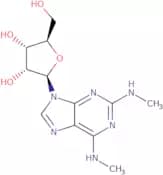
CAS:<p>2-Methylamino-N6-methyladenosine is an activator that can inhibit the replication of DNA, RNA, and protein synthesis. It is a novel monophosphate nucleoside with antiviral and anticancer properties. 2-Methylamino-N6-methyladenosine has been shown to be effective against human cytomegalovirus and murine leukemia virus (MLV) in cell culture. Furthermore, it has been shown to be active against the herpes simplex virus type 1 (HSV1) in mice after oral administration. 2-Methylamino-N6-methyladenosine is a modified deoxyribonucleoside that contains an amino group at the 2' position of the ribose sugar moiety. It also contains an alkyl group at the 6 position of adenine. This modification confers increased stability to the molecule, which prevents degradation by intracellular nucleases.</p>Pureza:Min. 95%9-(beta-D-Xylofuranosyl)guanine
CAS:<p>9-(β-D-xylofuranosyl)guanine (9XG) is a trifluoride. It is an antiviral agent that inhibits the growth of herpes virus, in particular by methylating guanosine to 9-methylguanosine in the viral DNA. 9XG binds to the viral DNA and prevents its replication through the inhibition of RNA synthesis. The drug is active against many different types of viruses and has been shown to be effective against tissue cultures infected with herpes virus. 9XG is synthesized from guanosine and boron trifluoride etherate, which are reacted at -78 degrees Celsius for three days. This yields a mixture of compounds with various peracylation groups, which are then separated by chromatography.</p>Pureza:Min. 95%6-Methyluridine
CAS:Methyluridine is a derivative of uridine that is used in the synthesis of pyrimidine nucleotides. This drug is also an inhibitor of orotidine 5′-monophosphate decarboxylase, which converts orotic acid to uracil. The conformational properties of methyluridine have been studied and found to be similar to those of other purine derivatives, such as adenine and guanine. In addition, methyluridine has been shown to inhibit the growth of typhimurium and increase the production of uracil in human lymphocytes. Methyluridine is metabolized by hydroxylation in liver microsomes, yielding 6-carboxylic acid.Fórmula:C10H14N2O6Pureza:Min. 95%Cor e Forma:PowderPeso molecular:258.23 g/mol5-Methyl-L-uridine
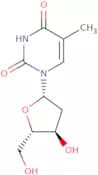
CAS:<p>5-Methyl-L-uridine is an antiviral drug which belongs to a class of compounds called nucleoside analogues. It is used in the treatment of chronic hepatitis B and C, as well as for prevention of hepatitis A and B. 5-Methyl-L-uridine inhibits the virus by turning off the production of viral DNA and RNA, through interactions with the virus's polymerase chain reaction process. This drug also prevents protein synthesis in cells infected with viruses such as HIV, herpes simplex virus type 1, and influenza A virus. 5-Methyl-L-uridine is a prodrug that is converted to its active form, uridine monophosphate, by enzymes in the liver. The cytotoxic effects of 5-methyluridine on cancer cells have been shown to be due to inhibition of cellular DNA synthesis and repair pathways.</p>Fórmula:C10H14N2O6Pureza:Min. 95%Cor e Forma:White PowderPeso molecular:258.23 g/molUridine-3',5'-cyclic monophosphate sodium salt
CAS:<p>Uridine-3',5'-cyclic monophosphate sodium salt is a phosphotriester that is an intermediate in the biosynthesis of nucleosides. It is also a phosphodiesterase inhibitor, which means it inhibits the breakdown of cyclic nucleotides and allows them to accumulate. This drug has been shown to increase platelet production and has anti-inflammatory effects. Uridine-3',5'-cyclic monophosphate sodium salt is a human metabolite that can be synthesized from uridine, which is present in DNA, RNA, and food sources such as meat, eggs, and milk. The synthesis of uridine-3',5'-cyclic monophosphate sodium salt requires phosphoramidite as a precursor.</p>Fórmula:C9H10N2O8P·NaPureza:Min. 98 Area-%Cor e Forma:White PowderPeso molecular:328.2 g/mol2'-Deoxy-N2-methylguanosine
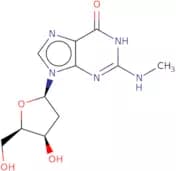
CAS:<p>2'-Deoxy-N2-methylguanosine is a nucleoside with anticancer properties. It is a phosphoramidite, which is an analog of the natural nucleotide guanosine, where the 2'-hydroxyl group has been replaced by a methylene group. This compound is used in DNA synthesis and RNA synthesis. It can be used as a monophosphate or diphosphate. It also has antiviral and anti-inflammatory activities, as well as N2-methylamino moiety that can be used for the treatment of cancer and inflammatory diseases such as arthritis.</p>Fórmula:C11H15N5O4Pureza:Min. 95%Cor e Forma:White PowderPeso molecular:281.27 g/mol2',3',5'-Tri-O-acetylinosine
CAS:<p>2′,3′,5′-Tri-O-acetylinosine is a protected form of the nucleoside inosine, with potential for use in the preparation of modified nucleotides and nucleoside analogs.</p>Fórmula:C16H18N4O8Pureza:Min. 95%Cor e Forma:White To Off-White SolidPeso molecular:394.34 g/mol

![4-Chloro-5-iodo-pyrrolo[2,3-d]pyriMidine-7-carboxylic acid tert-butyl ester](/_next/image/?url=https%3A%2Fstatic.cymitquimica.com%2Fproducts%2F3D%2Fthumb-webp%2FNC44293.webp&w=3840&q=75)