Nucleosídeos
Os nucleosídeos são building blocks fundamentais dos ácidos nucleicos, compostos por uma base nitrogenada ligada a uma molécula de açúcar. Nesta seção, você encontrará uma ampla variedade de nucleosídeos essenciais para pesquisas em biologia molecular, bioquímica e farmacologia. Esses compostos desempenham papéis cruciais na síntese de DNA e RNA, e também são vitais em vários processos metabólicos. Os nucleosídeos são usados para estudar material genético, desenvolver terapias antivirais e anticancerígenas, e entender os mecanismos celulares. Na CymitQuimica, fornecemos nucleosídeos de alta qualidade para apoiar suas necessidades de pesquisa e desenvolvimento, garantindo pureza e confiabilidade para suas aplicações experimentais.
Foram encontrados 3569 produtos de "Nucleosídeos"
Ordenar por
Pureza (%)
0
100
|
0
|
50
|
90
|
95
|
100
2-Deoxy-5'-O-DMT-N2-isobutyryl-8-oxoguanosine 3'-CE phosphoramidite
CAS:2-Deoxy-5'-O-DMT-N2-isobutyryl-8-oxoguanosine 3'-CE phosphoramidite is an 8-oxo modified amidite. The 8-oxo modification is caused naturally in DNA by oxidation so is significant in mutagenesis and ultimately carcinogenesis.Fórmula:C44H54N7O9PPureza:Min. 95%Peso molecular:855.94 g/mol5’-O-DMT-2’-O,4’-C-methylene-5-methyluridine
CAS:<p>5’-O-DMT-2’-O,4’-C-methylene-5-methyluridine is a nucleoside that is used as an antiviral and anticancer agent. It is a novel compound that has not been previously described in the literature. 5’-O-DMT-2’-O,4’-C methylene 5 methyluridine has been shown to inhibit the replication of the herpes virus in vitro (in cell culture) and in vivo (in animals). This compound also inhibits the proliferation of cancer cells by inhibiting DNA synthesis. It may be used as an anticancer agent or an antiviral agent.</p>Pureza:Min. 95%ALS-8176
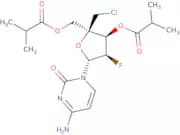
CAS:ALS-8176 is a benzimidazole compound that has been shown to be effective against both wild-type and syncytial viruses. It is also active against the hepatitis B virus, which causes fulminant hepatitis in humans and death in 30% of cases. The antiviral activity of ALS-8176 was demonstrated by its ability to inhibit viral DNA synthesis and to prevent the release of new viral particles. ALS-8176 has also been shown to have a broad spectrum of activity against paramyxoviruses, including mumps, measles, and respiratory syncytial virus (RSV). This drug can be used for the treatment of influenza A and B when administered during the early stages of infection. ALS-8176 blocks the antibody response to influenza virus infection as well as monoclonal antibody binding sites on the hemagglutinin protein, preventing fusion between infected cells.Fórmula:C18H25ClFN3O6Pureza:Min. 95%Cor e Forma:PowderPeso molecular:433.86 g/molN2-Ethyl-2′-deoxyguanosine - 98 % HPLC
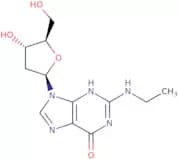
CAS:<p>N2-Ethyl-2′-deoxyguanosine is an important metabolite of N2-ethyl-3′,5′-dideoxyadenosine (NEDA) and has been detected in urine samples from Sprague-Dawley rats. The biological properties of this metabolite are not well understood, but it has been shown to have genotoxic effects in mammalian cells and to be carcinogenic in a rat model. N2-Ethyl-2′-deoxyguanosine is also able to enhance the repair of damaged DNA and has functional groups that are similar to those found in cancer cells.</p>Fórmula:C12H17N5O4Pureza:Min. 98 Area-%Cor e Forma:White PowderPeso molecular:295.29 g/mol2'-O-Propargyladenosine
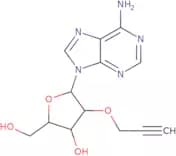
CAS:<p>2'-O-Propargyladenosine is a modified nucleoside that belongs to the group of deoxyribonucleosides. It is an activator of viral DNA polymerases, which causes the synthesis of viral DNA to stop. This compound has antiviral and anticancer activities. 2'-O-Propargyladenosine has been shown to be effective against various human cancer cell lines in vitro and in vivo. It is a synthetic nucleoside with high purity, showing no detectable impurities by HPLC analysis.</p>Fórmula:C13H15N5O4Pureza:Min. 95%Cor e Forma:White PowderPeso molecular:305.29 g/molThymidine-3',5'-diphosphate disodium salt
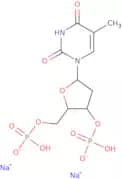
CAS:Thymidine-3',5'-diphosphate disodium salt is an antiviral and anticancer drug. It is a modified nucleoside which is synthesized from thymidine-3',5'-diphosphate and sodium bicarbonate (NaHCO3). This drug inhibits the synthesis of DNA and RNA, thereby inhibiting viral replication. Thymidine-3',5'-diphosphate disodium salt also has an antitumor effect by preventing the production of DNA in tumor cells.Fórmula:C10H14N2Na2O11P2Pureza:Min. 95%Cor e Forma:PowderPeso molecular:446.15 g/mol2',3'-O-Isopropylideneinosine
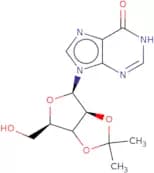
CAS:<p>2',3'-O-Isopropylideneinosineis a nucleoside for use in research applications</p>Fórmula:C13H16N4O5Pureza:Min. 95%Cor e Forma:PowderPeso molecular:308.3 g/mol2'-Deoxyinosine-5'-triphosphate sodium,100mM aqueous solution
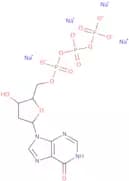
CAS:<p>2'-Deoxyinosine-5'-triphosphate sodium (2'-dITP) is a modified nucleotide that has antiviral and anticancer properties. It has been shown to be an activator for ribonucleosides, deoxyribonucleosides, and DNA. 2'-DITP has also been shown to inhibit the growth of human breast cancer cells in vitro.</p>Fórmula:C10H11N4Na4O13P3Pureza:Min. 95%Cor e Forma:Clear LiquidPeso molecular:580.09 g/molN4-Acetyl-2'-O-tert-butyldimethylsilylcytidine
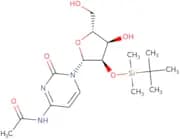
CAS:<p>N4-Acetyl-2'-O-tert-butyldimethylsilylcytidine is a novel nucleoside that has been extensively studied for its anticancer and antiviral properties. It is a modified nucleoside that inhibits the production of DNA, RNA, and protein. This product is also used as an activator in the synthesis of oligonucleotides. N4-Acetyl-2'-O-tert-butyldimethylsilylcytidine can be used in vitro to study the effects of different cancer cells on DNA replication. It has been shown to inhibit the growth of human leukemia cells in culture.</p>Fórmula:C17H29N3O6SiPureza:Min. 95%Cor e Forma:PowderPeso molecular:399.51 g/molDMTr-TNA-C(Bz)-amidite
CAS:<p>Please enquire for more information about DMTr-TNA-C(Bz)-amidite including the price, delivery time and more detailed product information at the technical inquiry form on this page</p>Fórmula:C45H50N5O8PPeso molecular:819.9 g/molm-Methoxytopolin riboside
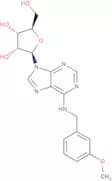
CAS:m-Methoxytopolin riboside is a nucleoside that is a phosphoramidite derivative of the natural nucleoside, topolin riboside. This compound has antiviral and anticancer activities. It inhibits viral DNA synthesis and also induces apoptosis in cancer cells. m-Methoxytopolin riboside is modified with a methoxy group at the 3' position of the sugar moiety. This modification prevents incorporation into DNA and RNA, thereby inhibiting viral replication and inducing apoptosis in cancer cells.Fórmula:C18H21N5O5Pureza:Min. 95%Cor e Forma:PowderPeso molecular:387.39 g/mol2-O-Ethylthymidine
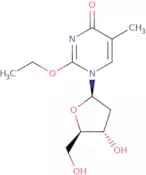
CAS:<p>2-O-Ethylthymidine is a nucleoside that is used to study the structure and dynamics of DNA. It can be synthesized by reacting 1-β-D-arabinofuranosylbenzene with ethylmercury acetate. 2-O-Ethylthymidine can be used in kinetic studies as it is specific for dna. It has been shown to have a conformational change, which is stabilized by the presence of an aromatic ring such as phenanthrene. This compound was also found to inhibit neuroblastoma cell growth in vitro.</p>Fórmula:C12H18N2O5Pureza:Min. 95%Cor e Forma:PowderPeso molecular:270.28 g/mol2'-Deoxy-3',5'-O-(1,1,3,3-tetraisopropyl-1,3-disiloxanediyl)uridine
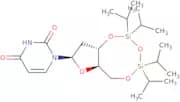
CAS:2'-Deoxy-3',5'-O-(1,1,3,3-tetraisopropyl-1,3-disiloxanediyl)uridine is a novel and synthetic nucleoside analog with antiviral activity. It inhibits the synthesis of DNA by binding to the enzyme ribonucleotide reductase. This compound has been shown to be an activator of PPARs in vitro.Fórmula:C21H38N2O6Si2Pureza:Min. 95%Peso molecular:470.72 g/mol4'-α-C-Methylcytidine
CAS:<p>4'-a-C-Methylcytidine is a nucleoside that is synthesized from 4'-a-C-methyluridine. It has antiviral and anticancer properties, and has been shown to be a potent activator of the immune system. The modified nucleosides in this compound are thought to be less toxic than other cytotoxic agents. 4'-a-C-Methylcytidine is also used as a building block for the synthesis of DNA, RNA and phosphoramidites.</p>Pureza:Min. 95%Cor e Forma:PowderPeso molecular:257.24 g/molN6-Benzyladenosine 5'-diphosphate sodium salt - 10 mM aqueous solution
CAS:N6-Benzyladenosine 5'-diphosphate sodium salt is a modified nucleoside that has a high purity, which is suitable for synthesis of DNA or RNA. It can be used in the modification of deoxyribonucleosides, ribonucleosides, and phosphoramidites. N6-Benzyladenosine 5'-diphosphate sodium salt has been shown to have anticancer effects and antiviral effects. This drug also has novel properties such as an ability to inhibit the proliferation of cancer cells.Fórmula:C17H21N5O10P2Pureza:Min. 95%Cor e Forma:Colorless PowderPeso molecular:517.32 g/mol2-Fluoroadenosine
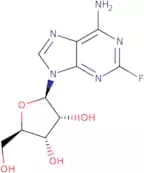
CAS:<p>2-Fluoroadenosine is a nucleoside that has shown high resistance to the enzyme cyclase. This property may be due to its structural and conformational properties, which are different from those of adenosine. 2-Fluoroadenosine has been shown to inhibit the synthesis of ATP in ventricular myocardium and fat cells, as well as increase levels of adenylate kinase in blood. It has also been shown to have potential as a drug target for autoimmune diseases, such as multiple sclerosis. 2-Fluoroadenosine can be used for biochemical and pharmacokinetic studies because it is rapidly metabolized by the liver and excreted in urine.<br>2-Fluoroadenosine can also be used to measure changes in the ratio of adenylate kinase:adenylate kinase reductase (AKAR) in blood plasma.</p>Fórmula:C10H12FN5O4Pureza:Min. 95%Cor e Forma:White Slightly Yellow PowderPeso molecular:285.23 g/molAdenylyl-3'-5'-guanosine sodium salt
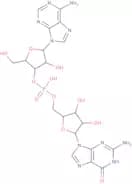
CAS:<p>3'-Adenylyl-5'-guanosine ammonium salt is a dinucleoside that competes with guanosine for binding to the enzyme adenylate cyclase. This reaction leads to increased levels of cyclic AMP, which causes an increase in the rate of viral replication. 3'-Adenylyl-5'-guanosine ammonium salt has been shown to inhibit the growth of pyogenic bacteria such as Streptococcus pyogenes and has also been used to treat influenza infections. 3'-Adenylyl-5'-guanosine ammonium salt is an inorganic compound that is found in tobacco. It can be synthesized from uridine and p-nitrophenyl phosphate by the reaction: 3'--O--(CH2)4--COOH + H2N--PO4--> 3'--O--(CH2)4--CONH2 + H3PO4</p>Fórmula:C20H24N10O11P·NaPureza:Min. 95%Peso molecular:634.43 g/mol2'-Deoxyadenosine
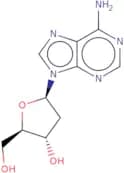
CAS:2'-Deoxyadenosine is a nucleoside that is found in DNA. It has been shown to have potent anticancer activity against carcinoma cell lines and to bind to the adenosine receptor A3. 2'-Deoxyadenosine has also been shown to inhibit the production of inflammatory cytokines, such as tumor necrosis factor-α and interleukin-6, from nuclear extracts of mouse tumor cells. This nucleoside may be a potential drug target for the treatment of cancer and inflammation.Fórmula:C10H13N5O3Pureza:Min. 98 Area-%Cor e Forma:PowderPeso molecular:251.24 g/mol5-Iodocytidine 5'-triphosphate sodium salt - 100mM solution
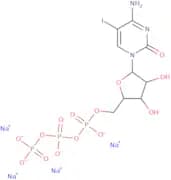
CAS:5-Iodocytidine 5'-triphosphate sodium salt is a novel antiviral agent. It is the sodium salt of 5-iodocytidine 5'-triphosphate and is used to inhibit viral replication. It inhibits RNA synthesis by interfering with the incorporation of deoxyribonucleosides into the growing DNA chain, which blocks DNA synthesis. This inhibition prevents virus production and may be useful in treating cancer.Fórmula:C9H15IN3O14P3Pureza:Min. 95%Peso molecular:609.05 g/mol2'-Deoxy-4'-ethynyl-2-fluoroadenosine
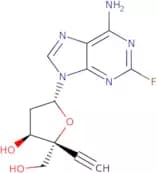
CAS:<p>2'-Deoxy-4'-ethynyl-2-fluoroadenosine (EFdA) is an analog of adenosine. EFdA is a potent inhibitor of HIV replication, and has been shown to be effective against other viruses such as influenza virus, herpes simplex virus, and vesicular stomatitis virus. EFdA was the first nucleoside analog to show antiviral activity in tissue culture against these viruses. This drug also inhibits the synthesis of mitochondrial rRNA and reduces the formation of mitochondrial DNA in human cells by inhibiting mitochondrial DNA polymerase γ. EFdA also prevents the binding of monoclonal antibodies to human B lymphocytes, which may be due to its steric interactions with plasma RNA. This drug is metabolized by cytochrome P450 2C8 and 2C9 into a variety of metabolites that are excreted in urine as glucuronides or sulfates. EFdA has a long</p>Fórmula:C12H12FN5O3Pureza:Min. 95%Peso molecular:293.25 g/mol