Nucleosídeos
Foram encontrados 3570 produtos de "Nucleosídeos"
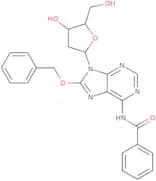
N6-Benzoyl-8-benzyloxy-2'-deoxyadenosine
CAS:N6-Benzoyl-8-benzyloxy-2'-deoxyadenosine is a novel nucleoside with anticancer and antiviral properties. It is an antiviral that inhibits the synthesis of viral DNA by blocking the incorporation of ribonucleotide triphosphates into DNA, while leaving intact the synthesis of deoxyribonucleotides and phosphoramidites. In addition, it is a potent inhibitor of cellular DNA polymerases that catalyze synthesis of DNA from deoxyribonucleoside triphosphates. N6-Benzoyl-8-benzyloxy-2'-deoxyadenosine also has antitumor activity in animal models.
Fórmula:C24H23N5O5Pureza:Min. 95%Peso molecular:461.5 g/molRef: 3D-SFA97940
Produto descontinuado3'-Deoxy-3',4'-didehydro-CTP
CAS:3'-Deoxy-3',4'-didehydro-CTP is a nucleoside analog. It is a novel, high quality, high purity and synthetic compound with antiviral and anticancer activities. 3'-Deoxy-3',4'-didehydro-CTP inhibits the synthesis of DNA by specifically inhibiting the activity of DNA polymerase. The IC50 value for this compound is 12.5 μM against herpes simplex virus type 1 (HSV-1) in vitro.
Fórmula:C9H14N3O13P3Pureza:Min. 95%Peso molecular:465.14 g/molRef: 3D-FD180918
Produto descontinuado7-Benzyl-4-chloro-5,6,7,8-tetrahydropyrido[3,4-d]pyrimidine
CAS:7-Benzyl-4-chloro-5,6,7,8-tetrahydropyrido[3,4-d]pyrimidine is a nucleoside analog that is used as an antiviral and anticancer drug. It has also been shown to have antimalarial activity. 7-Benzyl-4-chloro-5,6,7,8-tetrahydropyrido[3,4-d]pyrimidine inhibits the replication of HIV by blocking the viral reverse transcriptase enzyme. This drug is a phosphoramidite monophosphate with a purity of 99%.
Fórmula:C14H14ClN3Pureza:Min. 95%Peso molecular:259.73 g/mol5’-O-DMT cET-N2-isopropylguanosine 3’-OCE amidite
CAS:Please enquire for more information about 5'-ODMT cEt G Phosphoramidite including the price, delivery time and more detailed product information at the technical inquiry form on this page
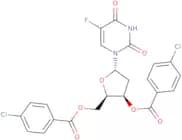
Fórmula:C46H56N7O9PPeso molecular:881.95 g/mol3',5'-Di-O-p-chlorobenzoyl-2'-deoxy a-5-fluorouridine
CAS:3',5'-Di-O-p-chlorobenzoyl-2'-deoxy a-5-fluorouridine is a nucleoside that is used in the antiviral drug Aciclovir. It is an analog of 2'-deoxyadenosine and inhibits viral DNA synthesis by acting as a chain terminator. 3',5'-Di-O-p-chlorobenzoyl-2'-deoxy a-5-fluorouridine has shown some anticancer activity against human tumor cells in culture, but its mechanism of action is not well understood.
Fórmula:C23H17Cl2FN2O7Pureza:Min. 95%Peso molecular:523.29 g/molRef: 3D-ND22464
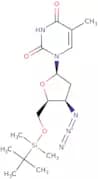
Produto descontinuado3'-Azido-5'-O-tert-butyldimethylsilyl-3'-deoxythymidine
CAS:3'-Azido-5'-O-tert-butyldimethylsilyl-3'-deoxythymidine (BUdR) is an antiviral agent that is used in the synthesis of DNA and RNA. BUdR is a modified phosphoramidite that is activated with diphosphate. It has a high quality, high purity, and a novel structure. BUdR has been shown to have anticancer properties as well as inhibitory effects on HIV production in cells.
Fórmula:C16H27N5O4SiPureza:Min. 95%Peso molecular:381.51 g/molRef: 3D-NA08679
Produto descontinuadoLinoleoyl coenzyme A
CAS:Linoleoyl coenzyme A (LCA) is a fatty acid that is a component of the cell membrane. LCA is synthesized from linoleic acid and coenzyme A in the mitochondria. In humans, LCA is an important component of the mitochondrial protein. The production of this enzyme can be enhanced by dietary supplementation with linoleic acid. Linoleoyl coenzyme A has been used as a model system to study energy metabolism in mitochondria. It has been shown to be involved in carthamus tinctorius, human mitochondrial, rat liver microsomes, and dietary models. LCAs have also been used as analytical methods for measuring the amount of fatty acids within cells or tissues.
Fórmula:C39H66N7O17P3SPureza:Min. 95%Peso molecular:1,029.97 g/mol5-Aminoallyl 2'-deoxycytidine-5'-triphosphate lithium, 100mM aqueous solution
5-Aminoallyl 2'-deoxycytidine-5'-triphosphate lithium salt - 100mM aqueous solution is a novel modified nucleoside that can be activated to the corresponding phosphoramidite.
Fórmula:C12H17N4O13P3•Li4Pureza:Min. 95%Cor e Forma:Clear LiquidPeso molecular:545.97 g/molRef: 3D-NA32075
Produto descontinuadoNicotinic acid-13C6 riboside
CAS:Please enquire for more information about Nicotinic acid-13C6 riboside including the price, delivery time and more detailed product information at the technical inquiry form on this page
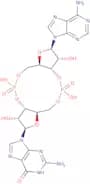
Fórmula:C6C5H13NO6Pureza:Min. 95%Peso molecular:260.17 g/mol3',3'-Cyclic guanosine monophosphate-adenosine monophosphate
CAS:3',3'-Cyclic guanosine monophosphate-adenosine monophosphate is a molecule that is a stimulator of lymphocytic leukemia. It has been shown to induce chronic lymphocytic leukemia in mice and humans, which is an indication of its clinical relevance. 3',3'-Cyclic guanosine monophosphate-adenosine monophosphate induces cancer by inhibiting the production of cyclic nucleotide phosphodiesterases, which are enzymes that break down cyclic nucleotides. This leads to elevated levels of cyclic nucleotides and an increase in intracellular cAMP levels. The anticancer effect of 3',3'-cyclic guanosine monophosphate-adenosine monophosphate may also be due to its ability to inhibit the growth factor activity of staphylococcus aureus.
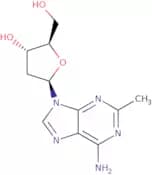
Fórmula:C20H22N10O13P2·2NaPureza:Min. 95%Peso molecular:718.38 g/mol2’-Deoxy-2-methyladenosine
CAS:2’-Deoxy-2-methyladenosine is a nucleoside that is chemically synthesized by the phosphorylation of 2,6-diaminopurine. It has been shown to be an effective activator of RNA polymerase and it also has anticancer properties. 2’-Deoxy-2-methyladenosine can be used as a substitute for thymidine in DNA synthesis. This nucleoside has also been shown to inhibit bacterial growth in culture by inhibiting DNA synthesis and protein synthesis. It is a modified nucleoside that can be used for the synthesis of DNA, RNA, or ribonucleic acids. The CAS number for this compound is 110952-90-4.
Pureza:Min. 95%Ref: 3D-ND163169
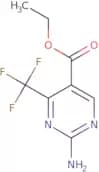
Produto descontinuadoEthyl 2-amino-4-(trifluoromethyl)pyrimidine-5-carboxylate
CAS:Ethyl 2-amino-4-(trifluoromethyl)pyrimidine-5-carboxylate is a small molecule that is a potent inhibitor of diacylglycerol acyltransferase. The compound has been shown to be an efficient inhibitor of this enzyme, which is involved in the synthesis of diacylglycerol. Diacylglycerol acyltransferase catalyzes the transfer of an acyl group from an acyl-carrier protein (ACP) to glycerol 3-phosphate, forming lysophosphatidic acid and releasing CoA. The inhibition of this enzyme leads to drastically reduced levels of diacylglycerol, which may have implications for the treatment of metabolic syndrome and diabetes.
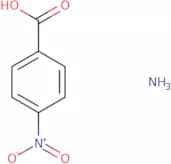
Fórmula:C8H8F3N3O2Pureza:Min. 95%Peso molecular:235.16 g/molAmmonium 4-nitrobenzoate dihydrate
CAS:Ammonium 4-nitrobenzoate dihydrate is a corrosion inhibitor that prevents the corrosion of metal parts and other materials. It is used in the production of plastics, coatings, adhesives, and lubricants. The corrosion inhibition activity of aminobenzoates can be attributed to their ability to form hydrogen phosphate (HPO) anions as well as their ability to complex with metal ions. The hydration process is also important for the corrosion inhibition activity of ammonium 4-nitrobenzoate dihydrate. This process involves the release of water molecules from the ammonium salt, which provide a protective coating around the metal surface. Ammonium 4-nitrobenzoate dihydrate also has additive properties that are beneficial for other industrial applications such as antistatic agents, surfactants, and stabilizers.
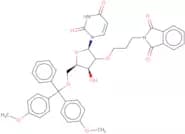
Pureza:Min. 95%5'-O-DMT-2'-O-propylphthalimidouridine
5'-O-DMT-2'-O-propylphthalimidouridine is a synthetic nucleoside that has antiviral and anticancer properties. It is used as a precursor for the synthesis of other nucleosides, including uridine and cytidine. 5'-O-DMT-2'-O-propylphthalimidouridine can be modified with phosphoramidites to create novel modified nucleosides. The chemical name is 1-(5'-O-dimethoxytrityl)-2-[(2' -propyl)thio]uracil. This drug has CAS number 61381-14-4 and molecular weight of 271.11 g/mol.
Fórmula:C41H39N3O10Pureza:Min. 95%Peso molecular:733.78 g/molRef: 3D-ND08421
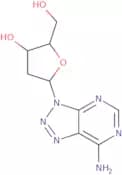
Produto descontinuado8-Aza-2'-deoxyadenosine
8-Aza-2'-deoxyadenosine is an anion that is cytotoxic to cells and can be activated to form a phosphate ester. It has been shown to have a higher cytotoxicity than adenosine in cell cultures, but is less effective in animal studies. 8-Aza-2'-deoxyadenosine has been shown to have a significant toxicity in rats and mice when administered at doses greater than 500 mg/kg body weight. The activation of 8-aza-2'-deoxyadenosine into the phosphate ester can be stereoselective. This activation has also been shown to cause enhancement of tumor growth inhibition.
Pureza:Min. 95%Ref: 3D-NA141794
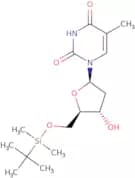
Produto descontinuado5'-O-tert-Butyldimethylsilylthymidine
CAS:5'-O-tert-Butyldimethylsilylthymidine is a nucleoside that is used for the synthesis of oligoribonucleotides. It can be prepared by treating 5'-O-tert-butyldimethylsilylthymidine with alkyl bromides in the presence of microwaves and catalytic amounts of a base such as sodium methoxide. The product is purified by vacuum distillation or column chromatography and can be hydrolyzed to uridine, which has been shown to have anti-inflammatory properties. 5'-O-tert-Butyldimethylsilylthymidine can also be converted into deoxyribose through the use of ultrasound.Fórmula:C16H28N2O5SiPureza:Min. 95%Peso molecular:356.5 g/molRef: 3D-NB08945
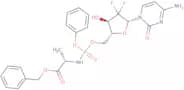
Produto descontinuadoN-(2'-Deoxy- 2', 2'- difluorocytidine 5'-P- phenyl phosphate) L- alanine benzyl ester
CAS:N-(2'-Deoxy- 2', 2'- difluorocytidine 5'-P- phenyl phosphate) L- alanine benzyl ester, also known as Acelarin, is primarily used in cancer treatment, including leukemia and solid tumors.
Fórmula:C25H27F2N4O8PPureza:Min. 98 Area-%Cor e Forma:PowderPeso molecular:580.47 g/molRef: 3D-ND158438
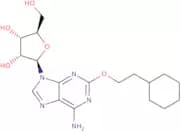
Produto descontinuado2-(2-Cyclohexylethoxy)adenosine
CAS:2-(2-Cyclohexylethoxy)adenosine (CX-5461) is a new chemical entity that has been shown to have an incremental effect on muscle contraction. The mechanism of action of CX-5461 is not fully understood, but it has been shown to be nonselective and to bind to adenosine receptors. This binding produces a response in the cell similar to that of adenosine, which is a small molecule involved in the regulation of blood pressure and heart rate. CX-5461 also binds with platelet membranes at the site of inflammation and causes vasodilation. It has been shown to be effective in animal models of pertussis, where it reduces the severity of muscle spasms and increases the duration before death. These effects are due to CX-5461's ability to lower intracellular calcium concentrations by preventing calcium release from internal stores or from outside sources such as muscle cells or platelets.
Fórmula:C18H27N5O5Pureza:Min. 95%Peso molecular:393.44 g/molRef: 3D-NC16523
Produto descontinuadoN,7-Dimethyl- 2'- O- methylguanosine
CAS:N,7-Dimethyl-2'-O-methylguanosine (DMOG) is a modified nucleoside with antiviral and anticancer properties. DMOG can be used as an activator of transcription, which activates the synthesis of viral RNA and dsDNA. This compound has shown to inhibit the activity of HIV by preventing reverse transcriptase from synthesizing DNA from viral RNA. It also inhibits tumor cell proliferation by inhibiting DNA synthesis and protein synthesis. DMOG is synthesized in high purity by chemical phosphoramidite chemistry.
Fórmula:C13H20N5O5Pureza:Min. 95%Peso molecular:326.33 g/molThymidine-5'-diphosphate-b-L-fucose
Thymidine-5'-diphosphate-b-L-fucose is a ketone that can be used to catalyze the hydroxylation of an organic compound. It has been shown to modulate the activity of hydroxy group, orbital, and dehydrogenation in ketones. Thymidine-5'-diphosphate-b-L-fucose can be used to investigate radical elimination and hypothesized mechanisms of action. This ketone competes with amino groups for binding to the enzyme s-adenosylmethionine and hyperconjugation.
Pureza:Min. 95%


![7-Benzyl-4-chloro-5,6,7,8-tetrahydropyrido[3,4-d]pyrimidine](/_next/image/?url=https%3A%2Fstatic.cymitquimica.com%2Fproducts%2F3D%2Fthumb-webp%2FNB57451.webp&w=3840&q=75)