


Nucleosídeos
Foram encontrados 3570 produtos de "Nucleosídeos"
Isowyosine
CAS:Isowyosine is a protein that catalyzes the synthesis of purines, which are essential for DNA synthesis and repair. Isowyosine is found in mammalian cells, where it has been observed to play a role in the translation of messenger RNA (mRNA). Isowyosine also plays a role in the synthesis of viral proteins and viral replication. It has been shown to be active against various viruses, including herpes simplex virus and influenza virus. Isowyosine may also have anti-cancer properties due to its ability to inhibit tumor growth.
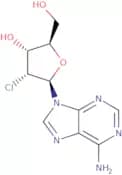
Fórmula:C14H17N5O5Pureza:Min. 95%Cor e Forma:PowderPeso molecular:335.32 g/mol2’-Chloro-2’-deoxyadenosine
CAS:2’-Chloro-2’-deoxyadenosine (2CDA) is a synthetic nucleoside analogue that is used as an antineoplastic agent for the treatment of non-Hodgkin lymphoma and histiocytic lymphoma. It is typically used in combination with other cytotoxic drugs. 2CDA has been shown to be effective against resistant tumor cell lines and has been used to treat patients with metastatic breast cancer, Hodgkin lymphoma, and multiple myeloma. The drug can cause thrombocytopenia, which may be due to its effects on platelets or bone marrow cells. Other toxicities include bone marrow suppression, nausea, vomiting, diarrhea, anorexia, and liver damage. Patients who are at risk for these toxicities should be closely monitored.
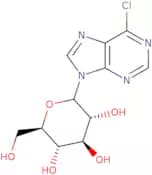
Fórmula:C10H12ClN5O3Pureza:Min. 95%Cor e Forma:PowderPeso molecular:285.69 g/mol6-Chloropurine-9-b-D-glucoside
CAS:6-Chloropurine-9-b-D-glucoside is a nucleoside that belongs to the family of modified nucleosides. It is used as an activator and a phosphoramidate in the synthesis of oligonucleotides. 6-Chloropurine-9-b-D-glucoside is also used in anticancer therapy because it inhibits DNA, RNA, and protein synthesis. 6CPG has antiviral activity against herpes virus and other viruses. This compound has been shown to have antiinflammatory activities by inhibiting the production of prostaglandins. 6CPG is also classified as a carcinogen by the International Agency for Research on Cancer (IARC).
Fórmula:C11H13CIN4O5Pureza:Min. 95%Peso molecular:420.16 g/molcis-Zeatin-o-glucoside riboside
CAS:Cis-Zeatin-o-glucoside riboside is a plant metabolite that belongs to the class of phenylpropanoids. It is the product of the conversion of zeatin by a polyphenol oxidase. Cis-Zeatin-o-glucoside riboside has been found in plants, such as Eucomis and Alnifolia, at levels ranging from 0.2 to 1%. This metabolite is also present in animal tissues, such as rat brain and bovine mammary gland. The metabolic pathway for cis-Zeatin-o-glucoside riboside has been elucidated through tissue culture experiments with Eucomis and 24-epibrassinolide. The biosynthesis of this metabolite involves a two step process: first, an oxidative cleavage of zeatin to indole-3-acetyl l -aspartic acid and then conversion to
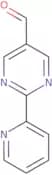
Fórmula:C21H31N5O10Pureza:Min. 95%Peso molecular:513.5 g/mol2-Pyridin-2-ylpyrimidine-5-carbaldehyde
CAS:Ribonucleosides and deoxyribonucleosides are synthetic analogues of the natural nucleotides. Ribonucleosides are analogues of ribose and deoxyribonucleosides are analogues of deoxyribose. Ribonuclesides, Deoxyribonucleosides, Activator, Antiviral, Synthetic, Modified, DNA, Nucleosides is a novel nucleotide analogue with high quality and purity. It can be used in the synthesis of oligodeoxynucleotides for use as antiviral agents. It is also a component of phosphoramidites.Fórmula:C10H7N3OPureza:Min. 95%Peso molecular:185.18 g/molRef: 3D-NP57439
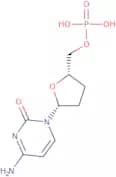
Produto descontinuado2',3'-Dideoxycytidine 5'-monophosphate
CAS:Dideoxycytidine 5'-monophosphate (DDCMP) is a molecule that inhibits HIV infection by inhibiting the synthesis of DNA. It binds to the dna template strand, preventing the addition of new nucleotides and thus blocking the progression of HIV infection. DDCMP has been shown to be potent in vitro and in vivo in clinical studies. In cell culture, DDCMP has been shown to inhibit DNA duplexes, leading to a decrease in lymphocytic leukemia cells activated by T-cell receptor stimulation. Structural biology studies have revealed that DDCMP inhibits HIV-1 reverse transcriptase through binding at the M2 subunit of the enzyme's active site.
Fórmula:C9H14N3O6PPureza:Min. 95%Cor e Forma:PowderPeso molecular:291.2 g/molRef: 3D-ND170662
Produto descontinuadoLauroyl coenzyme A
CAS:Lauroyl CoA is a body-fat molecule that can be formed from acetyl-coenzyme A, which is an intermediate in the metabolism of fatty acids. It is used in analysis as a standard for enzyme activities and as a substrate for reactions involving enzymes with coenzyme A. Reaction mechanisms are determined using titration calorimetry and structural analyses are performed using analytical methods such as infrared spectroscopy and nuclear magnetic resonance spectroscopy. Lauroyl CoA is also used to study the effects of the protein toll-like receptor 4 on hepatic steatosis. The wild-type strain of Escherichia coli was used to measure the activity of bacterial synthetases containing lauroyl CoA.
Fórmula:C33H58N7O17P3SPureza:Min. 95%Cor e Forma:PowderPeso molecular:949.84 g/molRef: 3D-NL47197
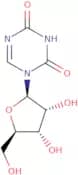
Produto descontinuado5-Azauridine
CAS:5-Azauridine is a nucleoside that is synthesized from uridine. It inhibits protein synthesis by inhibiting the enzyme orotate phosphoribosyltransferase. This enzyme converts orotic acid to orotidine 5′-monophosphate, which is a precursor for the synthesis of pyrimidines and purines. 5-Azauridine has been shown to have an inhibitory effect on leukemia cells in tissue culture and also has been shown to inhibit leukemic mice with an efficacy of 50%. This drug may be useful for the treatment of solid tumours as it inhibits protein synthesis.
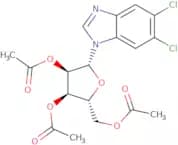
Fórmula:C8H11N3O6Pureza:Min. 95%Cor e Forma:PowderPeso molecular:245.19 g/mol5,6-Dichloropurine-1-(2,3,5-tri-O-acetyl-b-D-ribofuanosyl)-1H-benzimidazole
CAS:5,6-Dichloropurine-1-(2,3,5-tri-O-acetyl-b-D-ribofuranosyl)-1H-benzimidazole is an antiviral agent that has shown activity against RNA viruses. It is a modified nucleoside monophosphate that inhibits the synthesis of viral ribonucleic acid (RNA) by binding to the enzyme RNA polymerase. 5,6-Dichloropurine is also a novel anticancer drug with antiangiogenic and antitumor properties. The compound was found to be effective in inhibiting the growth of human cancer cells in vitro. 5,6-Dichloropurine has been shown to inhibit protein synthesis through inhibition of diphosphate activation of ribonucleotide reductase and DNA polymerase. This product is synthesized using high purity and high quality reagents with excellent yield. It can be used as anFórmula:C18H18Cl2N2O7Pureza:Min. 95%Peso molecular:445.25 g/molRef: 3D-ND16534
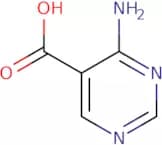
Produto descontinuado4-Aminopyrimidine-5-carboxylic acid
CAS:4-Aminopyrimidine-5-carboxylic acid is an aminopyrimidone that has been synthesized to be used as a new class of antihypertensive agents. It has dose-dependent blood pressure lowering effects, which are likely due to its ability to block angiotensin receptors. 4-Aminopyrimidine-5-carboxylic acid also has antibacterial and antifungal properties. This compound is metabolized in vivo into the pharmacologically active amine 6-aminonicotinamide and excreted in the urine. In vitro studies have shown that 4-aminopyrimidine-5 carboxylic acid inhibits the growth of bacteria by binding to DNA gyrase and topoisomerase IV enzymes required for cell division.
Fórmula:C5H5N3O2Pureza:Min. 95%Peso molecular:139.11 g/molRef: 3D-NA57368
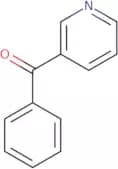
Produto descontinuado3-Benzoylpyridine
CAS:3-Benzoylpyridine is a natural product that has been isolated from the plant Plectranthus fruticosus. It is an aromatic compound, with a trifluoromethyl group and a hydroxy group. 3-Benzoylpyridine has been shown to react with amines in the presence of hydrogen gas to form 1H-1,2,3-triazole derivatives. This reaction is catalyzed by light or UV irradiation. The absorption maxima for 3-benzoylpyridine are at 270 nm and 330 nm in water and ethanol, respectively. In addition, 3-benzoylpyridine is able to combine with hydroxide ions to form the corresponding salt, which can be reduced to yield the nitrogen containing heterocyclic ring (3-benzo[b]pyridin).
Fórmula:C12H9NOPureza:Min. 95%Peso molecular:183.21 g/mol5'-Cytidylic acid
CAS:Please enquire for more information about 5'-Cytidylic acid including the price, delivery time and more detailed product information at the technical inquiry form on this page
Fórmula:C9H14N3O8PPureza:Min. 98.0 Area-%Peso molecular:323.20 g/molRef: 3D-Q-101433
Produto descontinuado3',5'-Di-O-acetyl-2'-deoxyguanosine
CAS:3',5'-Di-O-acetyl-2'-deoxyguanosine is a nucleoside that is activated by hypochlorous acid to form a reactive intermediate, which can then react with other molecules. 3',5'-Di-O-acetyl-2'-deoxyguanosine has been shown to be selectively cytotoxic to human tumor cells and may be used as a radiosensitizer for cancer treatment. The reaction products of this compound include hypochlorite and hydrogen peroxide, which are strong oxidizing agents that cause tissue injury. This compound is also an effective reagent for the detection of myeloperoxidase in plasma samples.
Fórmula:C14H17N5O6Pureza:Min. 95%Cor e Forma:PowderPeso molecular:351.32 g/molRef: 3D-ND04500
Produto descontinuado6-Amino-1-methyluracil
CAS:6-Amino-1-methyluracil is a synthetic drug that is used in the treatment of inflammatory diseases, including rheumatoid arthritis and psoriasis. It is also used to treat cancer, such as leukemia and in the treatment of bacterial infections. 6-Amino-1-methyluracil inhibits the synthesis of DNA by inhibiting the enzyme thymidylate synthetase. This inhibition prevents DNA replication and transcription, which leads to cell death. 6-Amino-1-methyluracil binds to cellular proteins through its amino group and hydroxyl group, which are not involved in its chemical reactions. 6-Amino-1-methyluracil has shown great promise as a template molecule for the synthesis of new drugs.
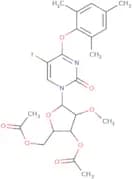
Pureza:Min. 95%3',5'-Di-o-acetyl-5-fluoro-O4-(2,4,6-trimethylphenyl)-2'-o-methyluridine
CAS:3',5'-Di-O-acetyl-5-fluoro-O4-(2,4,6-trimethylphenyl)-2'-O-methyluridine is a novel monophosphate nucleoside analog that is activated by T4 polynucleotide kinase. It is synthesized from the corresponding phosphoramidite and reacts with the 5'-OH group of a ribonucleoside to form a 3',5'-di-O-acetylribonucleoside. The diacetyl group confers increased stability to the molecule and also provides an acetyl group for incorporation into DNA. This compound has antiviral activity against herpes simplex virus type 1 (HSV1) in cell culture and has shown anticancer properties in animal studies.
Fórmula:C23H27FN2O8Pureza:Min. 95%Peso molecular:478.5 g/molRef: 3D-UJB35532
Produto descontinuado2'-Deoxy-3'-O-DMT-N2-iBu-guanosine--succinyl-CPG 1000 Å
2'-Deoxy-3'-O-DMT-N2-iBu-guanosine--succinyl-CPG 1000 Å is a modified nucleoside that is synthesized from 2'-deoxyribonucleosides and succinic anhydride. It has antiviral, anticancer, and antimalarial activities. It can also be used to modify DNA sequences. This product is a novel phosphoramidite monomer with high purity.
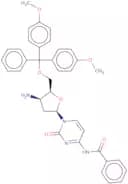
Pureza:Min. 95%3'-Amino-N4-benzoyl-2',3'-dideoxy-5'-O-DMT-cytidine
3'-Amino-N4-benzoyl-2',3'-dideoxy-5'-O-DMT-cytidine is a novel 3'-amino nucleoside
Fórmula:C37H36N4O6Pureza:Min. 95%Peso molecular:632.71 g/molRef: 3D-NA08780
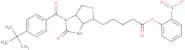
Produto descontinuadoN1-(4-(t-Butyl)benzoyl)-D-(+)biotin 2-nitrophenyl ester
CAS:N1-(4-(t-Butyl)benzoyl)-D-(+)biotin 2-nitrophenyl ester is a novel nucleoside analogue and phosphoramidite. It has been modified to have an acyclic carbon chain with a 4-hydroxybenzoyl group at the C2 position. This compound is an activator of DNA synthesis, and it can be used for the synthesis of deoxyribonucleosides. The purity of this compound is 99%. The CAS number for this compound is 869354-61-0.
Fórmula:C27H31N3O6SPureza:Min. 95%Peso molecular:525.6 g/molRef: 3D-UJB35461
Produto descontinuadoUridine-2-13C
CAS:Uridine-2-13C is a modified nucleoside that is used as an anticancer agent. It is phosphorylated to uridine-2-13C diphosphate and can be used in DNA synthesis and as a radiolabel.
Fórmula:C9H12N2O6Pureza:Min. 95%Peso molecular:245.19 g/molRef: 3D-KBA80342
Produto descontinuado6-Methyl-3-(β-D-2-deoxyribofuranosyl)furano-[2,3-d]pyrimidin-2-one
CAS:6-Methyl-3-(β-D-2-deoxyribofuranosyl)furano-[2,3-d]pyrimidin-2-one is a novel nucleoside analog that has been modified to contain an antiviral agent. It is phosphorylated at the 2' position to form a monophosphate. This compound is a potent inhibitor of HIV reverse transcriptase and human DNA polymerases α and β. The structure of this compound contains a furano ring fused with the pyrimidine moiety, which is substituted with methyl groups on C6 and C3 positions. The CAS number for 6-Methyl-3-(β-D-2-deoxyribofuranosyl)furano-[2,3-d]pyrimidin-2-one is 383897−60−7.Fórmula:C12H14N2O5Pureza:Min. 95%Peso molecular:266.25 g/molRef: 3D-IQA89760
Produto descontinuado







![6-Methyl-3-(β-D-2-deoxyribofuranosyl)furano-[2,3-d]pyrimidin-2-one](/_next/image/?url=https%3A%2Fstatic.cymitquimica.com%2Fproducts%2F3D%2Fthumb-webp%2FIQA89760.webp&w=3840&q=75)