Nucleosídeos
Foram encontrados 3570 produtos de "Nucleosídeos"
3'-Azido-3'-deoxy-b-L-cytidine
CAS:3'-Azido-3'-deoxy-b-L-cytidine is a novel nucleoside that has been shown to be an activator of the ribonuclease activity of purified RNase A in vitro. This product is suitable for use in synthesis of oligodeoxynucleotides and phosphoramidites. 3'-Azido-3'-deoxy-b-L-cytidine can be used as a potential anticancer drug or antiviral agent.Pureza:Min. 95%5-Methoxycarbonylmethyluridine
CAS:5-Methoxycarbonylmethyluridine is a nucleoside that is a precursor in the synthesis of other nucleotides. It has been shown to have potential as a biomarker for various diseases, such as metabolic disorders and hepatic steatosis. 5-Methoxycarbonylmethyluridine also inhibits the activity of methyltransferases, which are enzymes that catalyze the transfer of methyl groups from S-adenosylmethionine to substrates. It is also used as a model system for polymerase chain reaction in cancer research, because it has been shown to inhibit DNA replication by blocking the incorporation of uracil into DNA. 5-Methoxycarbonylmethyluridine has been found at high levels in fetal bovine serum and eukaryotic cells, but not in prokaryotes or cancerous tissues.Fórmula:C12H16N2O8Pureza:Min. 95%Cor e Forma:PowderPeso molecular:316.26 g/mol2'-Deoxy-2'-fluoro-5-methyluridine
CAS:2'-Deoxy-2'-fluoro-5-methyluridine is a nucleoside analog that is a modified version of uridine, where the sugar (deoxyribose) has a fluoro modification at the 2' position and a methyl group is attached at the 5' position of the uracil base.
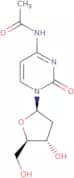
Fórmula:C10H13FN2O5Pureza:Min. 95%Cor e Forma:White PowderPeso molecular:260.22 g/molN4-Acetyl-2'-deoxycytidine
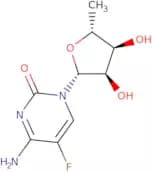
CAS:N4-Acetyl-2'-deoxycytidine is a nucleoside analogue that acts as an inhibitor of DNA synthesis. It binds to the active site of the enzyme ribonucleotide reductase, blocking the conversion of ribonucleotides to deoxyribonucleotides. This prevents DNA synthesis and replication, which leads to cell death. N4-Acetyl-2'-deoxycytidine has been shown to be more efficient than other analogues in terms of energy efficiency, control levels, and constant linear model. This compound is reactive and can cause low yields when isolated from solutions with high concentrations. A diode can be used for analytical purposes, while calcium binding may be used as a mathematical model in order to analyze this drug.Fórmula:C11H15N3O5Pureza:Min. 98 Area-%Cor e Forma:PowderPeso molecular:269.25 g/mol5'-Deoxy-5-fluorocytidine
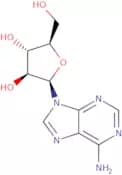
CAS:5'-Deoxy-5-fluorocytidine is a cytosolic nucleoside analogue that is phosphorylated by cellular enzymes to the active form 5'-deoxy-5-fluorouridine monophosphate. It is a prodrug, which is activated in the body to release 5-FU and inhibits the growth of cancer cells. 5'-Deoxy-5-fluorocytidine has been shown to be effective against metastatic colorectal cancer in humans and resistant breast cancer in mice. The drug can also be used as an oral prodrug for 5-FU, which has a wide therapeutic index and low toxicity. Studies have shown that it selectively inhibits proliferation of solid tumours through inhibition of protein synthesis and cell division. The drug also has antiangiogenic effects, which are thought to contribute to its antitumor activity.Fórmula:C9H12FN3O4Pureza:Min. 98 Area-%Cor e Forma:White PowderPeso molecular:245.21 g/mol9-(b-D-Arabinofuranosyl)adenine
CAS:9-(b-D-Arabinofuranosyl)adenine is a nucleoside that is used as an antiviral agent. It binds to viral RNA and inhibits viral replication. 9-(b-D-Arabinofuranosyl)adenine has been shown to have potent side-effect profiles, including myocardial infarct, neuronal death, and immunological reactions. These effects are due to its ability to inhibit the synthesis of guanine nucleotides in the heart and brain cells, which are essential for energy production and neurotransmitter release respectively. 9-(b-D-Arabinofuranosyl)adenine also binds to toll-like receptors (TLRs), which are proteins found on the surface of cells that recognize invading microbes or foreign substances. This binding leads to activation of immune response pathways.Fórmula:C10H13N5O4Pureza:Min. 95%Cor e Forma:White PowderPeso molecular:267.24 g/mol5’-O-Benzoyl-3’-O-(4-methoxybenzoyl)-2’-O,4’-C- methyleneuridine
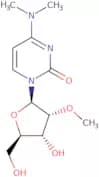
5'-O-Benzoyl-3'-O-(4-methoxybenzoyl)-2'-O,4'-C-methyleneuridine is a nucleoside that is synthesized from 5'-O-benzoyl-2'-deoxyadenosine and 4'-methoxybenzoyl chloride. It has antiviral and anticancer properties. 5' - O - benzoyl - 3' - O - (4-methoxybenzoyl) - 2' - O,4' - C methyleneuridine is a novel nucleoside with anti-cancer and antiviral effects. It can also be used as an activator for the synthesis of oligonucleotides or as a ribonucleotide phosphoramidite. The chemical name for this compound is 5’ – O – benzoyl – 3’ – O – (4 methoxybenzoyl) – 2Pureza:Min. 95%N4,N4,2’-O-Trimethylcytidine
CAS:N4,N4,2’-O-Trimethylcytidine is a novel nucleoside that has been shown to be an anticancer drug. It inhibits the growth of cells by selectively inhibiting their DNA synthesis. N4,N4,2’-O-Trimethylcytidine is also active against viruses and is able to inhibit viral replication by blocking the synthesis of deoxyribonucleosides and phosphoramidites. This compound has been synthesized in high purity and quality with CAS No. 34218-81-0.Fórmula:C12H19N3O5Pureza:Min. 95%Cor e Forma:White PowderPeso molecular:285.3 g/molCytidine 5'-monophosphate disodium salt
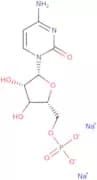
CAS:Cytidine 5'-monophosphate disodium salt (CMPDS) is a prodrug that is converted to cytidine 5'-monophosphate, an active form, in the acidic environment of cancer cells. CMPDS has been shown to inhibit the growth of squamous carcinoma and other solid tumours by binding to survivin, which regulates cell growth and apoptosis. CMPDS also inhibits the activity of matrix metalloproteinases-9 (MMP-9), an enzyme that promotes tumor growth by breaking down connective tissue. This drug can be used as a therapeutic agent for treatment of congestive heart failure due to its ability to increase mitochondrial membrane potential and decrease myocardial infarct size.Fórmula:C9H12N3Na2O8PPureza:Min. 95 Area-%Cor e Forma:White PowderPeso molecular:367.16 g/mol5’(R)-C-Methyladenosine
CAS:5’(R)-C-Methyladenosine is a nucleoside that is used as an antiviral and anticancer agent. It has been shown to inhibit the replication of the human immunodeficiency virus type 1 (HIV-1) in a dose-dependent manner, with an IC50 value of about 0.4 μM for HIV-1 reverse transcriptase activity. In addition, 5’(R)-C-Methyladenosine has been shown to inhibit DNA synthesis and promote apoptosis in cancer cells by inhibiting transcription and translation. The compound also inhibits the growth of tumor cells in mice without affecting normal tissue growth.
Pureza:Min. 95%N4-Benzoyl-2’,3’-di-O-tert-butyldimethylsilyl-5’-O-DMT-N4-methylcytidine
N4-Benzoyl-2’,3’-di-O-tert-butyldimethylsilyl-5’-O-DMT-N4-methylcytidine is a modified nucleoside that is used as an antiviral agent. It inhibits the activity of reverse transcriptase, which is an enzyme that catalyzes the conversion of RNA into DNA. This nucleoside inhibits viral replication and prevents the production of new viruses in cells infected by HIV. N4-Benzoyl-2’,3’-di-O -tert -butyldimethylsilyl -5’ -O -DMT -N4 methylcytidine also inhibits DNA synthesis by inhibiting the activity of DNA polymerases. This drug has been shown to be effective against cancer cells and may have anticancer properties.Pureza:Min. 95%N3-Methyl-2'-O-methyluridine
CAS:2'-O-methyluridine is an antiviral nucleoside that is used as a phosphoramidite in the synthesis of oligonucleotides. It has been shown to inhibit viral replication, and has been found to be effective in treating HIV-1 by inhibiting reverse transcriptase. N3-Methyl-2'-O-methyluridine also inhibits DNA synthesis and cell proliferation, and may be useful for the treatment of cancer. This modified nucleoside has been synthesized from uracil and contains a methyl group at the 3' position. The methyl group prevents 2'-O-methyluridine from being activated by cellular thymidylate synthase, which normally converts deoxyribonucleotides into ribonucleotides. This novel nucleotide has not yet been used in clinical trials but it may provide an alternative to other drugs used for cancer treatments.
Fórmula:C11H16N2O6Pureza:Min. 95 Area-%Cor e Forma:White Off-White PowderPeso molecular:272.25 g/mol3'-Azido-3'-deoxy-5-fluoro-b-L-cytidine
CAS:3'-Azido-3'-deoxy-5-fluoro-b-L-cytidine is an antiviral drug. It is a modified nucleoside with phosphoramidite and azido groups. This product can be used as an activator for DNA synthesis, in anticancer drug development, as well as in the treatment of HIV. 3'-Azido-3'-deoxy-5-fluoro-b-L-cytidine has been shown to inhibit the growth of human tumor cells by inhibiting protein synthesis and enhancing the production of reactive oxygen species (ROS). It also inhibits the activity of ribonucleotide reductase, which is a critical enzyme for DNA synthesis.Pureza:Min. 95%2'-Deoxy-5'-O-DMT-2'-fluorouridine
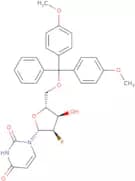
CAS:2'-Deoxy-5'-O-DMT-2'-fluorouridine is a medicament that belongs to the group of antineoplastic agents and is used in cancer treatment. It inhibits the synthesis of DNA by inhibiting the enzyme thymidylate synthetase, which is required for the formation of thymine nucleotides. This drug has been shown to be effective against some cancer cells in vitro and in vivo, but not all. 2'-Deoxy-5'-O-DMT-2'-fluorouridine can also inhibit terminal growth phases and induce programmed cell death. Solid phase synthesis has been used to synthesize this molecule as a phosphoramidite.Fórmula:C30H29FN2O7Pureza:Min. 98 Area-%Cor e Forma:White PowderPeso molecular:548.57 g/molN4-Benzoyl-5'-O-DMT-5-methylcytidine
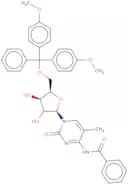
CAS:N4-Benzoyl-5'-O-DMT-5-methylcytidine is a deoxyribonucleoside that has been modified to make it resistant to nucleases. N4-Benzoyl-5'-O-DMT-5-methylcytidine is an antiviral agent, which inhibits the synthesis of viral DNA by inhibiting the activity of viral DNA polymerase. It also acts as an activator for cellular DNA polymerases and phosphoramidites. The drug can be used in the treatment of HIV and other retroviruses, herpes viruses, and certain types of cancer.Fórmula:C38H37N3O8Pureza:Min. 95%Cor e Forma:White SolidPeso molecular:663.73 g/molCytidine 3'-monophosphate lithium salt
CAS:Cytidine 3'-monophosphate lithium salt is a synthetic nucleoside that is used to inhibit the synthesis of DNA in cells. It is an analog of cytidine, with a phosphate group at the 3' position and a lithium cation at the 5' position. Cytidine 3'-monophosphate lithium salt has been shown to be effective in treating cancer and viral infections, although it does not have antiviral activity against influenza A virus.Fórmula:C9H14N3O8P·xLiPureza:Min. 95%Peso molecular:323.2 g/mol8-(4-Chlorophenylthio)-2'-O-methyladenosine 3',5'-cyclic monophosphate sodium salt
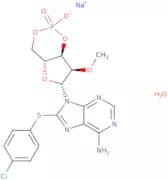
CAS:8-(4-Chlorophenylthio)-2'-O-methyladenosine 3',5'-cyclic monophosphate sodium salt (8-CPT-cAMP) is a cyclic nucleotide that activates adenyl cyclase, which increases intracellular levels of the second messenger cAMP. It also inhibits P2Y receptors and other ion channels. 8-CPT-cAMP has been shown to be effective in activating cells expressing the enzyme camp levels, such as those found in heart muscle cells. This drug is used clinically to lower blood pressure, as it has been shown to activate amp-activated protein kinase and calcium chelator. 8-CPT-cAMP may have clinical applications for the treatment of cancer due to its ability to induce cell cycle arrest and apoptosis.Fórmula:C17H16ClN5O6PS·NaPureza:Min. 95%Cor e Forma:PowderPeso molecular:507.82 g/molN3-Methyl-2’-O-(2-methoxyethyl)uridine
CAS:N3-Methyl-2’-O-(2-methoxyethyl)uridine is a modified nucleoside that is synthesized from deoxyribonucleosides and ribonucleosides. It has antiviral, anticancer, and antifungal properties. N3-Methyl-2’-O-(2-methoxyethyl)uridine has been shown to be an effective inhibitor of HIV replication in vitro and in vivo. This drug also inhibits the growth of human cancer cells in vitro and has been shown to be active against breast cancer cells. N3-Methyl-2’-O-(2-methoxyethyl)uridine is phosphorylated by cellular enzymes to form its active form, which binds to the viral reverse transcriptase enzyme and prevents DNA synthesis.Fórmula:C13H20N2O7Pureza:Min. 95%Peso molecular:316.31 g/mol2'-Deoxy-5'-O-MMT-uridine
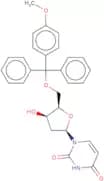
CAS:2'-Deoxy-5'-O-MMT-uridine is a monophosphate nucleoside that is an antiviral and anticancer drug. It is synthesized from the pentaphosphate derivative of cytosine and uracil, and inhibits RNA synthesis by forming a covalent bond with the enzyme ribonucleotide reductase. This product can be used as a starting material for the synthesis of other nucleosides, such as 2'-deoxy-5'-O-methylcytidine. 2'-Deoxy-5'-O-MMT-uridine can also be used to modify DNA by replacing uracil residues in DNA with their corresponding 2'-deoxy counterparts.Fórmula:C29H28N2O6Pureza:Min. 95%Peso molecular:500.56 g/mol5'-O-Tritylthymidine
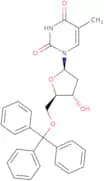
CAS:5'-O-Tritylthymidine is a nucleoside that is found in human mitochondrial DNA. It is synthesized from uridine by the enzyme thymidylate synthase and can be converted to thymine by the enzyme thymidine phosphorylase. 5'-O-Tritylthymidine has been shown to inhibit cancer cell growth, but its mechanism of action is not clear. It may inhibit xylene production. 5'-O-Tritylthymidine also causes an increase in p53 activity, which may lead to apoptosis of cancer cells.Fórmula:C29H28N2O5Pureza:Min. 95%Peso molecular:484.54 g/mol