Nucleosídeos
Os nucleosídeos são building blocks fundamentais dos ácidos nucleicos, compostos por uma base nitrogenada ligada a uma molécula de açúcar. Nesta seção, você encontrará uma ampla variedade de nucleosídeos essenciais para pesquisas em biologia molecular, bioquímica e farmacologia. Esses compostos desempenham papéis cruciais na síntese de DNA e RNA, e também são vitais em vários processos metabólicos. Os nucleosídeos são usados para estudar material genético, desenvolver terapias antivirais e anticancerígenas, e entender os mecanismos celulares. Na CymitQuimica, fornecemos nucleosídeos de alta qualidade para apoiar suas necessidades de pesquisa e desenvolvimento, garantindo pureza e confiabilidade para suas aplicações experimentais.
Foram encontrados 3569 produtos de "Nucleosídeos"
Ordenar por
Pureza (%)
0
100
|
0
|
50
|
90
|
95
|
100
3'-O-Benzoyl-2'-deoxyuridine
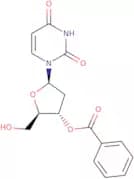
CAS:3'-O-Benzoyl-2'-deoxyuridine is a synthetic nucleoside that is used in the synthesis of DNA and RNA. 3'-O-Benzoyl-2'-deoxyuridine is also an antiviral agent that has shown efficacy against HIV, HSV, and influenza virus. 3'-O-Benzoyl-2'-deoxyuridine is a phosphoramidite monophosphate that can be used as a building block for DNA or RNA synthesis. It is also a diphosphate that can be used to synthesize modified nucleosides. This product has novel properties and high purity, making it suitable for research purposes.Fórmula:C16H16N2O6Pureza:Min. 95%Cor e Forma:PowderPeso molecular:332.31 g/mol2,4,6-Trichloro-5-methylpyrimidine
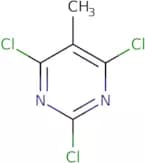
CAS:2,4,6-Trichloro-5-methylpyrimidine is a nucleoside for use in research applicationsFórmula:C5H3Cl3N2Pureza:Min. 95%Cor e Forma:PowderPeso molecular:197.45 g/mol3',5'-Diamino- 3', 5'- dideoxythymidine
CAS:3',5'-Diamino-3',5'-dideoxythymidine (ddT) is a cytosine analog that inhibits the growth of cells by interfering with DNA replication. This drug is effective against viruses such as herpes, which are dependent on deoxycytidine for replication. 3',5'-Diamino-3',5'-dideoxythymidine binds to the viral DNA and prevents it from being used as a template for viral RNA synthesis. It also has potent antiviral activity against l1210 and uninfected mice. 3',5'-Diamino-3',5'-dideoxythymidine is not charged and does not penetrate tissues well because of its large size. It also has limited effects on bacterial enzymes.Fórmula:C10H16N4O3Pureza:Min. 95%Peso molecular:240.26 g/molN4-Benzoyl-3'-deoxycytidine
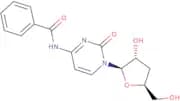
CAS:N4-Benzoyl-3'-deoxycytidine is a novel antiviral agent that has shown activity against DNA and RNA viruses. It is an activator of DNA polymerase, which is essential for replication of viral nucleic acids. The compound is a modified nucleoside with a benzoyl group at the 4' position of the ribose moiety. It also has phosphoramidite, monophosphate, and diphosphate analogues. N4-Benzoyl-3'-deoxycytidine binds to the enzyme DNA polymerase, thereby inhibiting its ability to synthesize deoxyribonucleotides from ribonucleotides. This results in inhibition of viral DNA synthesis and subsequent inhibition of viral replication.Fórmula:C16H17N3O5Pureza:Min. 95%Cor e Forma:White To Off-White SolidPeso molecular:331.32 g/mol2'-Deoxy-7-deazaisoguanosine triphosphate
CAS:2'-Deoxy-7-deazaisoguanosine triphosphate is a nucleotide analogue that is used as an antiviral agent in the treatment of HIV. It has potent activity against HIV and other retroviruses, including SIV, FIV, and HTLV-1. 2'-Deoxy-7-deazaisoguanosine triphosphate has been shown to act as an activator of DNA polymerase by enhancing the incorporation of deoxynucleotide triphosphates into DNA. It also inhibits the synthesis of viral DNA by inhibiting the activity of reverse transcriptase enzymes. 2'-Deoxy-7-deazaisoguanosine triphosphate can be synthesized from diphosphates and phosphoramidites through a modified phosphoramidite approach that allows for high quality and purity with high yield.Fórmula:C11H17N4O13P3Pureza:Min. 95%Peso molecular:506.19 g/mol5-Methoxycarbonylmethyluridine
CAS:5-Methoxycarbonylmethyluridine is a nucleoside that is a precursor in the synthesis of other nucleotides. It has been shown to have potential as a biomarker for various diseases, such as metabolic disorders and hepatic steatosis. 5-Methoxycarbonylmethyluridine also inhibits the activity of methyltransferases, which are enzymes that catalyze the transfer of methyl groups from S-adenosylmethionine to substrates. It is also used as a model system for polymerase chain reaction in cancer research, because it has been shown to inhibit DNA replication by blocking the incorporation of uracil into DNA. 5-Methoxycarbonylmethyluridine has been found at high levels in fetal bovine serum and eukaryotic cells, but not in prokaryotes or cancerous tissues.Fórmula:C12H16N2O8Pureza:Min. 95%Cor e Forma:PowderPeso molecular:316.26 g/molRiboflavin 5'-adenosine diphosphate disodium salt hydrate
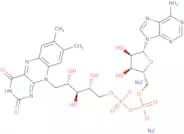
CAS:Riboflavin 5'-adenosine diphosphate disodium salt hydrate is a chemical compound that can be used as a substrate for nitrate reductase in the presence of molecular oxygen. It can be used to identify mollicutes and diagnose radiation-induced lesions. The reaction mechanism involves the conversion of riboflavin 5'-adenosine monophosphate to riboflavin 5'-adenosine diphosphate by an enzyme called nitrate reductase, which is present in the microorganism. This reaction is accompanied by the release of electrons, which are detected by a fluorescence detector. The rate constant for this reaction is k=1.5x10^-4/s at pH 7 and 37 degrees Celsius with an electrochemical detector and k=2.0x10^-3/s at pH 7 and 37 degrees Celsius with a carbonyl oxygens detector. Riboflavin 5'-Fórmula:C27H31N9Na2O15P2·xH2OPureza:(Uv) Min. 95%Cor e Forma:Yellow Orange PowderPeso molecular:829.51 g/mol2'-Azido-2'-deoxy-5'-O-DMT-uridine
CAS:2'-Azido-2'-deoxy-5'-O-DMT-uridine is a nucleoside that has been modified with an azido group at the 2' position. The azido group is used to modify DNA and RNA nucleosides, which are monophosphate, ribonucleosides, and deoxyribonucleosides. This drug may be used as an activator of DNA synthesis or as a antiviral agent. It has been shown to inhibit HIV replication in vitro.Pureza:Min. 95%5'-Azido-5'-deoxyuridine
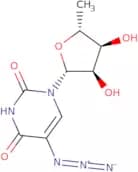
CAS:5'-Azido-5'-deoxyuridine is a synthetic nucleobase that is used in the synthesis of oligodeoxynucleotides. It has been shown to have an inhibitory effect on tumor cells, which may be due to its ability to interact with guanosine diphosphate (GDP) and prevent the formation of GTP. 5'-Azido-5'-deoxyuridine has also been shown to have an inhibitory effect on Mycobacterium tuberculosis and Mycobacterium avium complex, but does not affect other bacteria. 5'-Azido-5'-deoxyuridine interacts with RNA by binding to the phosphate group and inhibiting the synthesis of proteins and DNA.Pureza:Min. 95%2'-Deoxy-5-methyl-isocytidine triphosphate
2'-Deoxy-5-methyl-isocytidine triphosphate (2'-DMI-dTP) is a novel nucleoside that is synthesized by phosphoramidite chemistry. 2'-DMI-dTP has antiviral and anticancer activities, and can be used for the treatment of hepatitis B virus (HBV) and human papillomavirus (HPV). It has shown protective effects in animal models of HBV infection. 2'-DMI-dTP inhibits HBV replication by inhibiting DNA synthesis. In addition, it decreases levels of reactive oxygen species in cells treated with HBV. 2'-DMI-dTP also inhibits HPV replication through inhibition of DNA synthesis, which may lead to cancer prevention or treatment. 2'-DMI-dTP may be a useful drug candidate for the treatment of other viral infections such as influenza A virus and HIV type 1.Pureza:Min. 95%5-(2-Amino-2-oxoethyl)-2-thiouridine
CAS:5-(2-Amino-2-oxoethyl)-2-thiouridine is a modified deoxyribonucleoside that is used as a phosphoramidite to synthesize oligonucleotides. 5-(2-Amino-2-oxoethyl)-2-thiouridine inhibits the synthesis of viral DNA and RNA, and its antiviral activity has been shown in vitro. It also may have anticancer activity due to its ability to inhibit DNA synthesis and cell proliferation. This compound has high quality, high purity, and novel properties.Fórmula:C11H15N3O6SPureza:Min. 95%Cor e Forma:PowderPeso molecular:317.32 g/mol5-Aminoimidazole-4-carboxamide-1-b-D-ribofuranose
CAS:Acadesine is a purine nucleoside analogue that inhibits the synthesis of ATP in cells. Acadesine blocks phosphorylation of adenosine monophosphate (AMP) to adenosine triphosphate (ATP) by inhibiting the activity of kinase-3, an enzyme involved in the production of ATP. Acadesine also inhibits the release of ATP from muscle cells into the blood stream and preferentially targets kidney cells, thereby reducing renal injury. Acadesine has been shown to be effective at reducing proteinuria and improving renal function in rats with acute kidney injury. Acadesine also has anti-inflammatory properties due to its ability to inhibit proteins that are involved in inflammation.Fórmula:C9H14N4O5Pureza:Min. 98 Area-%Cor e Forma:PowderPeso molecular:258.23 g/mol2'-Deoxyisocytidine
CAS:2'-deoxyisocytidine is a nucleoside that is used in biochemical research. It can be synthesized by two methods: solid-phase synthesis and depyrimidination. 2'-deoxyisocytidine has been shown to be more efficient than other fluorescent nucleosides when used with the excimer laser technique. The stability of this compound has also been shown to be greater than other fluorescein-based compounds, which makes it an appropriate substitute when using phosphoramidite chemistry.Fórmula:C9H13N3O4Pureza:Min. 95%Cor e Forma:PowderPeso molecular:227.22 g/mol3'-O-Aminothymidine
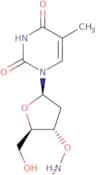
CAS:3'-O-Aminothymidine is an isomer of thymidine, a nucleoside that is found in DNA and RNA. It has a neutral charge and belongs to the category of nucleosides. 3'-O-Aminothymidine is synthesized by the coupling of an amino group with a hydroxyl group. This reaction is efficient and can be used to produce dimers. 3'-O-Aminothymidine can also be used as a precursor for other nucleotides or as a synthetic intermediate in other chemical reactions.Fórmula:C10H15N3O5Pureza:Min. 95%Cor e Forma:PowderPeso molecular:257.24 g/mol1-(2R,3R,4R,5R)-3-Hydroxy-5-(hydroxymethyl)-4-methoxytetra hydrofuran-2-yl)-5-methylpyrimidine-2,4(1H,3H)-dione
1-(2R,3R,4R,5R)-3-Hydroxy-5-(hydroxymethyl)-4-methoxytetra hydrofuran-2-yl)-5-methylpyrimidine-2,4(1H,3H)-dione is a nucleoside that is a novel anticancer drug. It has been shown to have potent antineoplastic activity in vitro and in vivo. This compound is an activator of the p53 tumor suppressor gene and may also act as a transcriptional inhibitor of NF-κB.Pureza:Min. 95%Adenosine 3',5'-bisphosphate triethylammonium salt - 10mM aqueous solution
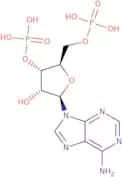
CAS:Adenosine 3',5'-bisphosphate triethylammonium salt is a metabolite of adenosine and an ester of triethylamine. The conjugate acid has been isolated from mouse urine. It is a metabolite of adenosine in the liver and is hydrolyzed to adenosine monophosphate and bisphosphate. Adenosine 3',5'-bisphosphate triethylammonium salt is used to study the metabolism of adenosine in mice. It has also been shown that this metabolite can inhibit the growth of E. coli (a bacterium) and mouse erythrocyte mitochondria by blocking ATP synthesis at the level of substrate-level phosphorylation.Fórmula:C10H15N5O10P2•(C6H15N)xPureza:Min. 95%Peso molecular:427.2 g/mol9-(2',3',5'-Tri-O-benzoyl-b-D-ribofuranosyl)-2-chloropurine
CAS:9-(2',3',5'-Tri-O-benzoyl-b-D-ribofuranosyl)-2-chloropurine is a modified nucleoside with anticancer activity. It has been shown to be an effective activator of DNA, RNA, and protein synthesis in vitro. This drug has also been shown to have antiviral properties against herpes simplex virus type 1 (HSV1) and influenza A virus. 9-(2',3',5'-Tri-O-benzoyl-b-D-ribofuranosyl)-2-chloropurine is an analog of the natural purine metabolite hypoxanthine that can be synthesized in high purity.Pureza:Min. 95%3'-Azido-N6-benzoyl-2',3'-dideoxyadenosine
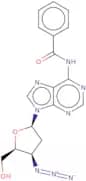
CAS:3'-Azido-N6-benzoyl-2',3'-dideoxyadenosine is an antiviral drug that inhibits the synthesis of viral DNA and RNA. This antiviral drug is a novel synthetic nucleoside analogue that is phosphorylated to form monophosphate, which inhibits the synthesis of RNA. 3'-Azido-N6-benzoyl-2',3'-dideoxyadenosine has been shown to be effective against cancer cells by inhibiting ribonucleotide reductase and DNA synthesis. 3'-Azido-N6-benzoyl-2',3'-dideoxyadenosine also inhibits DNA synthesis by blocking the enzymes DNA polymerase and deoxyribonucleoside kinase.Fórmula:C17H16N8O3Pureza:Min. 95%Cor e Forma:PowderPeso molecular:380.36 g/moltrans-Zeatin-o-glucoside riboside
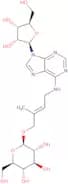
CAS:Trans-Zeatin-o-glucoside riboside is a nucleotide that is found in protonemata and is involved in the regulation of cell division, cytokinin production, and responses to light. It is a cytokinin that regulates the pathways of nitrogen metabolism and other metabolic pathways. Trans-Zeatin-o-glucoside riboside has been detected at detectable levels in cells, tissues, and fluids. It has been shown to be involved in the evolution of plants. It has been shown to regulate cell division by inhibiting the phosphorylation of fibrillarin protein kinase, which leads to an increase in cyclins D1/D2 with no change in cyclin E1/E2. This nucleotide may also play a role in regulating cytokinin production by binding to DNA and influencing gene transcription.Fórmula:C21H31N5O10Pureza:Min. 95 Area-%Cor e Forma:PowderPeso molecular:513.5 g/mol9-(2'-Deoxy- 2'- fluoro- a- D- arabinofuranosyl) -9H- purin- 6- amine
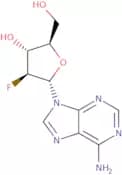
CAS:9-(2'-Deoxy- 2'- fluoro- a- D- arabinofuranosyl) -9H- purin- 6- amine is an antiviral and anticancer agent. It can be used as a monophosphate or as a phosphoramidite for the synthesis of DNA, RNA, and modified nucleosides. The chemical name is 9-(2'-deoxy-2'-fluoro-a-D-arabinofuranosyl)-9H-purin-6-amine. It has the CAS number 20187-82-0. This drug was synthesized in 1976 by Koehler and colleagues at Bayer. The molecular weight is 268.46 g/mol, with a melting point of 190°C, boiling point of 320°C and density of 1.408 g/mL at 20°C. It is soluble in water, methanol, ethanol, chloroform and acetic acidFórmula:C10H12FN5O3Pureza:Min. 95%Cor e Forma:SolidPeso molecular:269.23 g/mol