Nucleosídeos
Os nucleosídeos são building blocks fundamentais dos ácidos nucleicos, compostos por uma base nitrogenada ligada a uma molécula de açúcar. Nesta seção, você encontrará uma ampla variedade de nucleosídeos essenciais para pesquisas em biologia molecular, bioquímica e farmacologia. Esses compostos desempenham papéis cruciais na síntese de DNA e RNA, e também são vitais em vários processos metabólicos. Os nucleosídeos são usados para estudar material genético, desenvolver terapias antivirais e anticancerígenas, e entender os mecanismos celulares. Na CymitQuimica, fornecemos nucleosídeos de alta qualidade para apoiar suas necessidades de pesquisa e desenvolvimento, garantindo pureza e confiabilidade para suas aplicações experimentais.
Foram encontrados 3569 produtos de "Nucleosídeos"
Ordenar por
Pureza (%)
0
100
|
0
|
50
|
90
|
95
|
100
N6-([6-Aminohexyl]carbamoylmethyl)adenosine 5'-triphosphate lithium salt
CAS:N6-([6-Aminohexyl]carbamoylmethyl)adenosine 5'-triphosphate lithium salt is a monophosphate nucleoside that has been modified with a 6-aminohexylaminocarbonyl group. It is an antiviral and anticancer agent that inhibits the synthesis of DNA, RNA, and proteins. N6-[(6-Aminohexyl)carbamoylmethyl]adenosine 5'-triphosphate lithium salt is novel and high quality.Fórmula:C18H32N7O14P3·xLiPureza:Min. 95%5'-O-tert-Butyldimethylsilylthymidine 3'-CE phosphoramidite
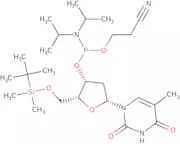
5'-O-tert-Butyldimethylsilylthymidine 3'-CE phosphoramidite is a nucleoside which is an activator for DNA synthesis. It is synthesized from the natural substance thymidine, and it can be modified to have various properties by changing the chemical group that attaches to the 3' carbon. 5'-O-tert-Butyldimethylsilylthymidine 3'-CE phosphoramidite is a novel nucleoside that has been shown to be anticancerous in vitro. This compound may also play a role in treating viral infections due to its antiviral properties.Fórmula:C25H45N4O6PSiPureza:Min. 95%Peso molecular:556.72 g/molN4-Acetyl-2'-O-tert-butyldimethylsilyl-5'-O-DMT-cytidine 3'-CE phosphoramidite
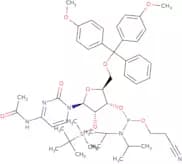
CAS:N4-Acetyl-2'-O-tert-butyldimethylsilyl-5'-O-DMT-cytidine 3'-CE phosphoramidite is a novel nucleoside analogue with antiviral and anticancer potential. It is a modified nucleoside that contains an acetyl group at the 4' position. The 3'-OH group has been replaced by a tertiary butyldimethylsilyl group, which renders the compound resistant to deamination by nucleases. N4-Acetyl-2'-O-tert-butyldimethylsilyl-5'-O-DMT-cytidine 3'-CE phosphoramidite also shows high purity and high quality.Fórmula:C47H64N5O9PSiPureza:Min. 98 Area-%Cor e Forma:White PowderPeso molecular:902.11 g/mol2’-Deoxy-2’-fluoro-N3-(n-dodecyl)uridine
2’-Deoxy-2’-fluoro-N3-(n-dodecyl)uridine (2DFO) is a novel nucleoside analog that is phosphorylated to 2DFP, which is an antiviral drug that has been shown to inhibit the replication of HIV. 2DFO inhibits the activity of DNA polymerase, RNA polymerase, and reverse transcriptase, preventing the synthesis of viral DNA and RNA. This drug also inhibits the activity of human topoisomerase II alpha and beta, which are enzymes involved in replication and transcription. 2DFO binds to purine nucleosides by competitive inhibition at the enzyme active site, preventing the formation of ribonucleotides from deoxyribonucleosides.Pureza:Min. 95%2'-Deoxy-5'-O-DMT-N2-ethylguanosine 3'-CE phosphoramidite
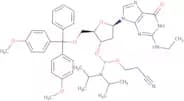
CAS:2'-Deoxy-5'-O-DMT-N2-ethylguanosine 3'-CE phosphoramidite is a novel nucleoside analogue. It is a nucleotide analog with potent antiviral and anticancer activities. This compound has been shown to be an activator of deoxyribonucleosides and ribonucleosides, which may lead to the activation of their respective polymerases. It also has high purity, quality, and stability, as well as being inexpensive. Rifapentine is an anti-tuberculosis drug that belongs to the class of rifamycins. It is the most active of the rifamycins for the treatment of tuberculosis. Rifapentine inhibits bacterial growth by binding to DNA-dependent RNA polymerase, thereby preventing transcription and replication. The high frequency of human activity has been shown using a patch-clamp technique on human erythrocytes. This active formFórmula:C42H52N7O7PPureza:Min. 95%Cor e Forma:SolidPeso molecular:797.88 g/mol3’-b-Amino-2’,3’-dideoxy-5-methyl-5’-O-trityluridine
CAS:3’-b-Amino-2’,3’-dideoxy-5-methyl-5’-O-trityluridine is an antiviral nucleoside that can inhibit the synthesis of DNA in cells. It has been shown to be active against Hepatitis B and Human Immunodeficiency Virus (HIV). This drug has also been shown to have anticancer properties. 3’-b-Amino-2’,3’-dideoxy-5-methyl-5’-O -trityluridine is a novel nucleoside modified at the 5′ position with a trityl group and with an amino group at the 3′ position. 3′ b -amino 2 ′,3 ′ -dideoxy 5 ′ -methyl 5 ′ -O trityl uridine is water soluble and stable in acid conditions.Pureza:Min. 95%2',3',5'-Tri-O-acetylguanosine
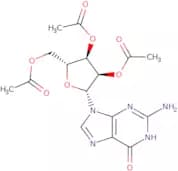
CAS:2',3',5'-Tri-O-acetylguanosine is a protected form of the nucleoside guanosine which has potential application as a synthetic intermediate in nucleic acid and nucleoside chemistry.Fórmula:C16H19N5O8Pureza:Min. 95%Cor e Forma:White PowderPeso molecular:409.35 g/mol2'-Deoxy-5'-O-DMT-uridine 3'-O succinate TEA
2'-Deoxy-5'-O-DMT-uridine 3'-O succinate TEA salt is a modified nucleoside that is an activator for DNA synthesis. It can be used to synthesize oligonucleotides for use in the treatment of cancer and antiviral agents. 2'-Deoxy-5'-O-DMT-uridine 3'-O succinate TEA salt has been shown to inhibit viral replication by inhibiting the function of reverse transcriptase, which is an enzyme that catalyzes the conversion of RNA into DNA. This product has a CAS number, high purity, and high quality.Pureza:Min. 95%2'-Deoxy-4'-thioadenosine
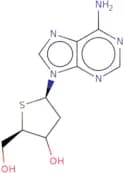
CAS:2'-Deoxy-4'-thioadenosine is a purine nucleoside that is synthesized from 4-thiouridine and phosphorylase. It is cytotoxic and has significant cytotoxicity against cultured cells. The cytotoxicity of 2'-deoxy-4'-thioadenosine was found to be due to its conversion to the triphosphate form in the cells, which inhibits both DNA synthesis and RNA synthesis. This drug also has an inhibitory effect on the growth of tumor cells by inhibiting ribosomal protein synthesis.Fórmula:C10H13N5O2SPureza:Min. 95%Peso molecular:267.31 g/mol3'-Azido-5'-O-benzoyl-3'-deoxythymidine
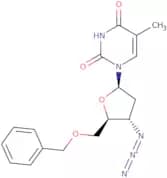
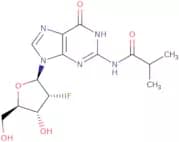
CAS:3'-Azido-5'-O-benzoyl-3'-deoxythymidine is a novel antiviral agent that is synthesized by modifying the structure of thymidine. It has been shown to have high antiviral activity against HIV and other viruses in vitro. 3'-Azido-5'-O-benzoyl-3'-deoxythymidine also inhibits tumor growth in animal models and may be useful as an anticancer drug. This compound is found to be active against a number of cancers, including leukemia, colon cancer, and prostate cancer. 3'-Azido-5'-O-benzoyl-3'-deoxythymidine is phosphoramidites for DNA synthesis, which can be used in the production of ribonucleosides or deoxyribonucleosides.Fórmula:C17H19N5O4Pureza:Min. 95%Peso molecular:357.36 g/mol2'-Deoxy-2'-fluoro-N2-isobutyrylguanosine
CAS:2'-Deoxy-2'-fluoro-N2-isobutyrylguanosine is a modified nucleoside analog for research applicationsFórmula:C14H18FN5O5Pureza:Min. 95%Cor e Forma:White PowderPeso molecular:355.33 g/mol5-Bromo-7-(2-C-methyl-b-D-ribofuranosyl)-7H-pyrrolo[2,3-d]pyrimidin-4-amine
CAS:5-Bromo-7-(2-C-methyl-b-D-ribofuranosyl)-7H-pyrrolo[2,3-d]pyrimidin-4-amine is a chemical compound that has antiviral and anticancer properties. It is synthesized by the reaction of 5,5'-dibromoimidazole with 4,4'-dimethoxytrityl chloride. This product is used as a building block in the synthesis of deoxyribonucleosides, modified phosphoramidites, and nucleosides. It also has high purity and high quality.Pureza:Min. 95%9-(b-D-Arabinofuranosyl)-8-chloroadenine
CAS:9-(b-D-arabinofuranosyl)-8-chloroadenine is a deoxyribonucleoside that is structurally related to adenosine. It has antiviral properties and has been shown to be active against herpes virus, influenza A virus, and cytomegalovirus. 9-(b-D-Arabinofuranosyl)-8-chloroadenine is an activator of cellular DNA polymerase δ and has been shown to inhibit the replication of HIV in human T lymphocytes. 9-(b-D-Arabinofuranosyl)-8-chloroadenine also inhibits the proliferation of tumor cells and is being investigated as a potential chemotherapeutic agent for cancer treatment.
Pureza:Min. 95%2’,3’-Bis-O-tert-butyldimethylsilyl-5-methoxyuridine
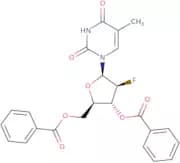
2’,3’-Bis-O-tert-butyldimethylsilyl-5-methoxyuridine is an antiviral nucleoside that is chemically synthesized from 5-methoxyuridine. It has been shown to inhibit the replication of HIV in cell cultures and animal models. This drug can be used as a phosphoramidite for the synthesis of oligonucleotides. 2’,3’-Bis-O-tert-butyldimethylsilyl-5-methoxyuridine is a novel nucleoside that has not been previously reported in the chemical literature.Pureza:Min. 95%1-(3',5'-Di-O-benzoyl-2'-deoxy-2'-fluoro-β-D-arabinofuranosyl)thymine
CAS:1-(3',5'-Di-O-benzoyl-2'-deoxy-2'-fluoro-b-D-arabinofuranosyl)thymine is a chemically modified nucleoside analog. This compound contains a thymine base, a 2'-fluoro-β-D-arabinofuranose sugar, which alters biological stability and function and benzoyl protecting groups at the 3' and 5' positions, commonly used in nucleoside synthesis to control selective modifications.Fórmula:C24H21FN2O7Pureza:Min. 95%Cor e Forma:White To Off-White SolidPeso molecular:468.43 g/mol2'-O-Acetyl-3'-azido-5'-O-(4-methylbenzoyl)-3'-deoxyuridine
CAS:2'-O-Acetyl-3'-azido-5'-O-(4-methylbenzoyl)-3'-deoxyuridine (2'AAZ) is a modified nucleoside that has antiviral and anticancer activities. This compound blocks the synthesis of DNA, RNA, and proteins. 2'AAZ inhibits cell proliferation by interfering with the replication of DNA and by inhibiting protein synthesis. It has been shown to inhibit the growth of cancer cells in vitro and in vivo. The IC50 values for 2'AAZ are 5 μM for herpes simplex virus type 1 (HSV1) infection in Vero cells, 4 μM for HSV2 infection in Vero cells, 3 μM for influenza A virus (H1N1) infection in MDCK cells, and 0.5 μM for human immunodeficiency virus type 1 (HIV-1) infection in CEM-SS cells.Pureza:Min. 95%N4-Methylcytidine 5'-triphosphate triethylammonium salt
N4-Methylcytidine 5'-triphosphate triethylammonium salt is a novel nucleoside analog that inhibits the growth of tumor cells. It is synthesized by reacting N4-methylcytidine with phosphoramidite in an amine base, and then treated with triethylamine to produce a triethylammonium salt. This nucleoside analog inhibits DNA synthesis by inhibiting the enzyme ribonucleotide reductase, which converts ribonucleotides to deoxyribonucleotides. The resulting monophosphate compound has been shown to be effective in cancer treatment and may also be used as an antiviral agent.Fórmula:C10H18N3O14P3Pureza:Min. 95%Peso molecular:497.18 g/molPalmitoyl coenzyme A potassium salt
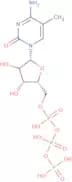
CAS:Palmitoyl coenzyme A potassium salt is a novel, modified nucleoside that has antiviral and anticancer activities. It is a phosphoramidite with a phosphate group at one end and a palmitoyl group at the other. The phosphate group is attached to the 5' position of the sugar, while the palmitoyl group is attached to the 3' position of the sugar. Palmitoyl coenzyme A potassium salt can be used in DNA synthesis.Fórmula:C37H65N7O17P3SKPureza:Min. 95%Cor e Forma:White PowderPeso molecular:1,044.03 g/mol5-Methylcytidine-5'-triphosphate sodium salt - 100mM aqueous solution
CAS:5-Methylcytidine-5'-triphosphate sodium salt is a nucleoside diphosphate that is used as an activator in the synthesis of DNA. It is also used as a building block in the synthesis of anticancer agents, such as 5-methylcytosine monophosphate and phosphoramidites. The chemical name for this product is 5-methylcytidine-5'-triphosphate sodium salt and its CAS number is 327174-86-7. This product is available for purchase at Sigma Aldrich with a purity of 99%.Fórmula:C10H18N3O14P3·xNaPureza:Min. 95%Cor e Forma:PowderPeso molecular:497.18 g/molAdenosine 5'-O-(3-thiotriphosphate), BODIPY FL thioester sodium salt - 5mM buffered aqueous solution
Adenosine 5'-O-(3-thiotriphosphate), BODIPY FL thioester sodium salt - 5mM buffered aqueous solution is a novel nucleoside that is synthesized from the corresponding phosphoramidites. This compound is an activator of DNA synthesis in mammalian cells and a potent inhibitor of viral replication. It has antiviral activity against HIV, herpes, and influenza viruses. The molecule can be modified to include different substituents such as fluoro, bromo, or chloro groups and has been shown to have anticancer activity.Fórmula:C24H27BF2N8Na3O13P3SPureza:Min. 95%Peso molecular:878.28 g/mol
![N6-([6-Aminohexyl]carbamoylmethyl)adenosine 5'-triphosphate lithium salt](/_next/image/?url=https%3A%2Fstatic.cymitquimica.com%2Fproducts%2F3D%2Fthumb-webp%2FNA73270.webp&w=3840&q=75)




![5-Bromo-7-(2-C-methyl-b-D-ribofuranosyl)-7H-pyrrolo[2,3-d]pyrimidin-4-amine](/_next/image/?url=https%3A%2Fstatic.cymitquimica.com%2Fproducts%2F3D%2Fthumb-webp%2FNB14095.webp&w=3840&q=75)